Charges dropped against family accused of brutally beating man in Broward for dating son
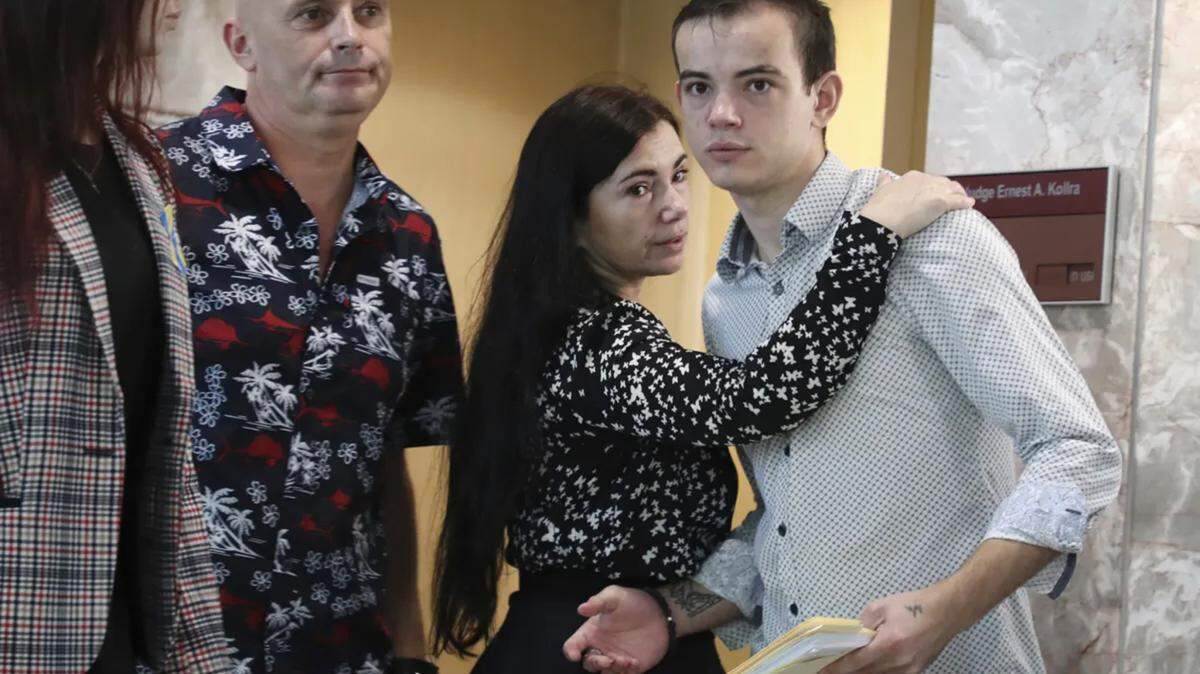
A family facing up to life in prison for allegedly beating a man because he “made” their son gay had their case dismissed after Broward prosecutors dropped the charges against them.
Prosecutors announced the decision Tuesday, citing that they “would not be able to prove beyond a reasonable doubt” that Inna Makarenko, 46, Yevhen Makarenko, 45, and, Oleh Makarenko, 23, were present at the scene of the Aug. 6, 2021 beating.
The Makarenkos were charged with attempted murder, burglary with battery and kidnapping. Their charges were previously “enhanced” under Florida’s hate crime law.
“Though it is apparent that a crime was committed, there is no likelihood of conviction that these defendants committed such crimes,” prosecutor Veronica Walker said in a memo.
Defense attorney George Palaidis, who was representing Yevhen, commended prosecutors’ decision but said he believed they should’ve done so long ago to “spare this family from the tragedy [they had] to go through.”
“From the evidence... that we received from the state, it was pretty clear that our clients weren’t there,” he told the Miami Herald Thursday.
Palaidis said he was ready to present a case to a jury this week including phone records, DNA analysis and alibi witnesses.
“We were prepared to show that there was absolutely nothing that placed our clients at the apartment,” he said.
Divergent accounts of attack
According to investigators, the family stormed into the victim’s Pompano Beach apartment, brutally beat him and left him to die on the blood-covered floor for 13 hours. The attack, authorities say, was related to the victim’s forbidden romance with Oleh.
When police found the victim, the apartment was in disarray. There was damaged furniture and empty alcohol bottles littered on the floor. But the victim, despite his condition, told police he injured himself falling down.
Officers immediately suspected the victim wasn’t being truthful, records show. Body camera footage captured an officer speculating that the man had the “s--t beat out of him.”
Another officer even told the victim: “How many times did you fall? 20?”
The victim is now blind in both eyes due to the attack, court records say. He also suffered extensive injuries, including a concussion, severe bruising, brain swelling, multiple fractures in his facial bones and a fractured jaw.
According to police, the victim dated Oleh for about nine months. But that summer, he learned that Oleh’s father “found out that he was homosexual” and “was treating him poorly and was not accepting him.”
While he initially denied getting beat up, the victim in February 2022 said “his memory of the incident” had returned and he wanted to press charges.
“He stated that the reason for this attack was because he was a homosexual, was dating Oleh and that the family felt that he made Oleh a homosexual,” a warrant said.
A lack of evidence?
In the eight-page memo, Walker said the main issue with the case was the “lack of evidence and identification of the alleged attackers.”
Text messages exchanges, she said, indicated that Oleh was in a ongoing relationship with the victim — and that his parents had uncovered that. Phone records, however, didn’t place any of the family members at the scene during the beating.
Police also didn’t gather evidence on the day of the crime, Walker said. When the victim detailed the incident months later, detectives were unable to obtain any surveillance footage or witnesses.
The victim told investigators that the family showed up to his apartment driving a Lincoln Navigator. But Oleh’s fianceé testified that she had the car in her possession in Texas at the time.
Another witness — a family friend who was staying with the Makarenkos for a birthday celebration at the time that the beating occurred — said the only cars at the home were a white Mercedes-Benz Sprinter and a BMW sedan. She, too, testified that none of the family members left the house.
When asked why he took so long to report the assault, the victim told Walker that “he did not want to see Oleh in trouble and was afraid of retaliation.”