
Miami man was sentenced to 150 years — a lifetime and more. A court is showing him mercy
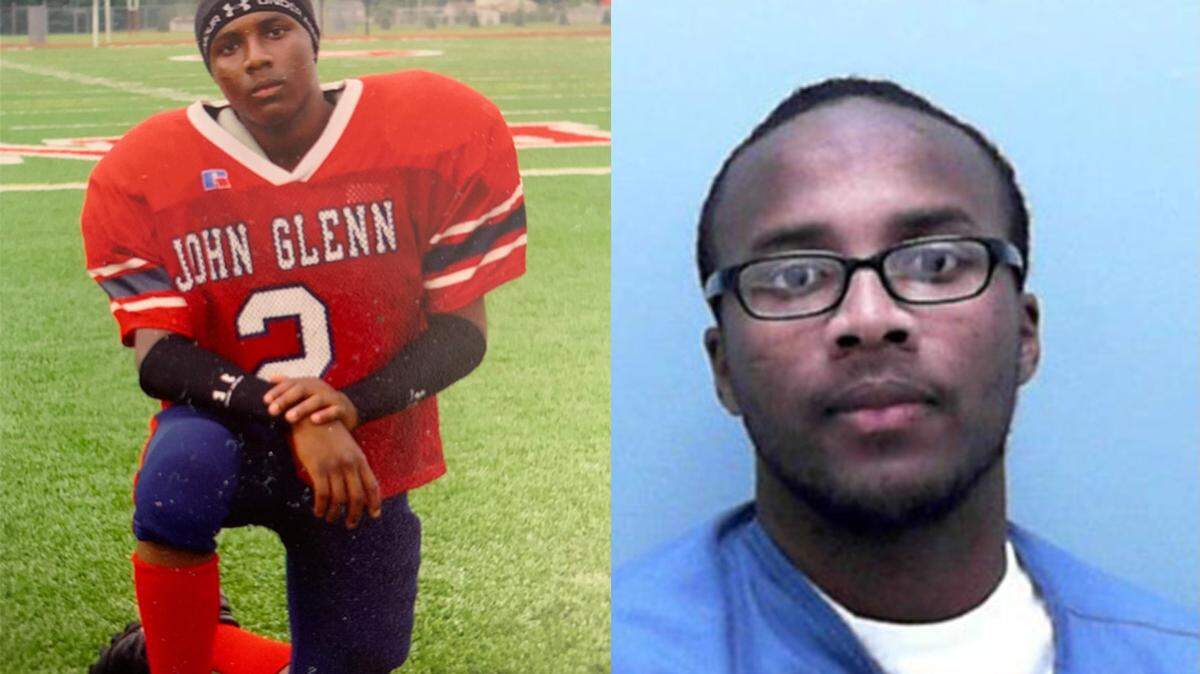
Jared Stephens, a homeless, schizophrenic man who committed an incomprehensible crime — and was sentenced to 150 years as a result — will get a second chance at a life outside prison
In court Monday, Stephens’ attorney and state prosecutors shared the outline of an agreement to drastically shorten the 32-year-old Stephens’ stay in the Florida prison system: 10 years with credit for time served, followed by 11 years of probation on the condition that he spend the first two years of that probation in mental health facilities.
By the end of the second year of probation, he will be eligible to move to Arizona, where he can live with family.
Under that timetable, Stephens would be freed from prison in July 2025 — a full 140 years earlier than his original release date of July 4, 2166, prescribed under the sentence meted out by Circuit Judge Veronica Diaz, one that shocked longtime defense attorneys and court observers.
Diaz is no longer in charge of the case. It now is in the hands of Circuit Judge William Altfield, who gave no indication that he objected to a shortened sentence.
Details have to be worked out, however, which means another hearing will take place, scheduled for June 12.
Stephens ended up with a 150-year sentence after walking into a Best Buy in Sweetwater and attempting to walk out of the store with a laptop without paying for it. When confronted, Stephens pulled his own laptop out of his backpack and declared, “Look, I have child pornography!”
And then he sat on the floor and perused that child pornography until police came and arrested him.
The state initially offered a deal of three years in prison. Stephens, estranged from his family, uttering gibberish in open court and refusing to cooperate with his lawyer, would not go along. The judge gave him the 150 years, far beyond what prosecution recommended or the typical sentence for such crimes. She did not go into significant detail.
Fan Li, a new defense lawyer, would eventually become involved in the case, arguing that Stephens needed therapy, not a life behind bars. At the same time, Stephens’ family became aware of his circumstances. That led to Monday’s second chance, still not finalized.
Miami-Dade Judge Steven Leifman, instrumental in setting up Miami-Dade’s mental health court, appeared in the case as a witness. He stated that that once Stephens is free from prison, he will be able to receive the treatment he needs — and in a safer environment.
Li said that although receiving treatment while incarcerated is not a condition of the agreement, the option is available to Stephens.
Li said his client, who was not present in court because he had asked to be returned prison, could get some therapy in the prison system, though he may be reluctant to do so, given past alleged mistreatment. The most recent example, Li informed the court, involved the disappearance of all Stephens’ belongings, including an iPad, and the Florida Department of Corrections’ claim that there is no record of him ever having owned any of it. Li said Stephens used the iPad to listen to meditation tapes, a way to keep occupied while avoiding some of the prison system’s harsher realities.
The sentence was handed down by Judge Diaz in January 2018. It was 129 years longer than what prosecutors recommended after conviction and dozens of times greater than the average sentence for possession of child pornography.
Stephens’ mental health troubles were evident at the onset of trial. He informed the court, falsely, that he was facing federal treason charges for crimes against humanity in Central America.
After four months of treatment and a diagnosis of schizophrenia, the court deemed him competent and the trial resumed.
It didn’t get any smoother for the defense team. Stephens had stopped responding to his family and friends’ messages years before and none of them knew he was on trial. With no family to speak on his behalf, combined with Stephens’ lack of cooperation, Stephens’ attorney at the time was unable to present any mitigating factors that would demonstrate to the judge why she should show mercy.
She didn’t.
After the jury found Stephens guilty of 32 counts of possession of child pornography, Diaz sentenced him — tacking on an additional 120 days in the county jail for theft and disorderly conduct.
Around then, Stephens reached out to the mother with whom he had lost touch. She offered up an explanation of why Stephens might have fallen into a cycle of mental illness and homelessness.
.jpg "Pages from Motion to Correct Sentence - Appendix (filed 1.18.19).jpg")
When Stephens was just 9, he survived a fire that claimed the lives of his two younger brothers. The tragedy made the local papers. His loved ones say he blamed himself and never truly processed his shock and grief.
A star wrestler in high school in Southfield, Michigan, he began experiencing mental health troubles in late adolescence — derailing his career as a college wrestler at Arizona State.
His attorneys presented this new information to Judge Diaz during a series of hearings to amend or appeal his sentence, but she was unmoved.
Only when a new defense attorney and judge became involved was Stephens’ plight reconsidered. After initially resisting a change in the sentence, the Miami-Dade State Attorney’s Office agreed to the plan that was tentatively spelled out Monday before Judge Altfield.
This story was originally published April 24, 2023 at 6:36 PM.