NAACP: Charge Miami cop cleared by state in shooting death of man during traffic stop
Two months after the state cleared a Miami police officer in the shooting death of a man who tried to run during a traffic stop, the dead man’s family has filed a wrongful death lawsuit in federal court and the NAACP is calling for the officer’s arrest.
“We have been monitoring the situation since it occurred and throughout the investigation we’ve always said that the shooting appeared to be unlawful and unjustified,” said Miami-Dade NAACP President Daniella Pierre.
The 20-member executive committee of the NAACP voted unanimously earlier this month to recommend to the city of Miami and Miami-Dade State Attorney’s Office that Miami Police Officer Constant Rosemond be charged in the shooting death of Antwon Cooper.
Cooper, 34, was shot once in the head by Rosemond as he scuffled with Miami police officer Olivier Gonzalez. A gun was found on the ground about 15 feet away. Pierre said her organization will go into detail about its findings during a Zoom press conference on Thursday.
The announcement comes a week after Cooper’s family filed a wrongful death civil rights lawsuit against Rosemond and the city of Miami in federal court. The suit says Cooper posed no threat to police or the public when he was shot in the head and killed at close range.
The 21-page lawsuit filed in the U.S. District Court for the Southern District of Florida says that Cooper was stopped while driving a red 2016 Nissan Altima he had recently purchased with his wife. It also says that body-worn camera video, eyewitnesses and crime scene photos clearly show that Cooper was unarmed during the struggle and that Gonzalez never drew his weapon.
“No reasonable officer would have responded as Rosemond did,” the lawsuit says.
But the State Attorney’s Office and Miami Police share a different perspective. Cooper was killed as he wrestled with Gonzalez, who had yelled “gun” after discovering Cooper was armed, they say. And he was shot dead while standing over Gonzalez, who had no reason to believe Cooper wasn’t a threat.
The state attorney exonerated Rosemond of any wrongdoing in January, calling the officer’s actions “reasonable and legally justified.” Investigators said Gonzalez was on the ground under Cooper when Rosemond arrived and that much of Gonzalez’s police-issued equipment — including his body-worn camera — was dislodged from his uniform.
State Attorney Spokesman Ed Griffith said Miami-Dade State Attorney Katherine Fernandez Rundle has received the NAACP’s letter and has met with organization members about the shooting.
“The completed police shooting memo is the result of a thorough and extensive review of all the video material and all of the evidence by both the Florida Department of Law Enforcement and the Miami-Dade State Attorney’s Office,” Griffith said.
Miami Fraternal Order of Police President Felix Del Rosario supported Rosemond, saying no police officer ever wants to fire his weapon.
“It’s probably the worst thing we have to do,” he said. “But Rosemond saw the gun. He had to take action to save the officer’s life.”
That there was a gun, is one of the few things Cooper’s family and police agree on. Cooper’s family has never said the weapon belonged to him, only that it was found far enough away from the wrestling match to not be a threat. Police and prosecutors counter that Gonzalez had no way of knowing the gun had been dislodged from Cooper.
Cooper was killed in March 2022 after being pulled over for allegedly speeding and having illegally tinted windows at Northwest 71st Street and 10th Avenue, just outside Miami Northwestern High School. During the traffic stop, Cooper was told to get out of the car after failing to produce a valid driver’s license.
Police body-worn camera video released after the shooting shows Cooper leaning against a car as he’s being patted down. When the officer spots a gun on him, Cooper tries to take off, but is tackled by the officer, who manages to hold onto Cooper by grabbing his T-shirt and his dreadlocks. The video doesn’t show Rosemond until after the shooting, but the sound of gunfire is clear as he strikes and kills Cooper.
Rosemond’s single bullet struck Cooper in the head as he hovered over the officer on the ground appearing to try and get away. The officer never appears threatened by the weapon in the video. Rosemond is a decorated cop who spent time training Haitian police after the earthquake there more than a decade ago.
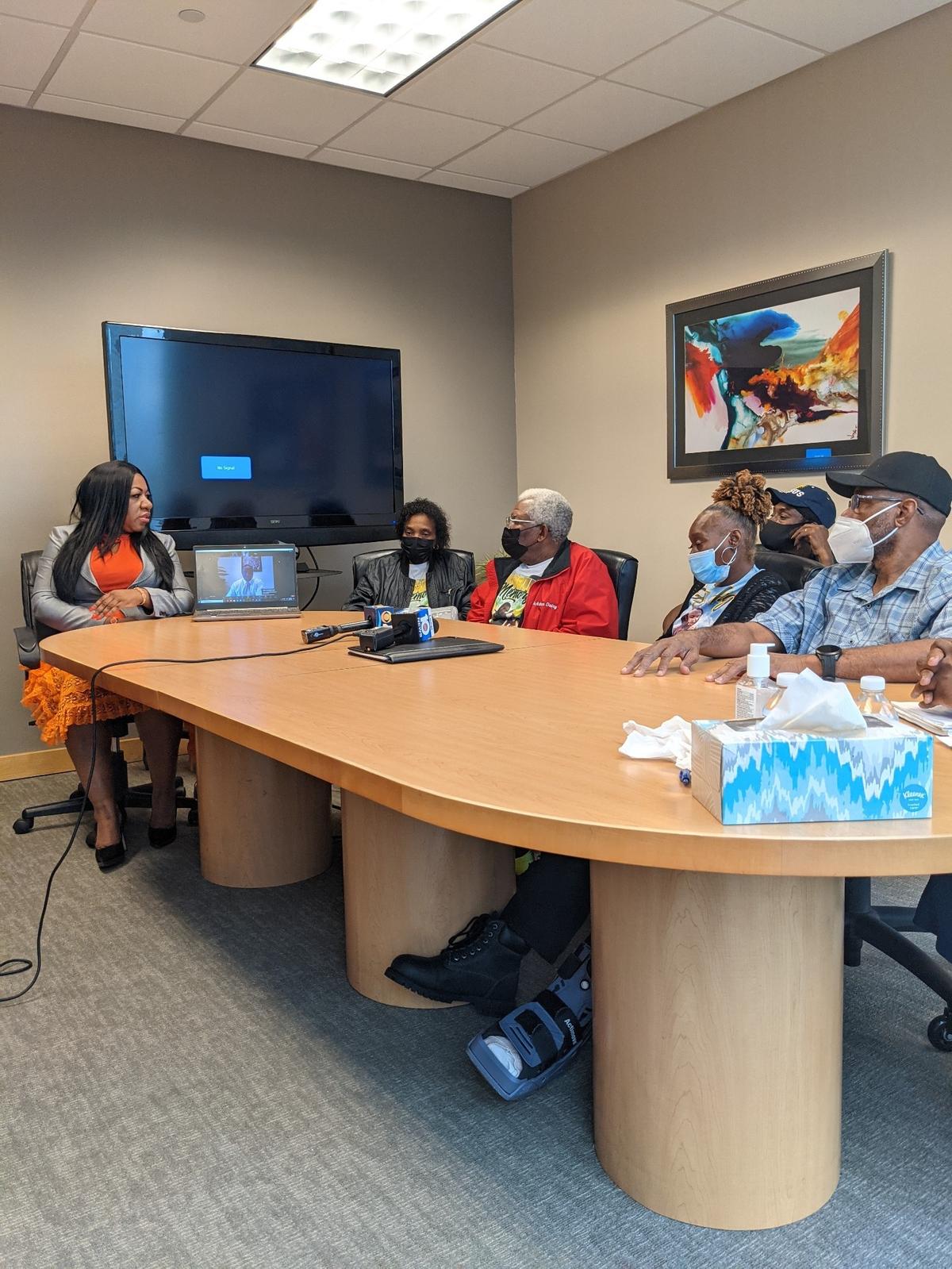
Press conferences at William’s office with heartbroken family members and threats of a lawsuit followed. The family purposely waited until the one-year anniversary of Cooper’s death to file the federal lawsuit, which seeks damages and attorney’s fees. Family attorney Rawsi Williams said there was no need for Rosemond to use lethal force as a first resort.
“He committed a crime and he killed the man without legal cause of justification,” she said.
This story was originally published March 15, 2023 at 5:30 AM.