Critics say police foot chases end badly too often, urge rules for South Florida cops
Decades after many South Florida police departments set rules to reduce dangerous and often deadly high-speed vehicle pursuits, some civilian police oversight leaders say it’s time to do the same for foot chases.
At least three recent cases in Miami-Dade, they say, make the case for why:
Last January, a teenager named Vito Corleone-Vinisee was in the backseat of a sports car when the driver ignored a police order to pull over. The car crashed into a tree. Corleone-Vinisee ran. Police chased. An officer fired from behind and struck the teen near his neck. He was partially paralyzed.
Less than two months later, Antwon Leonard Cooper, 34, was killed by a police officer after trying to flee on foot following a traffic stop. After a scuffle with one officer who tackled him, another shot and killed him.
And in August, Miami-Dade Police Officer Cesar “Echy” Echaverry was killed in a shootout during the foot chase of a suspected armed robber, who also was shot dead.
Foot chases, the common thread in all three, are a tactic that some critics say too often leads to serious injury for relatively minor offenses. The vast majority of foot chases that end tragically, they say, begin over traffic stops like rolling through a stop sign or a broken tail light. And most police agencies in South Florida have no guidelines for when chases are warranted — or not.
“I hate them,” said Cristina Beamud, former chair of Miami’s police oversight board and who temporarily chaired Miami-Dade’s newly-formed civilian police oversight panel. “If they don’t end in death, they end in head injuries almost all the time. Police get completely amped up. It makes them really mad. And in so many cases it started over a traffic stop.”
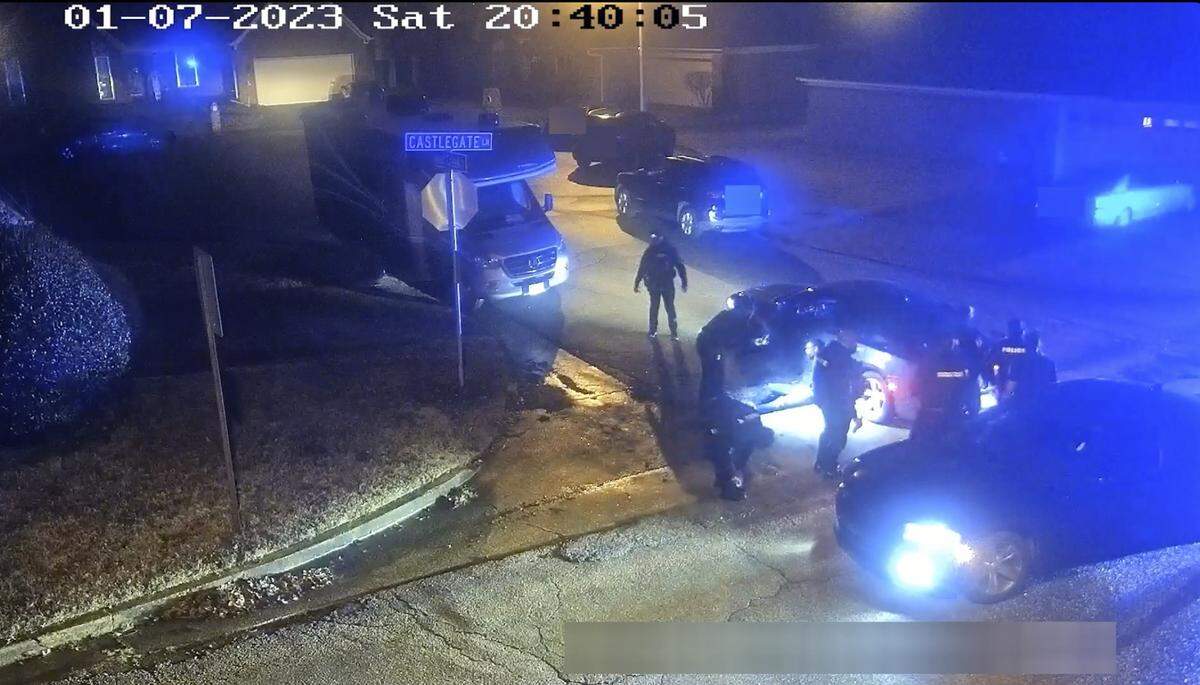
Rodney Jacobs, who chairs Miami’s Civilian Investigative Panel, said police usually have license plate information and some type of personal identification by the time a foot chase begins. Nationally, the Tyre Nichols case in Memphis, which resulted in the arrest of five officers on murder charges, is an extreme example of police rage following a foot chase, he said.
“Often, when they catch up to you — and we saw this in the last 20 minutes of the Tyre Nichol’s video — they’re going to beat you up and inflict pain. You run, you pay,” said Jacobs. “And where are they going that you can’t find them later. Most of these people aren’t going anywhere far.”
Nichols, 29, died in a Memphis hospital three days after he was beaten by five police officers. He had been pulled over for reckless driving and was shocked by officers with an electronic Taser and pepper-sprayed before breaking free and running to within 100 yards of his mother’s house, where he was beaten again by police.
Though the foot chase policies that do exist vary by department, the tactic is basically unaddressed by the two largest agencies in Miami-Dade. City of Miami police have a vague policy that says officers can initiate a foot pursuit of anyone an officer reasonably believes is about to engage in, is engaging in, or has engaged in criminal activity. Miami-Dade Police, the eighth-largest agency in the nation, has no foot chase policy at all.
The International Association of Chiefs of Police calls foot pursuits “inherently dangerous.” It suggests agencies provide direction and guidance on whether a pursuit is necessary and how to go about it. And Chicago police greatly reformed their foot chase policy last June, more than a year after a pair of police foot pursuits ended in the deaths of a 13-year-old and a 22-year-old. Chicago police can now only initiate a foot chase if a suspect is committing or about to commit a felony or in misdemeanor cases like domestic battery.
But Steadman Stahl, who represents more than 6,000 sworn personnel in South Florida as president of the South Florida Police Benevolent Association, said he sees no need for a policy addressing foot pursuits, which he says could cripple a basic law enforcement mission: Stopping and arresting bad guys.
“When somebody runs from police, most of the time they’re running because they’ve done something wrong and they don’t want to get caught,” he said. “If you decide on no foot chases, then all you have to do if you rob a bank, is run from police.”
Stahl pointed to the death of Echaverry, the 29-year-old Miami-Dade officer who lost his life last summer during a shootout that began as a traffic stop. In that case, police had been looking for the Hyundai driven by Jerome Willie Horton, 32, because it was believed to have been involved in an armed robbery in Dania Beach the night before the shooting. They found it in Miami Springs and followed it north before surrounding it with police vehicles.
Police tried to execute an arrest without violence. But for about 30 minutes, Horton refused to get out of the vehicle, then rammed several police cars before hitting a light pole a few blocks away. With police following, Horton took off on foot. Police did, too.
One of Horton’s bullets is believed to have killed Echaverry. Horton, was killed in the firefight as well.
“That’s what makes policing difficult. That guy, for sure, had been robbing places from Georgia down south,” said Stahl. “If a car runs a stoplight or a red light and you go to stop the guy and he flees, why is the guy running? If you really want to make it safe, say we don’t have to enforce traffic laws.
“Whatever we’re ordered to do, we’re going to follow the orders. But there are going to be consequences. Ted Bundy was stopped for a taillight offense.”
But Beamud said creating foot-chase policies would not only protect suspects on the run, but police as well.
“It’s not only the suspect I’m worried about, but the officer as well. It’s [Echaverry’s death] illustrative of the high risks of doing it,” she said.
Many cases also are not as clear-cut as the Echaverry shooting.
Cooper, who was shot and killed by police just outside of Miami Northwestern Senior High School last March, was pulled over because police said the temporary tag on the Nissan Altima he was driving had expired. His family and attorney dispute that. Police body camera video of the incident shows Cooper had identification, but no license and was asked to step out of the vehicle.
As he was being patted down with his hands on the car, the officer yelled gun. But there is no indication from police, witnesses or video surveillance that Cooper ever handled the weapon or threatened the officer in any way. Cooper tried to run at that point. The officer held him on the ground by grabbing his dreadlocks.
When another officer arrived during the scuffle, Cooper was partially over top of the cop who had tackled him and trying to get away. He was shot once in the head by the arriving officer. Video shows a Sigfried Armory handgun on the ground about 15 feet away. The officer who killed Cooper was cleared of any criminal wrongdoing less than a year later.
Attorney Rawsi Williams said the family plans on filing a wrongful death civil rights violation lawsuit in federal court next month on the one-year anniversary of Cooper’s death. She said she’s a firm believer that foot chase policies should be mandatory for all police departments.
“Many times, people minimize the danger of foot chases,” said Williams. “In every instance of police engaging the public, there must strict and detailed policies and procedures in place that not only hold the officer accountable, but that also ensure the officer is trained competently on what the officer should or should not do when interacting with the public.”