Blood-soaked shirt, drugs, knives among likely ruined police evidence in Opa-locka
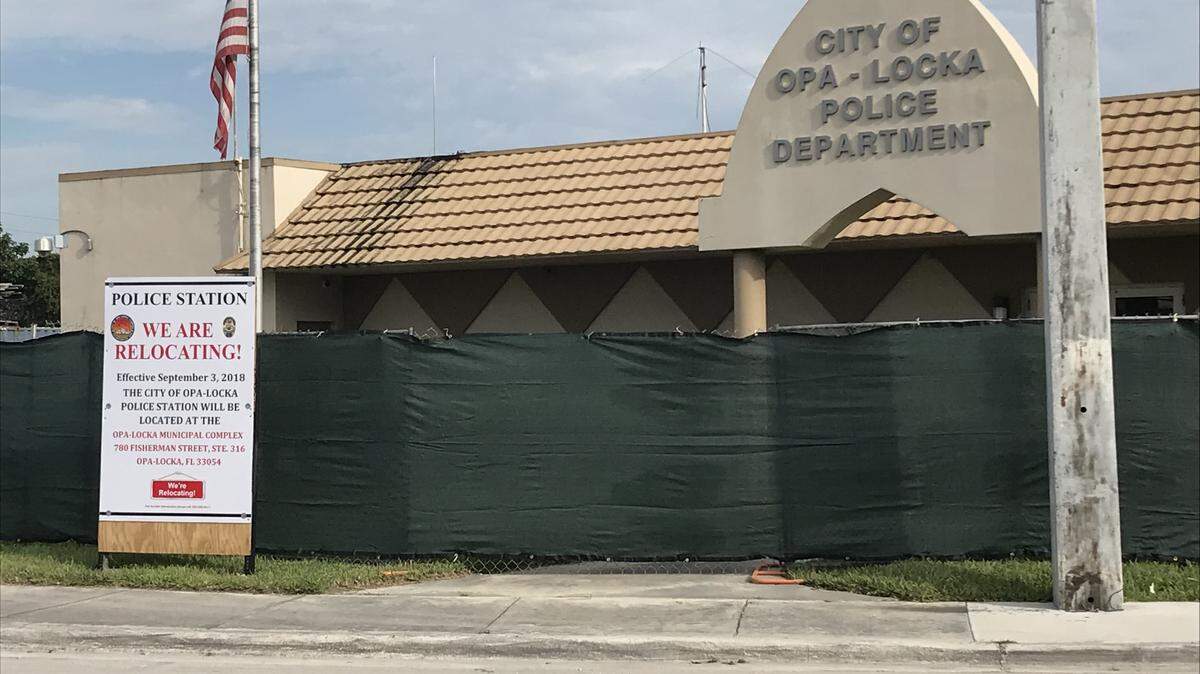
Opa-locka police moved into offices at newly built City Hall more than four years ago, leaving behind a mold-infested headquarters on Ali Baba Avenue with peeling paint and a leaky roof. But they also left behind some important items: like 230 pieces of evidence ranging from battery chargers and bicycles to bloody clothing with bullet holes.
Earlier this month the agency contacted the Miami-Dade State Attorney’s Office and asked prosecutors what to do with the evidence collected from dozens of cases that has been sitting in a non-air-conditioned soggy room for almost a half-decade and that had likely become contaminated and worthless at trial.
In the email, Opa-locka Sgt. Lowrie Simon said that the old shuttered building is set to be demolished by the new year and that the evidence stored in the “blood room” is believed to be contaminated.
“These items are contained in brown paper bags which do not have the integrity to withstand such an infestation as mold,” Simon wrote. “That being said, we believe the evidence contained in that room in its entirety is contaminated and not fit for trial.”
State Attorney Spokesman Ed Griffith said investigators from his office are working with Opa-locka police to determine if any of the contaminated evidence affects any ongoing cases.
“Once the department has tied each piece of evidence to specific criminal cases, evaluated the condition of that evidence and taken appropriate steps to preserve the evidence for court use, we will be better able to assess the overall impact of the situation,” Griffith said.
An inventory of the items in the outdated storage area, provided to the Miami Herald by Opa-locka, shows there are 230 items ranging from the mundane like clothing and cellphones and purses and wallets to the more troubling like knives, baseball bats, a bloody shirt with a bullet hole, blue pants with blood, Taser and ammunition cartridges and six gaming machines and a poker table.
There is also curious material like Life Savers and Peanut M&Ms.
What the list sent by Opa-locka doesn’t provide is accompanying information explaining where or how the evidence was obtained. It does list what it says are case numbers.
Opa-locka Police Chief Scott Israel wouldn’t venture to guess whether any of the possibly contaminated evidence was from any cases that remain open. But he said he was fairly certain the vast majority of them have long been closed. He said most serious crimes that occur in Opa-locka — like sexual battery and homicide — are investigated by the Miami-Dade Police Department, which gathers its own evidence.
“We have not put any evidence in that building in years,” said Israel. “But we have asked the state attorney to let us know if any cases are still active. And if they say no, how we should destroy the material and move forward. If a case is alive, we will check to see if the evidence meets prosecutorial standards.”
According to Israel, all evidence collected by Opa-locka police the past four years has been stored in a clean, air-conditioned and safe evidence room in City Hall where police now gather. Israel, who was appointed chief in May, said he had no idea why the evidence wasn’t moved four years ago when the department cleared out of the older building.
Opa-locka’s beleaguered police department has been dealing with money woes and scandal for decades. A 2018 Miami Herald story about the shuttering of the old police building was filled with grievances from police officers upset with low pay, outdated equipment and old used police vehicles. The agency was forced to lay off about a quarter of its staff in 2016 when a state financial oversight board imposed austerity cuts to try and salvage the city’s budget.
Though the city has bought several new police cars since then and officers are now in a newer facility, debilitating political squabbles and scandals remain. Israel is the city’s fifth police chief since James Dobson was fired in 2020 for not implementing reforms recommended from a consultant. One of the city’s highest-ranking officers has been suspended with pay for several months and another has been suspended after being transferred to code enforcement.
The agency is also being investigated by the Florida Department of Law Enforcement over a 2020 incident in which police were videotaped dragging a bound teen suffering from mental illness, very roughly, down a flight of concrete stairs. The family of Jafet Castro, now 21, has filed a civil rights lawsuit in federal court against the officers and the city.