
Investors say Miami crypto whiz kid took them to the cleaners
Alberto Rivera’s cryptocurrency nightmare began in the most unlikely of settings: a Cub Scout camping trip.
He says another scouting dad, Ryan “Brody” Crawford, was cooking breakfast for the pack at Camp Elmore in Davie. Rivera says Crawford began regaling him with tales of his crypto riches, how he and his family had made a fortune. He was building a new investment platform that harnessed artificial intelligence to give him and his clients an edge. He was also creating his own crypto coin.
Did Rivera want in?
Almost eight months after that campout, Rivera says he is $11,514 poorer but wiser, if disgruntled - a victim, he told the Miami Herald, of a crypto rip-off separate from the plunge in the price of most cryptocurrencies. He is not alone.
Led by Rivera, self-described victims - including two who filed suit and won substantial judgments - and others claim collective losses to Crawford in excess of a million dollars.
Rivera has produced a website dedicated to Crawford. It is not flattering. It screen-shots Crawford’s promises (Example: “Help me with 2K Eth [Ethereum, a form of cryptocurrency currently worth $1,800 and change, down from $4,700 a year ago] I am bringing you 190K cash and the check should clear soon called e trade all good”).
Rivera’s website encourages Crawford’s clients to report him to the FBI and the SEC, just as he himself has done.
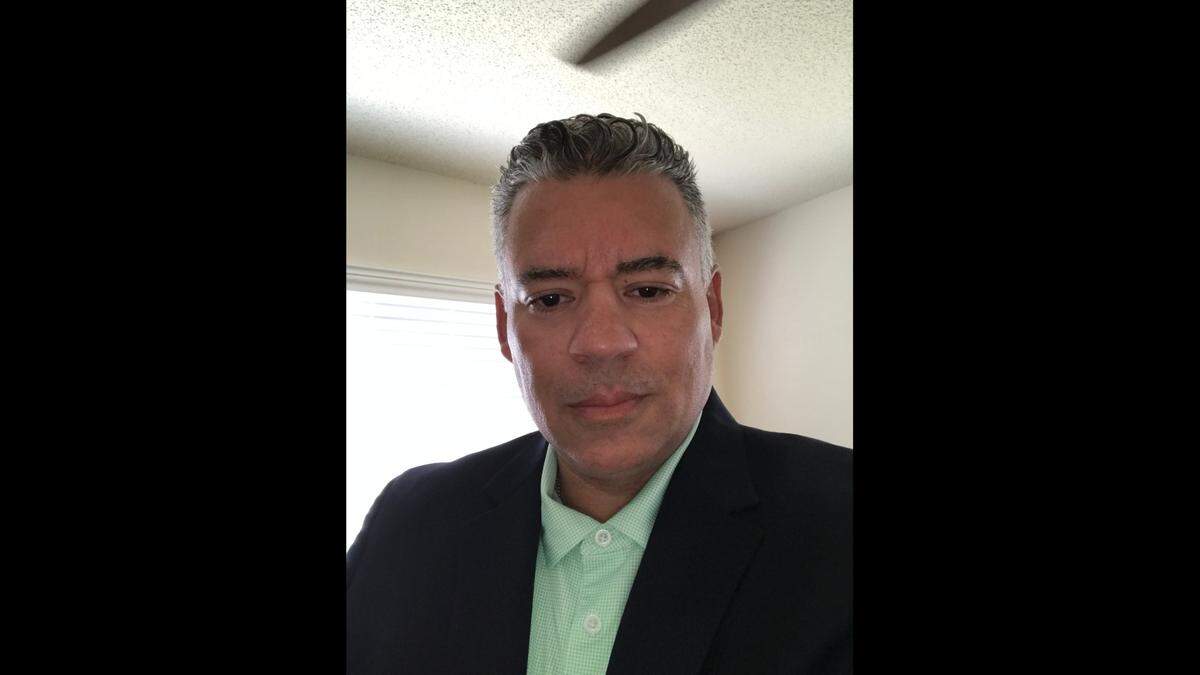
Crawford has been criminally charged with nothing, except for a domestic violence arrest in March that was later dismissed. He was recently hit with the lawsuits after writing bad checks to burned clients on a closed bank account for $140,000, $50,000 and $16,000. He was sued in a separate eviction proceeding for $60,000 in back rent on his Brickell Key apartment and he has told at least some investors he is homeless.
Many investors in crypto, the digital currency, have taken a bath in recent years. Take the case of Bitcoin, which has lost half its value in the past year, far worse than the wobbly stock market. That’s the nature of investments. Sometimes they go down.
But perhaps because cryptocurrency has had such dizzying climbs, leading people to believe they are missing out on the party if they don’t jump in, some have joined the frenzy and can fall prey to shady operators.
Is Crawford one of those? Crawford texted one of his accusers, who was angry at not receiving promised payments, and Crawford admitted that he had “lived a lie.”
“My redemption story is going to be the greatest comeback to right all my wrongs in history it will really be,” the text read. “All I can do now is tell the truth and hope and pray that you will forgive me and one day I will make it right for you.”
After he lost a six-figure sum, purportedly belonging to a group of football players, he made a video expressing sorrow and shared it on WhatsApp. “Yo, dudes,” it began, leading to “I’m really sorry.” He offered to arm them with some of his trading tips, albeit the same ones that had blown their $140,000 investment.
Crawford, 29, is a quintessential South Beach character who has cultivated a stylish persona on social media, buttressed by photos of him surrounded by a bevy of models, the brim of his cap askew, like something between the Fresh Prince and Flavor Flav. In a video posted online, he zips along a South Beach dock on a skateboard, narrating footage that appears to have been shot by a GoPro camera mounted on his head. In another video, he twirls and struts at poolside in the trademark tilted cap. Draped in a Dolce & Gabbana cheetah-print shirt, he predicts, “We’re going to take over the world!”
Paul Sibenik, lead case manager with blockchain forensics investigative agency CipherBlade, told the Herald Crawford’s trading website is sprinkled with jargon that makes him suspicious.
“It also asserts a variety of claims about the ‘platform’ that simply make no sense from a technical perspective, and thus are merely trying to deceive people into “investing” by using lingo that victims themselves don’t have a solid understanding of,” he said.
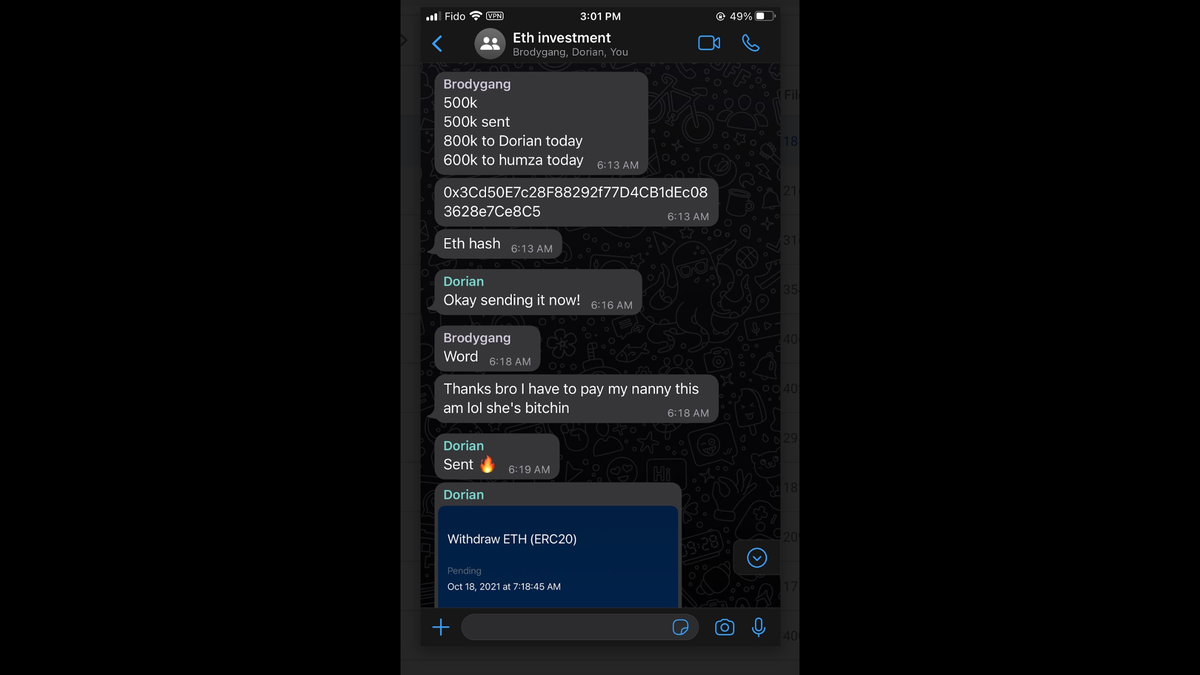
According to the website built by Rivera, Crawford has hoodwinked individuals out of anywhere from hundreds to hundreds of thousands of dollars, after allegedly convincing them to send him money or crypto, to be redeemed with far more valuable crypto. In videos Crawford shows and WhatsApp discussions, he shares screen-shots that suggest vast, seven-figure wealth.
On Dec. 6 of last year, he scheduled a glitzy party at the Seminole Hard Rock to celebrate both his birthday and the birth of his own currency, the “Cheetah Coin,” whose value is currently $0.00000893.
In conjunction with his transactions, he signs “secured promissory notes” that don’t explain what that means, as in how exactly they are “secured.” That’s an important distinction because cryptocurrency is little regulated and those who broker deals needn’t have licenses like, say, stockbrokers. As he often requires payment in advance in cryptocurrency, experts note that when a payment is conveyed via crypto there are few ways to recoup the money, unlike, say, a credit card payment.
Some clients said that when they collected none of the profits he promised, Crawford would simply deny receiving anything from them, leaving them powerless and frustrated.
Court records show that when pressed for repayment by jittery investors, Crawford on at least three occasions wrote checks on the closed bank account.
Accusers say he lined up clients and friends to recruit other customers in exchange for a commission, which is how Ponzi schemes work. Other customers, like Rivera, he met not through recruiters but through social interaction.
In a rambling response to the Herald sent by text, Crawford blamed his problems on a list of factors, including a debilitating bout with COVID-19, pressure from his wife (there is no evidence she is involved), the freezing of his bank account, clients who lie and say they haven’t been paid when in fact they have, “people that were in my group chat [who] crashed the [Cheetah] coin and took all the liquidity out and basically destroyed my company,” and “greedy people [who] took a gamble with me.”
He added: “Everybody loves me when I win for them but they hate me when I lose [and] that’s just the way it goes[.] [B]ut I always told every single person only invest what you are willing to lose.”
The losses, angry clients and irredeemable checks predate the current slump in crypto.
“He showed me his phone with his crypto investments, he showed me all the money he’d made, and I’ve tinkered in crypto, it seemed legit,” Rivera told the Herald.
Rivera said it wasn’t until a couple of weeks after the Cub Scouts encounter that Crawford — whose social media is rife with photos of himself riffling through fat stacks of cash — reached out, asking him to invest in his new platform. The deal, documented in a WhatsApp exchange between the two men, was a cryptocurrency swap. Rivera was to send Crawford two units of the digital currency Ethereum, which at the time would have been worth $8,335 combined, to invest in Crawford’s new trading platform. In return, Crawford promised Rivera that he would send him two Bitcoins, at the time valued at nearly $60,000, within a few days.
The Federal Trade Commission cautions against doing business with anyone who demands payment in crypto in advance. It also cautions people not to conduct crypto business with those promising fantastical returns, citing the axiom that if it sounds too good to be true, it probably is.
Nonetheless, Rivera said he sent Crawford the Ethereum as instructed, as well as an additional $3,000 through the digital payment network Zelle and $180 through PayPal. But the promised return on his investment never showed up. Instead, he told the Herald, he got excuses.
“After he ran out of excuses, he became harder and harder to reach,” Rivera told the Herald. Eventually he stopped picking up the phone altogether, only texting back once every few weeks.
Rivera reported Crawford to the Securities and Exchange Commission (SEC) in February 2022, as well as the Internet Crime Complaint Center (IC3), a division of the FBI that investigates internet-facilitated criminal activity, laying out the same allegations contained in this story. But he told the Herald that he never heard back from either agency.
Rivera is not the only one making allegations. Steve Arpaia, who lives in Charleston, South Carolina, told the Herald Crawford scammed him out of around 100 Ethereum, in the aggregate worth somewhere between $250,000 and $300,000, using the same proposed Ethereum-for-Bitcoin swap that enticed Rivera.
Crawford’s AI-run trading platform seemed both feasible technologically and — being unique — incredibly lucrative, Arpaia told the Herald. Arpaia, who said he reported Crawford to various police departments, members of Congress, the Federal Trade Commission and the FBI, among others, said he met Crawford on a group chat of friends he shared investment tips with, and believed because Crawford had gained entry to the by-invitation-only group he had been vetted.
“I had some FaceTime conversations with him face to face to verify he was who he said he was. But I didn’t really do a whole lot of research,” he told the Herald. “I just assumed that he had been vetted because he was in this chat room that was full of other friends. Looking back I wish I had spent a little bit more time investigating.”
Crawford told the Herald that he came from a well-to-do family and was given a substantial trust fund, but that he depleted it giving money to charity, saving some of what remained for his children.
Most of Crawford’s accusers met Crawford through a friend or acquaintance, which they said gave them a false sense of security.
“Before I sent him any money, we signed a promissory note on DocuSign. And while I may have harbored some doubts before, that legally binding contract was kind of the icing on the cake for me,” said Humza, a Miami resident who asked to only be referred to by his first name. He said he entrusted Crawford with $75,000 and lost nearly all of it.
%20(1).png "Screen Shot 2022-05-30 at 10.45.23 AM (1) (1).png")
“I was like, no one is dumb enough to send a DocuSign to someone and then just fall back on it, because later on he’s legally obligated to pay it back.”
Miami-based lawyer Jacqueline A. Salcines represents several individuals who have accused Crawford of cheating them. This includes the three current clients who sued, including the two who have won legal judgments. She said she has been contacted by 15 individuals from multiple states who are still waiting to meet with her.
Salcines told the Herald that she has personally reported Crawford to the FBI, as have several of her clients and other accusers who spoke to the Herald, including Rivera. However, none of them have heard back. And according to Salcines, the lawsuits and accusations have not slowed Crawford down.
“He’s not scared at all,” Salcines told the Herald. “Even after the suits were filed, he continued to try to lure my clients to give him more money and continues to obtain more money from innocent people. He is very savvy that way and knows exactly what they want to hear.”
Others have not pursued lawsuits because they fear it will be ineffective, or the legal fees will amount to more than the money they lost. Indera Seudath is one of them.
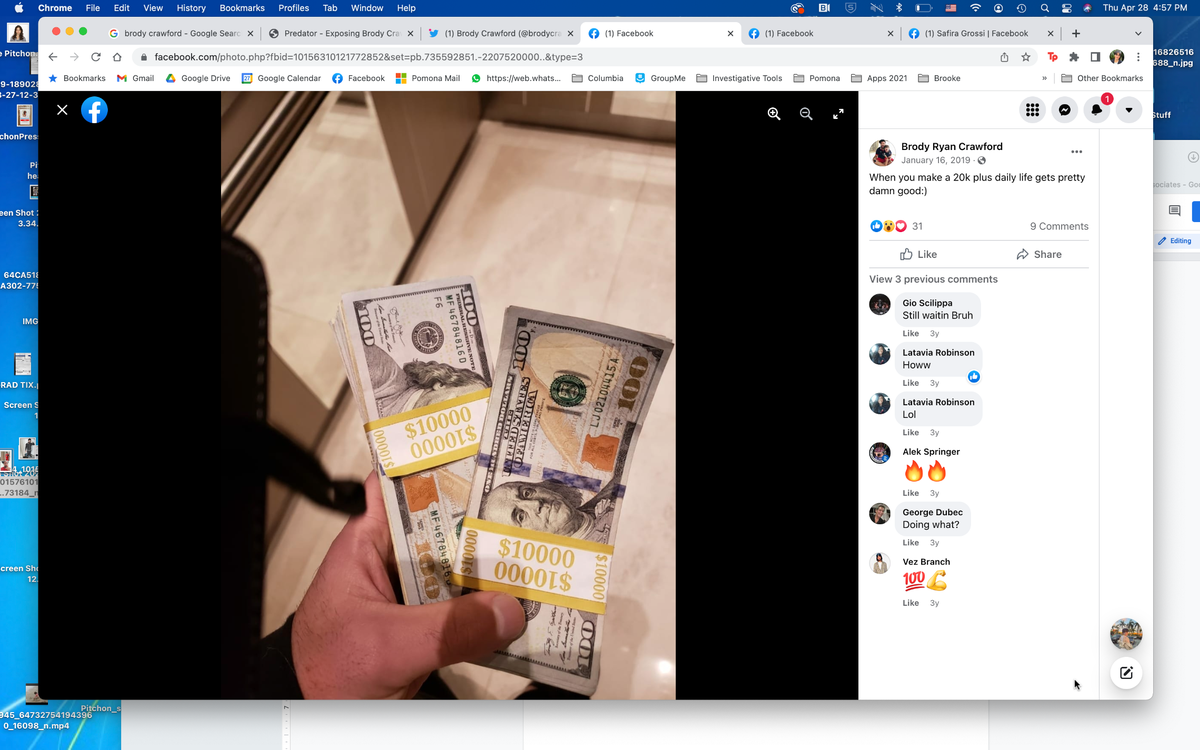
Seudath said she met Crawford in 2021 through a friend she had known for several years. Her friend told her that he had done some investing with Crawford in the past and that it had gone very well. She trusted her friend, so when Crawford asked Seudath to send him roughly $40,000 in Ethereum and in exchange he’d give her a payout worth several times that in a few weeks, she took a leap of faith, she told the Herald. But the payout never came.
“Weeks went by and he kept saying he was going to pay but he never did. All he did was ask for more money,” Seudath told the Herald. “Then he started talking about this big party on December 5, where he was supposedly going to launch his own cryptocurrency, Cheetah Coin, and he would pay everyone. And we were all so excited. But December 5 came and went and nothing happened.”
Crawford’s social media is filled with mentions of the launch party for the exchange, which he refers to as “Cheetah Exchange” on several Facebook posts. A poster for the party that Crawford posted to Facebook in November 2021, which advertises the event as both a launch party and birthday celebration for himself, lists the location as the ballroom of the Seminole Hard Rock Hotel and Casino near Hollywood.
_fitted%20(1).png "Screen Shot 2022-06-01 at 6.55.02 AM (1)_fitted (1).png")
“Fraudsters like him are popping up all over town and my clients innocently believed what he was saying because he worked so hard to make it all believable, Salcines told the Herald. “They have lost millions of dollars to him and likely will not ever recover a penny.”
Salcines blames jurisdictional issues, asserting that Crawford has spirited money out of the country, out of reach of regulators.
NBC6 asked crypto experts at ERMProtect Cybersecurity Solutions in Coral Gables to try to follow the money. They said they tracked $1.2 million to the Seychelles Islands, an African archipelago and tax haven beyond the jurisdiction of U.S. authorities.
Seudath told the Herald that as much as she would like to have her money back, and as much as the financial burden of the loss has impacted her family, she is not sure that they will be able to get their money back anytime soon.
“My husband is still mad at me,” she told the Herald. “But I said to him it’s already done. You can’t cry over spilled milk. It’s life.”
Sibenik, too, is skeptical about the possibility of Crawford’s accusers ever recovering funds. As crypto activity — and crypto-related crimes — have increased in recent years, law enforcement has had to be selective about which cases they take on, Sibenik told the Herald.
Zach Grashin, who says he invested just under $2,000 with Crawford in November 2021 and lost it all, agrees. He told the Herald he invested after a friend convinced him the deal was too good to pass up.
“It wasn’t an insane amount, thankfully, like other people. It was a rent check gone,” Grashin said.
He doesn’t believe he will ever see his money again.
“I guess that’s the price you pay when you think you could be a millionaire for $2,000.”
Crawford keeps talking like he’s on the cusp of a comeback.
“Maybe I’m waiting for crypto to finish crashing and then going to send money back to everyone after I’m done sorting it out and then everyone has their money back plus some of the Best Prices,” he said in his last text to the Herald.
“And then, everyone wins in the end.”
Correction: This article originally stated that NBC6 “hired” a cybersecurity company in an effort to track the movement of Brody Crawford’s proceeds, suggesting the firm was paid for its analysis. ERMProtect Cybersecurity Solutions did the work pro bono.
This story was originally published June 5, 2022 at 6:30 AM.