
NFL players accused David Coriaty of betrayal. So did his fiancée and her parents
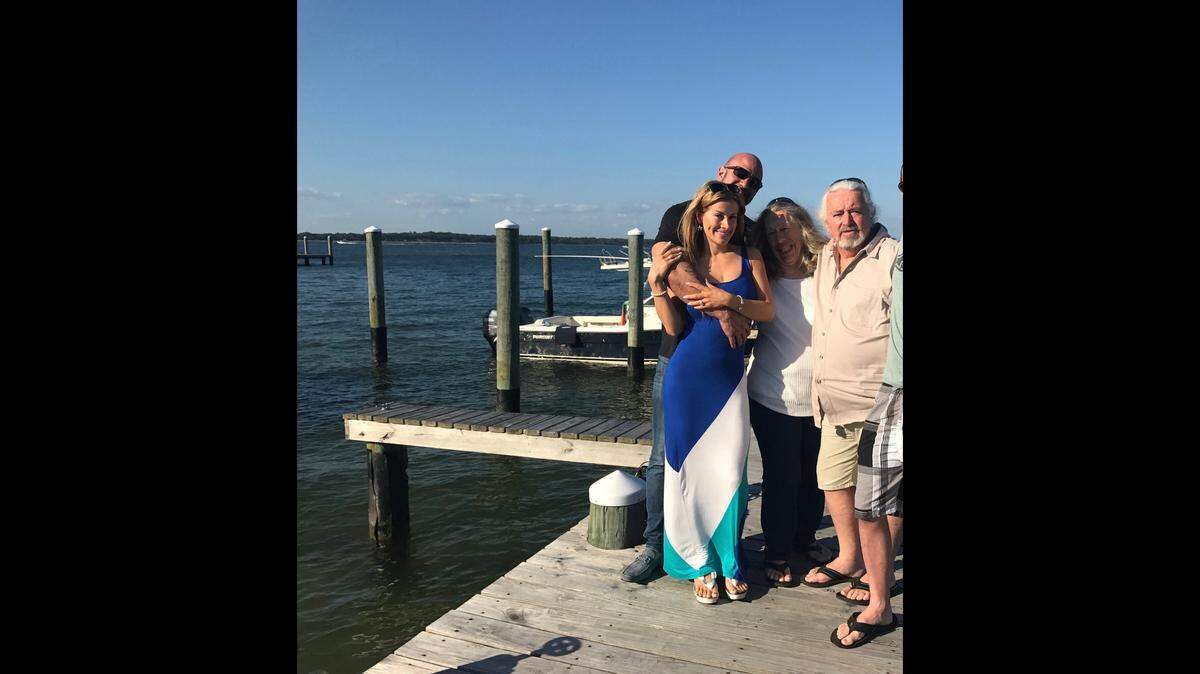
When Rachel Ehrenreich met David Coriaty in May 2016, she had a six-figure salary with a pharmaceutical company and an 816 credit score. They started dating in August 2016. She says he asked her to quit, promising her a more flexible job with him that would pay $200,000.
But after jettisoning her career and joining the man she thought loved her, the job offer evaporated. she says. She earned “not a single penny,” and by 2019 was unemployed, debt-ridden and struggling with PTSD.
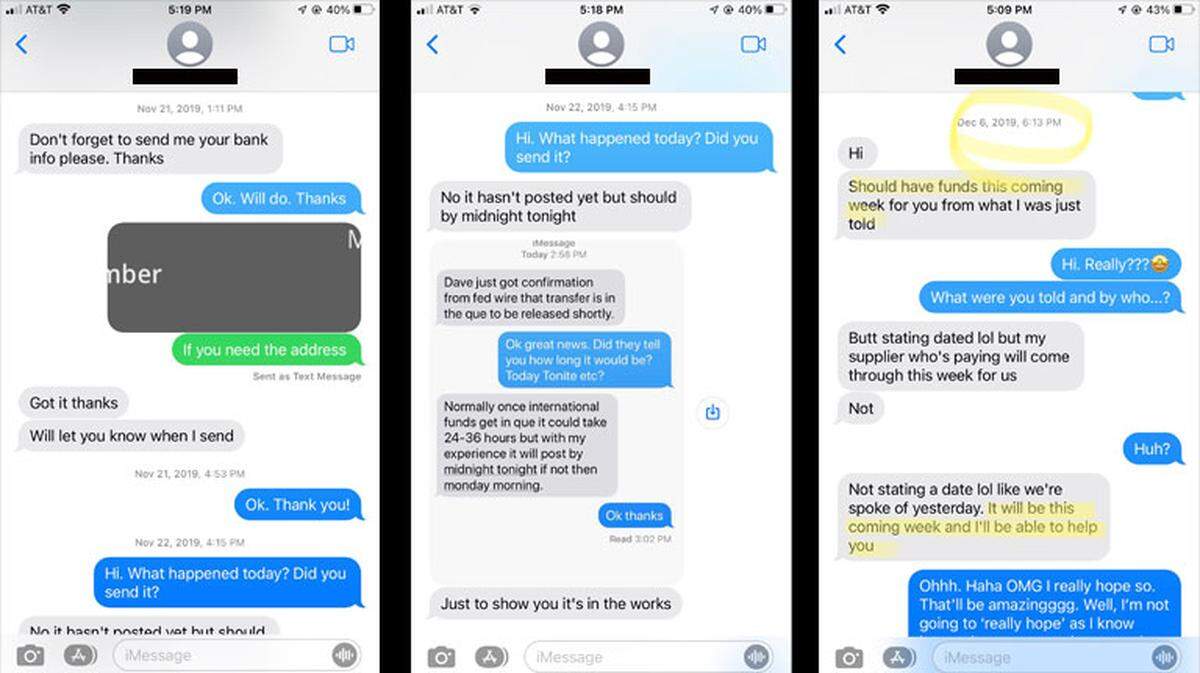
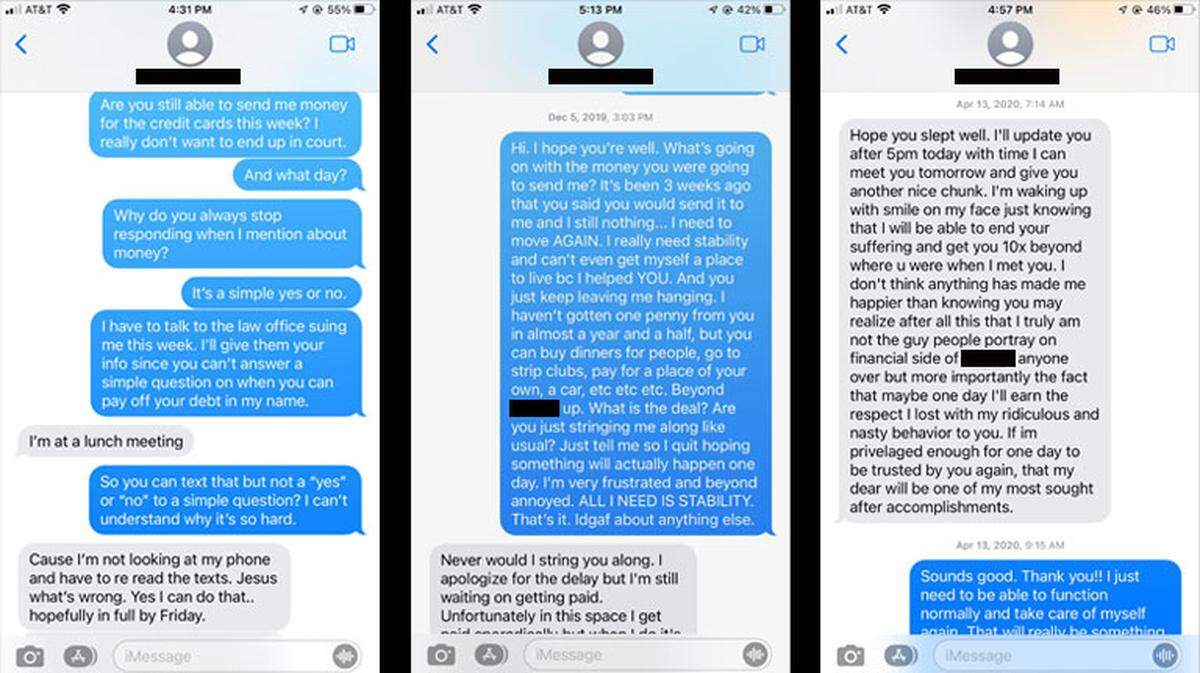
According to Ehrenreich, Coriaty rang up $66,000 in credit card debt on her accounts during their three-year-plus relationship. He denied it in an interview with the Herald, but she shared his repeated texts promising to pay her what he owed. The amount was never specified in the texts, but in one he apologizes to Ehrenreich over her finances being destroyed.
He also convinced her parents to invest with him, she says. They lost big.
Over a two-decade business career, Coriaty has been accused in litigation and police reports of spending tens of millions of investor dollars on luxury cars, Las Vegas junkets, chartered flight, luxury box tickets, expensive jewelry and gambling debts while never producing a product line, delivering paid-for goods or providing a return on investment on stock shares that are now worthless. His investors have included high-profile NFL players — so many that the league issued an advisory urging players to be wary.
Despite investigations by the FBI, the Securities and Exchange Commission and the Palm Beach County Sheriff’s Office, whose detective swore in a deposition that Coriaty’s operation had the earmarks of an illegal Ponzi scheme, Coriaty has never been charged with the crime of fraud. The deposition was taken as part of a slander lawsuit filed by a Coriaty ally against one of his critics. The lawsuit was dismissed.
Those probes mostly involved arms-length transactions. Ehrenreich and her father and mother, John and Maggie Ehrenreich, say they are an example of how Coriaty coaxed those closest to him to part with their money — and how, in their view, he abused their trust. They offer reams of back-and-forth text messages as evidence of their claim. Ehrenreich’s uncle, a disabled veteran named William “Chip” Jackson, filed a police report in Pettis County, Missouri, where he’s from, saying he’d been “defrauded of $15,000.” A string of texts between the two men show Coriaty promising Jackson over and over he’d be getting his money back imminently. It never happened.
Jackson wasn’t the only person to file a police complaint. Rachel Ehrenreich filed one too, with police in Miami Beach, where she lived. Nothing came of either report.
Texts between Rachel Ehrenreich and Coriaty show her repeatedly asking when she would be repaid and Coriaty insisting it would be another day or two. It went on for months and eventually years passed. No payments were made.
In an interview with the Herald, Coriaty said he planned to pay back the family and a family friend of theirs who also invested with him within 10 days of the conversation with a reporter — but 10 days came and went and he didn’t.
In a subsequent string of emails sent to the Herald reporter, Coriaty said Ehrenreich’s credit card debt was mostly hers anyway and that whatever small amount he owed her he paid “three times over.”
No fairy tale ending
“It was right out of a fairy tale at first,” Ehrenreich said of the beginning of the relationship. “He was romantic and attentive and affectionate and very loving. And I just remember thinking, ‘Wow, I never knew it could be like this.’ ”
He knew she was very close with her family, Ehrenreich told the Herald, and he traveled with her to visit her parents several times in the following months. He played dominoes with her mother and bonded over sports with her father.
“Within the first two months after we started dating, he started mentioning that he was a really successful businessman and he was doing business with all these important people and big-name companies,” said Ehrenreich. “He was constantly taking business calls or going to important business meetings and throwing money around so it all looked really legit. There was no reason not to believe him.”
Coriaty told Ehrenreich about his company, PROCAP Investments, and the cutting-edge biometric technology it was developing. The technology was supposed to enable users to start their car without a key, while preventing anyone else from cranking the engine. It was already big, but it was going to be huge, she said he told her. Soon after, Coriaty’s credit card problems began.
Why would a successful entrepreneur, one surrounded by Lamborghinis and private jets, need to use his girlfriend’s credit cards? Especially after Coriaty had shown Ehrenreich a bank statement indicating he had over $20 million in his accounts?
She said Coriaty came by one day distraught and told her that his bank account had been temporarily frozen due to some sort of business misunderstanding. He had his lawyers working on it, and it would be resolved any day, he assured her. In the meantime, Coriaty asked if she could put him on her credit cards, Ehrenreich said. She agreed. A letter from Bank of America, examined by the Herald, confirmed that Coriaty was an authorized user of Ehrenreich’s with
Bank of America’s credit card.
Soon after, Ehrenreich’s parents decided to retire and sell their business, Bonifay Water Sports, in Gulf Breeze, near Pensacola. They had built it from the ground up, starting in the 1970s.
“I got off the phone with my parents and Dave was there and I told him, oh my gosh my parents just sold their business. And he just got this look on his face. ... And just a few weeks later he started talking about wanting to get married,” Ehrenreich told the Herald. “But he wanted to be a gentleman about it and ask my dad in person for permission to marry me.”
Marriage and money
“That’s when he first brought up the investment opportunities to my parents, and then to my uncle.”
Coriaty asked Ehrenreich’s parents and her uncle to invest in his company shortly after asking her father for permission to marry her, according to Ehrenreich. He told them it was for their sake, the Ehrenreichs told the Herald. He loved their daughter and wanted to take care of her, and they were going to be family now, so he would take care of them, too. All they had to do was invest with him.
Her parents gave Coriaty $250,000 of their retirement savings — the money they had received from selling their business — over the next few months, starting in March 2017, the Ehrenreichs said. Her uncle invested $15,000 — most of his and his wife’s retirement funds.
But as weeks turned into months and eventually years, the returns that Coriaty had promised never materialized. Nothing did. Meanwhile, she said, he was making use of Rachel Ehrenreich’s credit cards, running up tens of thousands of dollars of debt on everything from rental cars, to expensive dinners to strip club outings for himself and his friends. Month after month, he promised Ehrenreich that his financial difficulties would be resolved soon and he would pay her back. He never made good on his promise, she said.
When reached for comment, Coriaty said that Ehrenreich may have added him to her credit card, but denied accumulating the mountain of debt that Ehrenreich describes. Ehrenreich sent the Herald screenshots of texts from Coriaty over the course of two years — spanning 2019 to 2021 — in which he apologizes and takes responsibility for the credit card debt, promising to pay her and her family back as soon as possible.
In the interview, Coriaty told the Herald that he did owe money to the Ehrenreichs. In the March 17 interview, he told the Herald that he would pay them back everything by March 27. That deadline came and went.
Over the arc of Ehrenreich’s relationship with Coriaty, as Rachel started asking more frequently and insistently about the money, Coriaty would go from promising her he was about to pay her back one day to admonishing her to stop badgering him the next, texts show. Why get worked over such a small amount, he told her, when he had millions of dollars coming in?
Crushed by financial problems, Ehrenreich had to move in with her parents — first briefly in October 2018, and then again permanently in April 2019, she said.
When a Miami Herald article was published in late August 2017 detailing previous complaints against Coriaty, Ehrenreich said he met her in tears. They had been together for a year and were by then engaged. He broke down, Ehrenreich said, sobbing and telling her that everyone would now think he was a crook and his life was ruined.
A big misunderstanding
It was all a big misunderstanding, she said he told her. He had a vindictive former business partner who was trying to slander him and everyone was buying his lies, he assured her.
“Looking back, it was really masterful because the way he lied, he made you feel really bad for him. He made you think he was the victim,” Ehrenreich told the Herald.
She said it was then that Coriaty began going by a new name, David Columbo, which is the name that appears on caller ID during a phone conversation.
In the interview with the Herald, Coriaty confirmed the name change, but said it was because his surname had been muddied and it was impossible to do business.
Ehrenreich never sued Coriaty, just filed the report with the police in Miami Beach PD, where she lived, detailing her accusations against him.
Ehrenreich, who is no longer romantically involved with Coriaty, said neither she nor her parents ever sued because “getting that money from him would be very difficult as he would just file bankruptcy.”
“The money it would take to pursue him isn’t something I’ve had since he destroyed my life.
“It might sound ridiculous that it took me so long to leave, but I really thought he loved me,” Ehrenreich told the Herald. “We had names picked out for our future kids. The wedding dress I was going to wear to marry him is still sitting in my parents’ house to this day.”
A 2011 deposition by Coriaty’s former executive assistant details an account similar to Ehrenreich’s, but with a different woman, one Coriaty dated a few years earlier. In the sworn statement, Coriaty’s former executive assistant describes witnessing how Coriaty told his then-girlfriend — her roommate — that he wanted to marry her, met her parents, and eventually got her friends and family to invest in his business. At the time, the business was called Hawk Enterprises, but it purported to be in the same biometric technology business.
That deposition was in a lawsuit by a disgruntled investor and director who called the business a Ponzi scheme.
Ehrenreich told the Herald she is grateful that her parents didn’t hand over more of their retirement savings, although she says he tried to get them to do so.
“He took every penny, every resource he could get from me — and only then, only when I had nothing left to take — he let me go,” she said. “And he didn’t even think twice about it.”
This story was originally published April 10, 2022 at 6:30 AM.