The challenge presented to Ghislaine Maxwell jury: 4 accusers and a wide array of charges
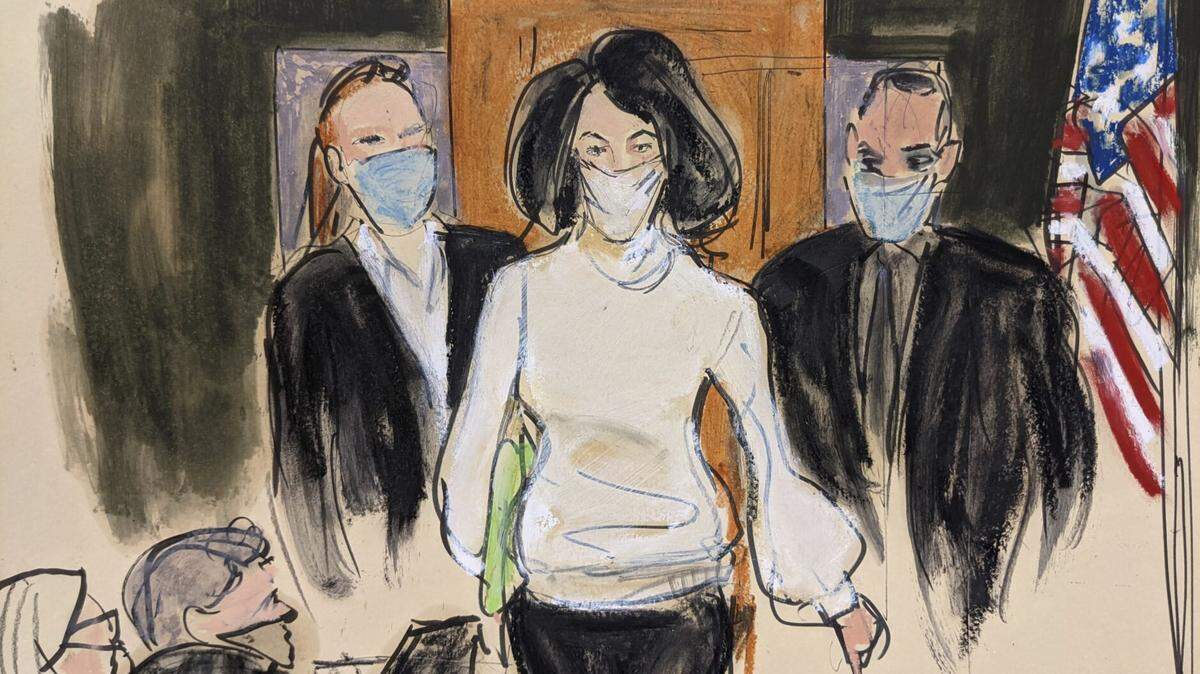
The biggest challenge in the Ghislaine Maxwell case may not be in deciding whether her accusers are credible or even whether the evidence is provable, but whether the jury will be able to grasp the complicated criminal counts under which Maxwell is charged.
On Monday, the prosecution and defense summarized their cases against Jeffrey Epstein’s longtime girlfriend and alleged procurer of underage girls, with each side putting its own spin on the various components of the crimes. Then U.S. District Judge Alison Nathan charged the jury — meaning she explained the underlying elements of the charges that must be proven beyond a reasonable doubt.
Maxwell, 59, faces six counts involving four different accusers, and each count carries its own penalty, ranging from five years to 40 years. Three of the counts are conspiracy counts, two are substantive counts and one is a sex-trafficking count. The key to the case is making sure the jurors understand the elements of each charge.
“This is not a typical indictment,’’ said Jill Steinberg, a former assistant U.S. attorney and Justice Department official who has handled hundreds of child exploitation cases.
“This is very complicated — so complicated that even a lawyer who doesn’t do this kind of work would have a hard time understanding it,” she said.
“Juries are lost when it comes to charges because there is so much legal wrangling that goes into the charges and they are filled with such legalese — it’s often devoid of common sense,’’ said Francey Hakes, a former federal prosecutor who specialized in crimes against children.
The Miami Herald asked Steinberg, Hakes and David S. Weinstein, another former federal prosecutor, to help make sense of the counts that the jury has to consider, and what the jury must agree on to convict — or acquit — Maxwell.

Here are the counts:
Count One: Conspiracy to entice minors to travel to engage in illegal sex acts. This count involves the alleged abuse of multiple minor girls from 1994 to 2004. Maxwell is charged with conspiring — that is, agreeing with others — to entice an individual to travel across state lines to engage in sexual activity. The alleged offense, in this case, is that Maxwell helped facilitate the crime of transporting minor victims. She can be found guilty even if the sex acts didn’t ultimately happen, Hakes explained.
“This essentially means that they planned it, and she is part of the plan and she helped him plan and carry out the scheme,” Hakes said.
Said Steinberg: “Under the law, even if no [sex] crime was ultimately committed, the person who was part of planning it is just as guilty as those who executed the crime.”
.jpeg "download (96).jpeg")
Count Two: Enticement of a minor to travel to engage in illegal sex acts. This charge is known as a “substantive count” and pertains to just one accuser, “Jane,” who alleges that Epstein and Maxwell flew her from Florida to New York when she was 14 to engage in sex acts that were in violation of New York’s state penal code. This means that she was under the age of 17 (the age of consent in New York) when the sex acts allegedly happened.
“They have to find, in order to convict Maxwell of this count, that she aided or abetted — or committed the offense herself — that she coerced the minor to travel in interstate commerce,” Weinstein said.
The jury must find that Maxwell persuaded or induced “Jane” to travel to New York for the intent of engaging in sexual activity that is a crime in New York.
Count Three: Conspiracy to transport minors with intent to engage in criminal sexual activity. This is another conspiracy count, to transport minors with the intent to engage in illegal sex acts, Weinstein said. “In other words, it’s what did Maxwell do to get someone [under the age of 17] to get from point A to point B.” Prosecutors, again, do not have to prove that the crime that was planned was ultimately committed, just that Maxwell was part of the conspiracy.
Count Four: Transportation of a minor with intent to engage in criminal sexual activity. This involves a person who “knowingly transports any individual under the age of 17 in interstate... commerce... with intent to engage in a criminal offense.” This charge relates only to “Jane,” who testified that she traveled on Epstein’s private plane with Epstein and Maxwell to New York, where she was allegedly sexually abused at the age of 14.
Maxwell would have also had to know that “Jane” was underage at the time they traveled.
Hakes said the government doesn’t have to prove that Maxwell personally transported Jane to travel.
“Under federal law, if you aided and abetted a crime you can be punished exactly as though you committed every part of the crime yourself. So if she helped Epstein transport this person, it’s as if she did it herself,” Hakes said.
Count Five: Sex trafficking conspiracy. This involves acts from 2001 to 2004 in which Maxwell, Epstein and others allegedly agreed and conspired to traffic someone under the age of 18 for the purpose of paid sex acts.
“For the conspiracy here [to exist], there [must be] agreement between Maxwell, Epstein and others to traffic the girls — for girls to be brought to him to be paid,” Steinberg said. “Sending her lingerie, the giving of gifts, proves there is an underlying conspiracy to commit the crime.” Here, the government must prove that Maxwell knowingly and willfully entered into an agreement with a purpose to violate the law.
Count Six: Sex Trafficking of a minor (under the age of 18). This charge pertains to “Carolyn,” who testified that between 2001 and 2004 she was enticed and recruited to engage in commercial sex acts. “To be guilty of this count, Maxwell would have to be directly involved and participated in the act of sex trafficking,” Weinstein said. Prosecutors would have to prove that Maxwell knew that “Carolyn” would be paid. It is not relevant whether the sex was consensual because “Carolyn” was under the age of 18.
This story was originally published December 20, 2021 at 8:18 AM.