Gus Boulis’ epic story — immigrant, tycoon, mob-hit victim — features one final dark twist
If you lived in Miami in the ‘90s, you’re bound to have heard of Konstantinos “Gus” Boulis. Yes — that Gus Boulis. Miami Subs founder, SunCruz Casinos tycoon Gus Boulis. Rose from humble origins in a tiny Greek fishing village to making a fortune Gus Boulis. The same Gus Boulis whose life was shockingly cut short in a 2001 mob-style hit that caught the attention of the world.
The mystery of who killed the famous businessman was seemingly solved in 2005, when three men — the colorfully nicknamed Anthony “Little Tony” Ferrari, James “Pudgy” Fiorillo and Anthony “Big Tony” Moscatiello — were charged with orchestrating his murder. But the Gus Boulis story was far from over when the trial ended. Rather, it was years later that some of the biggest tragedies surrounding his life and death — rooted in greed, lies and family betrayal — would begin to unspool.
Because Boulis left behind two young sons in Florida.
Now, two decades later, the brothers are tangled up in a bitterly fought court fight with their father’s cousin, Spiro Naos, the man Boulis placed in charge of his sons’ life-insurance trusts in the event of their father’s death.
Boulis’ sons saw Naos as a surrogate father after their dad was murdered, they told the Herald. They trusted him. Unfortunately, that made it that much easier for Naos to, according to court records, loot hundreds of thousands of dollars from their trusts. Today, the now-adult brothers are struggling to retrieve the money, but they are hesitant to seek criminal charges against the man they once loved and trusted.
Up from poverty
Gus Boulis was born in Kavala, in northern Greece, on April 6, 1949. His father was a fisherman, and he was one of four children. But when his brother Panagiotis “Peter” Boulis died tragically in an electrocution accident, Boulis, 16 at the time, found it difficult to stay in Kavala with the memories of his brother haunting his hometown.
In 1968, at 19, Boulis left for Halifax, Nova Scotia, where he began washing dishes at a Mr. Submarine restaurant. Within six months, his hard work and seemingly endless drive had landed him a position as a partner at the restaurant.
Three years after arriving in Canada, Boulis met a 16-year-old — also from Kavala — at a dry-cleaning store. One week later, they were married. Gus and Efrosini “Frances” Boulis would go on to have four children, raised by Frances in Greece while Boulis began working on business ventures across North America. While never officially divorcing, they would separate in 1976.
Boulis’ business ventures flourished. In 1980, he moved to Florida, where he met 18-year-old Margaret Hren. The two hit it off immediately, and Hren took out a $50,000 loan to help Boulis launch a restaurant business. The couple renovated a dilapidated restaurant in Key West, which would later become the very first Miami Subs. That single restaurant would grow into a flourishing chain that dotted 16 states as well as Puerto Rico, the Dominican Republic, Ecuador and Peru.
The couple would go on to have two sons, Aristotle and Alexander, but would separate soon after.
Boulis may have been best known for his “floating casinos.” In 1994, the businessman — already rich thanks to Miami Subs — founded SunCruz Casinos. The business model was simple: a “cruise to nowhere” that would transport passengers into international waters, beyond the reach of federal and state laws, which then banned most gambling on dry land.

It was more popular than Boulis could have imagined. Within a few years, the SunCruz casino line became Florida’s largest casino boat operation, comprising a fleet of 11 luxury gambling yachts. But as SunCruz generated a fresh fortune, the company — and Boulis — gained unwanted attention from the government.
In 1999, federal authorities filed a complaint against Boulis, citing an obscure law — the Jones Act of 1920 — requiring that fleets such as Boulis’ be owned by American citizens. While Boulis had become a citizen in 1997, the complaint alleged that he had purchased most of his ships before then. By February 2000, Boulis agreed to pay $1 million in fines, sell SunCruz and leave the floating-casino business.
Boulis’ fame, charisma and drive often made him a larger-than-life figure to those who knew him. On the one hand, Boulis was well-known as a generous man who would regularly give large donations to charity and the Greek Orthodox Church he attended. But he also had a temper, those who knew him said. Boulis was sued by a number of business partners who accused him of cheating them, and in 1997, his estranged wife Frances would obtain a restraining order against him.
That same year, Hren — from whom he had become estranged — would accuse Boulis of beating her, contacting her incessantly and threatening to kill her. She, too, obtained a restraining order against him in October of that year — an order he would be accused of violating multiple times.
In September 2000, Boulis sold SunCruz to Washington, D.C., businessmen and political figures Adam Kidan (founder of Dial-A-Mattress) Jack Abramoff (an influential lobbyist) and Ben Waldman for just under $150 million. But by December, the agreement had turned sour. Boulis accused Kidan of faking wire transfers and cheating him out of payment for SunCruz. (Kidan and Abramoff would eventually be indicted for wire and mail fraud in 2005.) A December meeting between the men ended in a wrestling match, the Sun Sentinel reported, in which Kidan said Boulis stabbed him with a pen and threatened to kill him.
Just a couple of months later, on February 6, 2001, Boulis was driving home from his office in Fort Lauderdale when a car cut him off and slowed to a stop in front of him. Boulis was forced to stop too, and a black Mustang pulled up alongside his BMW. A window of the Mustang rolled down and three shots were fired into Boulis’ car.
Robert Puskarich, a witness who happened to be in the car behind Boulis’, testified in Boulis’ murder trial that he saw the driver of the black Mustang shoot Boulis three times in the chest before fleeing the scene. Boulis would drive toward Federal Highway and Southeast 18th Street for about a mile, investigators said, before crashing into a tree on the side of the road. He was pronounced dead at the hospital.
Four years later, on Sept. 27, 2005, Fort Lauderdale police arrested three notable figures in New York City’s organized crime world in connection with Boulis’ murder, which prosecutors alleged was a murder for hire: Moscatiello, Ferrari and Fiorillo. Prosecutors would argue in court that Moscatiello had ordered a hit on Boulis, and that Ferrari and Fiorillo were both complicit in facilitating the crime, including cutting off Boulis’ car and notifying the hired hitman when Boulis was leaving work.
The motive, prosecutors said, was simple: money. And it traced back to Boulis’ fight with Kidan over Sun Cruz. Kidan — originally from Brooklyn — was old friends with Moscatiello, the unofficial bookkeeper for New York City’s infamous Gambino crime family, prosecutors said. Kidan had hired Moscatiello, who was running a catering hall at the time, as a food-and-beverage consultant for SunCruz.
When Boulis began fighting to get Sun Cruz back, prosecutors said, Moscatiello stood to lose a fortune. So he hired John Gurino, an alleged hitman with connections to the Gambino crime family, to kill Boulis, prosecutors alleged. Gurino was himself later shot and killed in a clash with the operator of a Boca Raton deli. (The shooter was convicted of manslaughter despite claiming he was the victim of a shakedown. He would go on to self-publish a book, “Bread and Bullets.”)
Fiorillo struck a plea deal with prosecutors in 2012, cooperating with the prosecution and pleading guilty to charges of first-degree murder and conspiracy to commit murder in exchange for a shorter six-and-a-half-year sentence. Ferrari and Moscatiello, meanwhile, were convicted of first-degree murder in 2013 and 2015 respectively, as well as conspiracy to commit murder and solicitation to commit murder.
Both men were sentenced to life in prison. The verdicts were partially based on a statement made by Kidan — who appeared as a witness for the prosecution — back in 2006, when he told authorities that Moscatiello had confided in him about hiring Gurino with the help of Ferrari and Fiorillo.
Kidan also testified that he was unaware of Moscatiello’s alleged Gambino affiliations at the time. But during Moscatiello’s 2015 trial, his lawyer would paint Kidan as the mastermind, arguing that he was the one who had the most to gain from the tycoon’s death. Kidan’s attorney, Martin Jaff, denied these claims, telling the Washington Post in 2005 that Kidan had cooperated with the police from the beginning and had nothing to hide.
“He’s never been told he is a subject or a target [of the investigation],” the lawyer told the Post.
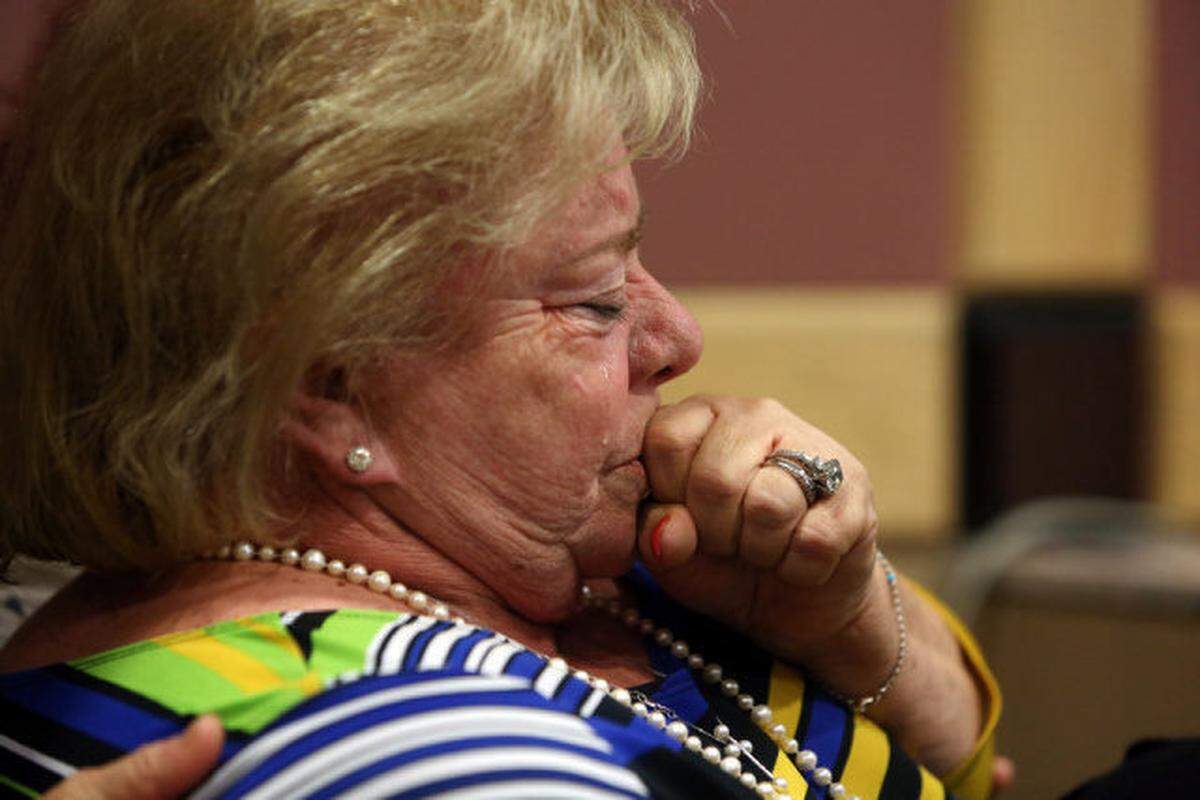
In 2018, the Fourth District Court of Appeals granted both Moscatiello and Ferrari retrials. In Moscatiello’s case, the court ruled, the jury had been allowed to hear damning testimony against him that the court later deemed “inadmissible hearsay.” In Ferrari’s case, the court found that the state had committed a discovery violation by revealing new evidence during the trial, some of which could have helped Ferrari’s case, and that the judge should not have admitted Ferrari’s cellphone records into evidence because they were obtained without a search warrant. Moscatiello and Ferrari’s retrials were rescheduled for March 2020, but were delayed to Jan. 18, 2022, due to COVID.
$1 million policies
After Boulis’ death, his Florida-based nephew, Naos, was named “settlor” and trustee of two separate trusts that Boulis had set up for the young sons he fathered with Hren. The trusts each contained a life insurance policy benefit of $1 million upon Boulis’ death. The brothers, only 5 and 7 at the time of Boulis’ death, had a hard time dealing with the aftermath of his murder and his sudden disappearance from their lives. “It was really hard,” Aristotle Hren-Boulis, now 28, told the Herald. “I was young, I didn’t know how to handle something like that. I did my best to suppress it and focus on my own life.”

Still, the boys and their mother felt lucky to have Naos in their lives. He lived only a few blocks from their home, and was an omnipresent figure in the brothers’ childhood. They loved and trusted him like a father, they told the Herald. Unfortunately, that would make what they see as his ultimate betrayal all the more painful. Because Naos began withdrawing money from both sons’ trusts as early as 2005, undisputed mortgage and bank statements presented in court show and, according to the brothers, lied about it when they started asking questions.
“He tried to bully and manipulate us every step of the way,” Aristotle Hren-Boulis told the Herald. But in recent years, the mounting evidence against Naos became too glaring to ignore. The brothers got a lawyer, and discovered hundreds of thousands of dollars missing from their trusts. Dozens of bank records and other documents, which they would eventually present in court, record years of aggregate withdrawals by Naos from their trusts, totaling a staggering $1 million.
In December 2020, the Miami-Dade Circuit Court found that Naos failed to properly perform his duties and committed a breach of trust in withdrawing the money from the Hren-Boulis brothers’ trusts without their knowledge or consent. But the exact amount that Mr. Naos is liable for has yet to be determined by the courts, Naos’ lawyer, Jonathan Noah Schwartz, told the Herald.
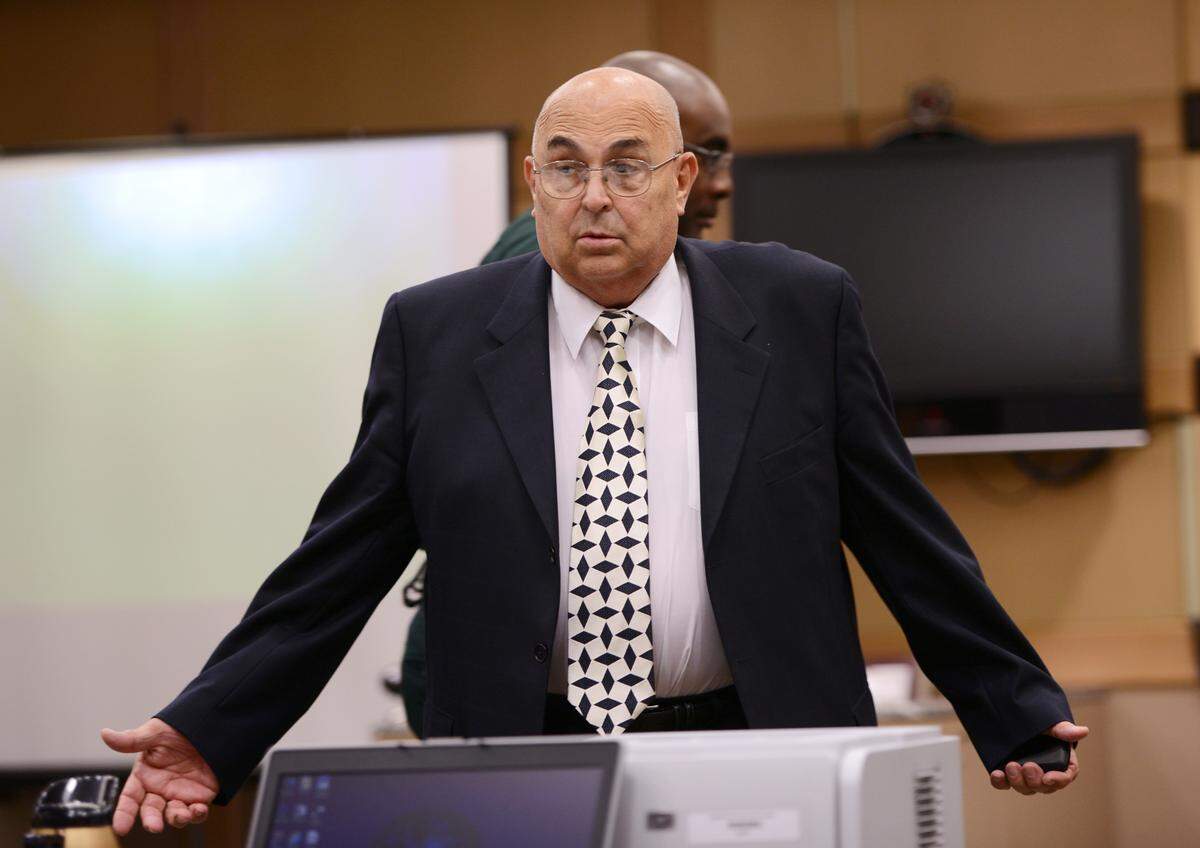
“His legal positions aside, Mr. Naos remains saddened as to the deterioration of his relationship with the Hren-Boulis brothers,” said Schwartz. “As to the case, generally, we look forward to presenting Mr. Naos’ defense before Judge [Jose] Rodriguez.”
In September 2019, Schwartz noted, Naos deposited $300,000 into the brothers’ trusts, which he argued was $4,000 more than the total Naos withdrew over the course of his tenure as trustee. However, as is shown in court documents, the brothers’ are demanding (treble the actual damages amount, as is determined by Florida statute 772.11 on civil theft) just under $1 million, not including attorney and court fees. The $300,000 Naos deposited into the brothers’ trusts also doesn’t take into account over a decade of lost interest on the brothers’ funds, their lawyer, Ricardo Arce, argued.
But while the loss of funds was significant, it was Naos’ betrayal that hurt the most, the brothers told the Herald. They’d looked up to him their entire lives, they said, but at every turn Naos had chosen money over their relationship.
In spite of everything, the brothers haven’t been able to bring themselves to ask a prosecutor to file a criminal complaint against Naos. Instead, they had a mediation scheduled for Tuesday, Oct. 26, to try and work things out within the family. The next step would be taking their claims to trial and seeking damages, their lawyer told the Herald,
In the meantime, the brothers have been taking steps to heal old — and fresher — wounds from their father’s mob-hit murder and what they view as his stand-in’s betrayal. Both are seeing specialists to work through their trauma, they said, and going into arbitration. It’s been a long road to recovery, they added, but once everything is resolved, they hope they’ll finally be able to close this chapter of their lives and begin to heal in earnest.
This story was originally published October 27, 2021 at 7:30 AM.