
He was a promising Chicago college student. His overdose in Miami Beach led to a murder case.
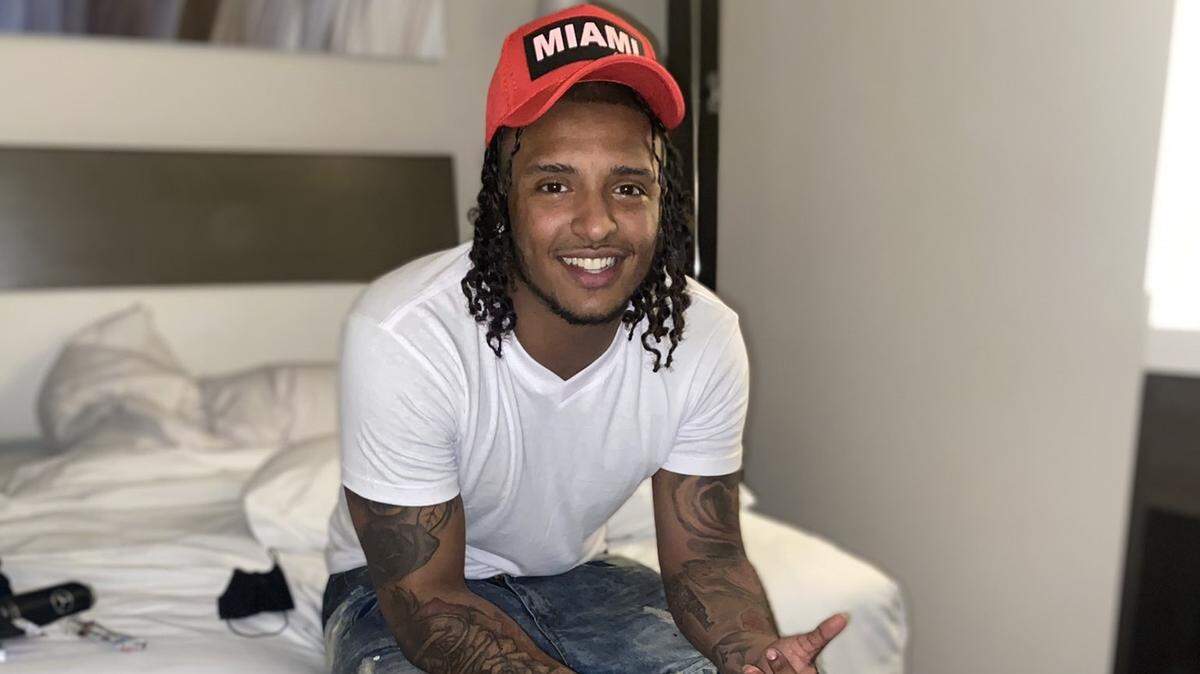
Walter Riley IV, a former walk-on football player at Northern Illinois University, played in only three games in his brief collegiate career. Still, the 21-year-old had high hopes for the future. While in school, he also ran a moving company in Chicago with his father.
“He really wanted to expand the business,” said his father, Walter Riley Jr.
But a trip to Miami Beach ended a short, promising life. Early on March 18, he collapsed on the street next to a South Beach bank, where he lay for more than seven hours before a construction worker flagged down police officers. Two days later, Riley died at Mount Sinai Medical Center.
A police probe found he’d taken a green pill he believed was “Percocet,” a strong but common painkiller. But a toxicology test showed the pill was actually fentanyl, the powerful synthetic opioid that has ravaged American communities in recent years.
The details of Riley’s overdose death will now be pored over in court proceedings after a grand jury this month indicted Dorian Taylor, the North Carolina tourist accused of selling him the pill, for first-degree murder. Riley’s death was the second overdose death attributed to Taylor, 25, who remains jailed and awaiting trial.
Taylor and his friend, Evoire Collier, 21, are also charged with murder for the overdose death of 24-year-old Christine Englehardt, of Pennsylvania, who died inside the Albion Hotel in South Beach on the same day. The two are also accused of raping her and stealing her credit cards.
Englehardt’s death drew international attention at a time when Miami Beach was grappling with rowdy Spring Break crowds drawn to South Florida during the coronavirus pandemic. Riley’s death on the same day, however, was largely unnoticed until the grand jury’s indictment this month.
Collier, who is only charged in Englehardt’s death, has pleaded not guilty. Taylor, who is charged with both deaths, also has pleaded not guilty. His defense attorney could not be reached for comment, but earlier told the Herald: “We will vigorously defend Mr. Taylor in court.”
As with Englehardt, Riley did not know either of them until their paths crossed in South Beach on the night of March 17.
Riley grew up in Chicago, one of five siblings. He was once featured in an article about the Salvation Army’s Croc Center recreation facility, a haven for young people in a tough Chicago neighborhood.
“He’d been going there for years. He was one of the first people I ever talked to there,” said Gabriel Ladisa, 19. “He was always like a big brother to me.”
At Chicago’s Richards High, Riley was a standout safety, despite injuring his knee just before junior year.
“He works his butt off every day,” his coach, Tony Sheehan, told the Chicago Tribune in 2018. He just wants the team to win. It’s always ‘we’ with Walter. Not ‘me.’ Whichever college gets him, they’re going to get a steal. You’re not going to find a better kid.”
In an email Thursday, Sheehan declined to comment but called Riley a “great kid.”
Riley later accepted a scholarship to play at Robert Morris University, but wound up at NIU, a successful Division I program in the Mid-American Conference. He joined the team as a walk-on linebacker in August 2019, according to the athletic program, appearing in three games on special teams.
But he left the team after the pandemic shut down NIU spring practices in March 2020. He was still enrolled at NIU when he traveled to Miami with a friend in March to celebrate spring break — and his 21st birthday.
On social media, RIley posted smiling photos: him with a red “Miami” hat and posing along Collins Avenue with friends. In his last post, he posed with a group of young women and buddies in the surf on South Beach, his hand in the sky. “Anywhere I go imma live it up,” he wrote.
“Last time I spoke with him, I had just sent him some money down there, on the Cash app. He was having a great time,” said his father. “He was just walking up and down the beach and the strip.”
According to authorities, he met Collier and Taylor at The Place, a restaurant at the Beacon Hotel on Ocean Drive. That’s also where the North Carolina men met Englehart, who is believed to have bought the green pill from Taylor just before 11 p.m.
A witness told police that Riley bought what he believed was a Percocet pill from Taylor around the same time. Percocet, a commonly prescribed pain killer that contained the drug oxycodone, is often used as a recreational drug. While it can be addictive, it’s generally not considered lethal.
Riley’s father said he never knew his son to take drugs, but did note that he had once torn the ACL in his knee. “Maybe he took it for the pain,” he said.
When Taylor was later arrested, police officers found those same green pills — marked with a 30 on them — inside his bag, according to an arrest report. But tests later revealed the pills to be fentanyl, the powerful synthetic opioid that can be many times stronger than Percocet.
Surveillance footage shows Riley collapsed on Ninth and Washington Avenue around 2 a.m., or about three hours after he is believed to have taken the pill. He lay there throughout the night, with no passersby coming to his aid, until a construction worker flagged down two Miami Beach cops about 10:40 a.m.
There was another indignity. According to a police report, about 90 minutes after the man collapsed, two “unknown men” were seen “possibly going through his pockets.” Walter Riley Jr., his father, said he his son was robbed while on the ground.
“They took all his stuff, his cash app card, his Bank of America card, his earrings, and jewelry,” his father said.
Even immediate medical attention may not have helped. Toxicology tests later showed Riley had 6.5 nanograms of fentanyl per liter of blood in his system, well within the range of a fatal dose, records show.
Collier and Taylor were charged under a 2017 Florida law that made it easier to charge someone with murder if they supply a fatal dose of fentanyl or synthetic variants, or a mixture of the drugs with others. Since then, prosecutors across Florida have charged a handful of drug suppliers with first-degree murder.
The elder Riley said he was glad someone had been arrested for his son’s death.
“I’m not satisfied. It ain’t going to bring him back,” his father said. “I just wish it went another way ... I’m upset. I ain’t going to see my son no more.”