
Serial killer Samuel Little confesses to Miami murder that once sent innocent man to prison
Notorious American serial killer Samuel Little has been identified as the murderer of two more women in Miami-Dade County — including one case in which another man served 22 years in prison before he was exonerated.
Authorities recently concluded that Little murdered Karen O’Donoghue, whose body has never been discovered, in the early 1970s, and Dorothy Gibson, who was strangled outside a downtown Miami hotel in 1977. Detectives say Little, who confessed to 93 murders and has been dubbed the country’s most prolific serial killer, admitted to both cases and there’s enough evidence to corroborate his claims.
In all, the Miami-Dade State Attorney’s Office has officially identified Little as the killer of four women in the county, although he is suspected in several other South Florida cases.
As with two cases last year, Little will not be charged because the 80-year-old remains imprisoned for life in California, and is also facing trials in other states. Chief Assistant State Attorney Kathleen Hoague, in two recent memos, wrote that the O’Donoghue and Gibson cases were being cleared as the “appropriate disposition for us and to give the next of kin closure” after so many years.
O’Donoghue’s disappearance never received publicity. Gibson’s murder is well known in South Florida because a man named Jerry Frank Townsend falsely confessed to her slaying, as well as five others.
Townsend’s is one of the most high-profile cases of wrongfully convicted Floridians. With an IQ of just 58, Townsend was arrested in 1979. Over the course of five days, prodded by homicide detectives from Miami and Broward County, Townsend confessed to a slew of crimes.
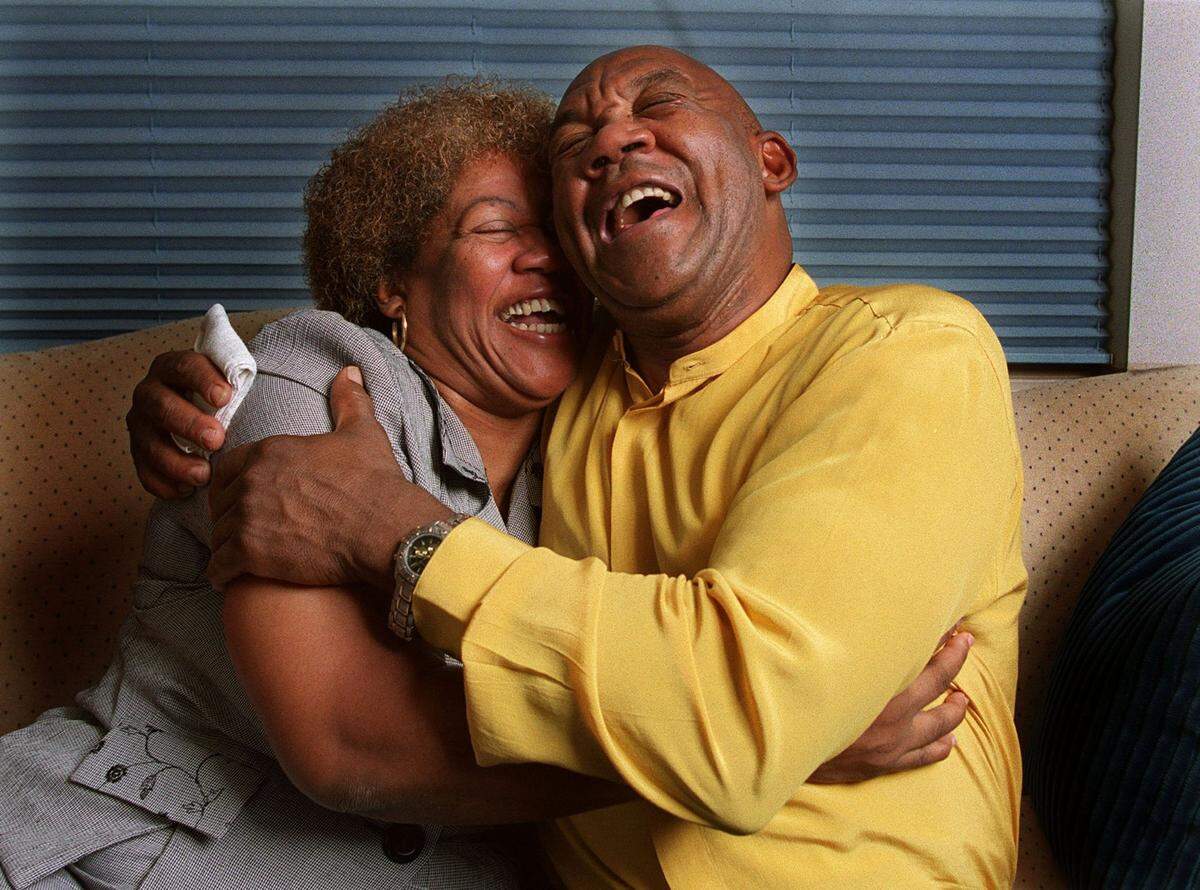
Ultimately, Townsend was convicted of four murders in Broward County and two killings and a rape case in Miami.
But in 2001, DNA testing cleared Townsend of two murders, and Broward prosecutors also cleared him of the others. Then-Broward Sheriff Ken Jenne even offered him an official apology. Two of his Broward cases were tied by DNA to serial killer and rapist Eddie Lee Mosley, who died in custody of COVID-19 in May.
In Miami-Dade, prosecutors filed to have the cases dismissed and Townsend was released from prison in 2001. At the time, State Attorney Katherine Fernández Rundle said her prosecutors believed Townsend was guilty but the confessions had been tainted and could not be used at any future trials.
Fernández Rundle’s office declined to comment on Wednesday. The city of Miami ultimately awarded Townsend $2.2 million in compensation for the 22 years he wrongly spent behind bars. Broward County also awarded Townsend $2 million.
Today, Townsend, now 69, lives in Georgia with his daughter, said his former attorney, Barbara Heyer. Told of the state’s decision to identify Little as Gibson’s murderer, Heyer said it “probably was him.”
“It certainly wasn’t Jerry,” said Heyer, who added of her intellectually disabled former client: “It is outrageous these officers and everyone supported this garbage conviction. They used his frailty to just close cases.”
Gibson was one of those cases. The 17-year-old runaway was found murdered on June 25, 1977, in the bushes outside the Dolphin Hotel near Northeast First Avenue and 10th Street, by the old Greyhound bus station. Her body was decomposing, and she died of asphyxiation, an autopsy revealed.
Two years later, Townsend confessed to Miami homicide detectives Bruce Roberson and James E. Boone. But a later review of the taped confessions found key details of his accounts were wrong, including that he had beaten the teen — the Medical Examiner’s Office, in fact, had not found any bruising.
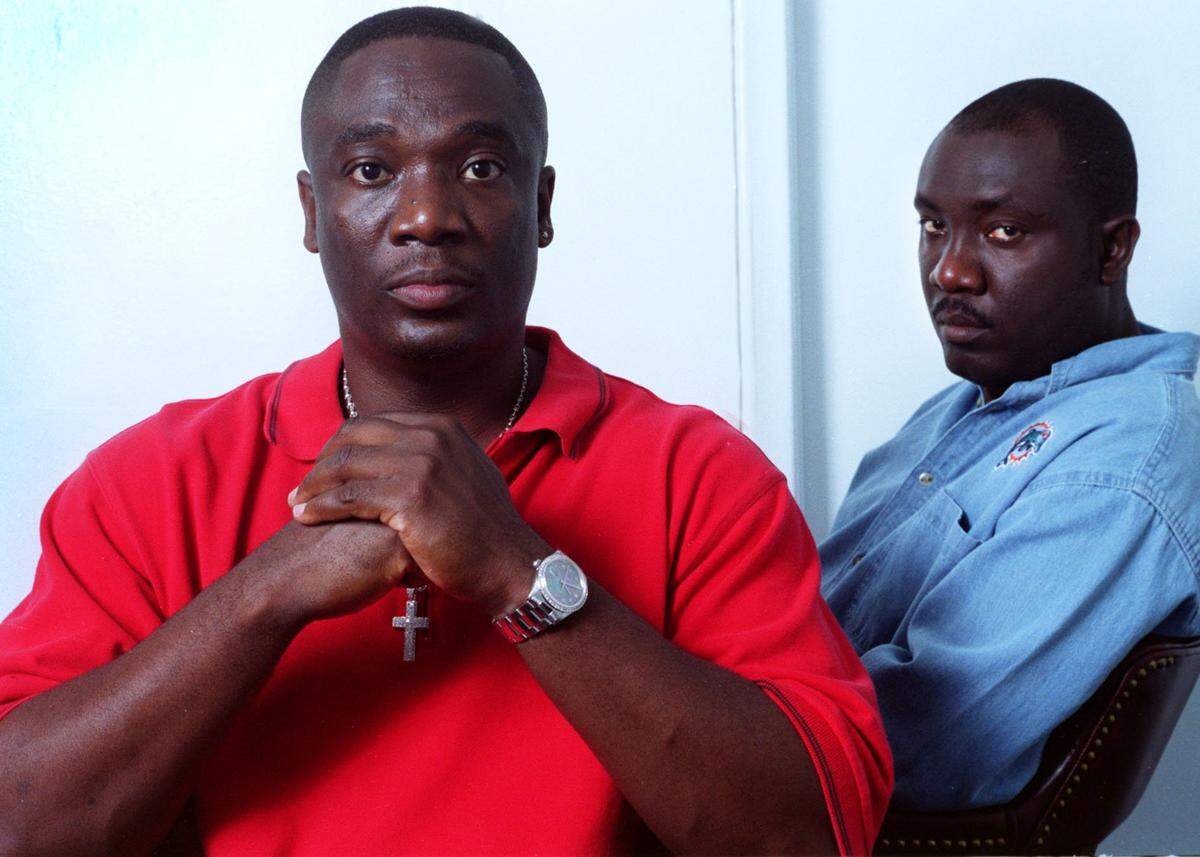
After Townsend was freed, Gibson’s murder was reclassified as open but remained unsolved.
“It’s a relief to know the actual killer is behind bars and is no longer a danger to the community,” said Confesor Gonzalez, the former Miami homicide detective who reviewed the Gibson case file in 2001. “Back then, I knew Townsend was not the killer based on the confession he gave and the inconsistent facts. I had always been concerned the actual killer was out there.”
A prolific killer
Enter Little, a drifter who grew up in Ohio and over the decades did stints in jail for sex assaults, but never served any serious prison time.
The scope of his crimes began to crystallize in 2012, when a Los Angeles cold case detective, through DNA matches, linked Little to three homicides of prostitutes in the city. He was ultimately convicted and sentenced to life for the murders.
The FBI teamed up with Texas Rangers investigator James Holland to explore a murder in Odessa. They eventually got Little to talk. He was transferred to a jail in Texas, where he began helping Holland piece together decades of bloodshed.
Over 700 hours of interviews, Little confessed to 93 murders from across the country. Police detectives and FBI agents have been able to match evidence to at least 60 of those cases; last month, the remains of a woman found dumped alongside a Georgia highway were identified as a Little victim.
In Gibson’s case, Little remembered specific details, including that the killing happened near a downtown Miami hotel in the 1970s. Texas Rangers passed the information to South Florida law enforcement, and it was eventually assigned to Miami homicide Sgt. Daniel Valladares.
By December 2019, Little was back in prison in Lancaster, California. Valladares and Detective Reynerio Guadamuz flew cross country to interview him.
According to the final memo on the case, Little said he remembered the girl as “Linda,” and said the “murder occurred behind a hotel that was located on North Miami Avenue” and that there was a bus station directly behind the building.
He remembered the girl got out of a cab nearby and the two chatted — she said she lived at the hotel. They later went to the “rear of the hotel building” to have sex, although Little claimed he did not want to pay her, the memo said.
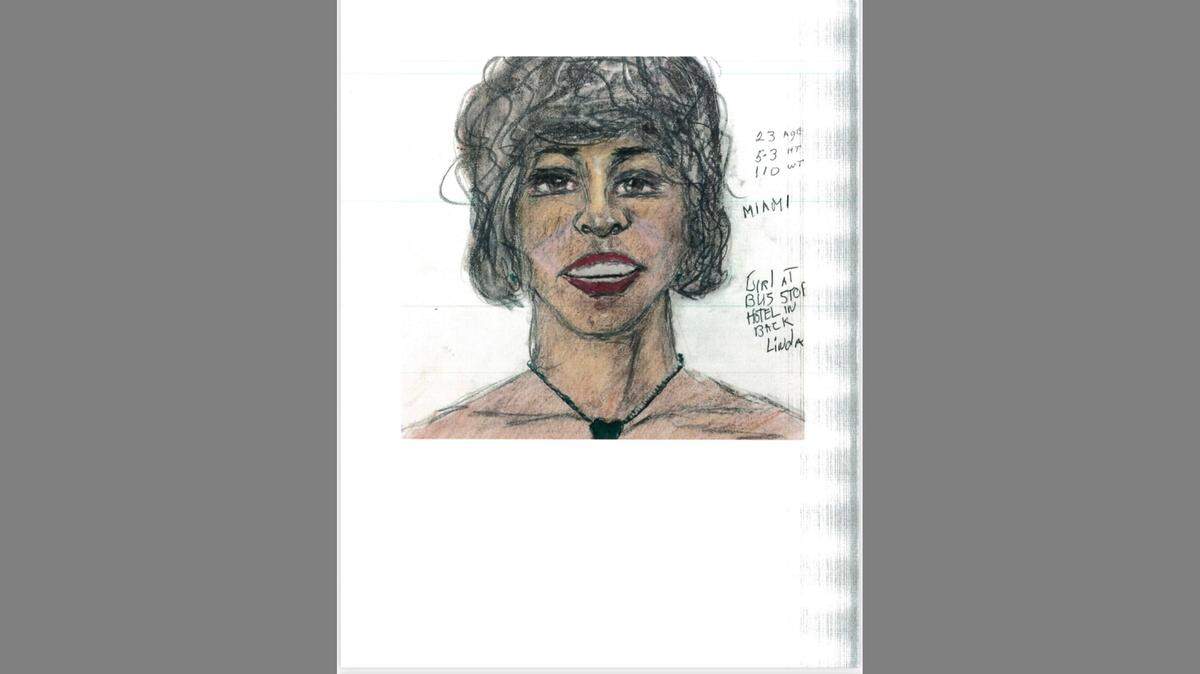
Little wound up “choking her to death with his hands” and left her body in the brush of an open field next to the hotel. He gave an accurate physical description of Gibson, pointed out the crime scene on an aerial map of the area, and even drew a sketch of the girl.
“Little ended their discussion explaining the obsession he has with choking women and that it is a need he has had since kindergarten,” prosecutor Hoague wrote in her memo.
More connections
It’s not unusual for supposed serial killers to confess to murders they didn’t commit, so Miami police had to place Little in South Florida around the time of Gibson’s murder — when there were no cellphones, widespread surveillance cameras or social media.
Valladares discovered that Little had been arrested in Mississippi in May 1977, on an open warrant in Miami-Dade County. Jail records showed that he was released from a Miami jail “several days” before Gibson’s body was found. Little claimed he hopped on a bus at the station and left town immediately after the murder.
In the O’Donoghue case, the investigation was done by counterparts with Miami-Dade’s cold-case squad.
Little told investigators that the murder occurred in 1970 or 1971, and he met her near a home or motel for “mentally ill persons” off North Miami Boulevard, according to a final memo on the case. He recalled specific details about her — that she was a nurse, had left home because of alcohol and drug problems, suffered from “gynecological issues” and was “slow” and “depressed.”
Many of those details matched up precisely with O’Donoghue’s life story, according to the memo. Records showed O’Donoghue had been a U.S. Air Force nurse, was discharged because of drug and alcohol problems and had suffered from “severe menstrual irregularities,” the memo said.
Little, who has sketched many of his victims, also made a startling drawing of the woman with a pointed nose and a long neck. It looks very similar to a photo of O’Donoghue provided by her family.
But what exactly happened to O’Donoghue was unclear, although Little said he killed several women and disposed of their bodies in the Everglades. Her case bore a striking resemblance to that of Mary Brosley, another Little victim whose remains were found in the woods of Northwest Miami-Dade.
She too hailed from the same area of Massachusetts and battled alcohol and health woes — detectives theorized that Brosley and O’Donoghue might have traveled to Miami together.
This story was originally published November 19, 2020 at 6:00 AM.