
Over 300 Miami jail inmates now have coronavirus. A judge rips conditions but declines releases
More than 300 Miami-Dade jail inmates have now tested positive for the novel coronavirus, sources confirmed Thursday as a federal judge criticized conditions behind bars but declined to order anyone released.
The dramatic statistic is the result of expanded testing, and comes amid an ongoing federal lawsuit filed by a group of inmates seeking their release over fears of the highly contagious virus.
U.S. Kathleen Williams, in an order issued late Wednesday, wouldn’t go that far. After two days of telephone hearings, she agreed that inmates at the Metro West Detention Center, with its tight sleeping quarters and shoulder-to-shoulder lines for headcounts, “are not able to achieve meaningful social distancing and that the experts agree social distancing is a critical step in preventing or flattening the rate of contagion.”
Instead, Williams ordered a 45-day extension of an earlier order requiring that inmates get soap, cleaning supplies and masks and that efforts be made to ensure social distancing. While she wouldn’t order anyone released, Williams said the jails need an “urgent reduction in the population ... and increased screening for COVID-19 among the staff and inmates.”
In her order, the judge left open the possibility that she could order the release of inmates at a later date. Miami-Dade County has already filed documents saying it intends to appeal her ruling.
The judge also ordered that Miami-Dade corrections provide updates every three days on how many Metro West inmates and staff members have been tested, and how many have contracted the virus. During the pandemic, the Miami-Dade corrections department has issued only sporadic public information on inmate testing, unlike the state prison system, which has maintained a daily update on its website.
In state and federal prisons and jails across Florida and the United States, authorities have struggled to contain the outbreak among inmates while trying to balance their release and the safety of the public. More than 300 inmates have tested positive across all three Miami-Dade jails, one source said, but the number is expected to rise dramatically as a new round of test results returns over the weekend.
In Florida state prisons, over 200 inmates have tested positive for COVID-19, and five have died. Testing, however, remains limited.
Federal jails have also been hard hit, as have immigration detention centers. This week, a Miami federal magistrate judge recommended that U.S immigration officials “substantially” reduce detainee populations at three South Florida detention centers.
Since early March, prosecutors, defense lawyers and judges in Miami-Dade have worked around the clock to release hundreds of low-risk inmates, many on house arrest. As of Wednesday morning, the corrections department had 3,293 in-custody inmates, down from nearly 4,000 in the beginning of March.
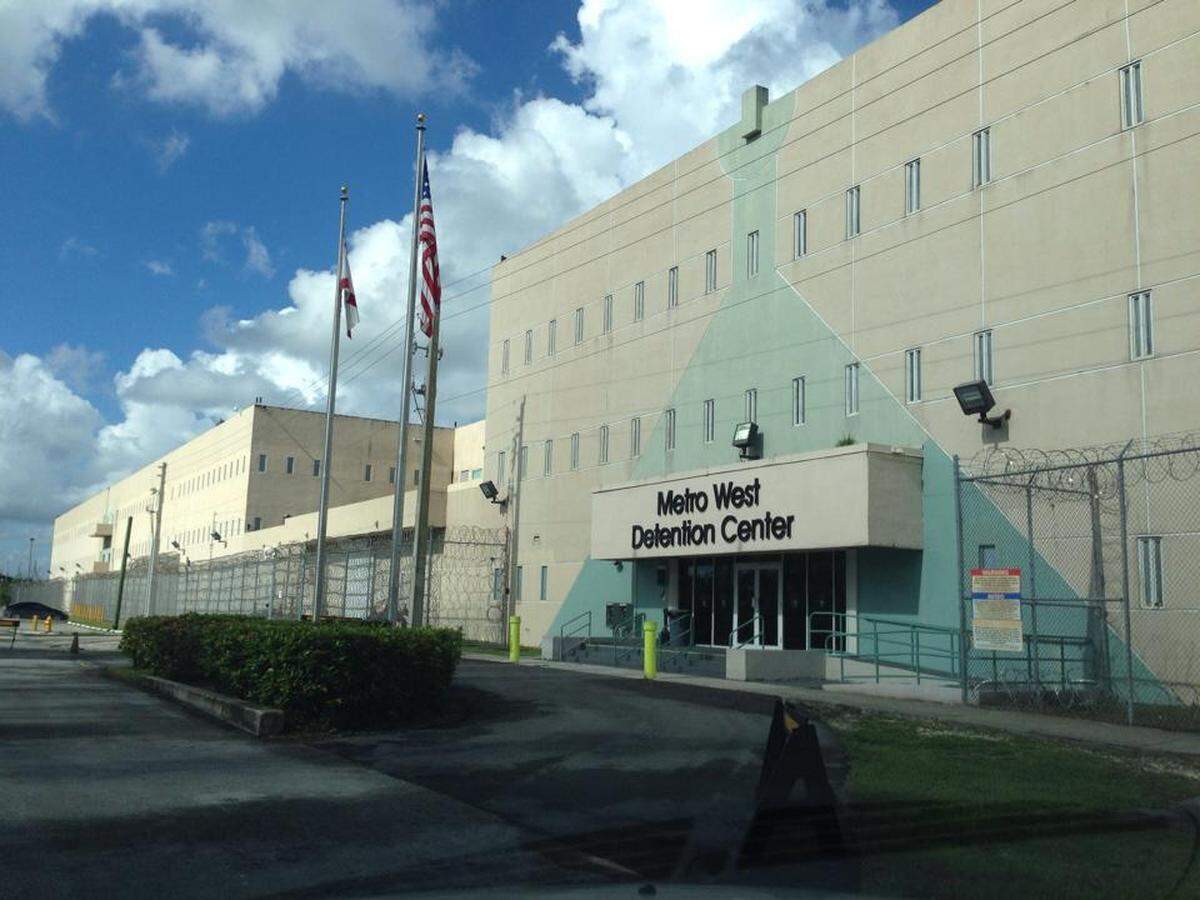
Still, a group of “medically vulnerable” inmates at the Metro West Detention Center filed a federal lawsuit earlier this month asking to be released because of the COVID-19 crisis. The suit was filed by civil rights groups, the Dream Defenders, Advancement Project National Office, Community Justice Project and Civil Rights Corps, and GST LLP.
Numerous wings at the jail have been quarantined, as at least 163 inmates there have been quarantined. One inmate told the Miami Herald by phone that he started a hunger strike to protest conditions at the jail, and a group of fellow inmates presented a petition to jailers demanding they improve protective measures.
“This facility was not designed to handle a pandemic,” he told the Herald on Wednesday night.
Days after the suit was filed, Williams ordered the jail system to provide soap and masks to inmates and try to ensure social distancing. Williams also ordered corrections to outline what steps it has been taking to protect sickly inmates.
Over two days of telephone hearings this week, Miami-Dade County has argued that it has already been giving soap and masks to inmates, and was doing its best to keep inmates apart from each other. “Where inmates are sleeping in bunk beds, they are instructed to sleep in staggered formation, head to toe, which creates social distancing of more than six feet between heads,” according to one court document.
The county also says it has stepped up temperature screenings, medical care and that more than 700 inmates have been tested for the virus.
Even so, Williams said that the inmates’ lawyers showed that the conditions behind bars still show “a deliberate indifference to a serious risk of harm” to those behind bars.
She pointed out that that when the lawsuit was filed in early April, there were no inmates who had tested positive at Metro West, and now there are at least 163. “And given the prevalence of asymptomatic hosts of the virus, the actual number is likely significantly higher,” she wrote.
This story was originally published April 30, 2020 at 10:03 AM.