
After decades, Pillowcase Rapist victims finally have hope for justice, and healing
Marianne Ritter left Miami nearly four decades ago, her life shattered.
Back then, Ritter was 20 years old, an idealistic art student living in a small Coconut Grove apartment. The stranger entered through an opening under a window in July 1983, forced her into a bathroom, and raped her at knifepoint — all while her roommate slept in the bedroom.
Cops called him the “Pillowcase Rapist.” The manhunt expanded over the years, then the trail went cold; the attack, and the dwindling hope for justice, leaving Ritter feeling lost.
Over the years, she moved to New York, the Florida Keys, Pensacola, Atlanta, California, and finally Portland, Oregon. She never felt stable. Once, Ritter climbed out down from her third-story window when she mistakenly thought someone was breaking into her apartment — it turned out, the sound was a neighbor opening his sliding-glass door.
“I couldn’t be alone at night for months,” Ritter recalled.
Ritter is one of dozens of victims, or possible victims, that are now reliving the trauma of their rapes as they speak to police detectives seeking to build more criminal cases against 60-year-old Robert Koehler. The suspected serial rapist was arrested at his Palm Bay home on Jan. 18, in a case that has drawn national attention.
So far, Koehler is being held in a Miami-Dade jail on just one charge: the rape of a 25-year-old woman at her apartment in Northwest Miami-Dade in December 1983.
But authorities on Thursday announced that around-the-clock DNA testing has linked Koehler to at least 25 attacks in Miami-Dade from the 1980s. Over the coming months, detectives throughout Florida will now re-examine similar rape cases, test DNA swabs taken from victims long ago, and interview victims, many of them like Ritter still haunted by a harrowing attack decades ago.
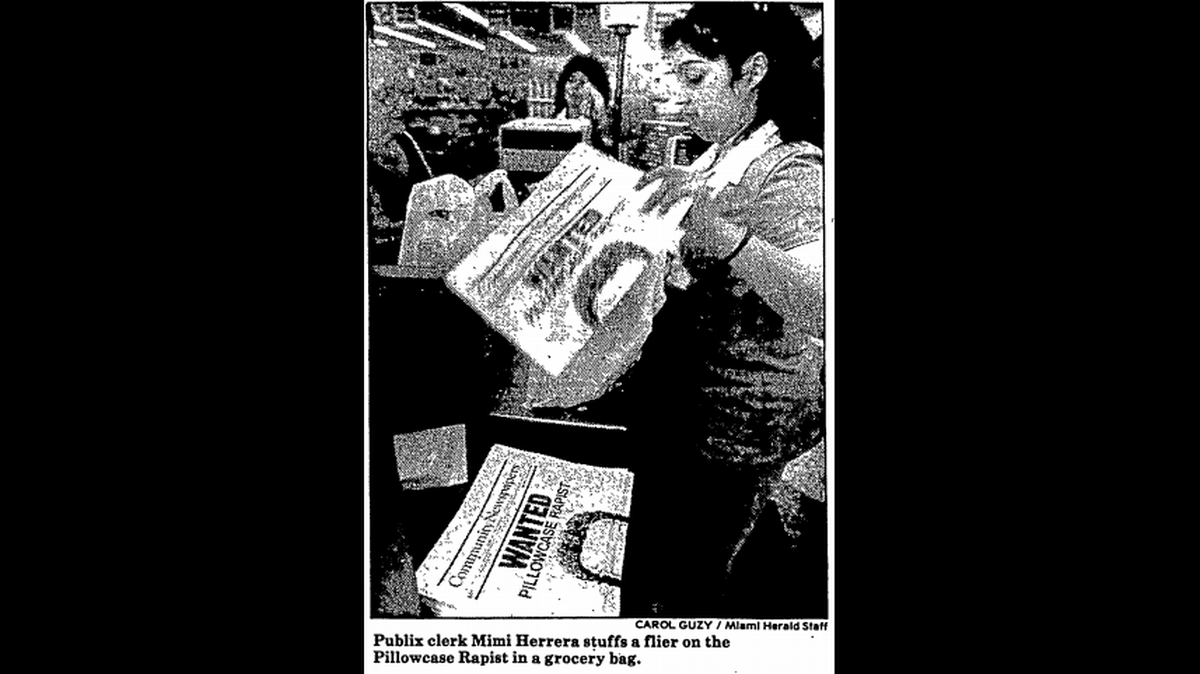
Ritter, now 57, long ago lost hope that cops would capture the so-called Pillowcase Rapist, the crafty, soft-spoken intruder suspected of attacking more than 40 women in South Florida in the 1980s. Then last week, at the Portland home while she was cooking dinner, her sister sent her a text message with news about Koehler’s arrest.
“I was in shock,” Ritter said. “I couldn’t even read the story until the next day.”
The Miami Herald generally does not identify rape victims. But Ritter — who wants to see her case prosecuted in Miami-Dade — wanted to share her story with hopes it will empower other victims to come forward.
“I definitely think it helps to bring this to the light,” she said. “I’m not at fault here. I’m a victim like many others, and there are many women who did not come forth back in the 1980s.”
As victims must grapple with the decades-old memories, Miami-Dade prosecutors have now set up a hotline for them to call: 305-547-0441. State Attorney Katherine Fernández Rundle said prosecutors will try to file charges in cases in which there is DNA evidence and the victim is still available to testify.
“We want to get the message out to a lot of the victims who may be out there,” Fernández Rundle said. “It’s going to take time to resurrect a lot of these files, to locate a lot of the victims.”
A search for victims
Some of the rapes may not even have been on the radar of a police task force set up in the mid-1980s.
Jill Simmons, now a 66-year-old retiree in Spokane, Washington, was on the couch watching the news when a story came on about the Pillowcase Rapist.
“I felt like somebody punched me right in the chest. I couldn’t breathe. I couldn’t talk. My husband thought I was having a heart attack,” Simmons said. “I finally got the words out: ‘I think that’s him.’ It just brought it all back. You’d think after 40 years, it’d be gone but it’s not.”
Simmons, then using her maiden surname Trent, said she was raped at her duplex in West Palm in 1978 or 1979. The intruder wrapped her head in a pillowcase, threatened her with a sharp object and quietly told her to shut up.
“Everything about it matched what he did in my rape,” said Simmons, who agreed to be identified by the Miami Herald.
No arrest was made in her case. Simmons never saw or read any of the South Florida coverage of the Pillowcase Rapist in the mid-1980s. By then, she had moved to Washington state.
“I couldn’t go back to my apartment. Every time I’d walk in there, I’d relive it,” said Simmons, who this week reached out to West Palm police about reviving her case. “I moved in with my sister for awhile, got back on my feet and started living my life. Every time I got a little better, the cops would call and bring it all back up again.”
Her experience is not uncommon among rape victims, experts say.
“One of the ways people avoid is not reading the news, or social media. That can bring back a lot of feelings and a lot of people don’t get help until years later,” said Shara Kaszovitz, a licensed clinical social worker at Jackson Memorial Hospital’s Roxcy Bolton Rape Treatment Center. “They avoid it, and then something will trigger them and all of those feelings come back.”
Kaszovitz stressed that the rape treatment center offers free counseling and support groups for victims, even ones from decades ago. “It’s never too late to get support,” she said.
More victims likely
For decades, police said the Pillowcase Rapist struck roughly between May 1981 and February 1986, from South Miami-Dade to Deerfield Beach, although there are likely victims such as Simmons whose cases haven’t been counted.
Koehler pleaded guilty to a 1990 rape in which he broke into a Palm Beach County woman’s home and raped her in the middle of the night. Detectives did not link the case to the Pillowcase Rapist, despite the similarities to the years-old attacks.
At the time, convicts were not required to give DNA for entry into a law-enforcement database. The Palm Beach State Attorney’s Office said records that explain why Koehler got such a lenient sentence — probation — no longer exist.
The South Florida intruder targeted women in their 20s and 30s, usually single professionals who lived alone in town houses, condominiums or apartments. He normally tied them up. Often, he used a pillowcase or some other fabric to cover the women’s heads, and his own.
“I’ve been watching you for a long time, honey,” the rapist told one victim in August 1984, police said.
Many of the women had been stalked, their routines analyzed, their vulnerabilities exploited. The rapist usually broke in through unlocked or poorly secured windows and doors.
At the time, some of the women spoke to the Miami Herald in 1985, awash in conflicting emotions. One fantasized about wanting to catch the rapist and light him on fire. Another grappled with lying to her father about the brutal details of the rape. One woman, a school teacher, suffered nightmares, even feeling the physical sensation that someone had climbed into her bed.
“I can either wallow in self pity and hold onto the fear and the anger and hatred, or I can let that go and heal myself and go on with my life,” she told the Herald.
Even decades later, the attacks sow anxiety.
‘This case haunted me’
One woman, who spoke to the Miami Herald this week but asked not be named, was wrapping Christmas gifts at night when an intruder appeared in her Fort Lauderdale apartment a few days before Christmas in 1982. The man held a knife to her back, wrapping her head in a pillowcase and attacking her. Suddenly, her roommate happened to walk in — and chased off the rapist with a pair of scissors.
“You always feel like they’re coming back,” said the woman. “You’re always wondering if they’re watching you, if they’re stalking you. I always felt like the person was still around.”
Many victims blamed themselves because they felt they hadn’t done enough to secure their homes, recalled retired Miami-Dade Detective Dave Simmons, who headed the Pillowcase Rapist task force in the mid-1980s. He tried to dissuade them of the notion.
Dave Simmons, who is not related to the West Palm victim, kept in touch with some victims after the task force was disbanded.
“They were understandably concerned, that we hadn’t forgotten them, that the case was still being worked,” he recalled.
After the news of Koehler’s arrest unfolded this past week, several victims reached out to Dave Simmons, thanking him for his work decades ago.
“I felt just absolutely thrilled for the victims, that we could finally tell them the man was caught, that the cold-case squad continued working it after I retired,” he said. “This case has haunted me over the years, and a lot them gave up hope.”
This story was originally published January 25, 2020 at 6:00 AM.