
Judge clears Miami reggae DJ who fatally shot man suspected of raping his girlfriend
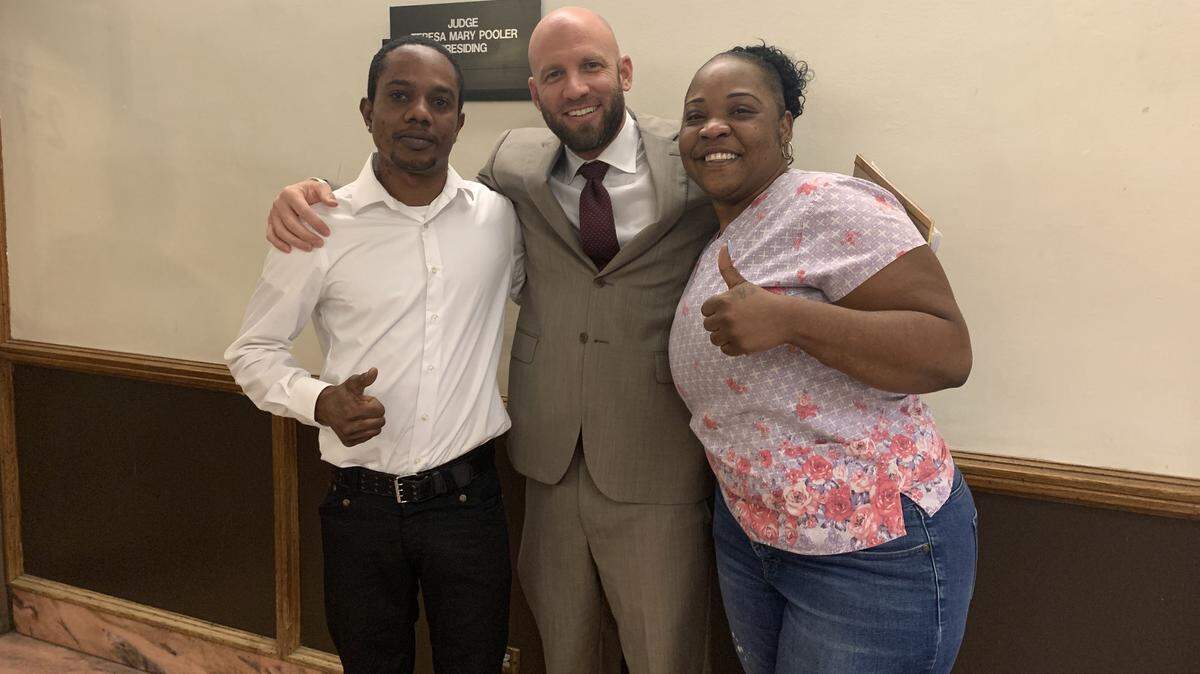
Pete Campbell, also known as DJ Feddy, was hired to spin reggae at Bunny’s West Indian restaurant in Miami Gardens.
John King, 42, was known around the neighborhood as a violent bully who’d been acquitted of a murder years back. He was also accused of raping Campbell’s girlfriend.
Their paths intersected on July 3, 2015, when King and friends accosted Campbell at Bunny’s. In a small hallway, Campbell — who said he was unarmed — wrestled a gun away from one of King’s friends and fired.
King, who Campbell said had a gun in his pocket, was shot and killed. Because he fled the scene, Miami Gardens police arrested Campbell, who spent several years in jail awaiting trial.
But a Miami-Dade judge has now thrown out the murder charge against Campbell, ruling he acted in self-defense.
“He knew King’s reputation in the community for violence,” Miami-Dade Circuit Judge Teresa Mary Pooler wrote in her order filed earlier this month. “He also believed that King was out to get him. .... Based on all that ensued prior, his fear was reasonable that King came to Bunny’s with the intent to kill or do great bodily harm.”
The judge cleared Campbell, 30, under Florida’s controversial Stand Your Ground law, which eliminated a citizen’s duty to retreat before using deadly force. Critics have long complained that the law, backed by the politically powerful National Rifle Association, encourages vigilante justice and gives criminals an easy way to beat accusations of violence.
Under the Stand Your Ground law, judges have wide legal leeway to grant “immunity” to someone they deem was acting in self-defense.
“This was the most transparent self-defense case of justifiable use of deadly force I’ve seen,” said defense lawyer Jonathan Jordan, who defended Campbell along with Andrew Rier.
“Credit to Judge Pooler who followed the law the Legislature has set out. The ‘victim’ sought out Pete at his place of employment; Pete never asked for this but he was put into a situation where he had no choice but to defend himself or become a victim himself.”
At a Stand Your Ground hearing, defense lawyers said King had raped Campbell’s girlfriend at gunpoint about six months before the shooting. “She reported the case to the police but nothing was done about it,” the judge wrote in her order.
Campbell had been pressing police to arrest King. “For several months, he and his girlfriend tried to find out King’s name, since they only knew him by sight, and where he lived,” the judge wrote. “At one point, they even spoke to one of King’s girlfriends.
“Every time they saw King, they would call the police but nothing was done.”
Word got back to King, who “was going after Campbell,” a police detective testified.
King found Campbell at Bunny’s. (That night, King was driving his girlfriend’s car — she kept a handgun in the glove compartment, and it later vanished.)
Campbell testified that during his DJ set, he’d gone out for a smoke break and was walking back through a small hallway when King and his friends grabbed him. “During the tussle and the back and forth, Campbell was able to grab the gun from the accomplice and shoot King with it,” the judge wrote in her order.
After the shooting, Campbell threw the gun down and fled. But police could not find him because he drove to Georgia, where his pregnant girlfriend was staying. Campbell testified that he took a bus up there to be with her, and had no idea if King had survived the shooting.
“Mr. Campbell testified and his testimony was very compelling and credible,” Pooler wrote.
This story was originally published November 26, 2019 at 11:54 AM.