Her child died amid ‘sadistic’ abuse; she was still allowed to work as a nurse in Florida
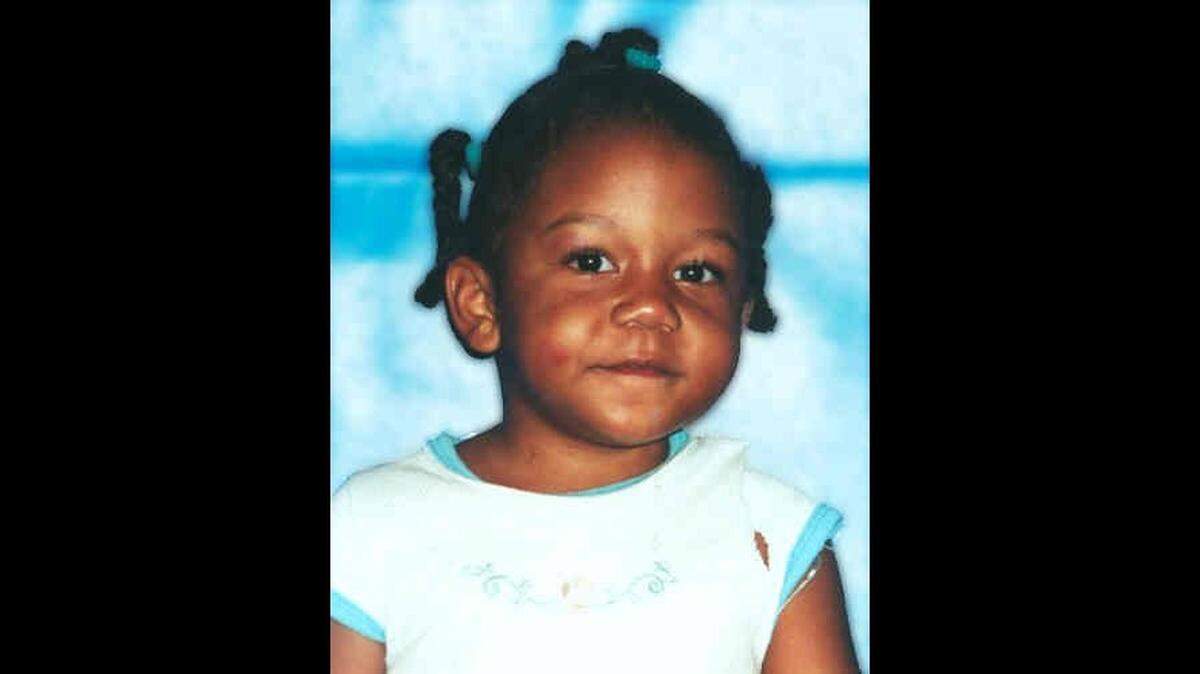
During her final months of life, Samayah Anne Emmanuel endured what state abuse investigators would later describe as torture.
The girl’s adoptive mother forced her to stand for long periods of time, arms outstretched, as if being crucified. When Samayah could take no more and dropped her arms, her mother would beat her with a shoe.
Samayah’s 7-year-old body had “shriveled” away from malnutrition, child welfare administrators were told, with her bones bulging from her body. When the youngster took a piece of bread, her mother burned her hands on the stove. And when Samayah was thirsty, her mother gave her bleach to drink.
Help never came for Samayah, who vanished from public view after Gina Emmanuel, a registered nurse, adopted her from foster care. Samayah died on Nov. 3, 2018, the story of her final months written on her small body: She was covered “head to toe” with bruises, burns and “open wounds,” the state’s abuse hotline was told.
The Department of Children & Families verified a report that the little girl had been profoundly abused — and DCF alerted administrators of a sister department, the Agency for Persons with Disabilities, of its findings, because Emmanuel was licensed to operate a Miami group home for people with disabilities.
APD administrators took no action toward Emmanuel’s license, however, until last month, almost a full year after Samayah died, when television stations and the Miami Herald reported that Emmanuel had been arrested for child abuse in connection with Samayah’s death.
Last month, APD administrators filed an administrative complaint against Emmanuel seeking to revoke her license to operate a group home for clients with disabilities. The two residents living there “were promptly relocated to another group home upon the arrest of Emmanuel,” an APD spokeswoman, Melanie Mowry Etters, told the Herald in an email.
“The Agency for Persons with Disabilities is committed to protecting the health and safety of its customers,” Mowry Etters wrote. “In light of this case, APD is exploring pathways to address this issue.”
The state Department of Health, which licenses Emmanuel as a registered nurse, waited almost seven months after DCF verified the child abuse to take disciplinary action.
Late Friday, after the Herald asked why Emmanuel’s license as a registered nurse remained clear and active despite the disturbing, and verified, allegations, the health department issued an emergency suspension order, citing Emmanuel’s “systematic, willful and sadistic abuse and neglect of her children.”
“Any vulnerable person seeking Ms. Emmanuel’s care and treatment is in danger of similar harm,” states the order, which was signed by Florida Surgeon General Scott Rivkees.
The suspension order divulged new details about Emmanuel’s mistreatment of her adopted daughters, who told state investigators that Emmanuel would chain her children to their beds whenever she left the house, “tied socks around their eyes,” and that she instructed the children to lie to officials about their burns and other injuries.
After Samayah’s death, DCF removed the girl’s siblings — including a 13-year-old girl, a 7-year-old girl and a 5-year-old boy — from Emmanuel’s home and placed them with a foster parent. Emmanuel was allowed to have supervised visits for one hour a week, but in May, a Miami-Dade judge terminated her parental rights.
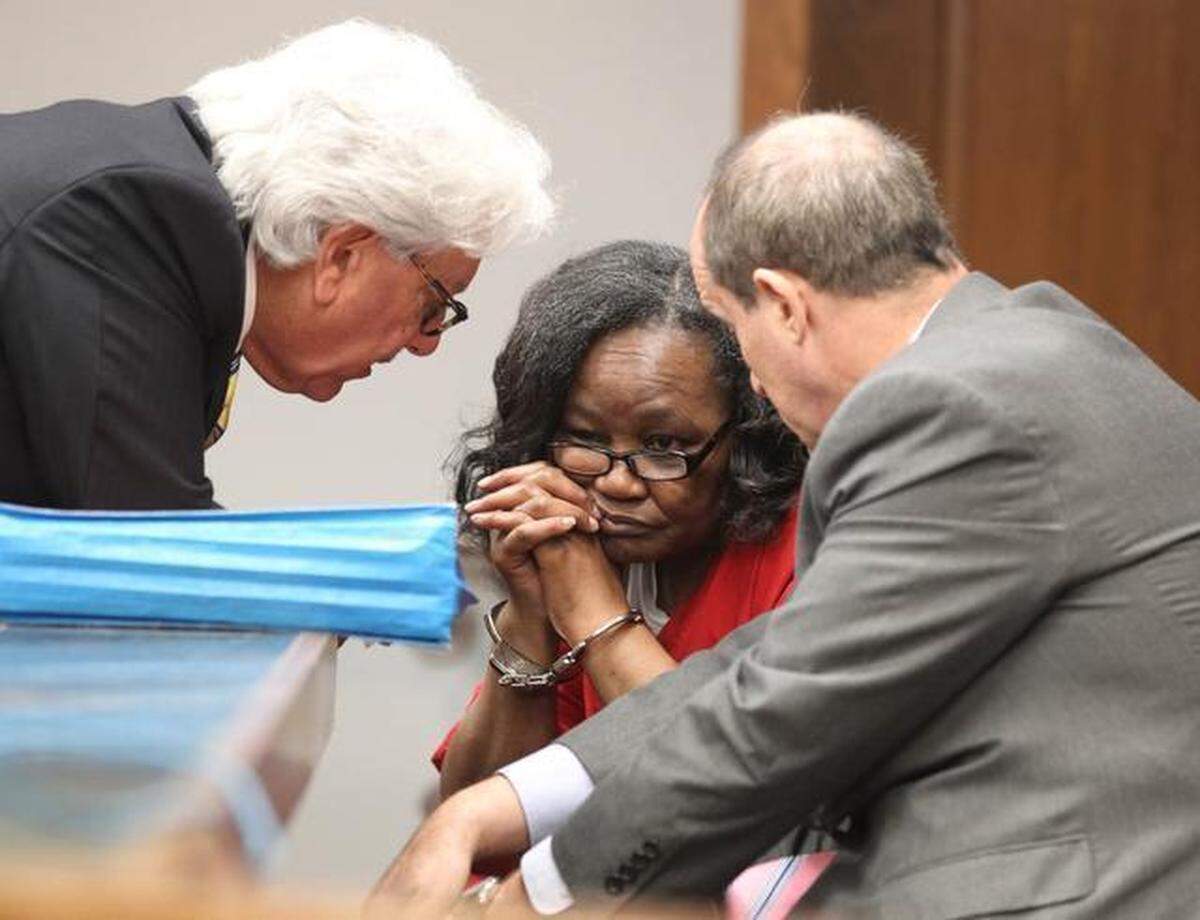
Emmanuel, 50, is out on bond on three charges of aggravated child abuse, child neglect and psychological abuse. Emmanuel was arrested Oct. 15. She will be arraigned on the charges Monday morning.
Claudia Bizune, Emmanuel’s defense attorney, could not be reached by telephone and did not respond to an email request for comment.
As new details have emerged about the abuse Samayah suffered at the hands of her adoptive mother, state records show her struggles started well before Emmanuel entered her life.
Samayah was described in 2014 child welfare records as “reserved and quiet.” Her name appeared in 10 separate reports to DCF’s child abuse hotline between 2012 and 2015, according to DCF records obtained by the Herald last week. It is unclear from the records when Samayah was sent to live with Emmanuel as a foster child. Health department records say she formally adopted Samayah in 2017.
What is clear though is this: Though Samayah’s birth mother struggled with drug abuse, appeared to exercise poor judgment in her choice of men, and eventually was ruled unfit to raise her children, Samayah’s fate was far worse after her mother’s rights were permanently severed.
After her adoption, Samayah’s universe became as small as Emmanuel’s North Miami-Dade apartment: Samayah was not allowed to go to school, a DCF report said, and she “did not [interact] with the outside world.”
That’s a critical detail, because under Florida law foster children must be enrolled in either a school or a daycare center. The law, called the Rilya Wilson Act, was passed by lawmakers following the disappearance of a Miami foster child. Rilya, whose name stood for “Remember I Love You Always,” was last seen alive in December 2000, at age 4.
The chubby, pigtailed youngster vanished — and is presumed dead — in part because her state-approved caregiver, Geralyn Graham, secreted her at home, sometimes in a dog cage, according to court testimony. A state social worker was supposed to check on the girl’s welfare, but falsified records of monthly home visits instead. Graham is serving a 55-year sentence on kidnapping and aggravated child abuse convictions. Prosecutors could not sustain a murder case, as Rilya’s remains never were found.
As foster children, Samayah and her siblings were to be observed by a caseworker every month. When they were adopted, that removed any sort of supervision.
State child welfare administrators first encountered Samayah and her siblings in 2012, records show. Investigators visited Samayah’s home after her mother asked for help with one of Samayah’s sisters, who had been sexually abused and was acting out on her siblings. The records do not identify Samayah’s mother, or any of her siblings, and it is impossible to determine who did what to whom.
“She caught the child in the bathroom trying to suffocate her younger sister with the bathroom curtain,” a DCF investigator reported in July 2012, leaving unclear the identity of the alleged incident’s victim. “She then told the mother that she heard voices telling her to do this and other things.”
DCF workers arranged a psychiatric evaluation for the unidentified child and assigned her a therapist. They also referred her mother to a daycare provider and helped her pay her utility bills. The case was closed.
Four months later, in November 2012, Samayah’s mother came to DCF’s attention again when she and her premature newborn tested positive for marijuana. But investigators reported that the mother kept a safe home for the children, and they referred the family for social services, including daycare for Samayah and her siblings, and parenting classes and substance abuse treatment for their mother.
In March 2013, DCF was alerted to Samayah’s family a third time, when one of her sisters started coughing and having trouble breathing while at daycare, state records show. The child was taken to the hospital by ambulance, but Samayah’s mother was not answering her phone. Authorities called police, who found Samayah’s mother, according to the investigative record.
It would be more than a year before DCF investigators reported on Samayah again. Her home life was deteriorating.
In June 2014, DCF investigators reported that Samayah’s mother was selling drugs out of the house. The children were at home when the drug dealing occurred, according to investigative records, and the mother and her boyfriend smoked marijuana in front of the children.
The mother’s boyfriend was a problem, records show. Police had recently arrested the boyfriend for punching, pushing and shoving Samayah’s mother, who was seven months pregnant with his child at the time. The violence occurred in front of the children, according to records.
Samayah’s mother refused to press charges, though. After his release from jail, the boyfriend was at the home “all of the time,” investigators reported.
In September 2014, during a child welfare hearing, a Miami-Dade judge expressed concern about an injury to Samayah, records show. The girl’s lip was swollen and she had a large scab on her lower lip. The explanation offered by her mother, that Samayah had injured her lip rolling out of bed, “appears to be inconsistent” with the injury, investigators reported. Samayah was seen by a pediatrician, however, who deemed the injury accidental.
The following month, Samayah’s mother appeared in court with a black eye that was swollen shut. She told the judge that the injury had occurred while playing football outside her house before dawn. State investigators reported their concern that Samayah’s mother remained in an abusive relationship.
Less than a week later, DCF reported that Samayah and her sister, who were under protective supervision, were no longer attending daycare.
“As a result, it is unknown as to what is going on with the children,” a DCF investigator reported.
By December 2014, Samayah’s family life had deteriorated to the point that DCF removed the girl and her siblings from their mother’s home, records show.
The mother had been lying to child welfare workers about her boyfriend living in the home and had coached her oldest child to lie about it, too, records said.
Abuse investigators also reported that one of Samayah’s siblings had reported being “beaten by mom” and “flinches or seems scared when approached by other adults.” Samayah’s mother also appeared to be “under the influence of a substance,” investigators reported.
Samayah was placed in foster care that month. She was 3 years old, and was living in a home with two other children unrelated to her, records show.
DCF investigators visited the house on Dec. 31, 2014, after the foster parent reported that one of the children had been trying to kiss and fondle the other two children in the home, including Samayah.
In January 2015, Samayah was living in a foster home with an unrelated child, and under the care of a 75-year-old foster parent, records show. Samayah had been accused of bruising and biting the other child.
“Samayah has no problems with other children outside of the foster home,” DCF investigators reported, “however, she does argue with another foster child frequently.”
That was the last time DCF investigators reported seeing Samayah alive.
Samayah, who had left the care of the older women and having been adopted by Emmanuel, was found unconscious in her bed on Nov. 3, 2018. She died that day. Investigators believe the little girl succumbed to pneumonia, her condition so severe that it appeared she had drowned. They also suspected abuse.
“Samayah had marks all over her body, some of them appeared to be ‘burn marks’ and some of them appeared to be ‘abrasions’,” a DCF investigator reported in January. “The marks appeared to be a mixture of old and new and they appeared to be from possibly being tortured.”
Samayah also appeared to be “malnourished”, and was reported to be “really really thin,” with visible bones, records show.
Her sisters, ages 6 and 12, also showed signs of being physically abused. Two days after Samayah died, doctors with the Department of Health’s Child Protection Team examined the two surviving girls. They found “numerous old injuries all over their bodies, including healed loop marks from beatings and healed burn scars on their hands and fingers,” according to the arrest affidavit for Emmanuel.
Samayah’s sisters told investigators that Emmanuel beat them with belts, a brush and a back scratcher for punishment. Emmanuel also made them stand for hours at a time and tied their hands and bodies to furniture when they were no longer able to stand, the girls told investigators.
One particular incident relayed by the girls stood out to investigators.
In the summer of 2018, Emmanuel made Samayah and her 6-year-old sister sleep on the floor in the living room as punishment. The girls woke up in the middle of the night because they were hungry.
Emmanuel became enraged with the girls, the arrest affidavit said, because they had taken bread that was intended only for Emmanuel’s adult birth son, described in records as developmentally disabled, who lived with them.
As punishment, Emmanuel woke up the 12-year-old girl and made her watch as she beat Samayah and their sister, and then burned their hands on a hot stove, the affidavit states.
Emmanuel did not take the girls to the hospital or a doctor to treat their burns, the affidavit states, and their hands were permanently disfigured.
Records obtained by the Herald last week show disability administrators were aware of Samayah’s death, and Emmanuel’s possible role in it, by April 2019 at the latest. That is when three agency administrators in Miami sent a request to Tallahassee to terminate Emmanuel’s group home license.
The request, dated April 30, said that child welfare administrators had “verified” child abuse allegations against Emmanuel — though other details were redacted. Emmanuel also was faulted for failing to report the verified abuse to disability administrators. It was “unknown to what extent” Emmanuel had “cooperated with DCF” in its investigation of Samayah’s death, the report said.
The termination request included a copy of the verified DCF report on Samayah’s death, which means APD administrators either were aware, or could easily have become aware, of the investigation’s details.
Three days before the termination request, an APD employee performed an “unannounced visit” to Emmanuel’s Miami group home, an email says. One resident was seeing a respiratory therapist. Another was “watching YouTube on her phone.” The worker phoned DCF’s abuse hotline afterward — noting the agency “did not take the call” — though the email doesn’t say what prompted the report.
APD records show Emmanuel’s license was set to expire on Aug. 31. Yet Emmanuel was still operating the group home, at 480 NE 111 St., when she was arrested Oct. 15.
On Oct. 28, APD filed the administrative complaint to close the group home.
Samayah and her siblings did not live in the group home. They lived with Emmanuel in a three-bedroom apartment in Northeast Miami-Dade. Whatever abuse Samayah suffered at home under Emmanuel’s care was a secret to most of the rest of the world, except possibly her siblings.
A DCF investigator reported in January that one of Samayah’s sisters was “blocking a lot of the trauma regarding Samayah’s death. She does not talk about Samayah’s death.”
On Friday, following an interview with the Herald, disability administrators said they would revise their policy for overseeing caregivers for disabled people: “Following a DCF verified finding of abuse or neglect involving a death, APD will initiate an administrative complaint against the group home licensee, even if the finding does not involve an APD customer or [didn’t] occur at an APD licensed group home,” Mowry Etters wrote in an email.
This story was originally published November 18, 2019 at 7:10 AM.