
Elderly killer spent 5 months trouble-free on parole. But his release was a mistake
After nearly four decades behind bars for murder, Arturo Larosa walked out of a prison after finally earning parole. So he thought.
He was elderly now, in his early 70s, suffering from diabetes and high blood pressure. He returned to his old Miami neighborhood, transformed by towering new buildings and people glued to their cell phones.
Although he was free, in many way Larosa remained a prisoner of poverty and circumstance.
Larosa crashed with his brother in an apartment for low-income people, ducking from housing authority employees because roommates there were forbidden. Larosa spent his days penniless, milling about an Allapattah park, listening to music on a small hand-held radio, using food stamps to occasionally buy a soda or chips.
He stayed trouble free for nearly five months — so Larosa was shocked earlier this year when heavily armed police officers swarmed his brother’s apartment to arrest him.
Larosa’s uneventful stretch of freedom ended in crushing news: The U.S. Bureau of Prisons — which was housing Larosa because he was a specially designated Cuban refugee — misunderstood the date of his release and freed him by mistake. State corrections authorities labeled him an escapee, even though he’d walked out with permission.
“I deserve to be out,” said Larosa, now 74. “I’d always thought I’d get parole.”
Larosa’s story, told to the Miami Herald in a recent prison interview, is an outlier — he is among a handful of Cuban refugees being housed in federal prisons on state convictions. But criminal-justice experts say Larosa’s story nevertheless underscores the hollowness of Florida’s antiquated parole system, which was largely abolished but still exists for people convicted decades ago.
“It’s just a horrible indictment of parole system,” said Stephen Harper, a Florida International University law professor and former longtime Miami-Dade assistant public defender. “There are very, very few people who are eligible for parole who get paroled.”
So what happened in Larosa’s case?
Because he had a clean prison record, the Florida Commission on Offender Review issued a “presumptive parole release date” of June 11, 2018. On that date, the federal prison system released Larosa to the custody of immigration authorities, where he stayed for another five months before he was released on supervision back to Miami.
But the presumptive parole release date is not the date an inmate actually gets out, according to Kelly Corder, a commission spokeswoman. The commission still had to approve his final release. Sixteen days after he left a Miami federal prison, the commissioners decided they “were not comfortable” with the elderly man’s plans for release, she said.
Nobody noticed he’d been mistakenly paroled for more than one year. The U.S. Bureau of Prisons did not respond to request to detail how the mistake happened, instead directing a reporter Thursday to file a Freedom of Information Act request.
Harper said it is not unusual for parole commissioners to push back release dates. “Bottom line is they can do whatever they want, basically for whatever reason,” Harper said. “They would not even have to prove what an unsatisfactory plan is.”
Larosa, an electrician who worked fixing medical instruments in Havana, came to Miami in 1980 during the Mariel boatlift, the mass exodus that brought thousands of Cubans to South Florida.
The sudden influx of Cubans, many of whom had been in island prisons, led to many cases of Mariel refugees committing violent crimes on the streets of Miami.
Miami in the early 1980s was one of the most violent cities in the United States, and Larosa’s arrest for murder was just one of many that never made the press.
Back then, Larosa didn’t have a steady job, instead living and working inside an Allapattah boarding house fixing radios. He and a friend often went to the Royal Castle cafeteria, 1680 NW 36th St., which today is a Honduran eatery.
“They would sit and play a game machine inside the restaurant, would have hot coffee or hot chocolate and just sit there and smile,” a waitress later recalled.
The shooting was rooted in the culture clashes unfolding between Miamians and the newly arrived Marielitos.
Miami police said David Buckles, who was African American, confronted Larosa and his friend as they sat at the counter and “demanded they stop talking in Spanish and speak English.”
Larosa today claims the waitress shooed the man away twice, but he kept returning, pulling out the gun and pointing it at his head. “I don’t know what he was telling me. I froze,” Larosa said in Spanish.
He finished his food and returned to his nearby apartment. But as he sat on his bed, Larosa admits, he grew angry that Buckles had put a gun to his head. He grabbed a rifle he’d been storing for a friend, returned to the Royal Castle and shot Buckles in the back of the head as he sat eating.
Larosa doesn’t shy away from what he did. He insists he’d never been a violent person until that day. “The devil steered me to it,” he said.
At his trial in August 1983, a jury convicted him of second-degree murder with a firearm. According to court documents, a judge sentenced him to life in prison, plus two counts of 15 years for a pair of related charges. (His defense lawyer was Federico Moreno, now the chief judge over Miami’s federal court system).
Back in 1982, it wasn’t unusual for inmates to do only short portions of their sentences because of “gain time” for good behavior. And even though Larosa got a life sentence back in 1982, he would eventually be eligible for parole.
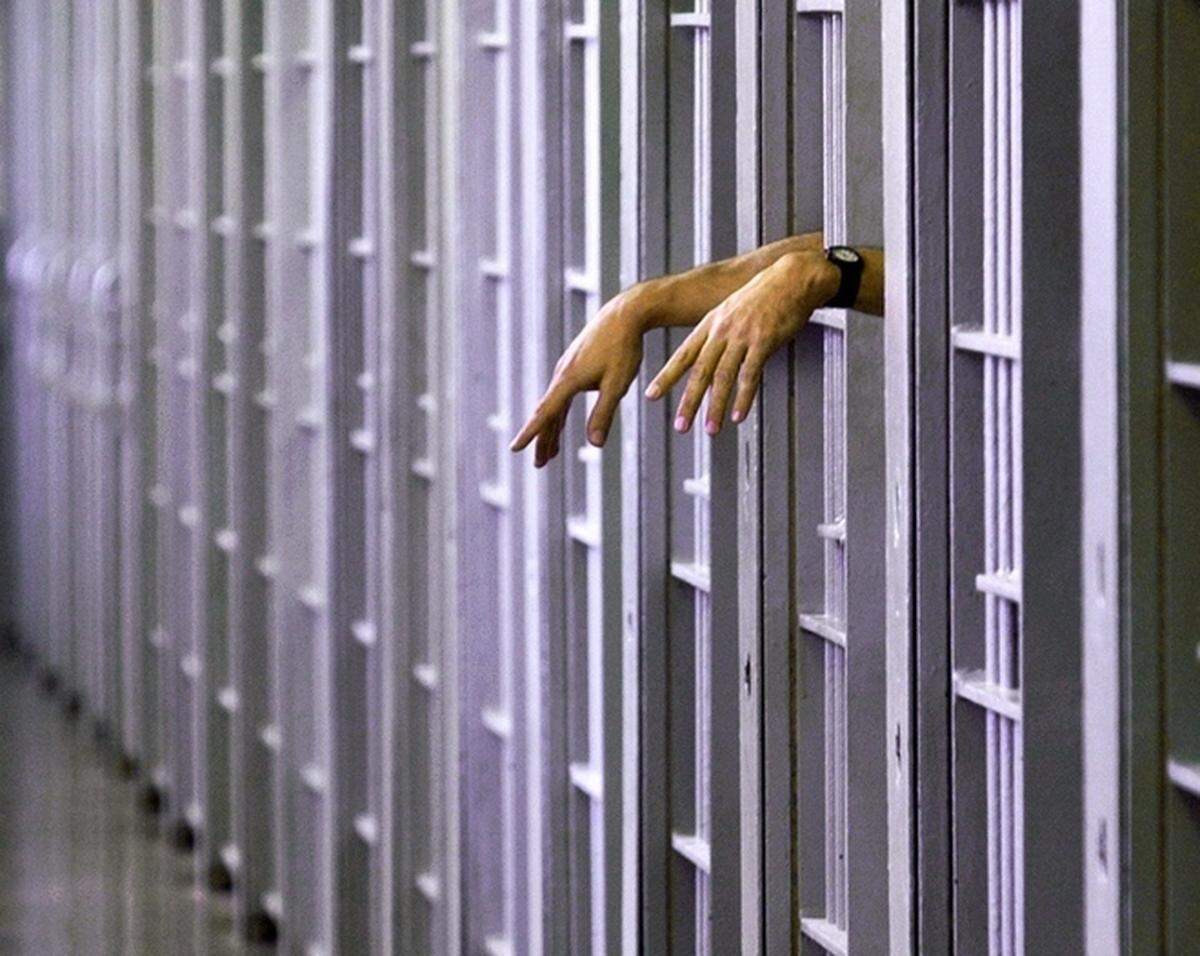
Florida mostly abolished parole in May 1983, although between 1983 and 1994, people convicted of murder and sentenced to life could get parole after 25 years. Today, a life prison terms means actual life, and for every other crime, inmates must serve at least 85 percent of their sentence.
The state’s parole commission, however, still exists to consider release for more than 4,100 current Florida inmates like Larosa whose crimes were committed before the system ended. During the last fiscal year, 27 inmates were released on parole, according to the commission.
Larosa’s mistaken release probably wouldn’t have happened if he had been serving his prison term in a state prison. But Larosa was part of a unique situation — as a Mariel refugee, he wound up serving his state sentence in a federal facility.
After the boat lift, Miami Dade County leaders bristled that Mariel refugees were increasingly filling up local jails and prisons after committing crimes on the streets of Miami. Then-Dade State Attorney Janet Reno struck a deal with federal authorities in which state prosecutors agreed to convict Mariel refugee criminals, but the U.S. Bureau of Prisons would assume the cost and responsibility of housing them for their prison sentence.
Because of that agreement, Larosa began his sentence in a federal prison in Miami. But in 1988, the U.S. Department of Justice nixed the agreement. Larosa and others were transferred back to state custody.
A decade later, the agreement was revived. Florida agreed to accept some Mariel federal convicts doing time for lesser crimes, while returning Larosa and others convicted of major offenses back to federal detention to finish their sentences.
Larosa spent 1998 onward at Miami’s Federal Correctional Institute, where he said the conditions were not terrible. The food was decent, the recreation time ample. Most of the prison officers spoke Spanish.
Over the years, the parole commission declined to give him a presumptive release date, in part because it did not believe he had an acceptable place to stay. His brother lived in low-income housing, and was not allowed to have roommates.
Parole records show Larosa had a clean prison history since he became eligible for parole, save 15 days in confinement for possessing an “unauthorized item” in 2013. He worked in the prison’s laundry unit, took classes on human anatomy and geology, and impressed his supervisor with his good behavior.
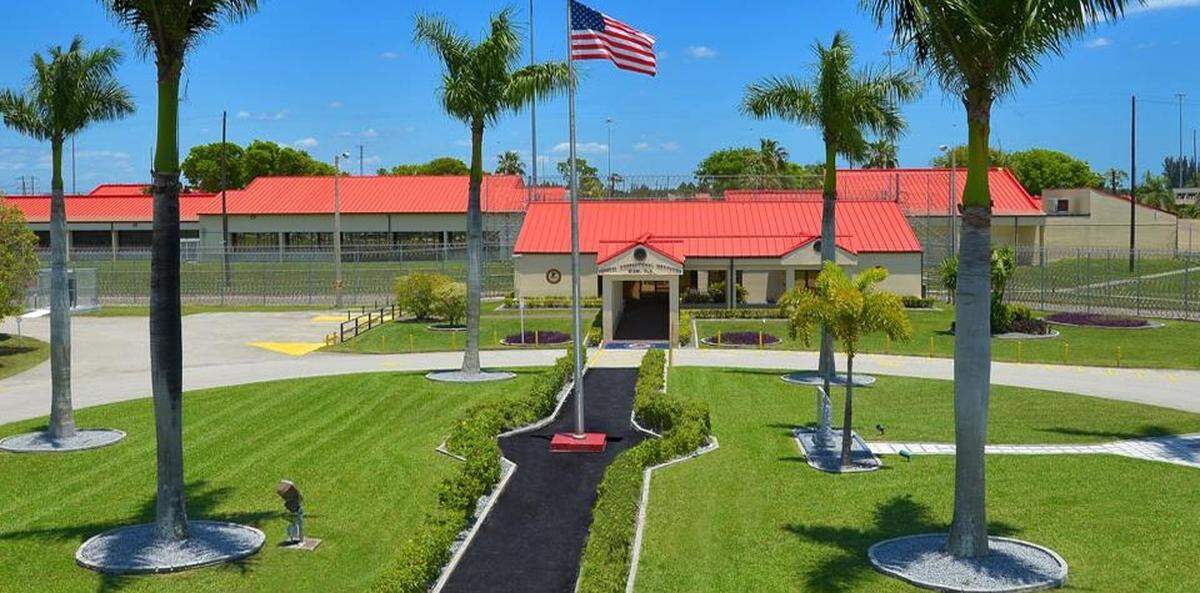
By May 2018, parole commission investigator Lindsay Peluso believed he was low-risk enough that she recommended he get a presumptive release date of June 11, 2018. The commission agreed.
When the date rolled around, Larosa was inside a dorm at the Federal Correctional Institute when a voice summed him over the loudspeaker.
“Estas listo pa’ que te vayas, papi?” A Spanish-speaking officer told him.
Are you ready to go?
Larosa giddily gathered up his belongings and changed into shorts and a T-shirt. He was not free just yet. Because he is a Cuban national convicted of a deportable offense, Larosa was placed in the custody of Immigration and Customs Enforcement, or ICE, for possible deportation.
Although there’s been an increase in deportations to Cuba, there are over 37,000 Cuban nationals with deportation orders living in the United States. Cuba accepts back relatively few of its nationals, mostly detainees who entered the United States within the past four years.
The irony is that Larosa wanted to return to Cuba, where his elderly mother still lives. But after five months in immigration custody, an employee at the Krome Detention Center summoned him. “Cuba won’t take you back. So we have to free you now,” the woman told him.
So in November, after 37 years behind bars, Larosa called his brother to pick him up. An hour later, a detention-center officer escorted him to the gate, where his brother met him.
“It was fresh air and sunlight,” Larosa said. “I opened up my arms.”
From the expressway, as he was driven back to the old neighborhood, Larosa marveled at the new construction. He at first stayed with his cousin, Mariano Estrada, and the man’s wife and teenage son. “The first night was magnificent. I slept in a bed, in a room by myself,” Larosa said. “Covered myself in good sheets. I woke up and had breakfast. Cafe con leche and buttered toast.”
Within a week, as instructed, he checked in with a parole office in Miami, and later an ICE supervision office, with no problems.
For Larosa, there were no grand tours of the marvels of the new South Florida.
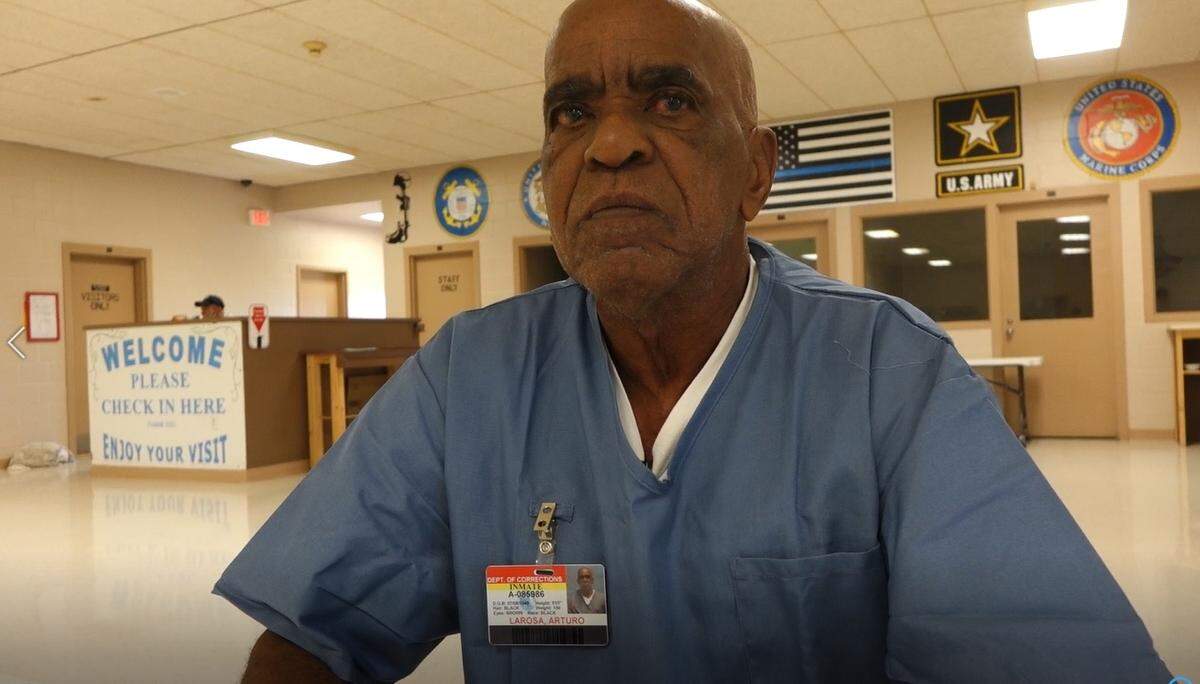
He qualified only for food stamps and medical care. Larosa had only his brother, Oscar Mendoza, a poor middle-aged tobacco roller who lived in low-income housing, and his cousin, Estrada, a retiree. Both lived in Allapattah, the same neighborhood where Larosa lived and was arrested in the early 1980s. Neither had much money.
Larosa quickly settled into a routine, gingerly exploring the neighborhood, nervous even crossing the street. “Ten blocks this way. Five blocks that way. So I didn’t get lost,” he said. “I was loving being able to walk around without anyone telling me where I could go.”
He tried to make himself useful sweeping the back and front patios every afternoon. A former electrician, he also took a keen interest in his 16-year-old nephew’s remote-controlled cars. Like many teenage boys, his nephew loved to retreat to his room to play online video games.
“The technology was amazing. In 1982, nothing like that existed. There wasn’t computers, or even cell phones,” Larosa said.
Eventually, Larosa’s family got him a simple push-button phone for low-income seniors. Still, he fumbled to answer calls, and barely could figure out how to make them.
Life wasn’t boring. But Larosa felt lonely.
After a few months, Larosa’s cousin could no longer support him. He moved to his brother’s apartment, where he wasn’t allowed to stay under the rules of the low-income facility.
So Larosa spent his days at Juan Pablo Duarte Park, while his brother was working, listening to music and the news while sitting on benches. He walked the streets to explore, occasionally using his food stamps to buy a soda or chips.
After 5 p.m., he’d return to his brother’s apartment. They’d eat, and watch telenovelas and the news on Spanish-language TV. At night, Larosa slept in his brother’s car until starting the routine all over again the next morning.
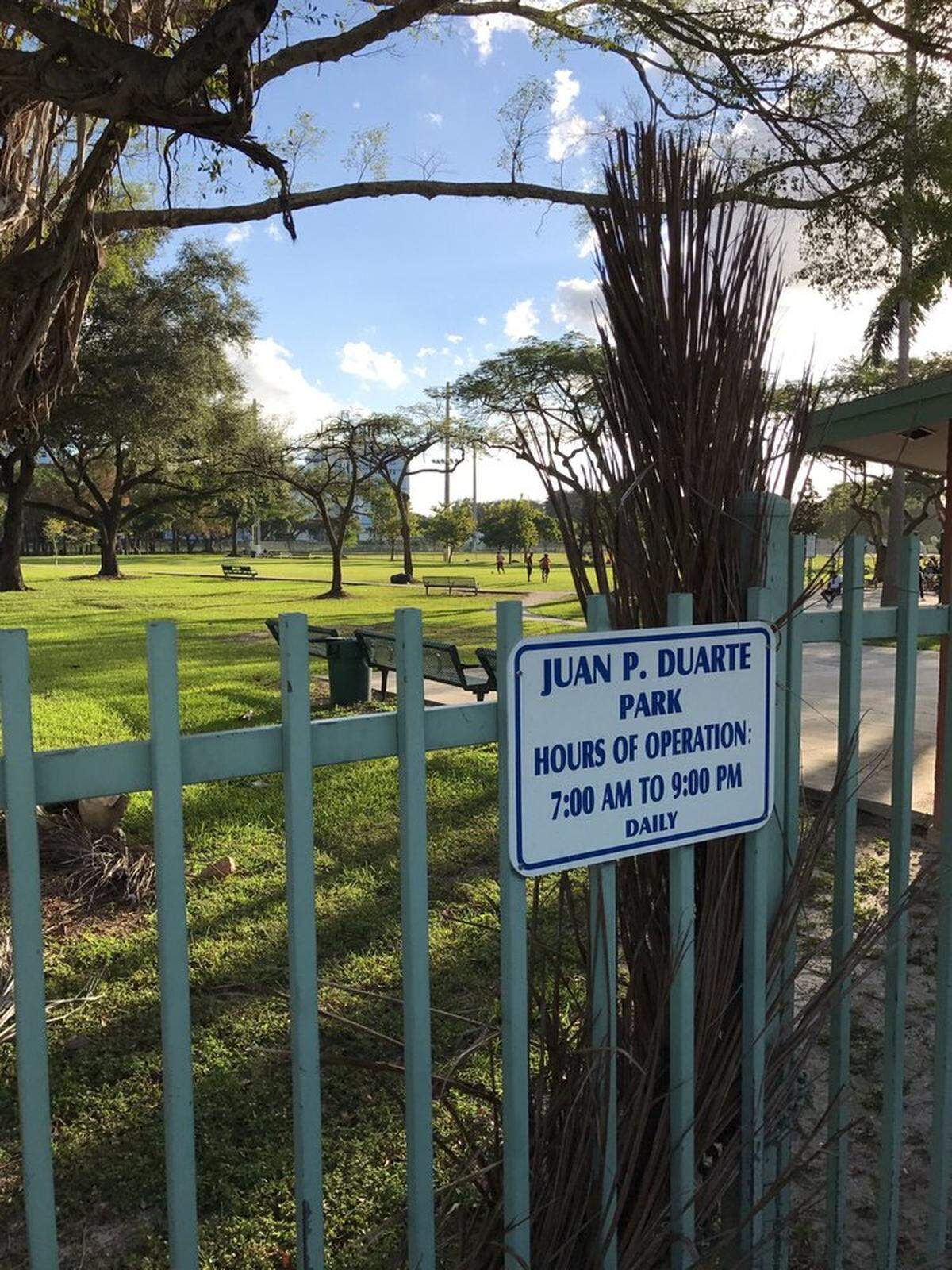
Ducking the housing employees wouldn’t have lasted. Mendoza admits he was exploring sending Larosa to live at Camillus House for the homeless .
“We didn’t know what to do with him,” Mendoza said.
Authorities would soon end that uncertainty. On March 26, state corrections officials were checking on parolees and released that Larosa had been released in error. With an arrest warrant issued for his arrest, Miami-Dade police officers arrested him two days later.
Today, Larosa is back in prison, but not a federal one. He has been moved to Florida’s Hardee Correctional Institution, about an hour’s drive east of Tampa.
He does not have an attorney, and seems to have a deep misunderstanding of his legal predicament. He believes Moreno, his former lawyer and current federal judge, can still represent him.
Larosa also insists that he never actually got the life sentence, just the 15-year terms. A few months ago, he sent a request to a Miami-Dade court, asking that his sentence be corrected. But after reviewing the transcript of the 1983 sentencing, a Miami-Dade judge rejected his request.
For now, Larosa’s next presumptive parole release date is June 11, 2021.
“I was months on the streets, quiet, without any problems, without bothering anybody,” Larosa said. “I have hope that I can return.”
This story was originally published September 13, 2019 at 6:00 AM.