
‘We are in a crisis’: Low pay spurs exodus among Miami prosecutors, public defenders
Gabriela Plasencia thought she would be a career prosecutor.
Raised in West Kendall, she joined the Miami-Dade State Attorney’s Office straight out of law school in 2015. She worked her way up the ranks, handling misdemeanor domestic crimes, juvenile delinquency cases, and then felonies. One of her proudest moments: helping convict a man accused of murder.
“I had grown close with the victim’s family,” Plasencia said. “When I saw the look on the family’s face after they heard the verdict, it made me proud. It made me happy there was justice.”
But outside of court, like many young state prosecutors in Miami, Plasencia was struggling financially. Her debt from the University of Miami’s law school remained in the six figures. Plasencia, 28, earning $52,000 a year, still lived at home with her parents. When a Coral Gables civil law firm, Raposo & Lukacs, offered her a job in November, she struggled with the decision before accepting.
Today, Plasencia says she is loving her new job representing victims in personal injury and medical malpractice claims. Her salary nearly doubled and she’s hoping to buy her own home. “Money was constantly a stressor for me,” she said. “I’m not stressed about money. Now, I can breathe.”
Young lawyers like Plasencia are part of a staggering exodus over the past year among the ranks of prosecutors and state-funded defense lawyers in Miami-Dade County. With the economy humming, private law firms have expanded hiring attorneys prized for the invaluable trial experience gained in the grind that is Miami-Dade’s criminal courthouse.
It’s against this backdrop that Miami-Dade State Attorney Katherine Fernandez Rundle and Public Defender Carlos Martinez will travel to Tallahassee next week to lobby the Legislature for a significant pay increase for their lawyers. There is a kernel of hope: The proposed budget from the Florida House of Representatives increases starting salaries to $50,000, still low among publicly funded lawyers but a start nonetheless.
Fernandez Rundle and Martinez will make the rounds during the legislative session armed with alarming statistics. Over the past year, each office has lost nearly a quarter of its lawyers, too fast to replenish them with new recruits who must be trained over years.
Seventy-two Miami-Dade prosecutors left the office between July 2018 and March 1, a clip so rapid that younger lawyers are being thrust into more complex cases sooner. Thirteen of the 20 prosecutors known as “A’s” — who handle major first-degree felonies such as attempted murder — have been in these positions less than six months.
“A lot of these losses are lawyers in the trenches,” Fernandez Rundle said. “We need them there fighting for safety, fighting for victims, fighting for justice.”
Across the street, the Public Defender’s Office is down to 192 attorneys — far below the 220 or so needed to adequately staff the thousands of cases that pour into Florida’s most populous county. Complex cases become revolving doors for court-appointed lawyers while the months slip away, with some defendants languishing in jail.
“You can have a client who had three to five assistant public defenders in a matter of two or three years, and those are the serious cases,” Martinez said.
Personnel turnover among prosecutors and assistant public defenders in Miami is nothing new, of course. The Richard E. Gerstein Criminal Justice building has long been a training ground for future private lawyers and aspiring judges.
But the rate of attrition has sped up in recent years, while wages have stagnated and the cost of living in Miami-Dade has skyrocketed.
According to a recent study, the median two-parent, two-child Miami household earns less than $52,000 a year — making Miami families the least well-paid among the biggest 25 metro areas in the United States. That means Miami is the second least affordable among the top 100 cities in the country.
Many younger state-paid lawyers can’t afford to live alone. Former Miami-Dade prosecutor Kim Archila, who left in August 2017 to defend insurance companies facing lawsuits, cycled through roommates and apartments during her time as an assistant state attorney.
“I put in seven years of sweat and I still had to look at my bank account if I wanted to go out to eat,” said Archila, 32, who left making $55,000 annually.
The starting salary for a prosecutor at the Miami-Dade State Attorney’s Office is $41,500; last month, the office had 243 prosecutors, well short of its 333 slotted positions.
The starting pay is now lower than for school teachers in Miami-Dade ($46,125) and county police officers ($45,929). Among other public-service lawyers, it’s the lowest — starting slots at the Office of the Statewide Prosecutor pay $51,355, at the Florida Attorney General’s Office $51,627, and at Legal Services of Greater Miami, a nonprofit servicing poor clients who need civil representation, $52,000.
And it’s far below the starting pay of federal prosecutors, who begin at $63,909 but get added pay based on their years of legal experience and because they live and work in Miami. Those are plum assignments, and over the past year, the State Attorney’s Office has lost a slew of experienced younger attorneys to the feds.
That includes Christine Hernandez, 39, who secured convictions in several high-profile murder trials; Alejandra Lopez, 38, an experienced homicide and gangs prosecutor; Trent Reichling, 34, a public-corruption prosecutor who joined the U.S. Attorney’s Office in Fort Myers; and Derek Ko, 40, a state cybercrimes prosecutor who joined the feds in San Diego. Thomas Haggerty, 38, the head of the Miami-Dade State Attorney’s Office Cyber Crimes Unit, is also leaving next month to join the U.S. Attorney’s Office in Miami.
Even more experienced attorneys have left. Last year, Miami-Dade Chief Assistant State Attorney Jose Arrojo left to head Miami-Dade’s Commission on Ethics and Public Trust, and Frank Ledee, the longtime head of the Gangs Unit, was appointed to become a judge in Broward.
Faced with daunting losses, the State Attorney’s Office has been forced to shift around personnel.
Some lawyers from specialized units such as Organized Crime and Gangs have been loaned out to help staff daily courtroom assignments. Training for new hires has been slashed in half, from six weeks to three.
Caseloads have skyrocketed. In some courtrooms, the “C” prosecutors who handle low-level felonies can juggle between 400 and 500 cases, Fernandez Rundle said.
“We are in a crisis,” she said.
Fernandez Rundle and Martinez, the public defender, have been making the rounds at local governments over the past couple of months, drumming up support for higher pay. The Miami-Dade County Commission in February passed a resolution calling for higher wages for the State Attorney’s and Public Defender’s Office.
The departures have been as equally pronounced at Martinez’s office, which last year lost more than 40 attorneys. Miami-Dade assistant public defenders start at $45,000 annually.
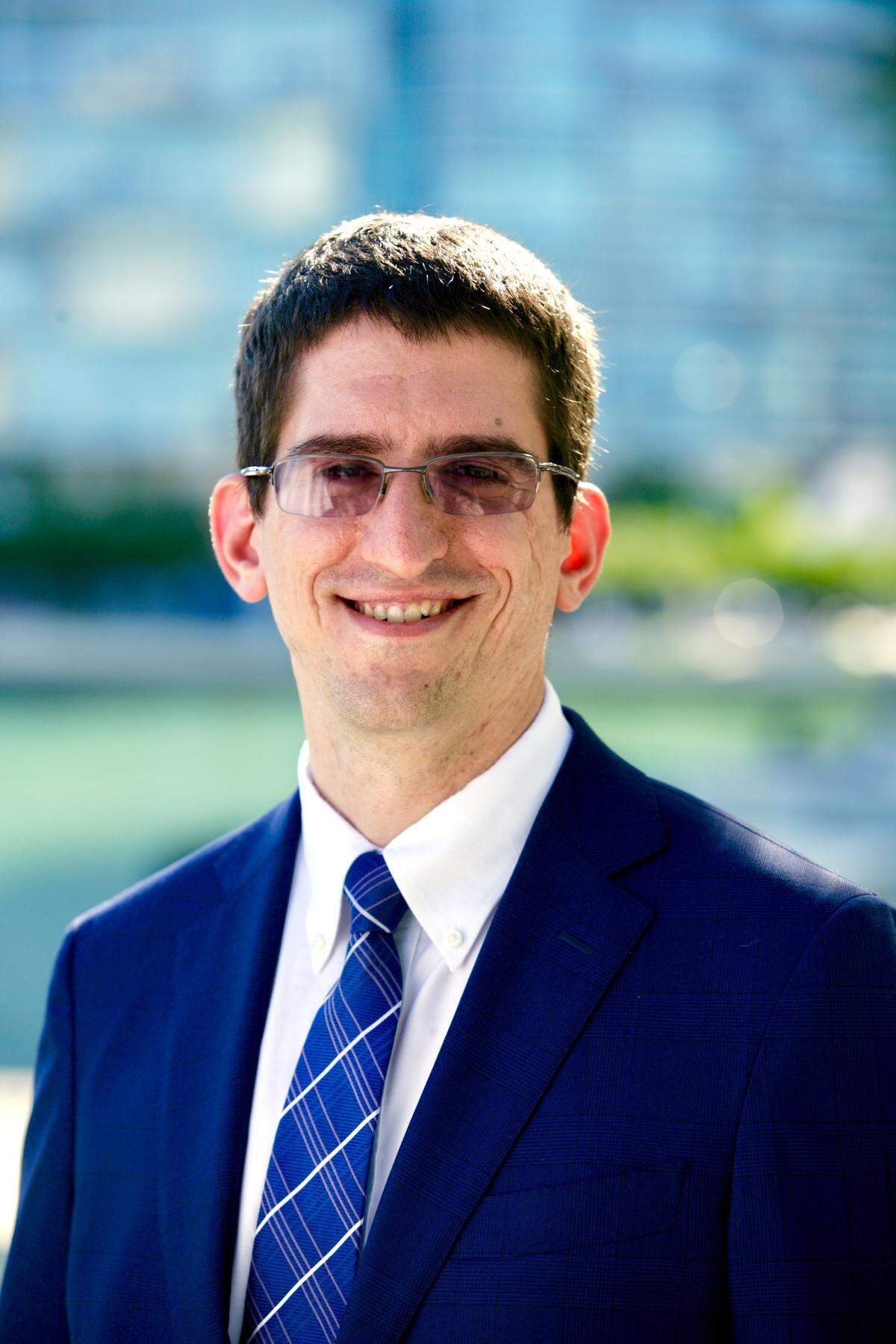
He said younger attorneys — who usually take at least two years to be fully trained — are starting to leave earlier than in years past, particularly to small to mid-size civil firms. “The love of the job only keeps you around so long,” Martinez said.
Igor Hernandez, 32, left the office in August 2017 to start a private firm with fellow assistant public defenders Cam Cornish and Dylan Gonzalez. While he loved the constant trials and camaraderie of the office, the $56,000 salary he was earning after four years wasn’t ideal — and there was little hope of any major raises.
“I remember working weekends pretty much every weekend. Ten-hour days were common, and that’s when I was not in trial,” Hernandez said. “When you calculate it hourly, it was probably minimum wage.”
Caseloads, already high for assistant public defenders, have mushroomed even more in recent months.
The staffing has gotten so bad that in December the Public Defender’s Office began paying nine certified legal interns — previously unpaid positions — to assume minor cases, under the supervision of veteran lawyers.
“I realized I needed to do something drastic,” Martinez said.
Whether the Legislature comes through with higher pay remains to be seen.
The proposed House budget institutes a minimum salary for both offices statewide at $50,000. The funding was added after Rundle and Martinez lobbied House Speaker Jose Oliva, R-Miami Lakes, earlier this month. Neither the proposed Senate budget, nor the governor’s budget, does likewise, however.
The final budget must be reconciled among the three proposals.
Miami Beach House Rep. Michael Grieco, a former prosecutor and current private defense lawyer, said the criminal justice system is “woefully underfunded.” He acknowledged that increasing funding, particularly to pay for representation for the poor accused of crimes, is a tough sell for the public.
“I think if we’re able to maintain what is in the budget now, we should be doing cartwheels,” said Grieco, a Miami Beach Democrat. “I’m just afraid that we get down to crunch time, this is one of those items that somebody going to siphon off. There’s so much horse trading between the House and the Senate.”
This story was originally published March 27, 2019 at 7:00 AM.