
Unlocking family health history through genealogy
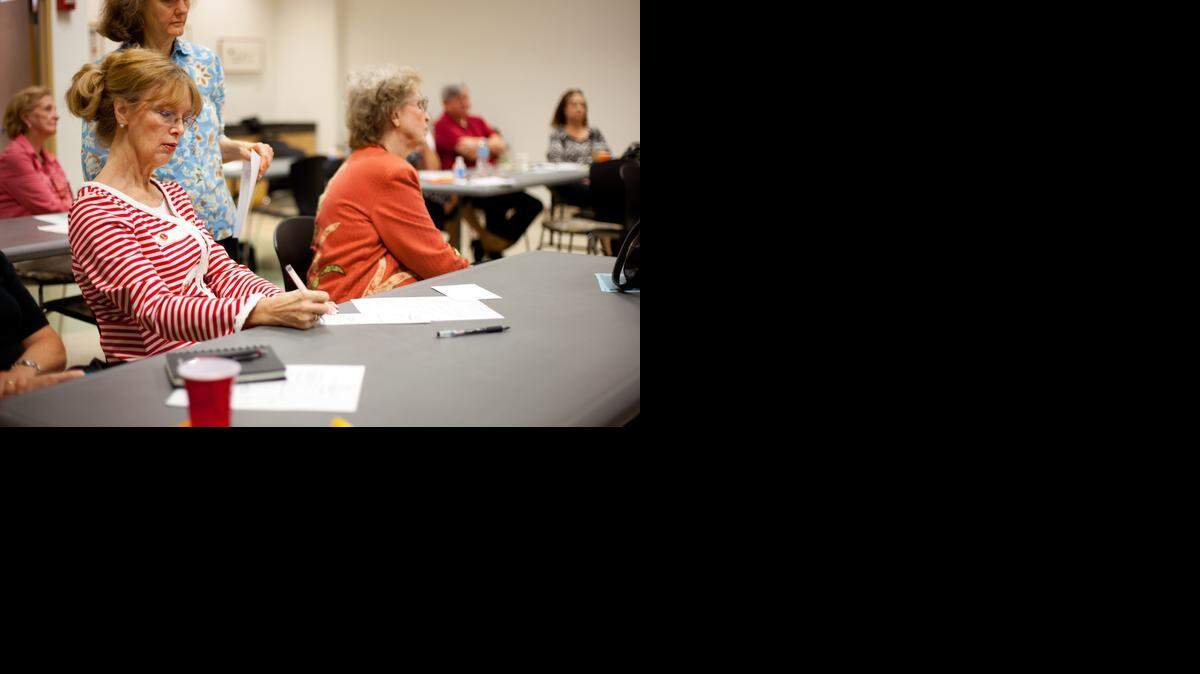
Janice Mc Kay started searching her family’s history and discovered a relative who fought in the American Revolutionary War, another one who fought in the Civil War and an Irish grandfather who was a descendent of Robert II of Scotland, who reigned as king from 1371 until his death in 1390.
Aside from the cool factor, Mc Kay says digging into a family’s past can help people live longer by tracing diseases that may be genetic.
“I try to emphasize to my genealogy members that they need to look at family health and genealogy,” said Mc Kay, 70, who recently became president of the Genealogy Society of Greater Miami, a nonprofit organization that encourages members to investigate their ancestry. “There are families that can carry certain [hereditary] diseases.”
On a recent Saturday at the Pinecrest library auditorium, Mc Kay invited Derek Dykxhoorn, Ph.D., a leading DNA and chromosome researcher with the University of Miami’s Miller School of Medicine, to discuss genealogy and health.
Dykxhoorn is an associate professor of human genetics and microbiology and immunology and co-director of the center for molecular genetics at the Hussman Institute for Human Genomics at the University of Miami Miller School of Medicine.
“My job as molecular geneticist is to understand the role that genes are playing,” said Dykxhoorn, 44, of Coral Gables. “Part of that involves understanding which genes are being expressed in which cells, and how that impacts the basic features of the cells.”
Dykxhoorn adds that the human genetics department at the medical school researches how mutations in certain genes cause specific diseases –– the reason Mc Kay and the Genealogy Society sought his expertise.
Dykxhoorn presented a simplified overview of genetic-related topics like pedigrees, modes of inheritance, epigenetics and induced pluripotent stem cells, or cells that have been experimentally reprogrammed to behave similarly to embryonic stem cells. In the past few years, Dykxhoorn and the Department of Human Genetics have found ways, using these cells, to replicate other cells in the body to replace those that have been damaged.
This is especially helpful when trying to understand certain conditions, like Alzheimer’s or Parkinson’s disease.
“When you’re working with a neurological disorder, you can’t get primary neurons from an individual because they still need their neurons to function,” Dykxhoorn said. “It’s not like blood cells where you can take a blood sample and begin to understand what’s going on.”
Dykxhoorn adds that being able to modify copious cells — like red blood cells or skin cells — and transform them into stem cells has changed the way doctors study neurological disorders.
“I can take, for example, blood from an individual who has autism; I can make the blood [cell] into stem cells, and then take the stem cells and make neurons,” Dykxhoorn said. “Now I have neurons that have the same genetic makeup as that individual.”
And since induced pluripotent stem cells can be derived directly from adult tissues, they do not involve embryos, which avoids the controversy behind embryonic stem cells.
Although studies allow doctors to understand certain hereditary disorders, McKay stresses that individuals should still take responsibility for knowing their family history.
“We wait until our grandparents and parents usually leave us, and all of the sudden we want to know who we are,” Mc Kay said. “You know those little things like arthritis and lumbago (lower back pain) and the other things [our parents and grandparents] might have had? We don’t take note of them, but they become important later on in life.”
If you go
The Genealogy Society of Greater Miami meets the second Saturday of every month from 1:30 p.m. to 4:30 p.m. at the Pinecrest Community Center, 5855 Killian Dr. For more information, email MiamiGenealogySoc@gmail.com
This story was originally published October 21, 2014 at 11:57 AM with the headline "Unlocking family health history through genealogy."