
A flood-prone South Miami-Dade suburb braces for a whopper of a development
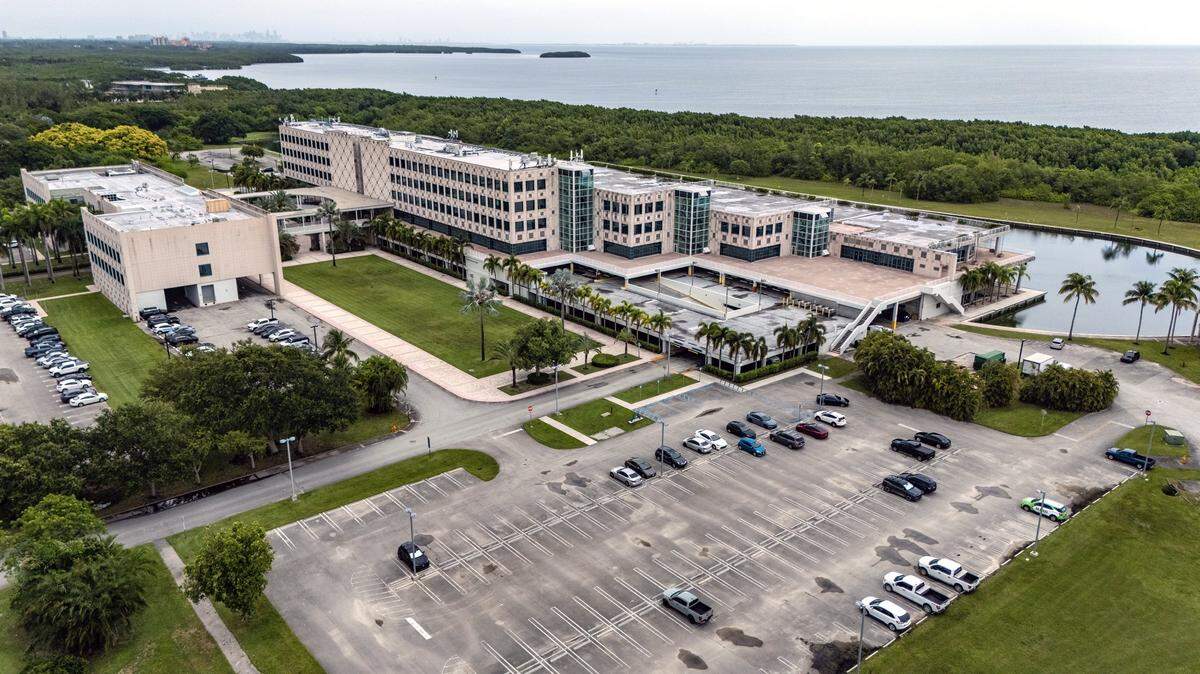
In the 1980s, when Miami-based Burger King looked to build a modern corporate headquarters that reflected the Whopper empire’s global reach and success, it chose an out-of-the-way — and flood-prone — slice of land on Biscayne Bay off Old Cutler Road, deep in what was then known as South Dade.
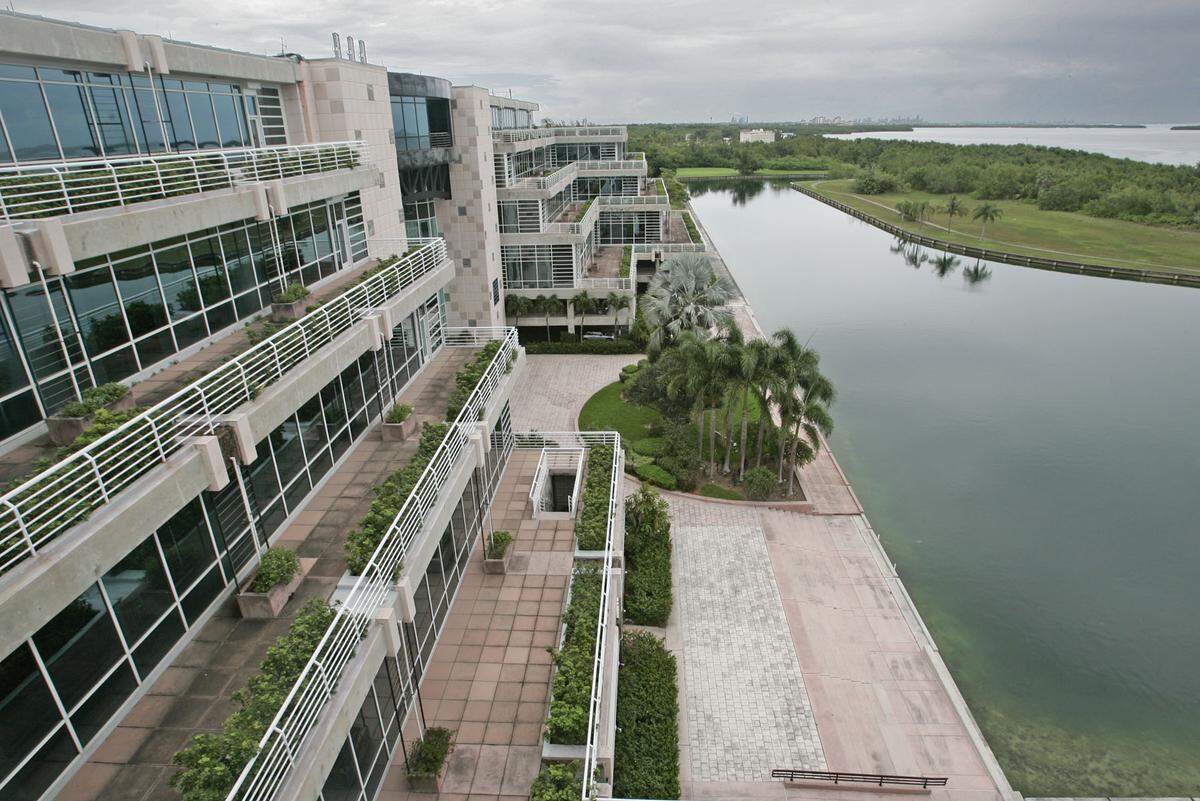
On 80 acres, the company built a sprawling, multi-story campus of monumental entryways, soaring atria and expansive terraces overlooking an artificial lagoon and offering, far in the distance across an expanse of water, a view of the downtown Miami skyline. Sandwiched between wild mangroves and a dense forest on the watery edge of what was once the Everglades’ vast flood plain, the complex rose like a fast-food Oz from the remnants of the area’s degraded but still vitally important natural environment.
Whether audacious or foolhardy, it would soon prove a fateful decision — one that carries new and consequential repercussions today.
The Village of Palmetto Bay, which didn’t exist when Burger King occupied the complex, now faces an extensive redevelopment plan residents and officials don’t want, on a site where some environmentalists say nothing of the scale of the old BK HQ should have been built in the first place.
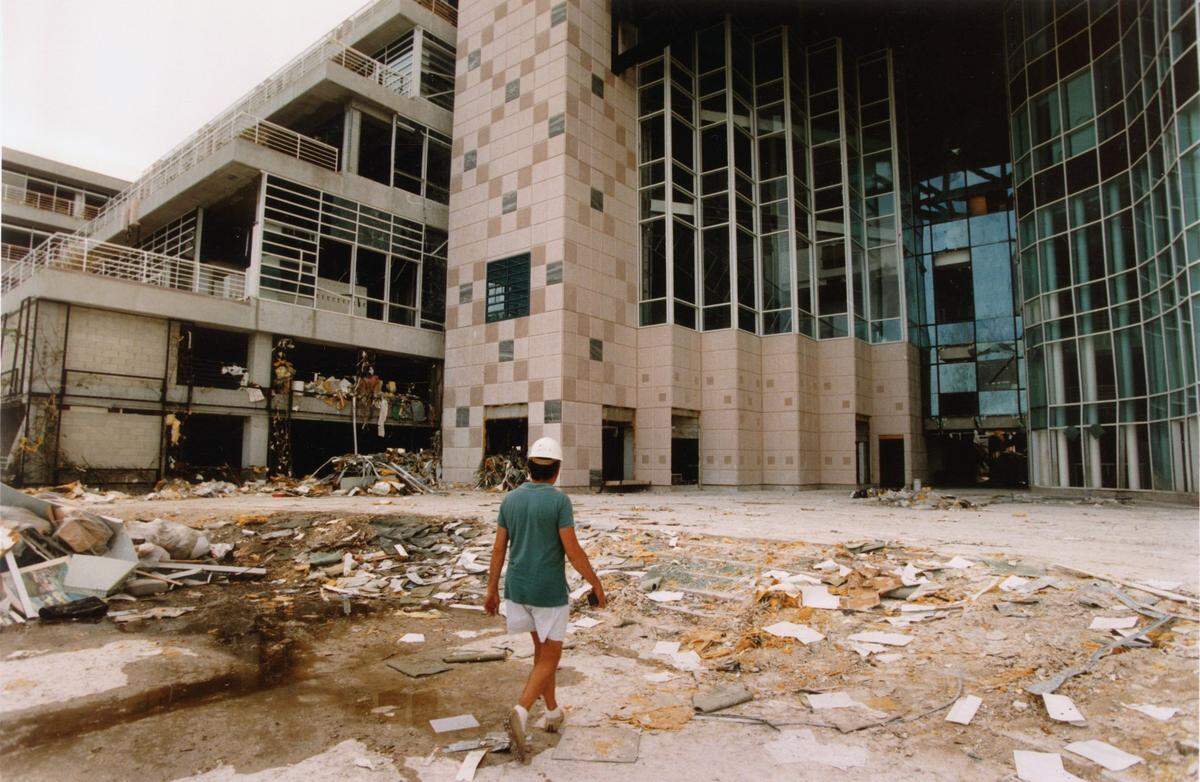
Just four years after Burger King moved in, in 1992, Hurricane Andrew hit it square-on with sustained winds as high as 165 mph and a record storm surge of nearly 17 feet. The storm blew out the main buildings’ bayfront windows and the corporate offices within, strewing the property with office furnishings, ducts, shards of metal and other building parts. After tens of millions in repairs, Burger King moved back a year later, but in 2002 sold the site and repaired to a more central and secure location, Blue Lagoon next to Miami International Airport.
For much of the two decades since, the owners of the complex, rebranded as the Palmetto Bay Village Center after the municipality founded in 2002, have leased out its offices — one longtime tenant is the Everglades Foundation — and hosted weddings and events while pursuing a wide-ranging redevelopment plan. Until recently, those plans had been thwarted by opposition from residents and village officials.
Not any more.
After a decade of political conflict, back-and-forth votes and a series of losses in court, the village council in June bowed to the seemingly inevitable: By a slim 3-2 majority, the body approved an agreement with Goddard Investments Group of Atlanta, the property owners, that would transform the old Burger King site into a dense village of apartments, townhomes, retail, restaurants, offices and, possibly, a hotel.
Palmetto Bay Mayor Karyn Cunningham, who had opposed redevelopment but voted for the agreement, said court decisions favoring Goddard left the town facing potential damages of up to $15 million and little choice other than to approve the deal, even though the village government and many residents oppose building more on Old Cutler, a narrow scenic and historic road that’s susceptible to flooding and already saturated with traffic much of the day.
Some land preserved
The village wrung two key concessions from the owners, she noted.
Goddard will donate a 22-acre nature preserve on the grounds along Old Cutler to the town, along with a smaller piece of wetlands and mangroves at the southern end of the property that could not be built on in any case. Goddard also agreed not to invoke the Live Local Act, a controversial state law that overrides local zoning controls and could in theory have allowed the developer to build as many as 2,300 units of housing on the site, Cunningham said.
In addition, Goddard agreed to drop the number of residential units in the project from 485 to 455, a reduction Cunningham said will help blunt its impact.
“What we’ve done is make the best of a really bad situation,” Cunningham said in an interview. “Traffic and environment concerns are the reason we’ve fought to keep this development from moving forward. But we lost.”
A Goddard representative said the company does not comment on ongoing plans.
Under the agreement, which provides a conceptual framework for the redevelopment, Goddard would retain Burger King’s original buildings, designed in a florid post-Modern style typical of the 1980s by prominent national architectural firm Hellmuth Obata & Kassabaum, today know as HOK.
Those buildings, which feature pinkish checkerboard patterns mixed with raw concrete, steel and sleek glass, would be refurbished for office and other commercial uses, including the possible 120-room hotel and a food market.
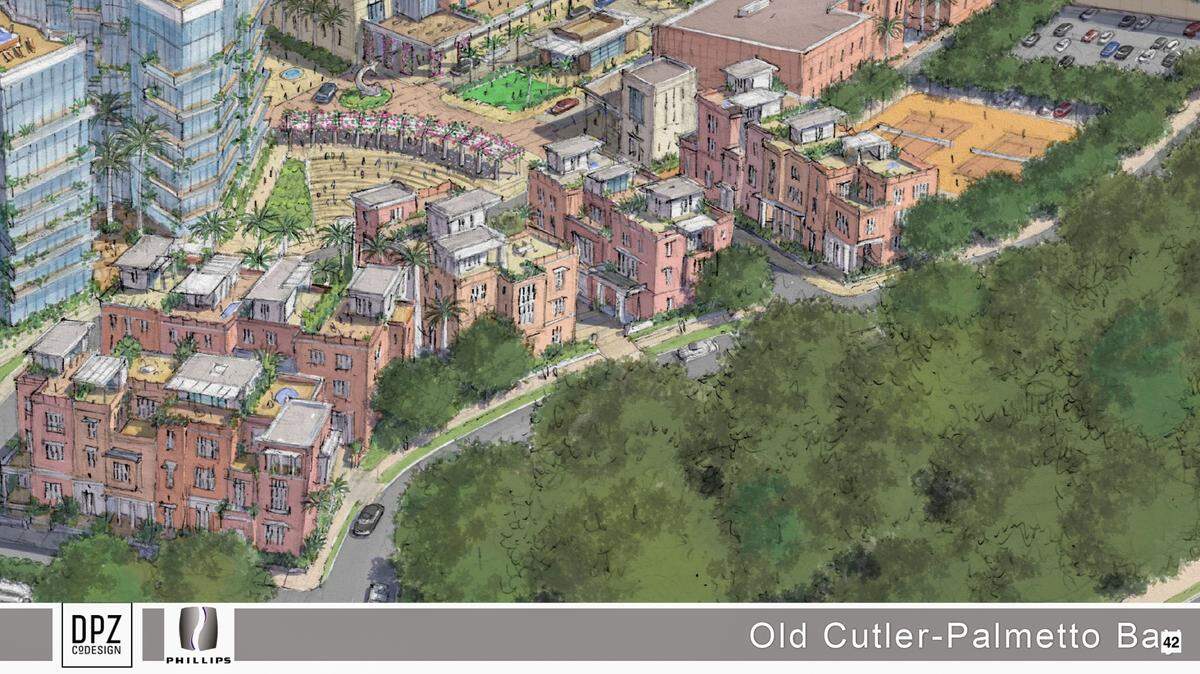
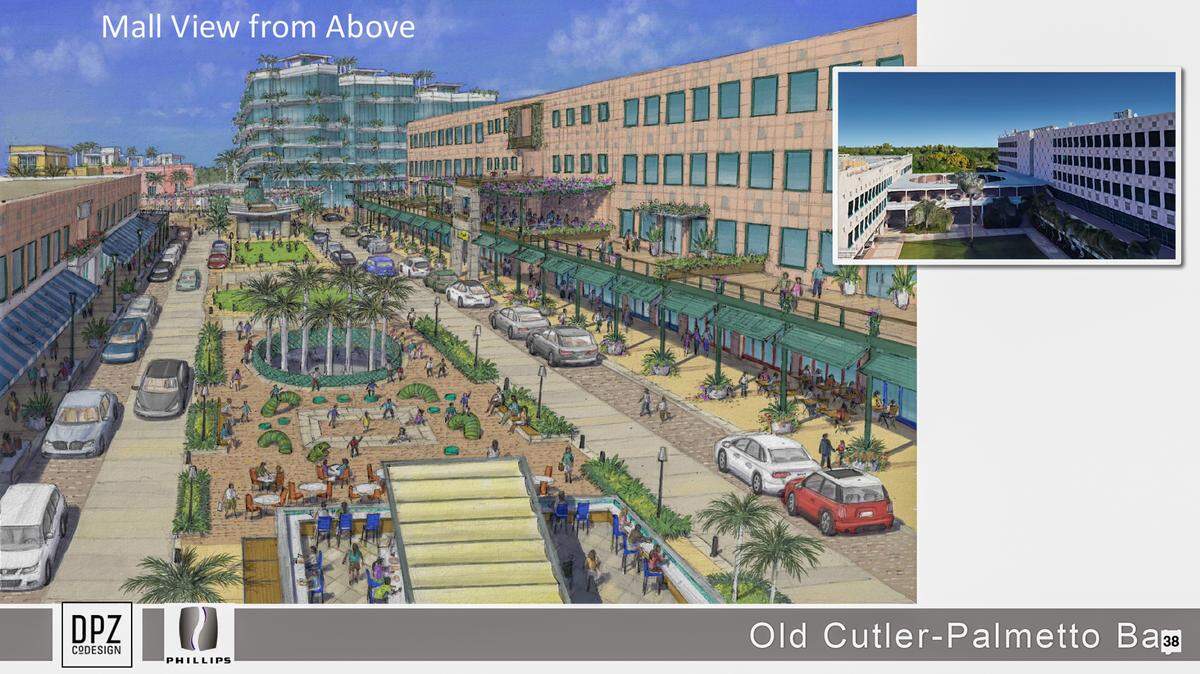
On what are now parking lots to the east, north and south of the complex, new buildings would house 413 condos or apartments, 42 rowhouses and a massive 100,000 square-foot fitness center, a master plan that accompanies the agreement shows. The lagoon would also be preserved and the site once again rebranded, this time as Laguna Vista.
The plan has a significant resiliency elements. All new construction, for instance, will be elevated well off the ground, like the original buildings.
Those original buildings, which range from three stories to six, housed Burger King’s corporate offices, its test kitchens and Burger King University, its training center. They stood fast when Andrew hit, in large part because, in anticipation of just such a blow, the first two stories consist of open parking with occupied floors above over stilts and columns. That allowed much of the surge from Andrew to flow through with minimal structural damage.
Even so, the high-water mark hit the third floor levels, and the risk of a repeat is significant. Scientists say a warming climate will bring stronger hurricanes driving even higher storm surge. The property sits in a designated coastal high-hazard area, and regulators say the south Biscayne Bay coast has a one-in-four chance of flooding from a storm surge within 30 years.
To help ride out surge, the conceptual plan drawn up for the developers by Miami planning and architecture firm DPZ CoDesign, known for its pedestrian-friendly New Urbanist approach, puts the first usable floor of the new buildings up in the air as well.
A new commercial main street, lined with retail and running between the existing buildings, would be up the equivalent of two stories, or one foot above the base flood elevation for the site, DPZ founding partner Elizabeth Plater-Zyberk said. FEMA’s required flood elevation for the site is 17 feet. New apartment buildings would be up to 10 stories tall, though Plater-Zyberk said they won’t be visible from Old Cutler or the bay.
The townhomes, which would sit on higher ground closer to Old Cutler, will have only entryways on the first floor, with all habitable space above.
The key, Plater-Zyberk said, is integrating the existing commercial buildings — and preserving their architectural style to provide a unique look and feel — with the new homes so that people who live in Laguna Vista can also work and shop there, reducing the number of car trips it would otherwise generate.
“We can’t just take those buildings down,” Plater-Zyberk said, adding that her firm’s plan tries to address village leaders’ and residents’ environmental and traffic concerns. “We need to make them compatible set pieces within a harmonious whole. There is now the possibility that certain kinds of everyday activities can take place close to home.”
Plans could still change
One big caveat is that the plan is a concept very much subject to change.
The legal settlement the village council approved outlines a zoning framework for the redevelopment and details its size and scale, but the council did not formally review the plan itself. Goddard now has architects working on specific designs, which must be reviewed internally by the village’s building and zoning departments, though there won’t be public hearings. Miami-Dade County’s environmental regulators may also need to weigh in, Cunningham said.
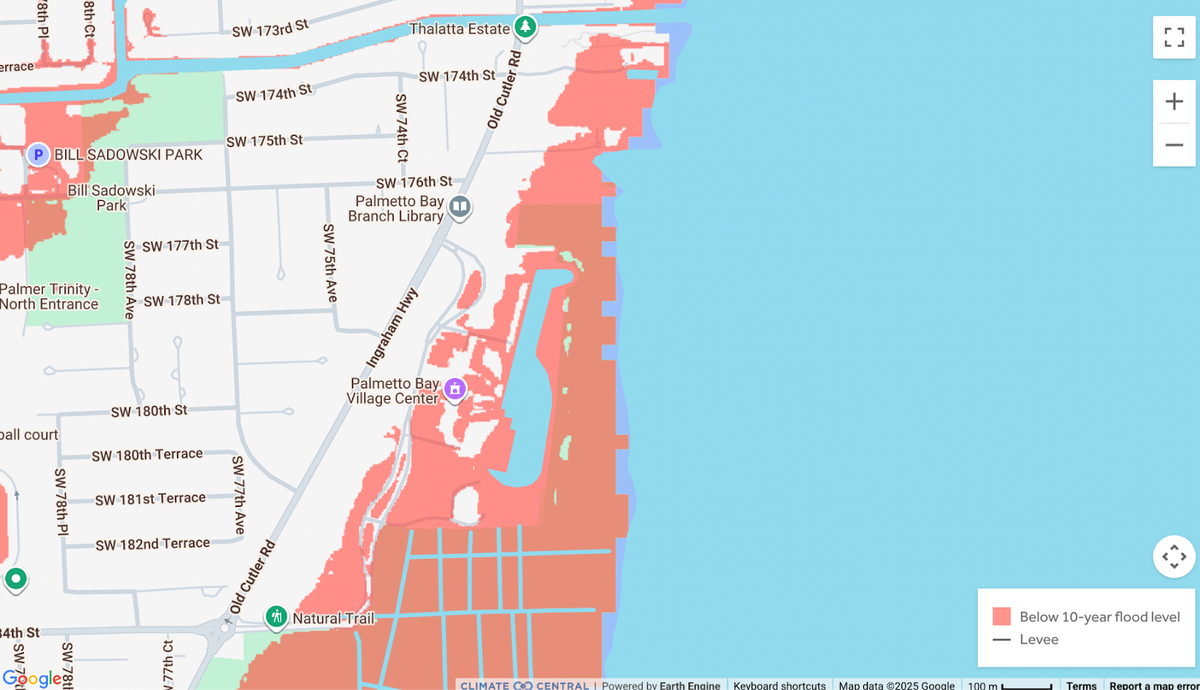
The agreement comes at a time when Palmetto Bay, once an unincorporated suburb of mostly modest homes built in the 1960s and 1970s, has been trying to stave off the intensive new development springing up on its borders, including in Cutler Bay to the south, and preserve its low-density scale and feel while girding for inevitable flooding from storms and sea-level rise.
At the same time, Palmetto Bay has become increasingly desirable for families, a trend that has driven up demand and seen the value of even simple concrete houses reach $1 million, Cunningham noted.
Because most of the village of about 24,000 people sits within designated flood zones, the majority of its homes and buildings are especially vulnerable to both surge and sea-level rise. A new village resilience action plan, just approved unanimously by the council, seeks to guide new development through incentives and other policies away from risk areas, including all properties along the coast of Biscayne Bay.
That hasn’t stopped a luxury home developer from building what he describes as a $50 million ‘’flood-proof bunker’’ on the bay just north of the old Burger King site.
In the case of the village center site, a controversial decision by a previous Palmetto Bay council and administration gave the property owner the right to redevelop and expand the campus, setting the stage for years of litigation and political conflict and the new settlement agreement.
In 2016, the council, led by then-Mayor Eugene Flinn, approved an upzoning that allowed 485 residential housing and retail to be developed on the site, essentially expanding on an older plan for senior housing on the property that never came to fruition. The vote outraged many residents, generated ethics complaints and helped elect Cunningham, then a council member who had voted against the upzoning, as mayor in 2018, defeating Flinn.
In 2022, Cunningham led a council majority that voted down Goddard’s application to build the 485-unit project. Later that year, she again defeated Flinn, who called for the village to buy the old Burger King property to block development, to win a second term.
But Goddard filed two court challenges, including a $15 million claim under the state’s Bert J. Harris Act, which gives property owners the right to claim damages when local government unreasonably infringe on their development rights. Trial and appeals courts ruled consistently in favor of the developers, who argued successfully that the council’s 2016 approval gave them vested rights, and ordered the village to settle.
Though the owners would have had to prove the Harris Act claim amount in court, the potential $15 million penalty “was really the sword hanging over our heads” that forced the settlement, Palmetto Bay village manager Nick Marano said in an interview.
The settlement, which provides for a 30-year agreement and a project to be built in unspecified phases, led Goddard to present a fresh plan that Cunningham called a marked improvement over the 2022 version, which she said had “nothing attractive about it.” The mayor says she hopes they adhere to the new blueprint, though the council was powerless to vote on it.
‘A better fit for Palmetto Bay’
“What they have presented is a better fit for Palmetto Bay,” she said.
The 22 acres of wooded land along Old Cutler will be deeded to the village once the first new building in the project is done. The woodland, which has a paved path through it, would be restored to its original state as a pine rockland with public access, she said. The preserve could also provide a path for golf carts — a popular alternative to cars in Palmetto Bay — in and out of the development so that residents don’t have to always rely on cars
The donation also includes a small slice of the Goddard property that now provides parking for the county branch library that sits at its north border, on land leased from Palmetto Bay inside a municipal park.
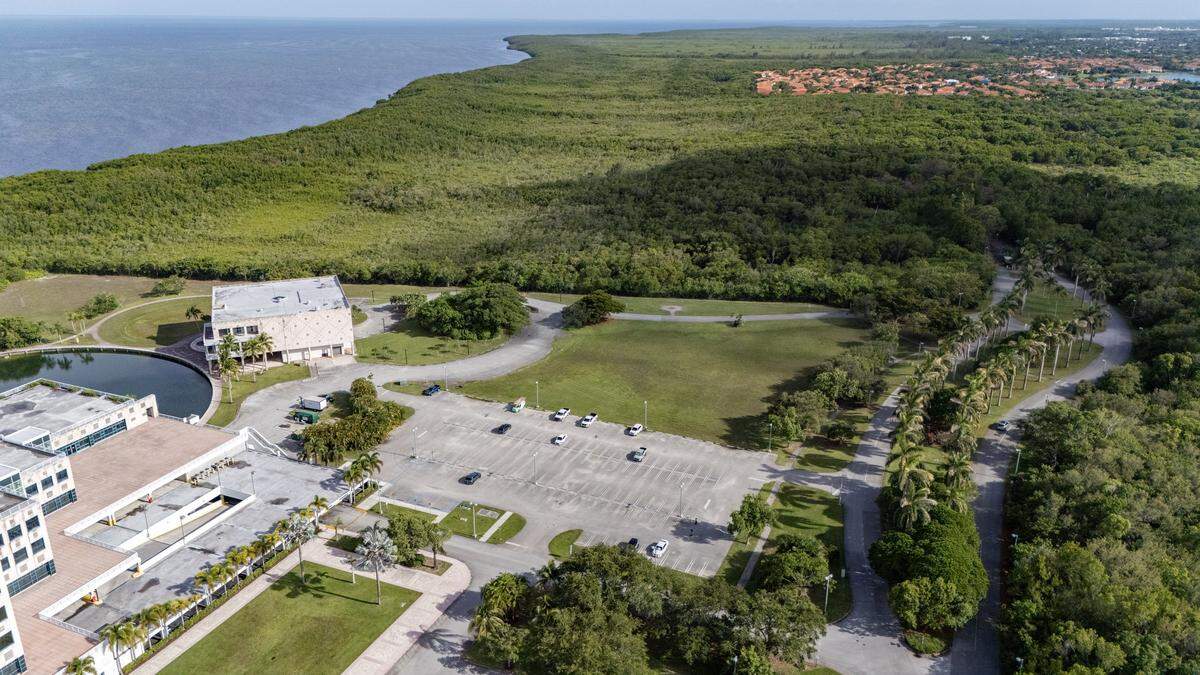
The 13 acres on the south border, mostly wetlands and mangroves, will be left as is. Cunningham said it’s a small but valuable piece that provides a buffer against flooding. It also adjoins a much larger coastal preserve south of the property’s southern entrance on Southwest 184th Street that is undergoing restoration in a joint project by Palmetto Bay and Cutler Bay.
Her hope, Cunningham said, is that the new project will live up to its stated promise as a place where residents can also work, shop and enjoy dining and recreation, minimizing the need for them to drive. Though many if not most Palmetto Bay residents drive north to work through the logjams of the Florida Turnpike and U.S. 1, more people have opted to work from home since the COVID-19 pandemic, the mayor said.
“I think this little area will attract people who will stick around the Palmetto Village Center area,” she said of the DPZ vision for Laguna Vista. “People will be able to walk on down and get what they need.”
Still, she acknowledged, the reality is there is only so much the village government can do to protect what she called quality of life for residents who sought out Palmetto Bay for its green yards and low density.
“This is important to me. Like many people, my biggest investment is in my home. It has been my goal to protect people’s biggest investment,” she said. “However, the world is changing.
“Who knew there would be so much multi-family being built in South Miami-Dade?”
Miami Herald climate reporter Denise Hruby contributed to this story. Her work is is funded by Florida International University, the John S. and James L. Knight Foundation and the David and Christina Martin Family Foundation in partnership with Journalism Funding Partners. The Miami Herald retains editorial control of all content.
This story was originally published July 18, 2025 at 5:30 AM.