He doesn’t really want to be mayor of North Miami Beach. Here’s why he’s running.

Bruce Kusens doesn’t want to be the mayor of North Miami Beach. He’s running anyway.
The 72-year-old engineer and entrepreneur lives in Eastern Shores, a gated neighborhood on a peninsula north of Oleta River State Park. Or as Kusens calls it: “the Beverly Hills of North Miami Beach.” Kusens, along with many of his neighbors, is hellbent on stopping a $1.5 billion plan to bring two million square feet of development to the site of the nearby Intracoastal Mall.
“I think everybody that moves to North Miami Beach wanted to move to a suburban area,” Kusens told the Miami Herald. “All they’re doing is they’re changing it into an urban area. That’s just not what we signed up for.”
Kusens isn’t shy about saying he has no desire to unseat Anthony DeFillipo as mayor. His campaign isn’t raising any money, other than $3,000 he has loaned to his own campaign, according to his financial reports. But he said he’s been disturbed by the political process surrounding the mall project, which is being pitched by high-powered South Florida developers Michael and Gil Dezer.

“I have zero political aspirations. I think I would be a terrible mayor,” Kusens said. “I take things to extremes when I try to make a point. ... This is a civic duty to try and be responsible to my neighbors, to my city, to my community, against horrendous abuses I’m seeing that have nothing to do with the merits of the issue.”
The Intracoastal Mall is a modest shopping center with a movie theater and a Winn-Dixie, among other stores, and a three-story office building used by nearby Asa College.
Dezer Development wants to transform the site over 10 years by building a 250-room hotel, 2,000 multifamily units, 375,000 square feet of commercial and retail space, and 200,000 square feet of office space. Towers would be up to 40 stories tall. A canal would be dredged through the middle of the property.
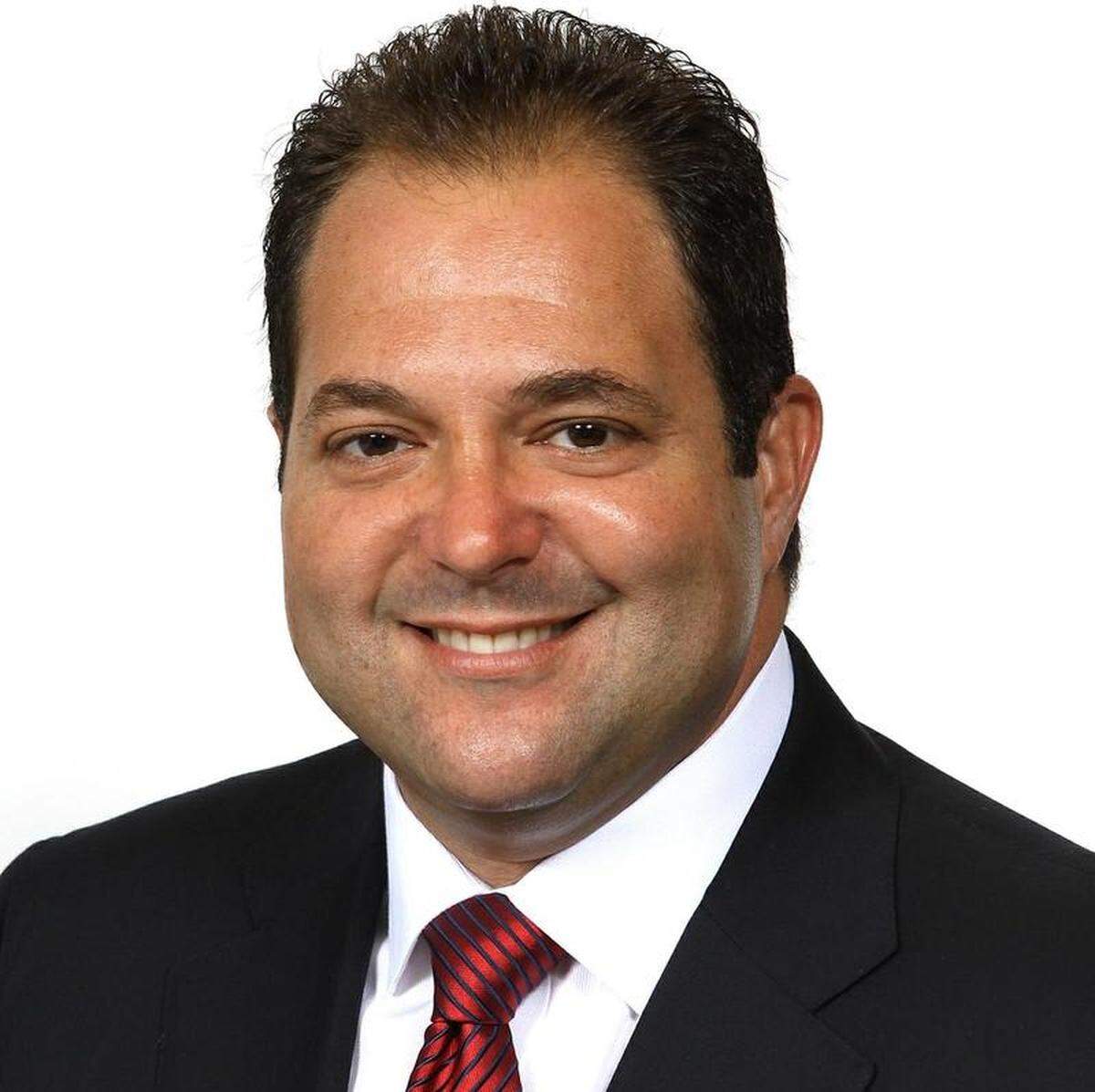
DeFillipo says he still has concerns about traffic stemming from the project, which will come before the city commission Sept. 24. But he supports the concept, pointing to Dezer Development’s claim that it will be home to 2,700 permanent jobs, up from about 600 currently, and bring in millions of dollars each year in property taxes.
Kusens “is only interested in running for mayor because he does not want to see a project developed in our city that is going to bring our city [millions] a year in tax revenue,” DeFillipo said. “He doesn’t wish to see this in his backyard. [That is] a little bit greedy.”
But Kusens says the developers are acting in bad faith. To mitigate traffic on Northeast 35th Avenue near 163rd Street, they initially supported creation of a so-called Texas U-turn to provide access to State Road 826 traveling both east and west. Kusens and other Eastern Shores residents say that, although the commitment was codified in the city’s zoning plan, the developers have backed away from it.
“There isn’t any wiggle room in that,” Kusens said. “This is a non-negotiable requirement.”
Representatives for the project couldn’t be reached for comment.
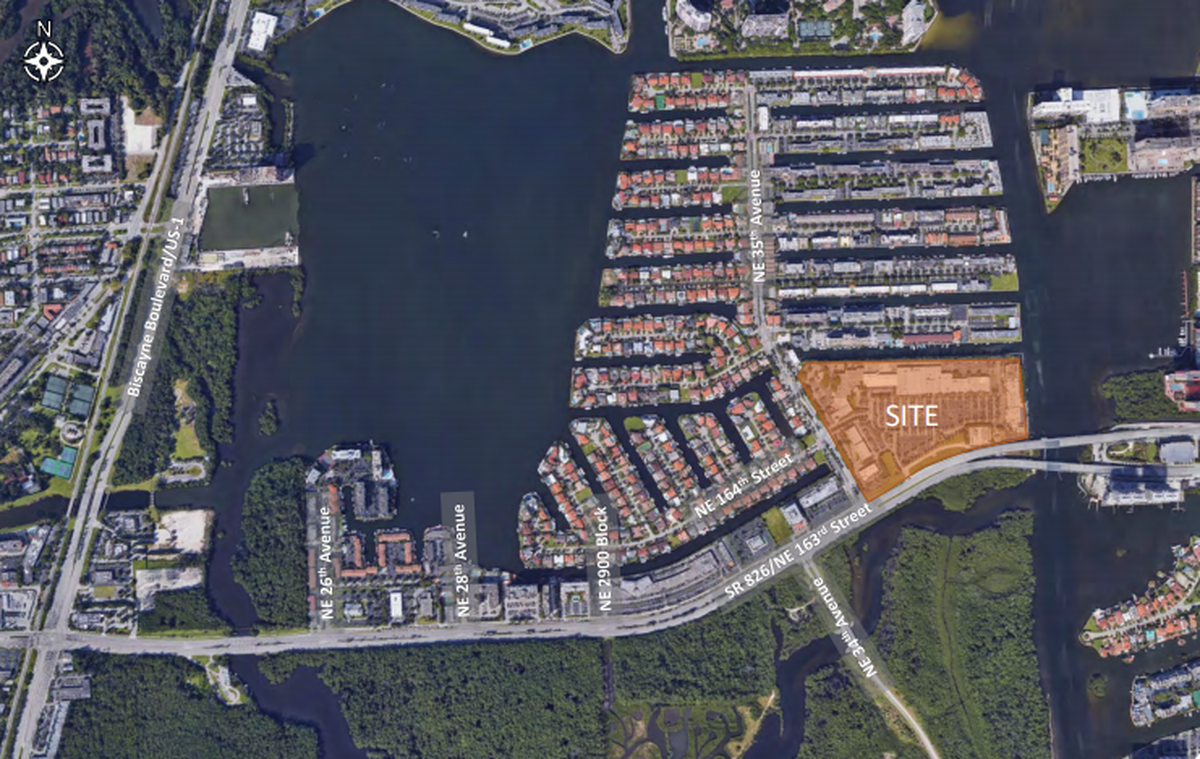
Eastern Shores residents say the project would make traffic worse, pointing to the congestion that high-rise residential towers have brought to nearby Sunny Isles Beach to the east. The current proposal would increase the number of lanes at 35th Avenue from four to six and widen the mall’s entrance, according to The Real Deal.
After the city’s planning and zoning board voted 5-2 to approve the proposal in July, Kusens decided to run for mayor against DeFillipo, a city commissioner for five years before he became mayor in 2018. DeFillipo is seeking a four-year term that would be his last due to term limits.
Kusens is hardly the only resident of Eastern Shores who opposes the mall project, but he’s likely the only one who has hired his own lawyer — former North Miami Beach city attorney Jose Smith — to help him do battle against the developers. Smith has provided written opinions to Kusens on issues related to the project.
In a July 28 opinion, Smith said the city commission should vote to reduce the project’s maximum building height to fit the character of the surrounding area.
“Considering that the proposed development is surrounded by single-family residential properties to the west, low-rise buildings to the north and the environmentally sensitive [Oleta River State Park] to the south,” Smith wrote, “the city commission should require a 15-20% reduction in building heights across the [zoning] district in order to meet compatibility criteria in the code.”
The mall project has a complicated history. Dezer Development paid $63.5 million to buy the property in 2013, and the city up-zoned the area two years later. Then, in 2018, the public learned that George Vallejo, the mayor who had initially pushed for the project, apparently had conflicting interests. Vallejo told Miami-Dade prosecutors that he and his wife created two shell companies to hide payments the Dezers were making to his wife while they employed her at their auto museum in North Miami.
Vallejo agreed to resign from office in April 2018 and accept house arrest as part of a plea deal for violating state campaign finance laws. Prosecutors found Vallejo and his wife used straw companies to divert thousands of dollars in campaign and political committee donations to pay their personal bills.
DeFillipo was elected as mayor seven months later. In his current campaign, he has collected more than $68,000 in contributions and spent over $22,000.
“I’m very happy to see the enormous support from my community and the vote of confidence I’ve gotten as I go door to door,” DeFillipo said. “I think I’ve done a great job.”
Two water utility workers seek office
In addition to DeFillipo, two other North Miami Beach officials, Commissioners Michael Joseph and McKenzie Fleurimond, are facing challengers in the November election. Two former city employees who now work for Jacobs Engineering, which took over management of the city’s water utility in 2017, are vying to unseat them.
Last month, the city commission — including Joseph and Fleurimond — voted 5-2 to terminate the city’s contract with Jacobs and transition back to city control of the utility, which includes a regional water plant that serves more than 170,000 water customers across northern Miami-Dade County.
Liliya Spektor, who works in the water plant’s quality control lab, is challenging Fleurimond. Antonio Ortega, a supervisor for the utility and a 21-year North Miami Beach resident, is challenging Joseph.
Ortega said that while he’s generally against private control of public utilities, he’s worried that transitioning back to city control now will cost taxpayers millions.
“What is the hurry?” Ortega told the Herald. “This commission, they try to throw our tax money away.”
Ortega says a more conservative approach would have been wiser: Stick with Jacobs for now, then consider a phased transition back to city control.
The vote to terminate the contract also raised questions about whether the city will be able to fill the necessary positions quickly enough to meet state requirements, and even prompted a letter from Aventura Mayor Enid Weisman threatening to switch her own city to a different water source.
But the commissioners who voted to terminate the Jacobs contract pointed to rising water bills in recent years and said the switch hasn’t brought the cost savings that were promised.
“It’s just not been a very beneficial relationship,” Fleurimond said.
The transition, Fleurimond added, won’t cost the $9 million that city officials originally projected and will be offset by future savings. He said the city recently held a job fair to start the process of filling more than 100 open positions.
“We need to do it the right way so we can assure it’s the most fiscally responsibly transition we can put together,” Fleurimond said.
In an email to the Herald, Joseph suggested Jacobs may be pulling the strings for Ortega and Spektor’s campaigns. “Voters should be upset that the water contractor appears to be running their employees against commissioners who sided with residents and voted to terminate their management agreement,” he said.
But Ortega and Spektor said it was their decision alone to run, and that Jacobs has made it clear that they won’t be allowed to continue working for the company if they’re elected. Ortega previously wanted to run for city commission in 2018, but he said Jacobs management told him not to do so because it posed a conflict.
Spektor was a late entry to this year’s race, filing to run only after the commission had voted to terminate the Jacobs contract last month.
“This actually gave me the push to run for city commissioner,” she said. “It was completely my personal decision.”
Spektor said the city should have given the company more time on its 10-year contract to execute large-scale improvements to the city’s water infrastructure.
“They are really working hard to fix problems,” Spektor said. “The problems accumulated over a long period of time [due to] a lack of preventive maintenance.”
DeFillipo, the city mayor, is endorsing Ortega in his race against Joseph. He hasn’t formally endorsed Spektor, but a property management company registered to him has donated money to Spektor’s campaign.
Racial and ethnic tensions have touched the city’s politics in recent years. During DeFillipo’s 2018 campaign, he filed a libel lawsuit over an anonymous campaign mailer comparing him to a Soprano-like mob boss. His attorney called it a “hate crime” based on DeFillipo’s Italian-American heritage.
Last year, the commission voted to censure DeFillipo after he wrote on Facebook that the city had fired its clerk so that Haitian-American officials could “put in a person of there own heritage and do what they want.” Joseph, who is Haitian American, proposed the censure. Fleurimond and Commissioner Paule Villard are also Haitian American.
Six candidates vie for open seat
Term limits are forcing the departure of Commissioner Phyllis Smith, who has served on the commission since 2007. Six candidates are running for her seat:
▪ Ruth Abeckjerr, a real estate broker
▪ Henry Raphael Dube, a real estate agent and mortgage loan originator
▪ Daniela Jean, a risk management administrative coordinator for the city of North Miami
▪ Ketley Joachim, a retired financial adviser for Wells Fargo
▪ Margaret “Margie” Love, a retired teacher
▪ Dianne Weiss Raulson, a member of the city’s public utilities commission
This story was originally published September 16, 2020 at 6:00 AM.