
Building owner fined $200K for moldy apartments is asking the city for a ‘fresh start’
The president of Millennia Housing Management came before the Opa-locka City Commission last month with a proposition: Millennia will fix up the Cordoba Courts apartments it owns on Northwest 22nd Avenue, and in return, the city will reduce or eliminate a fine for more than $200,000.
Call it a “fresh start,” said the president, Lee Felgar, adding that the repairs could likely be done within 90 days.
“We’re simply giving you a proposal for what we call our fresh start to get the property in better shape and to make everybody happy with the conditions,” Felgar said.
Residents called it an insult. Many have been complaining about slum-like conditions in the two buildings for years, and they say there’s little to show for it. The day before the meeting, Jan. 7, a plumbing backup caused sewage to seep into bathtubs and toilets in at least 20 units, according to Shalonda Rivers, a resident who leads the buildings’ tenant association.
“If they’re saying that they’re gonna do repairs, they need to do repairs all the way down to the pipes,” Rivers said.
One resident, Shavares McCray, told the commission her unit is infested with mold, rats and even baby possums. Her 3-year-old and 7-month-old children both have bronchitis that she believes is tied to the living conditions, she said.
“We understand it’s low-income apartments, but y’all have to treat us like we’re staying in it,” McCray said.
Another resident, Jakayla Taylor, said problems have persisted since she moved into a new unit at Cordoba Courts after a stint in a hotel due to mold in her old unit. She said her daughter once woke up with termite droppings on her.
“I have bags collecting termite’s droppings,” Taylor said.
Millennia, which bought the 175-unit property for over $11 million in 2016, insists it’s serious about improving conditions. Felgar said executives would go door to door with a city inspector and create a to-do list for each unit to turn Cordoba Courts into “habitable, safe, decent, sanitary housing.” Then, once the city is satisfied with the conditions, “we could come back and revisit the fine that’s currently in place and seek reduction,” Felgar said.
Opa-locka officials and Millennia executives have been through the apartments in recent weeks. City records show that, between Jan. 13 and Jan. 23, the city issued at least 89 warnings for dozens of Cordoba Courts units, most of which simply read: “failure to meet minimum housing standards.” Others cite problems with mold, rats and termites.
Millennia now has 30 days to fix the problems or else face new fines, according to Vice Mayor Chris Davis. The company told the Miami Herald in a statement that it is in “regular communication” with city officials as it addresses the violations.
“The lines of communication are open, and we are sharing progress on projects such as cleaning the sewer lines and hiring a new pest management vendor,” the statement said.
Addressing the fine, Millennia said its executives would “continue to work with officials in regard to the fine and are optimistic about a resolution.”
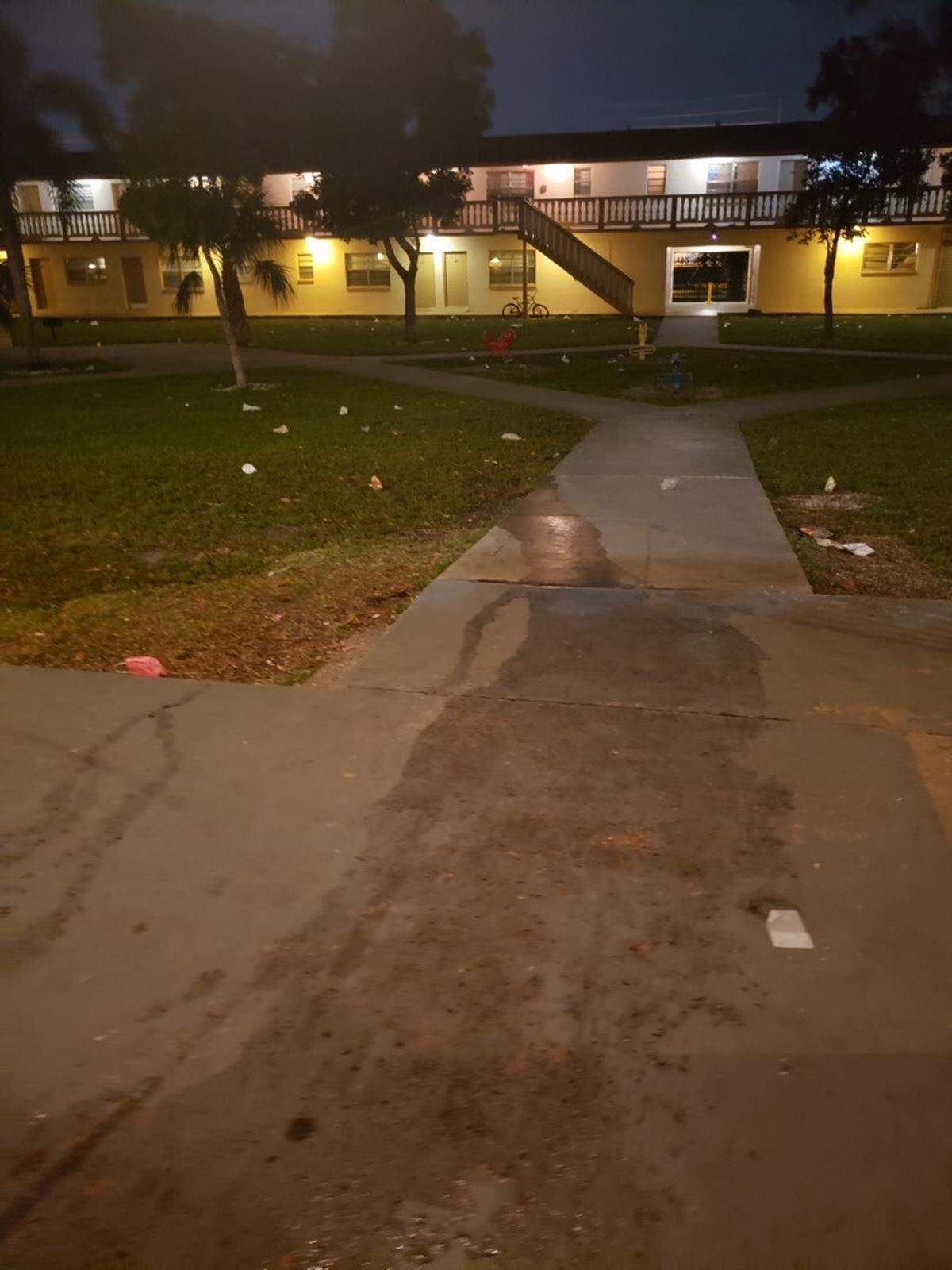
The company submitted a three-page action plan to the city on Jan. 22, saying it would prioritize urgent issues like pest control, sewage backups and mold.
The company added that it’s in negotiations to refinance the property, which will free up $1.1 million to spend on “near-term capital repairs and improvements.” Further down the road, Millennia said, it plans to apply for federal Low Income Housing Tax Credits in 2022 to enable a $9 million rehab of the property.
“We take the allegations and the conditions of Cordoba Courts very seriously,” David Bales, Millennia’s new Florida-based executive vice president, told the commission at a Jan. 22 meeting. “We’ve got a long way to go.”
But past experiences have left tenants skeptical that Millennia will stick to its word. Rivers and Taylor were among about 10 families that the company put up in a hotel for up to a year after elevated levels of mold were found. Most have moved back into different units, while their old units are still vacant and need repairs to become habitable.
“I don’t trust them,” Rivers told the Herald. “How could you say you’re gonna have something done in 90 days when they had me in a hotel for a year?”
.JPG "IMG_4541 (1).JPG")
Millennia officials say the company has put about $1.25 million into repairs since buying Cordoba Courts. But tenants and advocates say the changes have largely been aesthetic — including signage, landscaping and painting — and mask what’s going on inside.
“They’ve painted the building, they fixed up the paving areas, so when a person passes by there it looks good,” said Nathaniel Wilcox, the executive director of local nonprofit People United to Lead the Struggle for Equality. “It’s almost like a smokescreen. The people are living in a reprehensible condition.”
A disputed fine
The fine that Millennia is asking the city to forgive began as a $250 citation for mold in two units, including Rivers’ unit, in December 2016. A special master later assessed an additional fine of $300 per day starting in February 2018 if the problem wasn’t fixed.
The number has been growing ever since. As of Jan. 22, the company owed the city $211,011.56.
Millennia disputes the fine’s validity. For one, the company claims it addressed the mold problem years ago. But poor communication among officials in Opa-locka, a city long plagued by administrative failure, has also complicated matters.
In 2017, Millennia says, Opa-locka’s then-city manager Yvette Harrell agreed to wipe out the fine if the company held a session educating residents about mold prevention. Months later, city officials said Harrell never had the authority to cancel the fine, so it was reinstated and a lien was placed on the property in 2018.
Millennia has suggested that, if the city continues to enforce the penalty, there could be grave consequences for residents. In a Dec. 10 memo, an attorney for the company said Cordoba Courts runs on a “very thin profit margin,” in part because its rent is regulated by the U.S. Department of Housing and Urban Development.
If the city enforces the fine, the memo said, Millennia will “undoubtedly be faced with significant budget constraints” and may not be able to pay utilities, payroll, property taxes and “much needed services and social programs for residents.”
“The goal of Code Enforcement is not to generate revenue for the City, but to gain compliance,” the memo said. “Here, the City has gained [Millennia’s] compliance.”
The attorney, Katina Hardee, added: “My client has never experienced this kind of treatment, penalty and protracted and expensive process anywhere in its 26-state portfolio, nor seen anything like it in its three decades of apartment operations.”
But city officials, following the lead of frustrated residents, seem reluctant to let Millennia off the hook. Multiple commissioners told the Herald they weren’t ready to waive the fine, including Joseph Kelley, the longest-serving commissioner.

“The issue now is to get the units functioning,” Kelley said. “If they want to talk about any kind of reductions, that’s a discussion for another day.”
Davis, the vice mayor, said he thinks the company should pay the full amount. He noted that Millennia owns apartments around the country and recently paid $40 million for a property in Ohio, where the company is based.
“You guys have money,” he said of Millennia. “I don’t think it’s fiscally responsible as an administration to grant that sort of leeway for companies.”
Mayor Matthew Pigatt declined to comment on Millennia’s request, saying there was no formal resolution on the commission’s agenda. He said the city is taking residents’ claims about substandard living conditions seriously.
Davis and Pigatt are part of a new crop of Opa-locka officials elected in 2018 who are trying to take a harder line on housing issues.
“Housing has been one of those issues that have lingered in the city for some time,” Davis said. “This administration is taking a serious stance as it relates to housing and ensuring our residents are living in safe, healthy, sanitary living conditions.”
Their handling of the situation at Cordoba Courts could be a key test amid heavy pressure from not only tenants and owners, but also state officials. An oversight board has been monitoring Opa-locka’s spending since then-Gov. Rick Scott declared a financial emergency in 2016 amid crippling debts and FBI corruption probes.
Now, Florida lawmakers are considering a bill that would force Opa-locka residents to vote on whether to dissolve the city and become an unincorporated area of Miami-Dade County.
Given the ongoing financial crisis, said Wilcox, the nonprofit director, officials shouldn’t be giving fresh starts to businesses that owe the city money.
“For the mayor and commissioners to even consider this would be insane,” Wilcox said. “They’re already under financial watch from the state. If they allow people to get by without paying their taxes, without paying those fees, Opa-locka will become extinct.”
This story was originally published February 3, 2020 at 6:15 AM.