
Commission moves to make it harder to stage Formula One races in Miami-Dade County

Miami-Dade County will not be dropping the green flag on Formula One racing anytime soon after commissioners passed a resolution and an ordinance Tuesday that may become roadblocks in the way of the event.
The actions came in response to protests by Miami Gardens residents who are strongly opposed to bringing an annual Formula One race to Hard Rock Stadium and a public road outside it.
Commissioners passed a resolution that was amended extensively after hours of public hearing and debate from residents, Hard Rock employees, business owners and F-1 fans. The resolution would give commissioners the power to prohibit road closures related to racing events near or in residential areas.
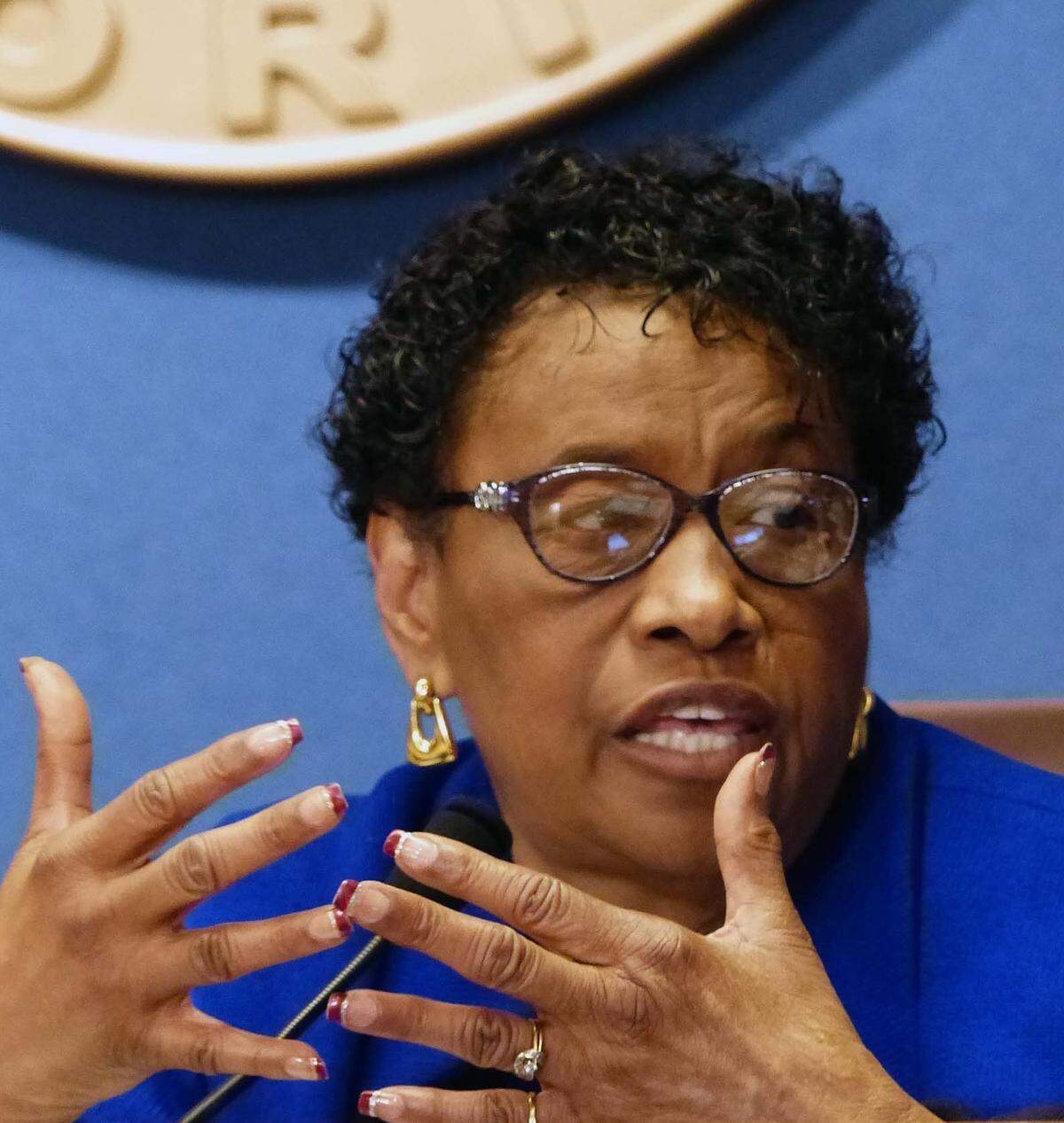
They also passed an ordinance to give Miami Gardens residents a public hearing on auto races proposed in the stadium’s district so that they could decide if they want a race. If they don’t, there will be an appeals process where commissioners would have the final say, said County Commissioner Barbara Jordan, who represents the Miami Gardens area and introduced the two items to the commission to block the event.
“I felt the municipality deserved an opportunity to at least weigh in,” Jordan said.
But Miami-Dade County Mayor Carlos Gimenez said there’s a “good possibility” that he would veto those two measures. The ordinance still needs to come back to the commission for a second vote. Gimenez said he has to take action on the resolution within 10 days after that.
With a possible annual economic impact of $400 million from the F-1 races, Gimenez said he wants the residents, the Dolphins and race organizers to reach an agreement.
John Lyons, who said he’s worked in the hotel business for 37 years, said some individuals will be affected, but that Miami will be highlighted around the world.
“We keep walking away, we can’t keep walking away from major events,” Lyons said.
Right now, Gimenez said he has leverage with his veto power. There are enough commissioners against the items that opponents couldn’t gather the two-thirds vote needed to override his veto, he said.
“Nobody is going to be 100 percent happy, but we need to come to a middle ground,” Gimenez said.
The city’s and the county’s options are limited because the Dolphins organization has a legal right to host events at the stadium site under its agreement with Miami-Dade County.
Since 2017, a group led by Dolphins owner Stephen Ross has sought to bring Formula One races to the Miami area. The original plan was for the F-1 to have a downtown Miami street course. But the plan to run the race along Biscayne Boulevard and around PortMiami was scrapped following pushback from residents and business owners, who threatened to sue, saying the three months it would take to build a racetrack every year would cause disruptions.
That’s when organizers started thinking about Hard Rock Stadium and its surrounding property, which are all owned by Stephen Ross. He’d cover the costs, including a $40 million custom track that would mostly run through the stadium grounds and make the race eligible for a marquee-event grant under a 2014 agreement with the county.
Denise White, a Miami Gardens resident for more than 40 years, said there is already heavy traffic and congestion from events at the stadium. White and dozens of other residents echoed the same concerns about the noise, traffic interruptions and health and environmental impacts caused by breathing in the cars’ fumes.
Other residents called the proposal “environmental racism,” by disproportionately moving the event from an area of affluence to a poorer one filled with people of color who would be exposed to the effects. In 2017, a study partially funded by the Environmental Protection Agency found that people of color were more likely to be exposed to harmful air pollution — and suffer from it — than white people across the U.S., according to The Guardian.
Some fans argued that emissions would be less because of new F-1 hybrid engines, announced in September.
White said she spoke to her young granddaughter before the meeting about why she was against the F-1 races. Her granddaughter said, “It’s the right thing to do, Grandma.”
“That’s from the mouth of babes,” White said.
The residents against the races have been led by former county commissioner Betty T. Ferguson, who has actively opposed the plans. She asked commissioners to think about who was calling in support of the races in the area during public discussion.
“Most of them don’t live in Miami Gardens,” she said.
Last week, Miami Gardens council members unanimously passed a resolution opposing the plan, citing the same concerns about noise and unsafe air quality.
“We understand we’re in the business of tourism, and I’ve never denied that,” Mayor Oliver G. Gilbert III said. “But this has to be a good place to live, and not just visit. The people who live here matter and sometimes we forget that.”

Gimenez recused himself from all decisions related to F-1 racing events in the county in May 2018 because his son Carlos J. “C.J.” Gimenez was involved in negotiations for the city of Miami and the use of PortMiami facilities, according to a memorandum. He wrote that since that time, the planned location for the race has moved and that his son has not served as a lobbyist on behalf of the city of Miami related to F-1 for a significant period of time, and is not currently lobbying on behalf of any interested party regarding the matter.
He wrote that he sought the opinion of the Commission on Ethics and Public Trust on whether there is any conflict of interest related to his involvement or participation in F-1 matters. The executive director issued an opinion concluding that he may participate in F-1 matters, including the two items considered Tuesday.
Residents were also upset about the lack of communication and coordination with the community about having the races near their homes. Marcus Bach-Armas, head of government relations for the Dolphins, said the staff held several meetings with the community before announcing the F-1 proposal.
Despite the restrictions passed by county commissioners, Bach-Armas said he’ll continue to work with the community.
“This changes nothing in terms of our ultimate goal in collaborating and communicating with the community as we have for 30 years,” he said.