Miami Beach to reduce towing of residents’ cars. Here’s how it will work
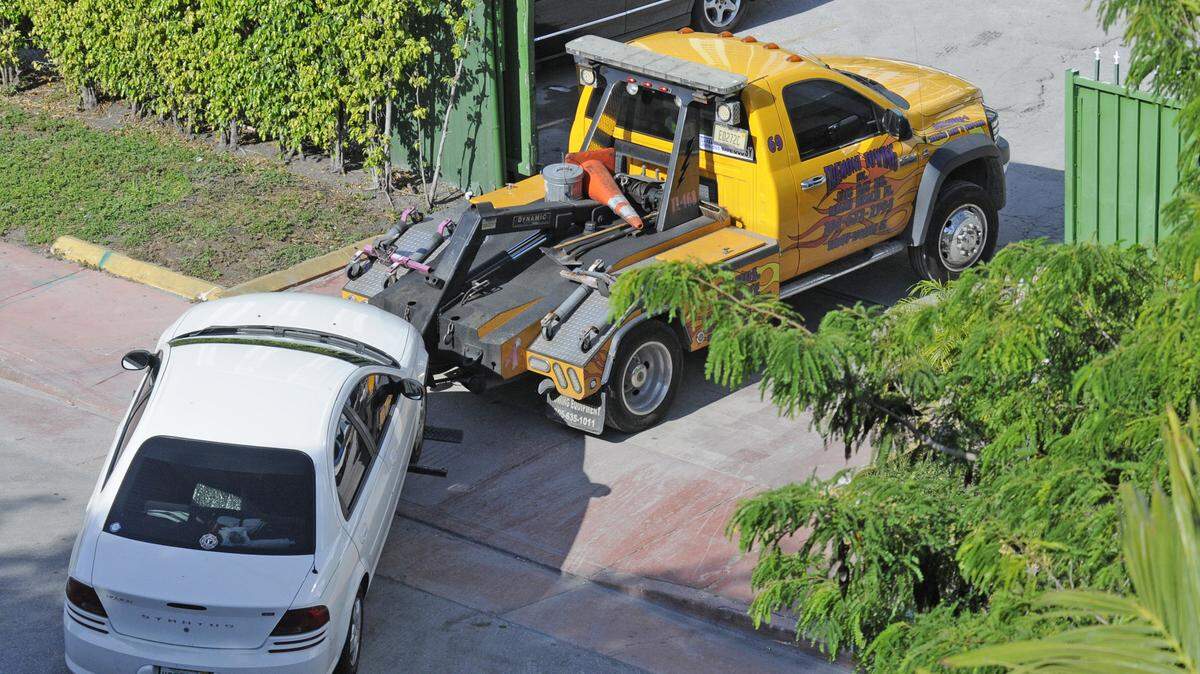
Miami Beach residents will get some relief from one of their biggest headaches: towing.
Under a new policy taking effect July 1, residents won’t immediately be towed for non-safety violations when they’re parked on public property.
The Miami Beach City Commission unanimously approved the change at its May 20 meeting. The goal, said Commissioner Alex Fernandez, who proposed the plan, is to achieve compliance “without unnecessarily punishing our residents who have placed their trust in us to serve them and improve their quality of life.”
“This is one of the most common frustrations that I hear, and I think we all hear, from our residents,” Fernandez said at the meeting. “People come home from work late at night, they circle the block trying to find parking, they finally find a space and wake up the next morning to find that their vehicle has been towed for a non-safety violation.”
READ MORE: Will Miami Beach limit towing of residents’ cars? City commissioner has a plan
Among the violations that could still lead to a citation but won’t lead to an immediate tow for city residents: parking in a residential spot without a permit, in front of a “no parking any time” sign, in front of a yellow curb, in a taxi stand, in a motorcycle space, in an alleyway, in a passenger loading zone, and in an “authorized vehicles only” area.
In those cases, residents who are registered in the city’s parking program will receive a text message notification giving them 24 hours to move their car.
After 24 hours — or for anyone with more than three violations in a calendar quarter — residents will receive a text message giving them 15 minutes to move their car before being towed.
Ralph Andrade, an attorney who represents the two towing companies that operate in Miami Beach, Tremont Towing and Beach Towing, said at last week’s meeting that the companies “will absolutely do our best to meet the city’s expectations.”
“I can tell you from my perspective and their perspective: If we never tow another resident again, we’re thrilled,” Andrade said. “We don’t want to tow residents.”
Out of almost 1,200 resident vehicle tows this year, about 62% were for non-safety violations, Fernandez said.
Last year, Fernandez championed a “text before tow” program to have the city send residents a text message after they get a citation but before their car is towed, giving them 15 minutes to get back to the car.
That program is also expanding under the changes approved last week. Even for violations the city considers to be safety hazards — like parking in front of a fire hydrant, in a fire lane, in a handicap space without a permit, or in front of a driveway, among others — residents will now get a text message with a 15-minute grace period.
Fernandez said that’s most conducive to addressing problems quickly. He noted that, in many cases, people parked illegally do so for “innocent” reasons, like misunderstanding signage or parking in front of a yellow curb where the paint is faded.
“I think, for the most part, people make innocent mistakes when it comes to parking,” Fernandez said.
Commissioner David Suarez supported Fernandez’s plan but raised concerns about the possibility of residents taking advantage of the new policy in the North Beach neighborhood. He pointed to parking constraints in the area due to a wave of development, including an upcoming community center project that will occupy an existing parking lot at 72nd Street.
Suarez helped push for a resident parking program in North Beach that took effect in 2024.
He proposed offering residents a one-time warning within that area, rather than the three non-safety violations that will be allowed elsewhere before towing kicks in. But Fernandez said he would prefer to give residents “the benefit of the doubt” and await data once the program begins to determine whether people are abusing it. Suarez ultimately agreed to that approach.
Getting towed in Miami Beach can come with a more than $500 price tag, including a $274 towing rate, $150 administrative fee, $33 fee to the city and $45 charge for outside storage beyond six hours. Miami Beach residents can pay a discounted towing rate of $150 and have the administrative fee waived if they show a driver’s license and registration at a valid city address.
“In many situations, a simple text notification can correct a violation faster than waiting for a tow truck to arrive, while also sparing residents unnecessary financial hardship, lost time, and frustration,” Fernandez said Sunday in an email to residents.
While city commissioners are taking a more lenient approach to the towing of residents, they’re also cracking down on parking rules related to loading zones for freight and commercial vehicles. City officials have said that abuse of the loading zones can create safety hazards and block the flow of traffic.
As part of last week’s discussion on parking, commissioners approved new penalties for freight loading zone violations: $1,000 for a first offense, rather than a warning; $5,000 for a second offense, rather than $150; and $15,000 if a special magistrate rules that a vehicle has blocked traffic beyond a “momentary obstruction.”
Officials also created standardized freight loading zone hours citywide, from 7 a.m. to 3 p.m. Monday to Saturday.