Miami Beach Holocaust Memorial debuts new technology to keep survivor memories alive
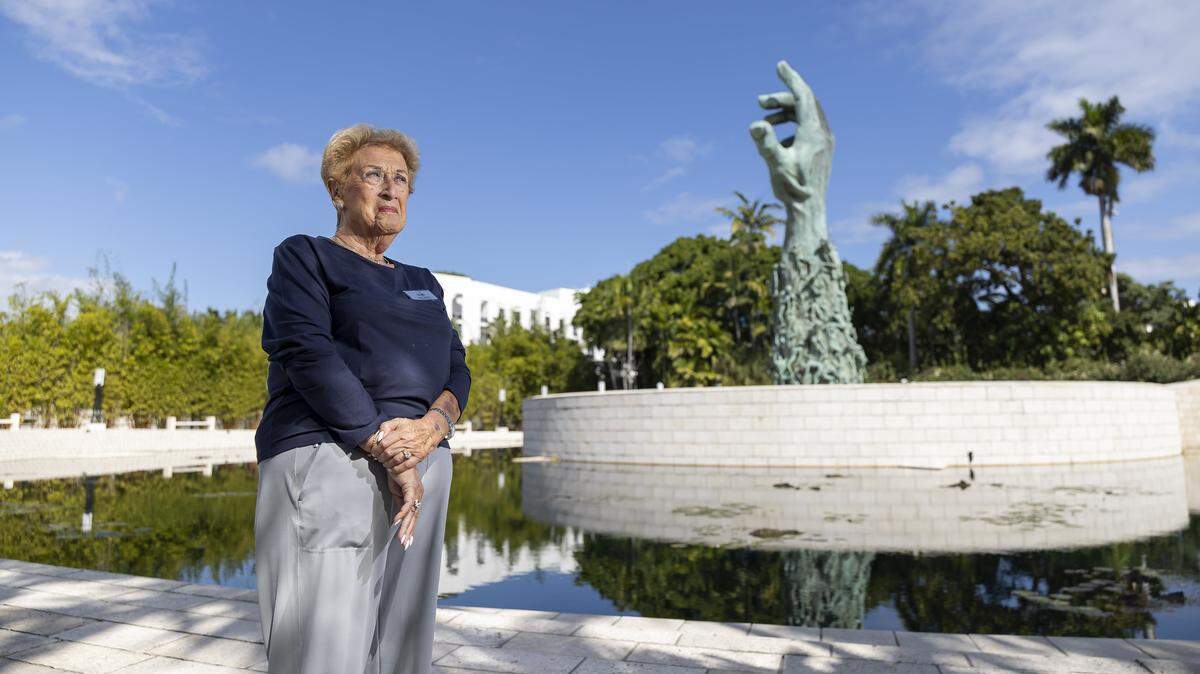
Though Rodi Glass considers herself an optimist, she’s not convinced that the world learned its lesson from the Holocaust.
Amid the United States’ divisive climate and with global antisemitism on the rise, 90-year-old Holocaust survivor Glass, believes that hatred towards Jewish people — and hate in general — isn’t something that can be easily cured.
“There are evil people who hate the Jews for no reason at all,” Glass told the Miami Herald. “It might not be a Holocaust, but it would be something like antisemitism or something maybe worse ... and there is really no way for us to prevent it.”
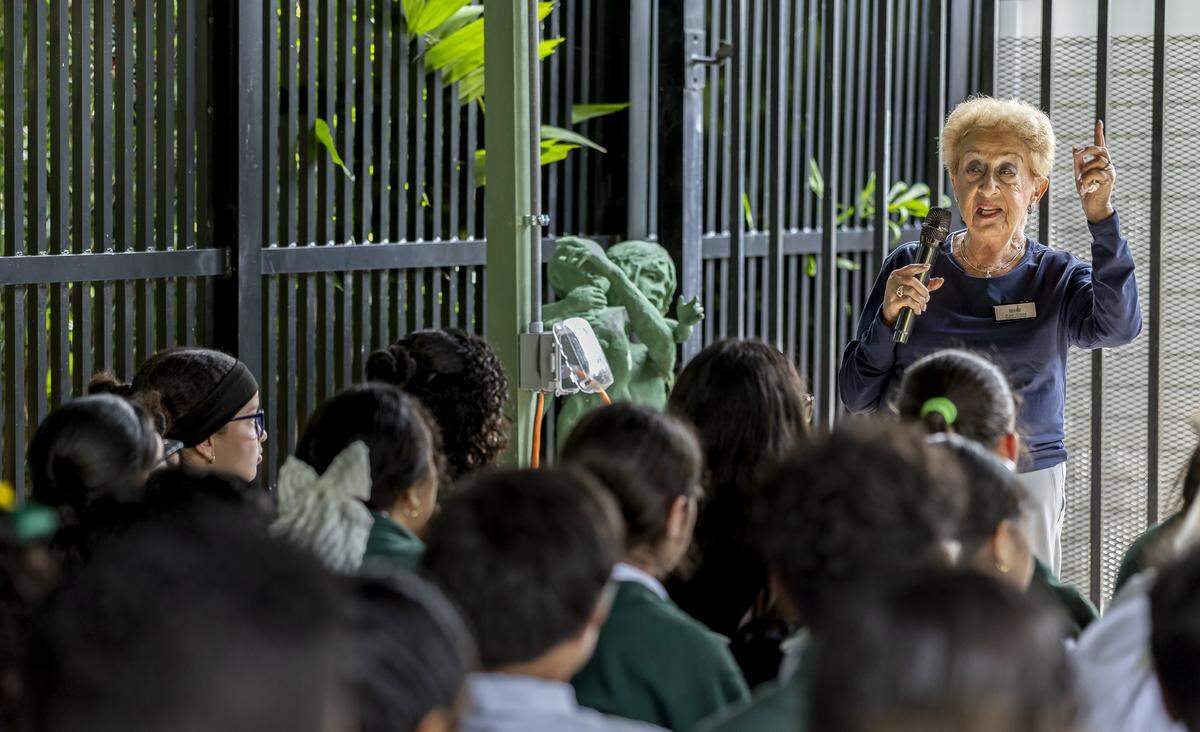
But after finishing a Q&A session with a group of Miami-Dade middle schoolers ahead of International Holocaust Remembrance Day — which honors the six million Jews and millions of others murdered by the Nazi regime that takes place on Tuesday — Glass said there is one thing that could help: Open dialogue and conversations with people who are different from one another.
“If we would all interact, like if we go to a Muslim’s house for dinner and see what their family life is about, or Buddhist or any other religion, or people would come to a Jewish house, I think we would be able to understand each other better,” she said.
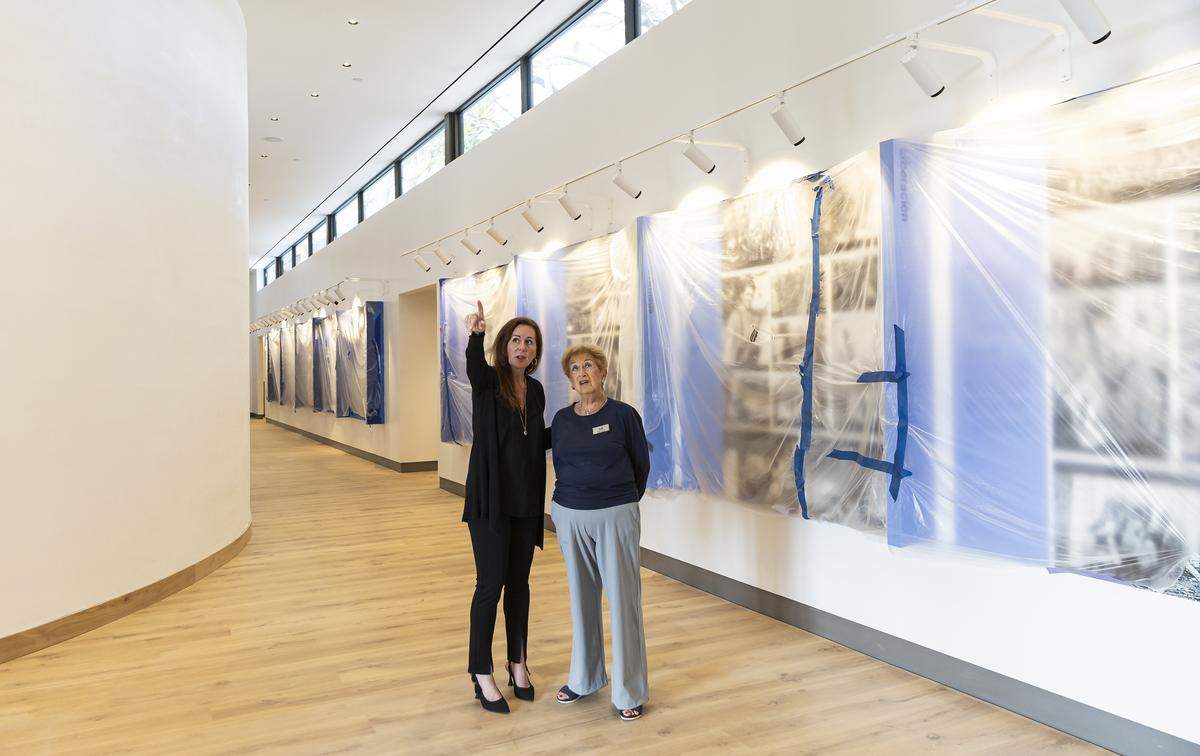
Sitting inside the nearly-completed Education Center at the Holocaust Memorial Miami Beach, Glass spoke with the Herald about her experience surviving the Holocaust and how she became a Holocaust educator. Soon her mission to educate people about the Holocaust will include a virtual reality and interactive component that will allow people to interact with her memories and testimonial thanks to innovative technology.
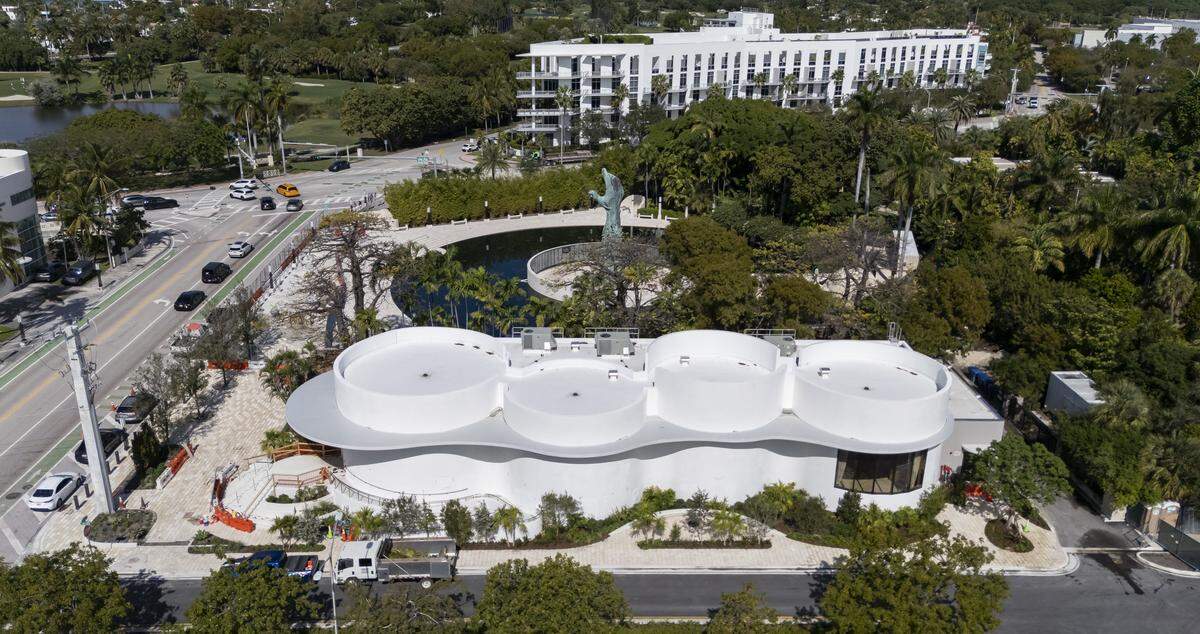
Opening on March 8, the Education Center, a new separate building situated next to the outdoor memorial, will include exhibits and tools that expand the way visitors can learn about the history of Holocaust and interact with survivors.
Using interactive technology, the heart of the new center is a program called “Dimensions in Testimony,” developed in collaboration with the USC Shoah Foundation, offering visitors real-time simulated conversations with survivors, even long after they’ve passed on.
Holocaust Memorial CEO Sheri Zvi dubs it “the future of Holocaust education.”
“As time goes by, we’ll have limited access to our survivors, and we want to make sure that students are able to speak to them,” Zvi told the Miami Herald.
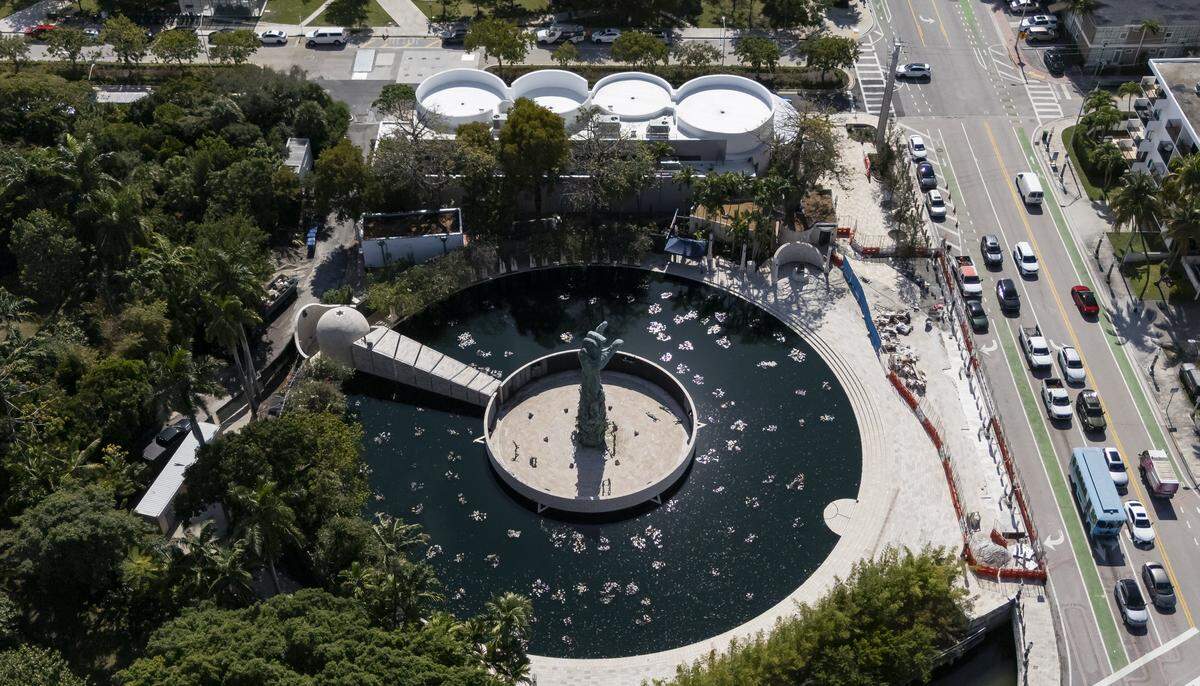
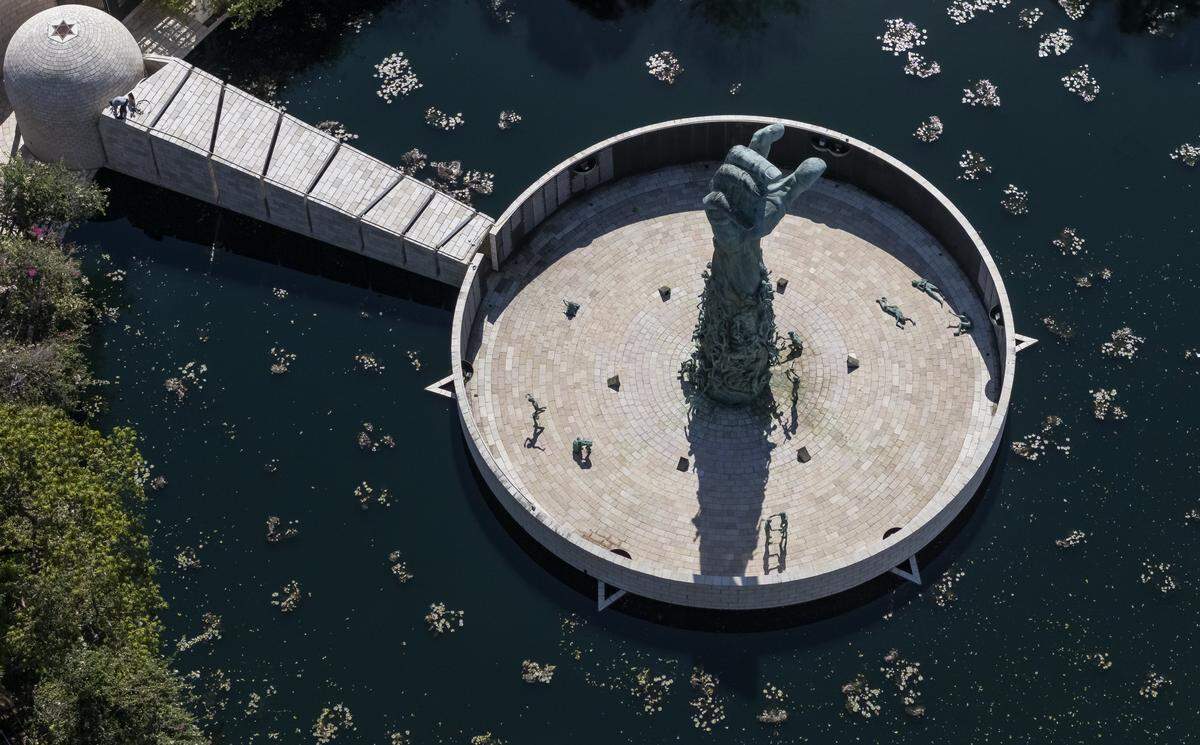
Most Miami Beach residents have probably seen, at least from afar, the memorial’s sculpture of a giant outstretched arm reaching to the sky as hundreds of small human figures cling to it and each other with expressions of agony.
The striking bronze sculpture, designed by architect, Kenneth Treister, is at the center of the memorial, which opened in 1990 to be a formal place of remembrance for those with no resting place. It features a dedication wall of about 30,000 names of those who perished in the Holocaust, with more being added on every day at the request of family members and survivors.
After hearing feedback from thousands of visitors every year, Zvi said that meeting face-to-face with a Holocaust survivor is the single more impactful part of someone’s visit to the memorial.
“That’s what changes people,” Zvi said. “If we plant seeds, and we encourage questions, and we encourage learning and the open dialogue, that is how we change the future,” Zvi said.
Using immersive technology in Holocaust education
As survivors continue to decline, Zvi said the immersive technology is important to preserving Holocaust memory and allowing younger generations to continue to have access to those one-on-one conversations with survivors.
“There’s not many of us left,” Glass said about survivors like her.
“To see all this growth. It’s unbelievable. We’re coming into the century,” Glass said, adding that the new education center “brought us out of the dark into the light.”
Glass filmed her own VR film, “Walk to Westerbork,” in 2022, which visitors watch wearing a virtual reality headset. The Education Center will include a library of survivor films and other walk-through exhibits that include lessons about Jewish life before and after the Holocaust.
“My fifth birthday is the last birthday that I really enjoyed,” Glass says with a shaking voice in the film’s trailer. The film follows Glass as she revisits the sites of her survival from Westerbork transit camp in Amsterdam, and Vittel internment camp in France. It details her intimate family memories, their arrest and their imprisonment.
“Nobody knew or thought that they were going to be killed,” she said in the film.
Glass’s first-person narration about her life as a young child during World War II coupled with immersive cinematography, animation and 360 sound, creates a vivid experience for the audience.
Glass said the days-long filming process was tedious. She was also required to answer over 1,500 commonly-asked questions about her life in order to complete the immersive installation, which allows students to interact with Glass for years to come.
The idea is that when a student asks a question: “What was life like before the war?” for example, a life-sized virtual-version of a survivor will answer back with a pre-recorded answer, simulating a real-time interview.
The expansion comes at a time when there’s a current cultural divide when it comes to Holocaust education.
Knowledge and understanding about the history of the Holocaust is becoming more limited, according to research from the Claims Conference. The nonprofit, which works to secure material compensation for Holocaust survivors, found that large swaths of the population did not know that 6 million Jews were killed during the Holocaust.
This lack of knowledge adds to the challenge of educating the youth.
As a survivor who had her early childhood stolen from her due to the war, Glass admits that she is frustrated to hear that there are people who still deny the Holocaust. But Zvi said that it’s survivors like Glass that are helping students understand, one conversation at a time.
“Rodi, using your voice, speaking to these students and explaining what happened to you as an eyewitness ... someone will say ‘that never happened,’ and you’re the reason that they will say, ‘Oh yes, it did. Yes, it did.’ And they’ll question things that they hear,” Zvi said.
The education center will also distribute free links to any of the virtual reality films, and other educational materials, to schools across Florida, which is a part of the memorial’s mission to be accessible to everyone.
“We’re equipping educators, students, and visitors from around the world to confront hate with knowledge,” Zvi said.
Holocaust descendants work to keep memory alive
Another impactful program of the memorial, 3GMiami, founded by Miami locals Julie Paresky and Stephanie Rosen in 2020, brings grandchildren of Holocaust survivors into classrooms across South Florida to share personal stories of the grandparents.
The program was recognized at a Miami-Dade County School Board meeting earlier this month for its contributions to Holocaust remembrance education in District 9. The free program complements the district’s curriculum, Zvi said, allowing thousands of students to experience Holocaust history through intergenerational storytelling while learning lessons of “empathy, responsibility and humanity.”
The Education Center’s new theater, a circular room equipped with microphones in the ceiling and a center stage for films and virtual holograms, also plans to become a local venue for films featured at the Miami Jewish Film Festival, which has been a partner of the Holocaust Memorial for over 10 years.
The memorial will be able to screen films from organizations like The Last Ones, which has traveled the world capturing and archiving hundreds of Holocaust survivor stories.
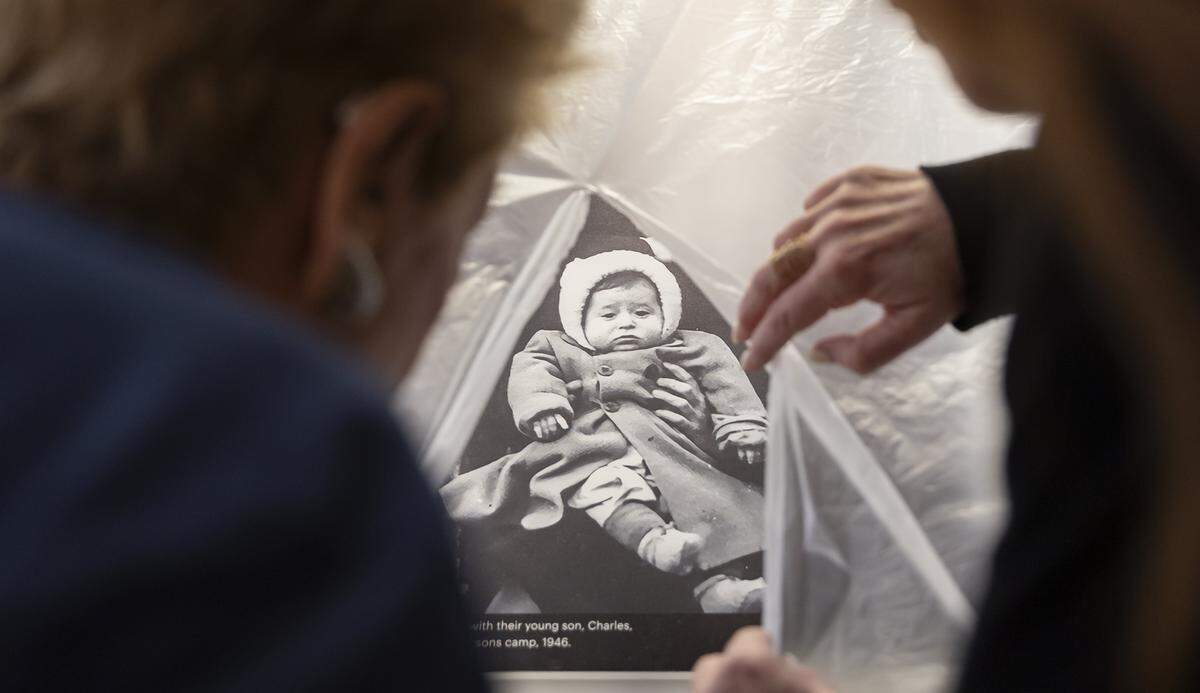
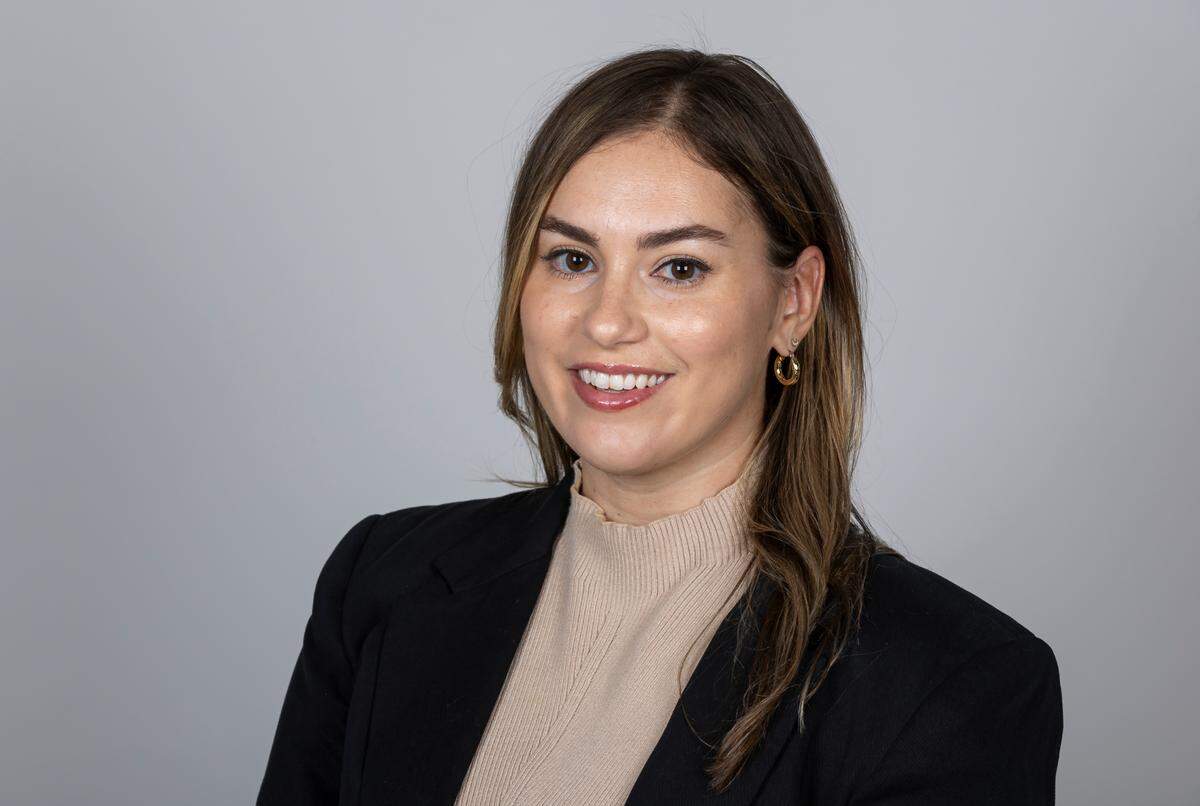
According to co-founder Leslie Benitah, The Last Ones is a project “rooted in memory” which uses powerful storytelling through a variety of mediums: documentaries, short form videos, books, classroom materials, and even a geolocated app.
The short-form videos — in which Benitah edits down hundreds of hours of testimonies to 12-18 minute videos — are tailored for young people who may have shorter attention spans.
“The persistence of Holocaust denial among younger generations is precisely why education is at the center of my work,” said Benitah, who presented her documentary “The Last Ones of Auschwitz” at the United Nations Headquarters in New York this week.
“When recent polls show that many young people question whether the Holocaust even happened, education becomes not optional, but urgent,” Benitah said in an email to the Herald.
For Benitah, a former journalist, the work is personal. She is a descendant of four Holocaust survivors and often uses her childhood memories of speaking with survivors during her visits to classrooms across South Florida.
“This is really where I am able to see the effect it has on the students,” she said. Benitah said while books and media can provide facts and figures, it’s in-person conversations that help keep the memory alive.
“When you hear it from someone who lived through it, it’s a lot more powerful,” she said.
This story was produced with financial support from Trish and Dan Bell and donors in South Florida’s Jewish and Muslim communities, including Khalid and Diana Mirza and the Mohsin and Fauzia Jaffer Foundation, in partnership with Journalism Funding Partners. The Miami Herald maintains full editorial control of this work.
This story was originally published January 26, 2026 at 4:55 PM.