
Lincoln Road revival? Miami Beach hopes multimillion-dollar makeover brings back crowds
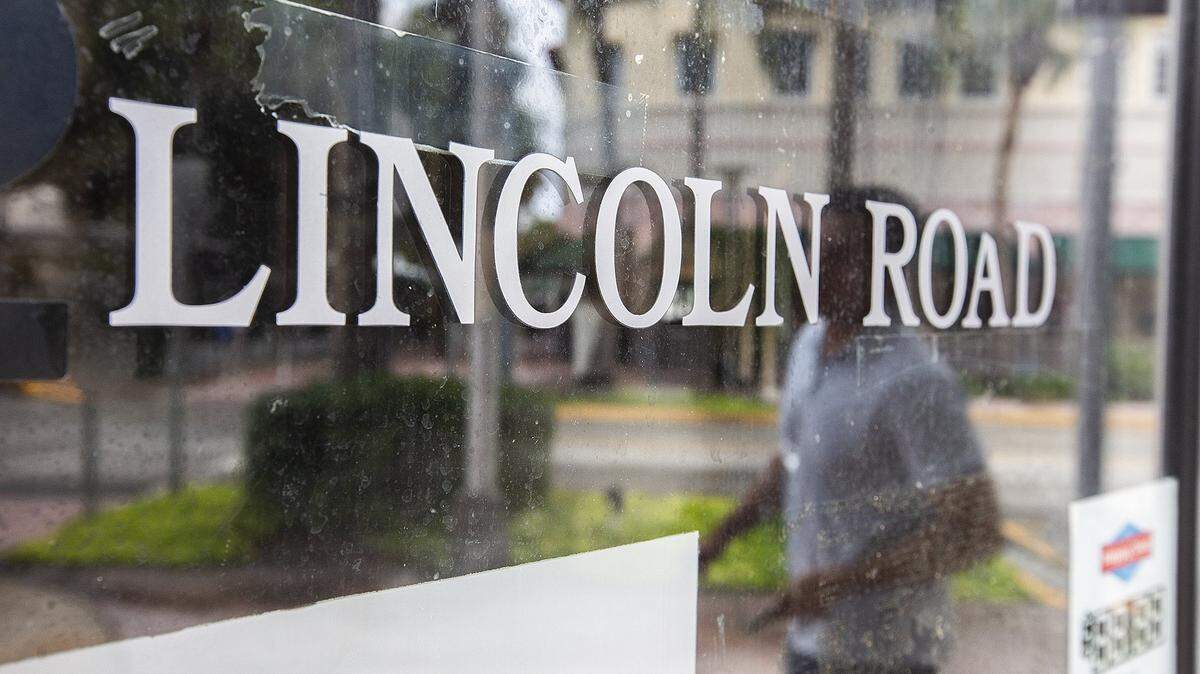
After a decade of planning, delay and debate, the city of Miami Beach has broken ground on a scaled-down version of a multimillion-dollar renovation plan for Lincoln Road Mall that aims to restore some of the famed pedestrian promenade’s lost shine.
The project, which entails an extensive refurbishing of the pedestrian mall’s profuse tropical landscaping and its whimsical but worn architectural “follies” and water features, is belatedly launching amid a prolonged downturn along the historic street that public officials and property owners now hope to reverse.
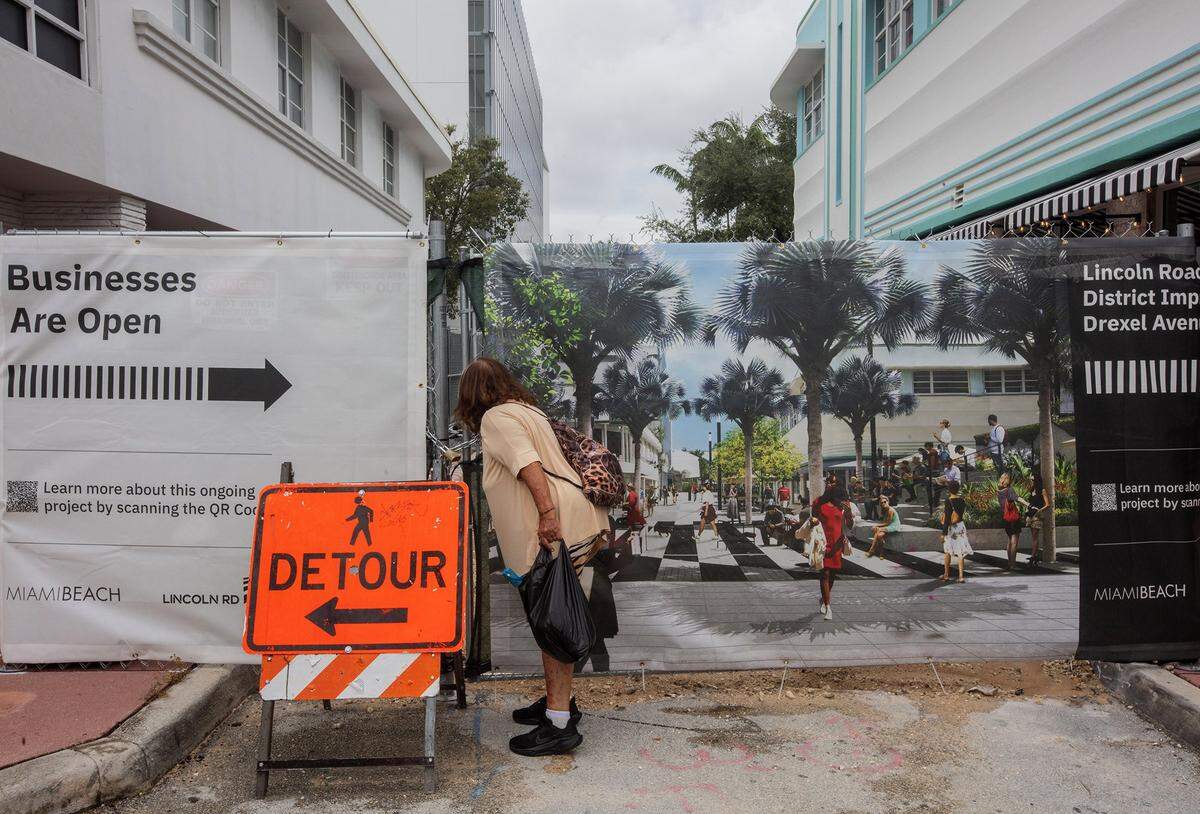
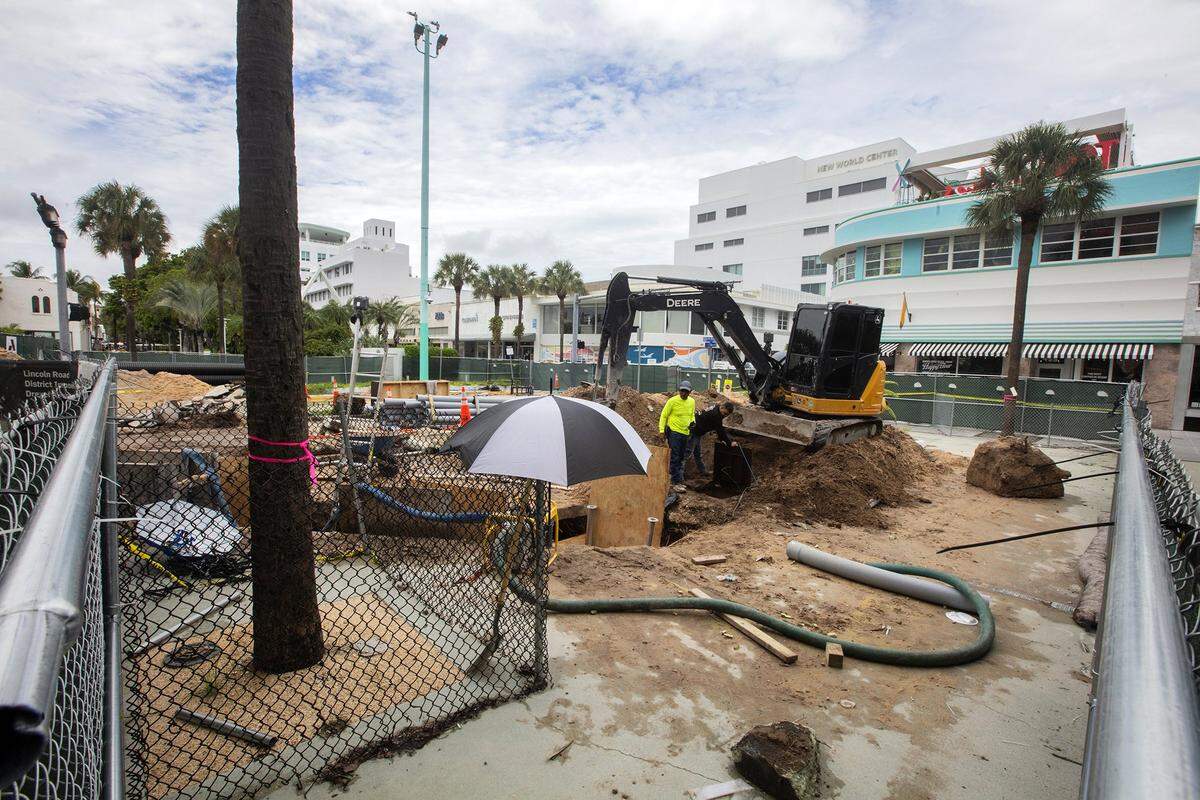
Work crews and excavators arrived earlier this month at the key intersection of Lincoln Road and Drexel Avenue, a block and a half of which will be turned into a pedestrianized extension of the mall, as years of dropping foot traffic and sky-high rents, combined with the lingering effects of the COVID-19 pandemic, have led to a profusion of vacant storefronts along the street — and a sense among South Floridians who once flocked to Lincoln Road that its glory days are behind it.
But Lincoln Road’s boosters say the start of renovation work, under a master plan first approved 10 years ago, has actually come at a fortuitous time. Renewed interest from national and international investors, retailers and restaurant operators has brought a clutch of new, high-profile — and, in at least one case, notably successful — dining and shopping spots to the road, with more on the way, they say.
The refreshed look for the street and the new dining spots, a mix of the high end and the informal, should draw back some of the locals who had given up on Lincoln Road for new hotspots in a revived Coconut Grove, downtown Coral Gables or Wynwood, while serving new Miami Beach visitors looking for a more upscale experience, they say.
Already, the popularity of one relatively recent addition, the Japanese-Mediterranean omakase restaurant Mila’s, which occupies a rooftop on the mall, vaulted it to the position of second highest-grossing independent restaurant in the country after South Beach’s Joe’s Stone Crab, according to Restaurant Business magazine. Mila’s raked in an astonishing $49 million in 2024, the magazine reported.
“There are a lot of new pieces and new activity on the road,” said Lyle Stern, president of the Lincoln Road Business Improvement District. “There’s quite a lot going on, and dining is leading it.”
In re-emphasizing food and the street’s tropical, open-air allure, the city and its business and property owners are effectively returning to the formula that once made Lincoln Road one of the region’s leading attractions, before mall chain stores came to the scene, pushing out many of the sidewalk cafes and locally owned shops that gave it much of its buzz.
Another angle: highlighting anew the street’s architectural design and its cultural life.
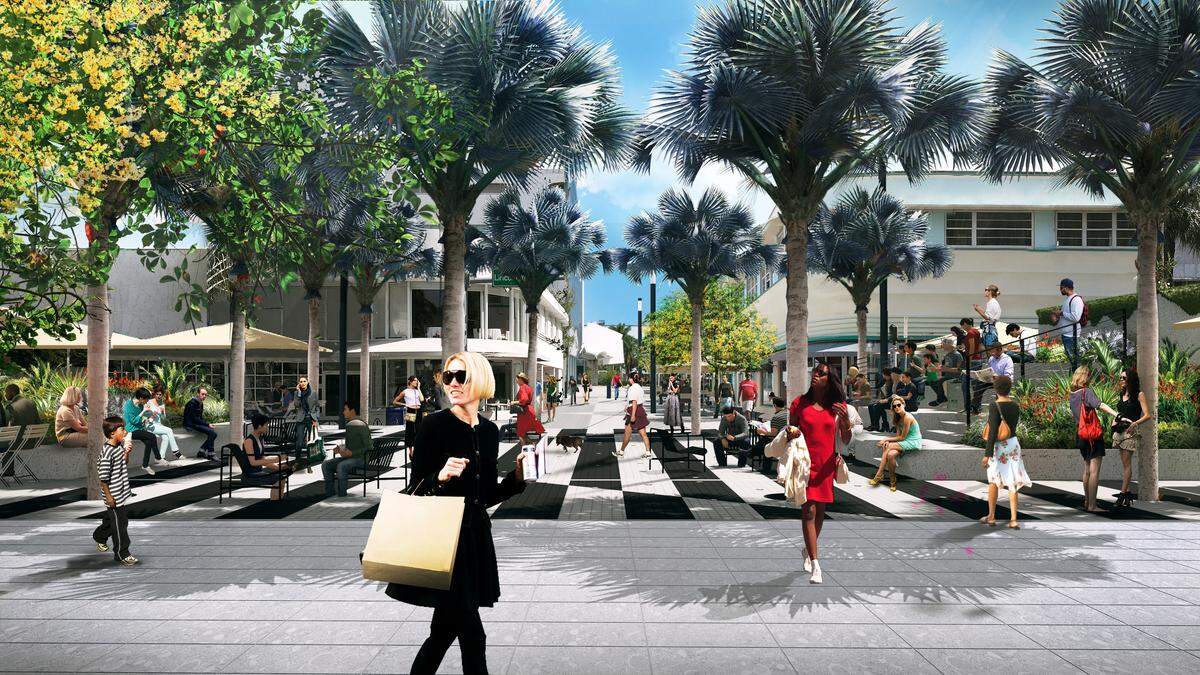
The current, $29.4 million phase of the renovation project will create an informal amphitheater at Drexel and the mall for live performances that now have no dedicated space. It will also fully pedestrianize and beautify the one-block segment of Drexel that leads from the mall to Soundscape Park and the adjacent New World Symphony building, accentuating the connection between the landmarks and making what was previously a somewhat dingy back street far more appealing.
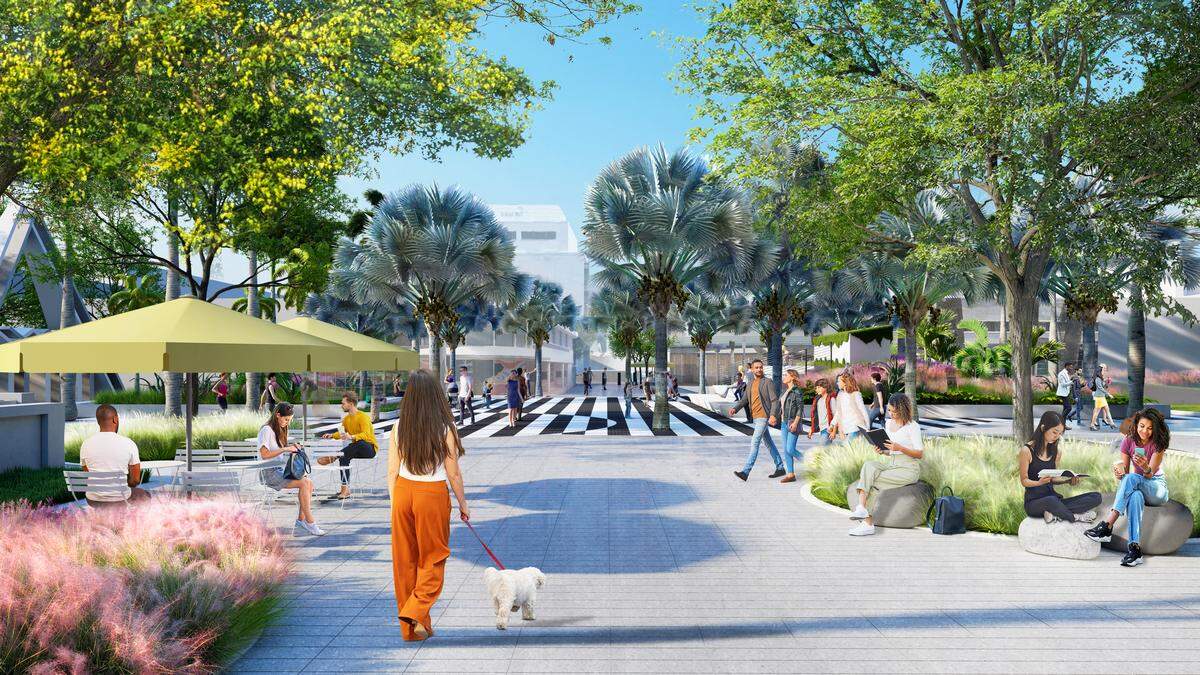
To the west, the current work phase will also encompass a remake of a section of Meridian Avenue between the mall and Seventeenth Street. Next spring, the project’s final phase will expand to all but the westernmost block of the mall at Alton Road, which underwent an extensive redesign when the architecturally dazzling 1111 Lincoln Road parking garage building opened in 2010.
Although the renovation master plan, designed by renowned landscape architecture firm Field Operations, envisioned a full replacement of the mall pavement, the city and property owners, represented by the quasi-public Lincoln Road BID, decided against that as too expensive and disruptive to businesses and visitors.
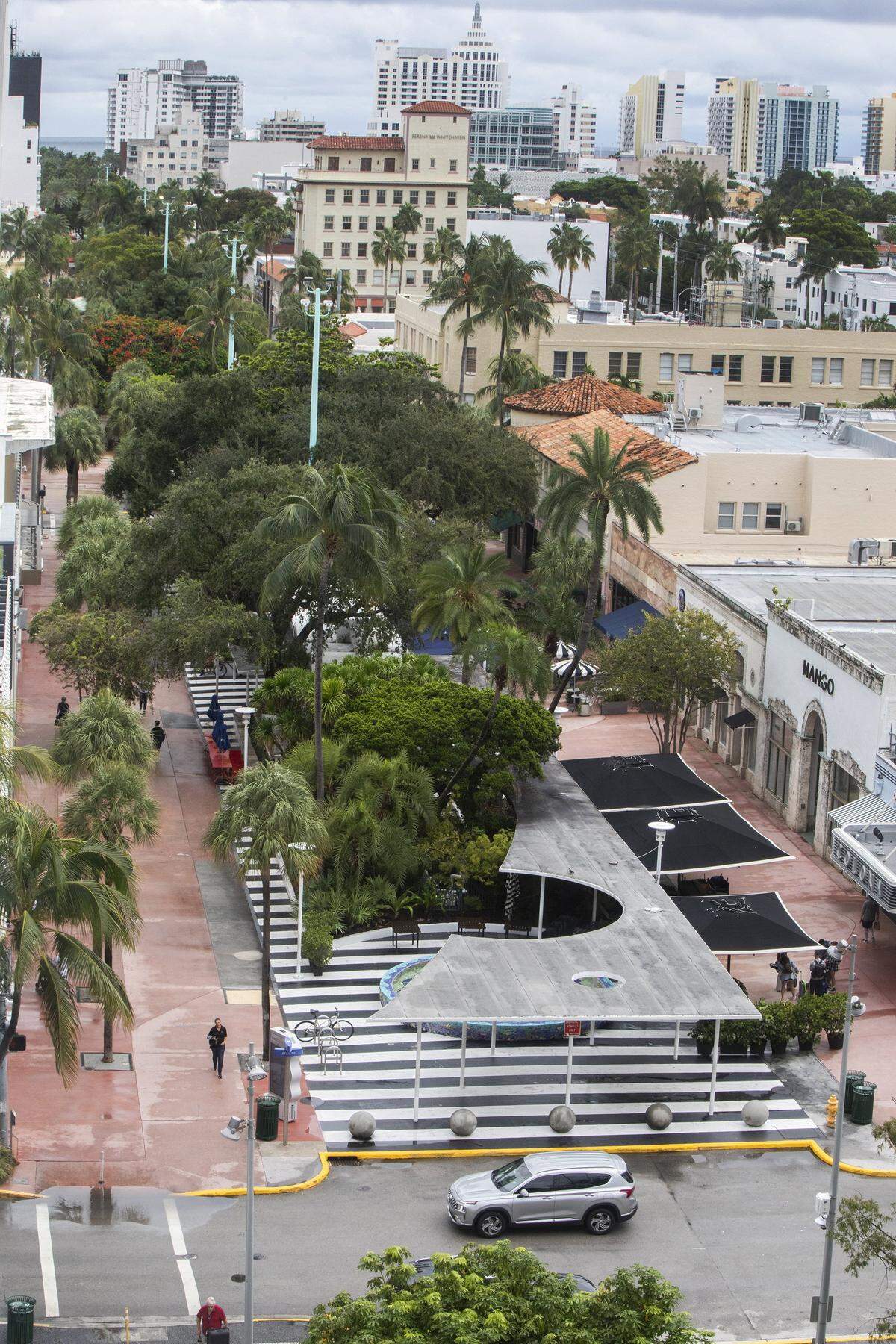
Instead, the project will spruce up landscaping, install needed irrigation systems, replumb water features and fountains, widen and improve sidewalks and renovate the Miami Modern shade shelters and other structures — known as architectural follies — that architect Morris Lapidus of Fontainebleau Hotel fame designed when he conceived of the blueprint to pedestrianize six blocks of Lincoln Road in the late 1950s.
The project will also redo the faded, painted black-and-white piano-key design that Lapidus placed on the pavement with a better wear-resistant application. And it calls for installation of public seating along the mall and expansion of dedicated cafe spaces while improving the flow for pedestrians, said David Gomez, the city’s director of capital improvements.
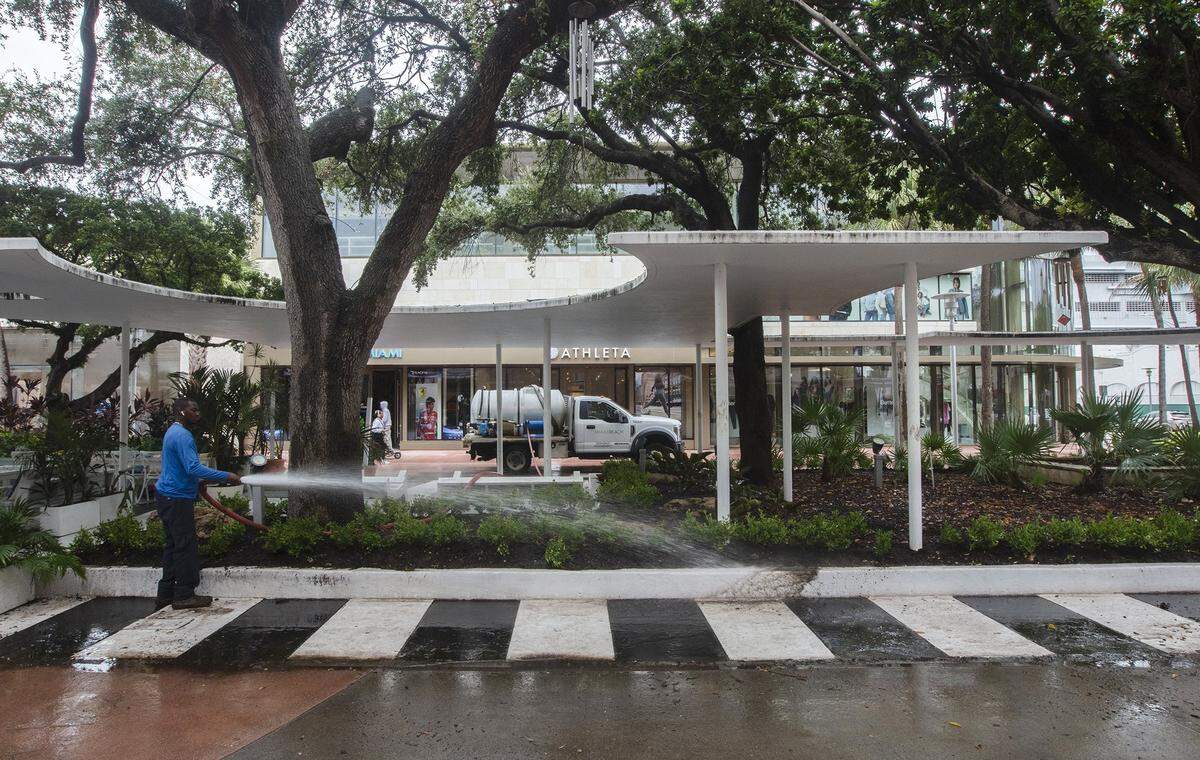
Street lights were already replaced with better and more efficient LED illumination, but the follies will receive more of a spotlight as well, Gomez said.
“The ultimate goal is to provide an improved backdrop for the business and visitors — more shade, improved circulation, seating and street furnishings,” he said.
By the time the yearlong project is done, the BID says, Lincoln Road should be in a position to fully reap the benefits.
With construction of a delayed convention center hotel finally under way one block over, and the planned reopening of several long-shuttered historic Art Deco beachfront hotels like the Delano following multi-million renovations and expansions near the street’s eastern end, Lincoln Road’s long-term fortunes are very much looking up, they say.
The convention hotel will allow the city to lure major meetings, while the coming reopening of the Delano and the Shore Club will being well-heeled visitors and new residents to the mall’s doorstep.
In addition, the owners of the Ritz-Carlton are moving ahead with a controversial condo tower addition and won approval this summer of an agreement with the city to remake the easternmost block of Lincoln Road at the beach. Though that block is not part of the mall, the strip of closed hotels and shops at Collins Avenue has been blamed for attracting vagrants and drug dealers that discourage its guests from venturing out.
The Ritz group has also proposed that the city pedestrianize the intervening, seedy two open blocks of Lincoln Road as well. The city planning board will take up a separate proposal in December to allow taller development along Lincoln Road to encourage development of badly needed apartments, in particular those affordable to Miami Beach’s working people — a move that would bring stability to the businesses that depend on them, while also providing customers for the street’s hops.
“Lincoln Road suffered from the environment around it for years, but that’s changing,” the BID’s Stern said.
If the street in fact sees an upswing, it would be only the latest turn in a long, up-and-down history for Lincoln Road, which Miami Beach developer Carl Fisher built more than 100 years ago as the city’s high-toned premier shopping street, dubbed “The Fifth Avenue of the South.”
As its fortunes gradually declined over the next several decades, Beach leaders turned in the 1950s to what was at the time a novel idea -- transforming six blocks of Lincoln Road into one of the nation’s first open-air pedestrian malls. The project enjoyed at best mixed success, however, and as South Beach entered a period of steep decline in the 1970s and early 1980s, so did Lincoln Road.
The mall became a flourishing centerpiece of the subsequent South Beach revival as artists, art galleries and hip shops and cafes set up shop on the street, luring hordes of locals and tourists. That success, in turn, began attracting national retailers and chain shops and restaurants, like Gap and Banana Republic, driving rents up and artists, local businesses and cafes out -- and, with them, the local visitors who had embraced the street as well.
Stern and the BID say the tourism business on the street remains strong, even amid substantial retail turnover, but concede that locals, a key to the street’s success, don’t have enough reason to cross Biscayne Bay to visit Lincoln Road.
Today, though Stern says chain stores don’t occupy most of the street’s commercial space, Lincoln Road appears dominated by common mall and chain stores like the mid-market Journeys, Pandora, Gap, H&M, and Pink, with a tiny smattering of more high-end outlets like jeweler Swarovski.
The street has two Starbucks locations, a Cheesecake Factory and some independent cafes desperately vying for the tourist trade with sidewalk billboard menus and menu touts, features that have given much of Ocean Drive a ticky-tacky feel. One Lincoln Road cafe, the Lobster Shack, advertises a bucket of beer for $25.
Just a few of the street’s old stalwarts remain, including the Italian restaurant Rosinella, which opened on Lincoln Road in 1997 in the early days of the street’s revival. Rosinella, which has avoided the fate of man of its neighbors in part because its Italian-born founders own the building, last year opened the mall’s only hotel, the boutique Link Hotel South Beach, upstairs from the restaurant.
Oolite Arts, the nonprofit organization that as Art Center/South Florida first brought artists and exhibits to the road, still maintains inexpensive studios in one of its two original buildings on the road, having sold the other for $88 million in 2014 to expand its offerings in mainland Miami.
But other fixtures have disappeared: Legendary dive bar Finnegan’s Road closed earlier this year after 25 years on the mall. Local chain Books & Books closed its Lincoln Road store, another catalyst in the road’s revival, in 2020 after 25 years because of unaffordable rent hikes.
The well-known pop artist Romero Britto, meanwhile, sued his landlord and cited deteriorating conditions on the street in an unsuccessful attempt to get out of the long-term lease for his Lincoln Road gallery, which remains open.
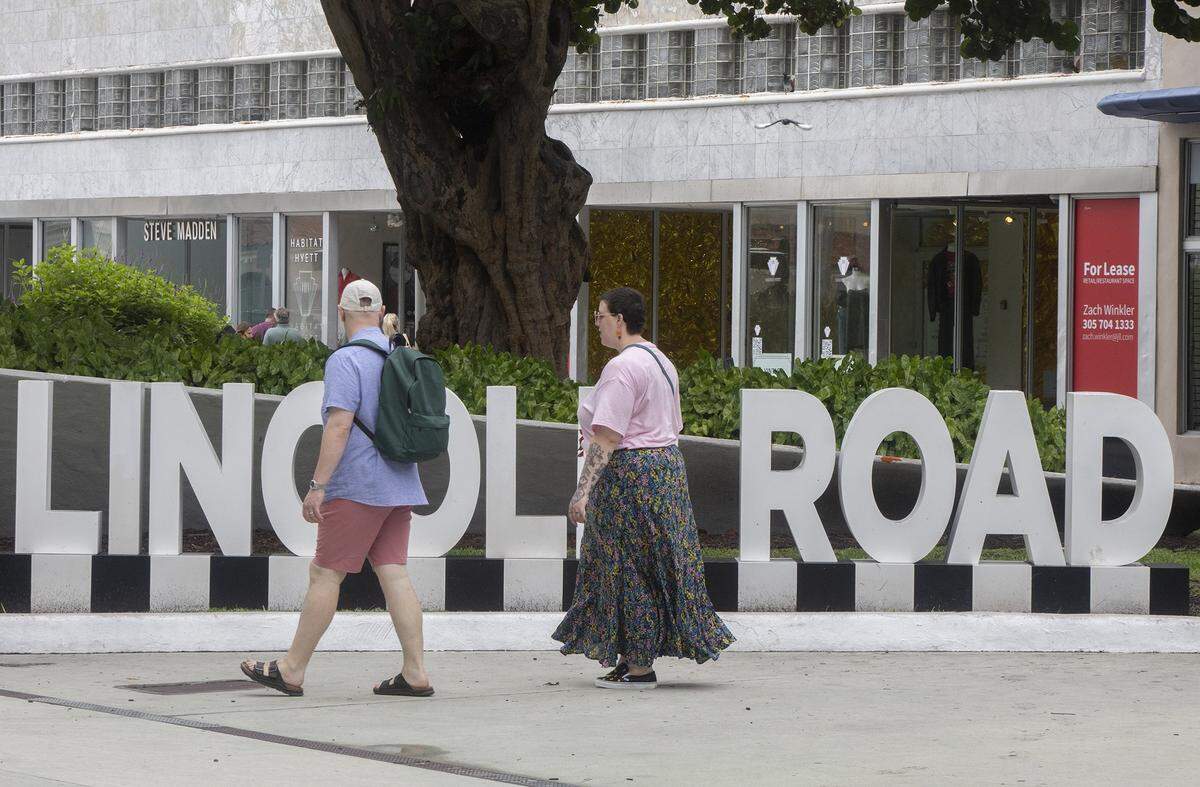
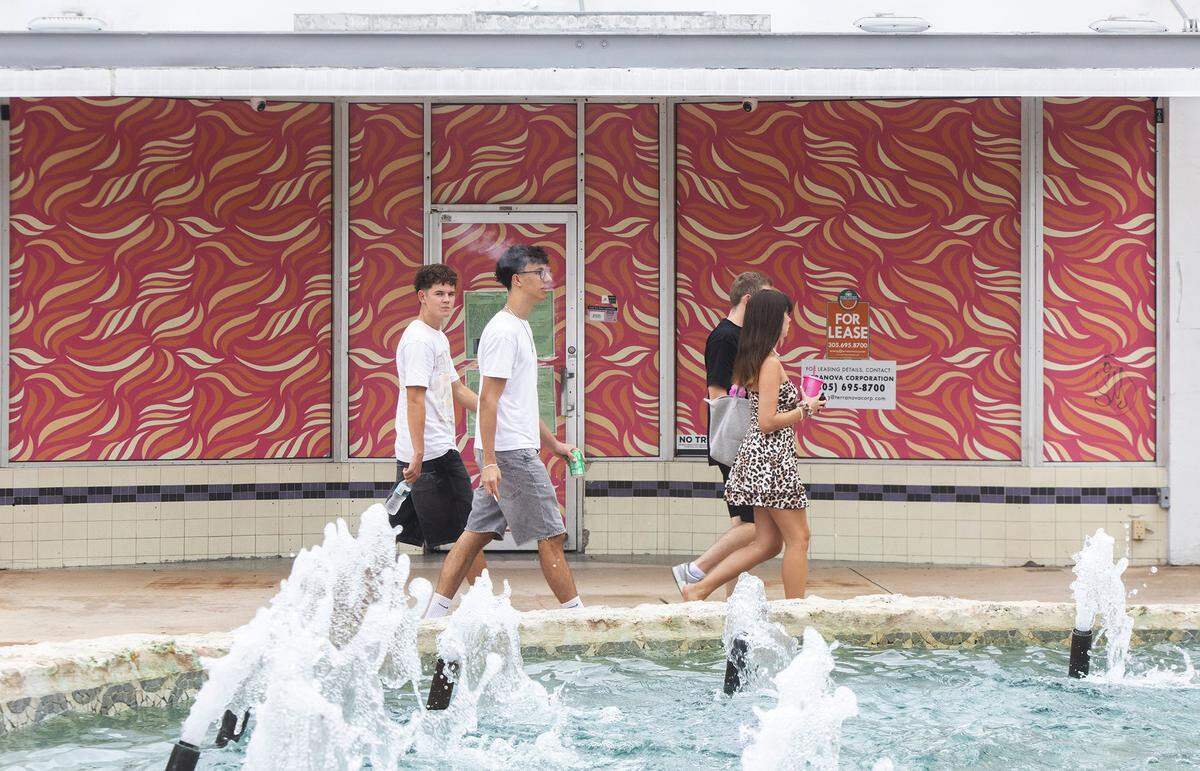
On a recent early weekday evening, there was a steady if not substantial stream of people strolling along the mall’s six blocks, but few were shopping. The big Gap and H&M stores, like most of the smaller shops on the street, were virtually deserted. Only the Apple store was busy. Several historic buildings, some beautifully renovated for previous tenants, sat empty, windows and doors covered with leasing signs and city-mandated scrims.
Stern noted that it’s the slow season for South Beach, that the day was wet and blustery, and that the shops on the street do report strong sales overall. The window scrims on vacant properties often disguise the fact that new tenants and signing leases and building out interiors, though permitting and approvals can take more than a year, he said.
To spark new interest, the BID has also been bringing art back to the road. It has instituted a monthly art walk, and is sponsoring a series of temporary curated and commissioned art installations and pop-up exhibits along the mall to supplement offerings by its remaining art galleries.
Meanwhile, new investors are spending millions to acquire and renovate buildings on the road. Los Angeles real estate mogul last month purchased the historic Lincoln Theatre, a 1935 Art Deco landmark that houses the H&M store, for $37 million. In a Q&A published on the BID website, Rivani said he believes the road is “on the cusp of another resurgence.”
Other newcomers include L.A.’s Hwood Group, which plans to bring its The Nice Guy mob-themed bar and resaturant to what’s now a boarded-up historic building on the road, and Oro, another rooftop luxury dining spot, already open, that requires a minimum “spend” of $200 per table.
New arrivals, though, also include more casual spots for lunch of drinks, such as New York’s Prince Street Pizza, which sells them by the slice, and, soon to open, a Negroni bistro and sushi bar and All’Antico Vinaio, a sandwich shop from Florence.
The trick to Lincoln Road’s eventual success, Stern said, is to balance shops and restaurants that will appeal to both locals and visitors at a range of prices and formality, while also providing needed everyday shopping at places like the Gap for Miami Beach residents -- but it hasn’t been an easy one to pull off with more than 60 separate property owners.
“There are a lot of philosophies and leasing practices, and there have been many iterations of Lincoln Road,” Stern said. “As the nature of the demographics and customers keep changing, the road continues to evolve with it.”