How will Miami Beach cover $1B in resiliency projects? Higher water bills may be coming
Miami Beach residents could soon face substantial utility rate increases to fund more than $1 billion in infrastructure projects that officials say are essential for keeping the coastal city dry.
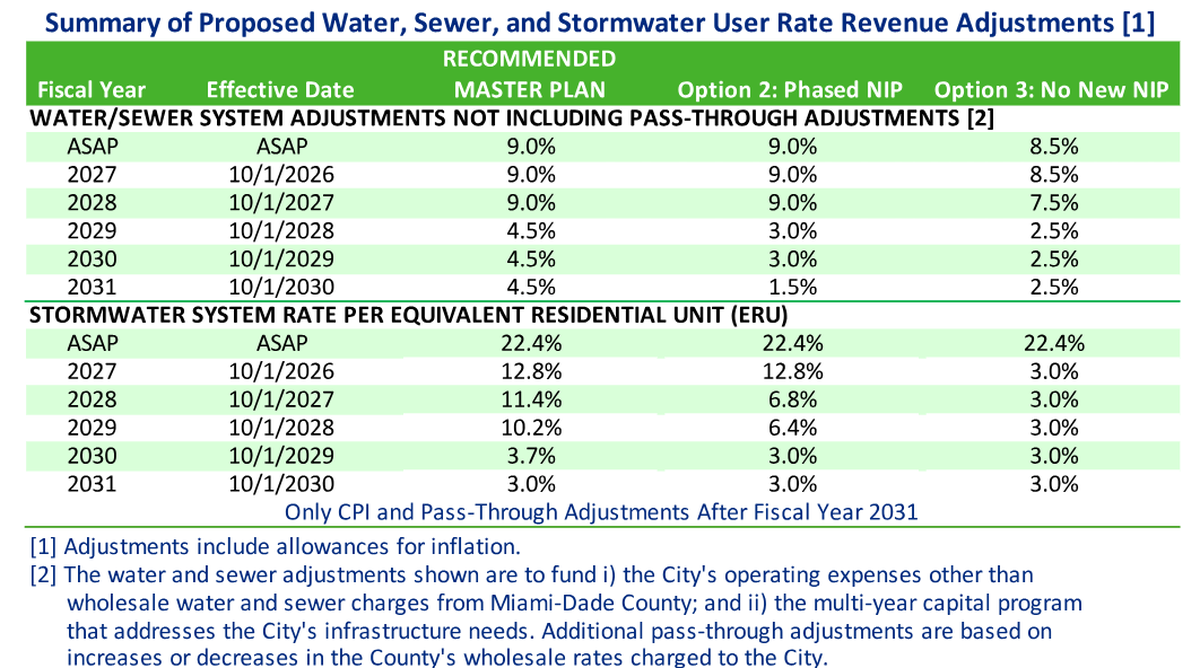
Under a proposal from the city administration, water and sewer rates would increase by 9% and stormwater rates would rise by 22% this year, followed by additional hikes each year until 2030.
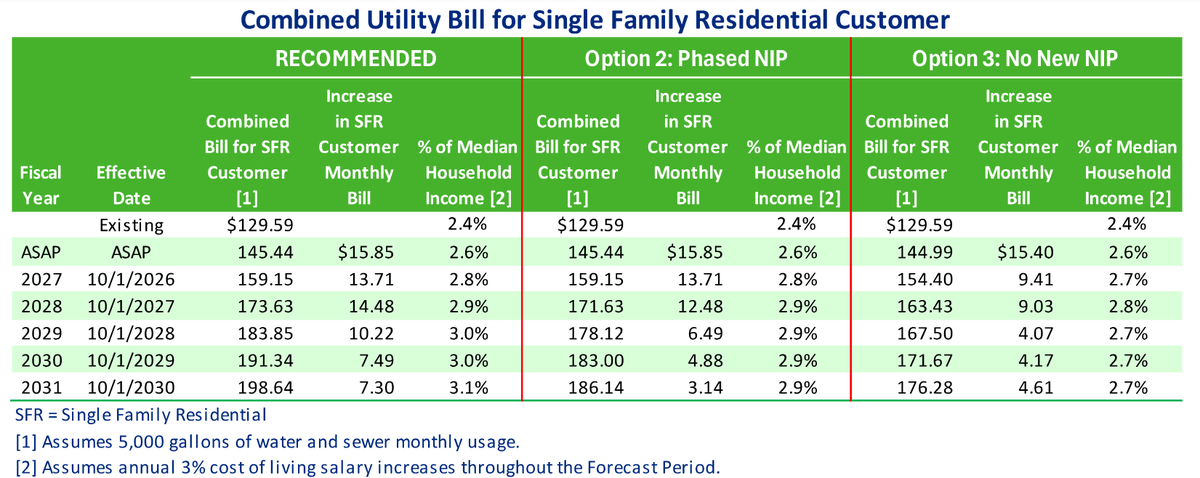
For the average single-family homeowner, the combined monthly utility bill would jump from about $130 now to $145 later this year — and to nearly $200 in five years. Those figures are based on households that use 5,000 gallons of water and sewer per month, a benchmark used by the city to calculate the typical increase. The city has not provided details about how the average condo owner would be affected.
On Friday, three commissioners sitting on the city’s Finance and Economic Resiliency Committee voted to endorse the changes, saying they are necessary to fund critical resiliency projects.
Officials said that, due to inflation and decisions by past city commissioners to implement smaller rate increases, the city is now at risk of neglecting planned water and sewer projects and potentially losing previously awarded grant funding for ongoing anti-flooding projects like resiliency plans for First Street.
“We can continue just kicking the can down the road, but at what expense?” Commissioner Joseph Magazine said at Friday’s meeting. “At the expense, quite literally, of the resiliency of our city.”
The rate hikes would need to be approved by a vote of the full City Commission, which could happen as early as March. The finance committee recommended that the first rate increase take effect in October, rather than the city administration’s suggestion to impose it as soon as it receives commission approval.
GovRates, a consultant hired by the city, provided three different rate increase options for officials to consider. While all three options are identical for this year, the increases would be more modest in future years under two of the options.
One of the proposals would require the city to take a phased approach to various neighborhood improvement projects, the firm said, while another could spell the end of some projects entirely, such as a major resiliency effort in the North Beach neighborhood.
“The City could choose not to fund certain projects and defer them indefinitely,” city officials said in a question-and-answer document about the increases. “However, the City’s renewal and replacement needs will not go away and will be more expensive to address in the future.”
Resident pushback
Some Miami Beach residents are pushing back on the plan, saying it will make life even less affordable in a city plagued by rising rents, condo fees and insurance costs.
Mitch Novick, a hotel owner who ran unsuccessfully for City Commission in 2023, said during Friday’s meeting that officials should eliminate “pork barrel spending” before raising utility rates.
“You need to focus on reducing our budget and deny these types of rate hikes, which have had the greatest impact on housing affordability and the exodus of residents in our city,” Novick said.
Commissioners acknowledged that the rate hikes may be unpopular with residents. But Commissioner Alex Fernandez, who is up for reelection in November, said he still supports the move.
“Is it something unpopular to do? Yes. Something that’s near and dear to my heart is equity and affordability issues in our community,” Fernandez said. “[But] we need to deliver on these projects. ... Deferring these upgrades will only lead to higher costs and increased risk in the future.”
Officials said the increases in utility bills will go toward fixing “a tremendous amount of water and sewer infrastructure that has reached the end of its useful service life,” some of which dates back to the 1930s.
Miami Beach has been forced to make emergency repairs for various pipelines and pump stations in recent years, including ruptures that have led to sewage spilling into Biscayne Bay. The city has a 10-year water and sewer spending plan that totals $643 million.
Meanwhile, a stormwater master plan approved last year identifies more than $450 million in needs over the next decade to raise roads, construct pump stations and take other measures to prevent flooding from sea-level rise.
Jason Greene, the city’s finance director, said Friday that the higher rates will help the city protect against events like the historic flash flooding that overwhelmed Fort Lauderdale’s drainage systems in 2023. Such extreme weather events could become more common because of climate change.
“This is hundreds of millions of dollars worth of absolutely needed water, sewer and stormwater infrastructure,” Greene said. “This is going to ensure that we’re delivering clean water to our residents, that we’re not having sanitary sewer overflows, that sewage is being transmitted properly and [we’re] draining our streets.”
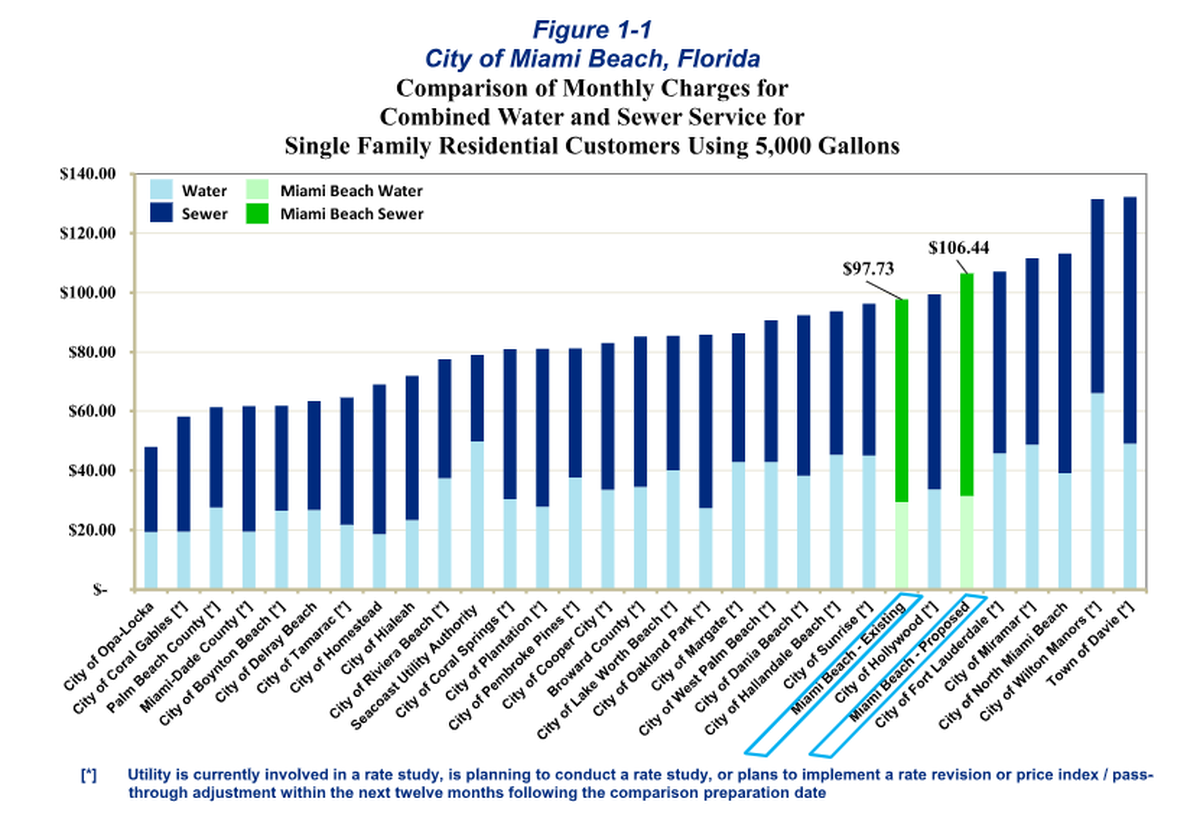
GovRates analyzed the city’s utility rates and found that Miami Beach homeowners already pay higher rates than many of their South Florida peers.
The city’s combined water and sewer rates are higher, for example, than those in Coral Gables, Hialeah and unincorporated Miami-Dade County.
But GovRates President Bryan Mantz said the increases are needed to fully fund the city’s 10-year infrastructure plans and to maintain a strong bond rating that allows for favorable borrowing rates.
“The bottom line is that [utility] rates have not kept up with the actual inflation,” Mantz said.
Raising ‘impact fees’
Also on Friday, the finance committee endorsed a proposal to significantly increase water and sewer “impact fees” that developers pay to account for the added capacity required after new construction. The city hasn’t adjusted those fees since 1995, meaning they have lagged far behind what most other municipalities charge.
Under the city’s proposal, the fees that a developer would have to pay for a typical residential unit would rise from $390 to $3,660 and would increase proportionally for buildings with larger water meters.
That change would also need approval by the full City Commission.
Vice Mayor Tanya Katzoff Bhatt said she was “floored” that the city had failed to increase the fees for 30 years.
She said it was necessary to increase them to present-day standards — and agreed with her colleagues about the need to impose higher utility rates on residents to allow the city to meet its infrastructure needs.
“The rains are going to keep coming and they’re going to get worse, and the sea level is going to keep rising,” Katzoff Bhatt said. “I don’t see any way forward other than approving this fully funded option.”
This story was originally published February 26, 2025 at 12:20 PM.