‘Downgrading our brand’: Miami Beach takes aim at jewelry vendors as artists push back
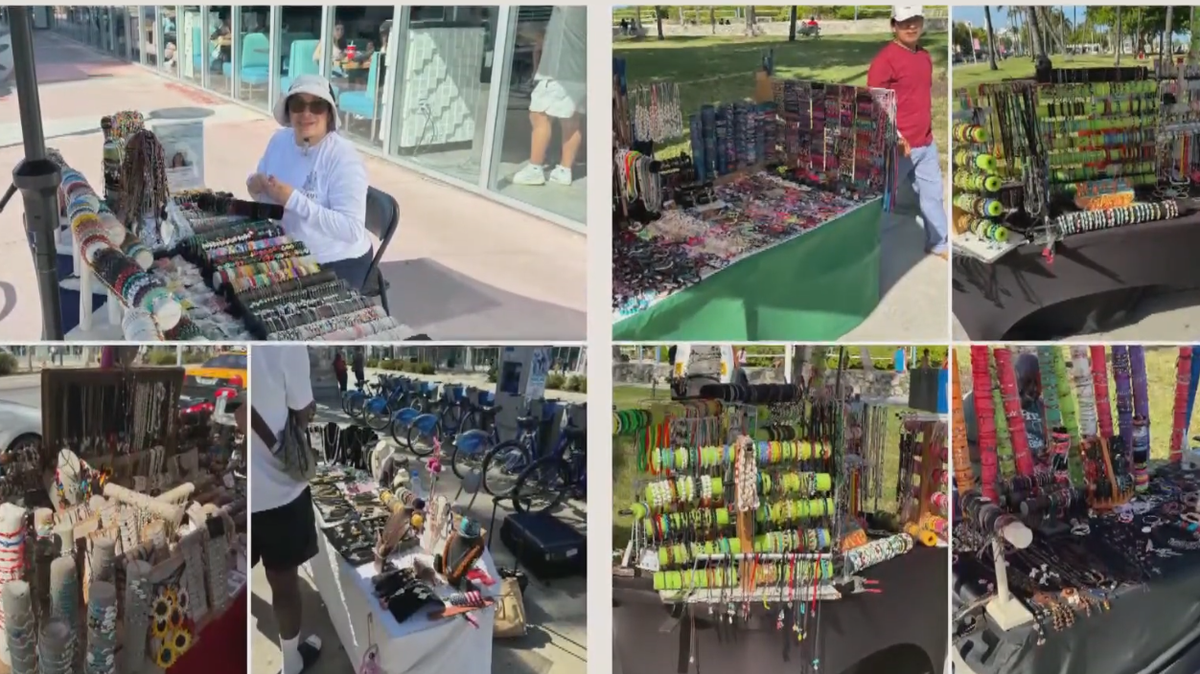
Miami Beach officials have a new target in their efforts to improve quality of life in the city: bead sellers.
The City Commission gave initial approval Wednesday to an overhaul of the city’s artist vendor program, citing the fact that the vast majority of artists in the program, who are permitted to set up shop on public property, sell beaded jewelry.
Commissioner David Suarez, who proposed the changes, said he wants to see more diversity in the types of art being sold and criticized the bead products as “tacky.”
“It looks like a flea market,” Suarez said during Wednesday’s meeting. “I think if we want to elevate our brand and the appeal of Miami Beach, let’s really diversify the artists that are on our public right of way.”
Among 58 artists who sell products in South Beach under the program, about 90% are bead stringers, according to city officials, who spent over $10,000 conducting an investigation into the program. Some artists and painters have transitioned to selling beaded jewelry because that’s what sells best, the city officials said.
The locations in South Beach, which include high-volume pedestrian areas along the beachwalk, Ocean Drive and Lincoln Road, get divvied up among approved artists through a lottery system every three months. About a dozen other artists have certificates to sell in other parts of the city further north.
The change that commissioners endorsed Wednesday would limit the number of bead stringers and makers of other types of jewelry citywide to 15, an increase from the five that Suarez had originally proposed. The item is set for a final vote Feb. 3.
Under the proposed changes, the city’s Art in Public Places committee would vet the artists and decide which 15 should be approved for the slots.
The sale of art in public is subject to First Amendment protections — something Miami Beach learned the hard way in 2005, when Florida’s Third District Court of Appeal ruled that a city law limiting the locations of street performers and artists was overly restrictive.
But those protections only extend to art that is deemed “expressive,” meaning it has limited use beyond its artistic value. Art that is “predominantly non-expressive” and has a common purpose is not subject to the same constitutional protections, City Attorney Ricardo Dopico said in a memo, meaning the city can restrict the sale of items like jewelry, appliances, clothing, sunglasses, candles and toys.
“We cannot regulate art, but we can regulate bead stringing,” Suarez said. “If we’re going to have something blocking the right of way, let’s at least have something interesting.”
The city is also looking to double certificate fees to participate in the artist vendor program from $108 to $216 per year and double fees to participate in the lottery from $65 to $130, a move that officials said would make up for financial losses in the program. Miami Beach spent about $107,000 to administer the program this year while collecting about $54,000 in fees.
Commissioners on Wednesday also called for stricter enforcement to ensure artists are selling the types of products for which they were approved and to prevent people from selling fake designer brands.
“I don’t think that just limiting the number [of bead stringers] is going to get us to this issue being resolved,” said Vice Mayor Tanya Katzoff Bhatt.
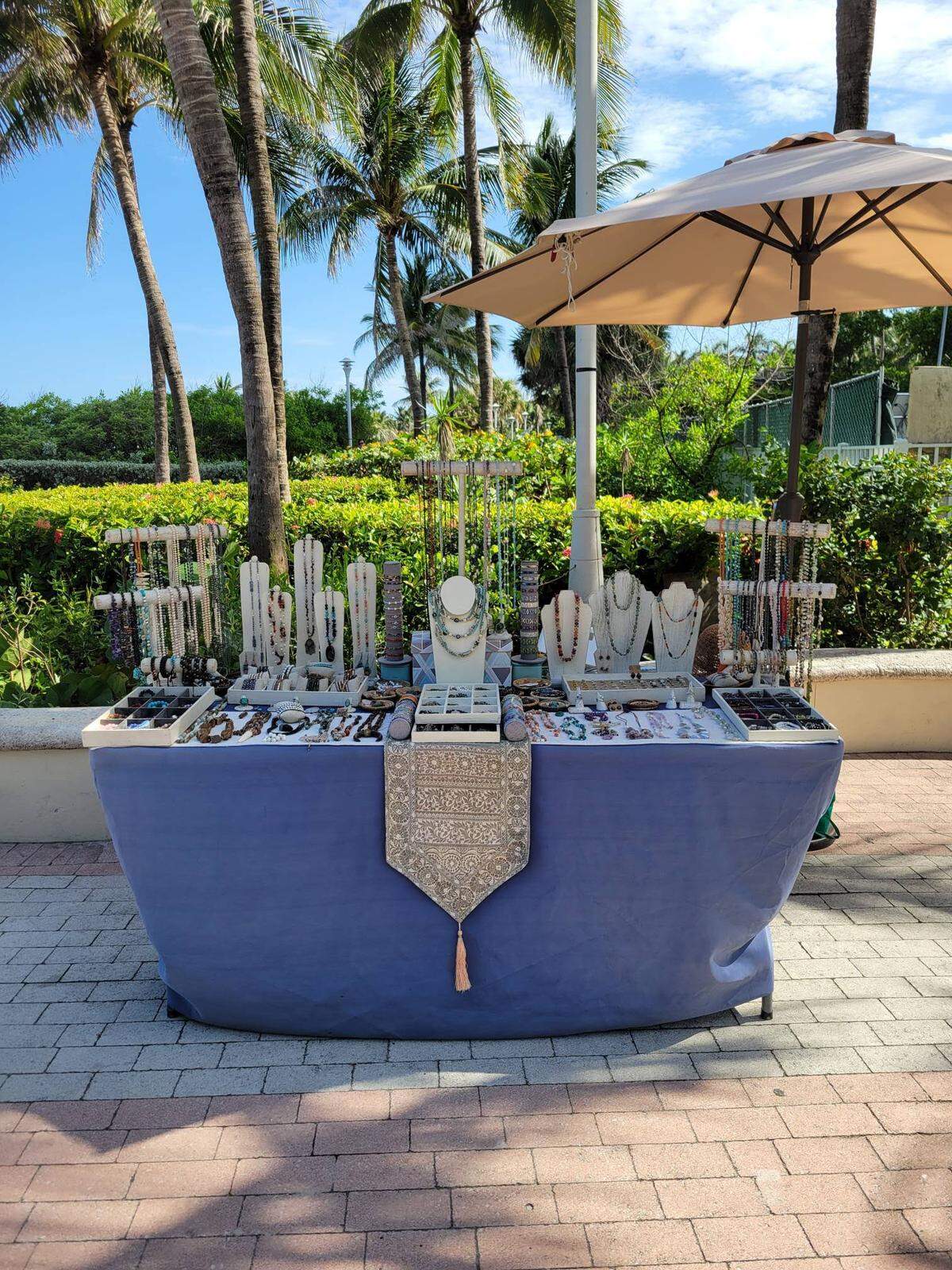
Artists in the program have pushed back on the restrictions, calling them heavy-handed and saying their livelihoods will be affected.
Christine King, who has participated in the program since 2016, acknowledged that the city’s current system is flawed and does little to control the quality of products. Still, she said, the proposed changes go too far in punishing artists who have been part of the program for years.
“It’s very heartless the way they’re doing it,” King said. “It’s just putting people out of business and putting them into stressful situations.”
King, who makes jewelry using pearls and gemstones, said she moved out of a storefront in Miami Beach when she could no longer afford the rent. While Suarez said Wednesday that bead stringers are “making money hand over fist” by using inexpensive beads and selling them for profit, King said that hasn’t been her experience.
“I can guarantee you nobody is making money hand over fist,” she said.
Suarez’s proposal passed unanimously on a first vote, but Commissioner Kristen Rosen Gonzalez raised concerns about the approach. She said the artists are simply trying to appeal to beachgoers and don’t deserve to be targeted.
“I’m not buying a big piece of art in my bikini or when I’m going swimming. I’m buying jewelry,” Rosen Gonzalez said. “Having code compliance harass our bead stringers, in my opinion, is a waste.”
This story was originally published December 13, 2024 at 12:16 PM.