Pressure from ex-Miami Beach mayor a factor in sea-rise project’s problems, report says
In the fight against sea-level rise, Miami Beach has earned a reputation as an innovator — the first city in the United States to start dramatically raising roads in low-lying areas while pouring hundreds of millions of dollars into pumps and other infrastructure to combat flooding.
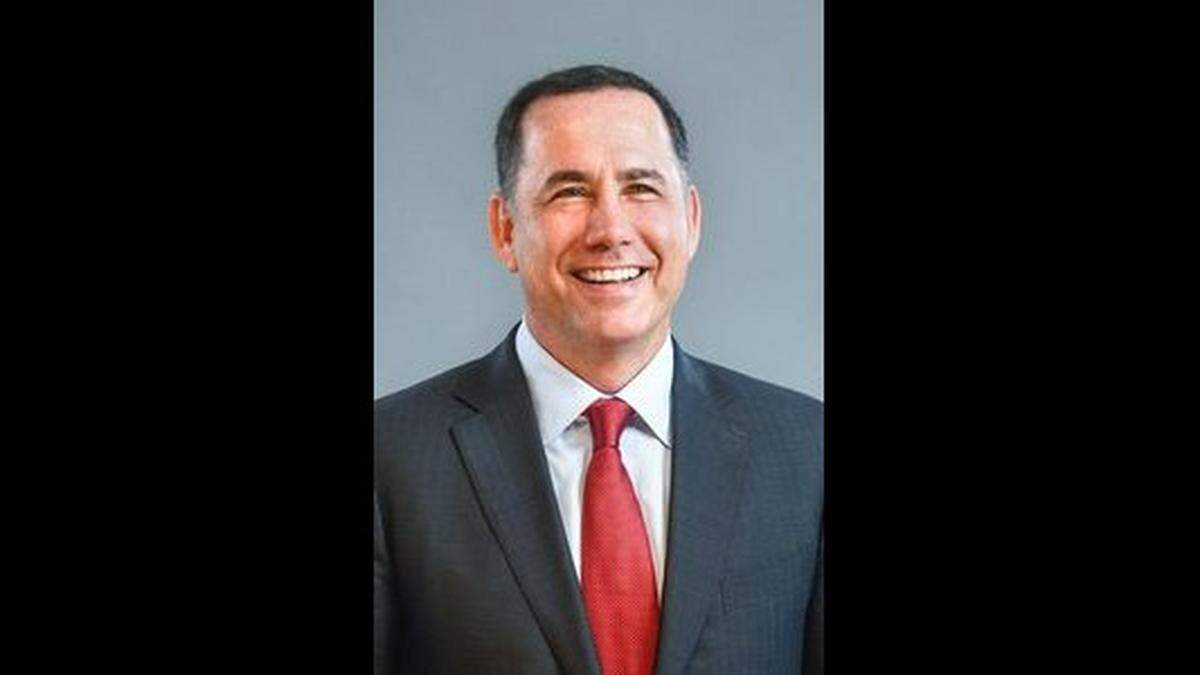
The architect of this aggressive approach was former Mayor Philip Levine, who commissioned a panel in 2014 to advise the city and pushed for a road-raising pilot project in the Sunset Harbour neighborhood that was widely seen as a success. Levine’s credo — “Just get it done!” — encapsulated his approach to resiliency projects and his belief that taking action on climate change simply couldn’t wait.
But while Levine garnered praise for his bold plan, his focus on speed contributed to the city’s mismanagement of a major stormwater project on flood-prone Indian Creek Drive, according to a report published Tuesday by the Miami Beach Office of Inspector General.
After king tides forced the city to shut down part of the state road in 2015, widely-circulated images showed people wading through ankle-deep water. Former Vice President Al Gore toured the street that year and reportedly said he saw fish swimming there.
The inspector general’s report says Levine applied “ongoing pressure” on city staff and contractors to accelerate a project to address the road’s flooding issues. But the report suggests his urgency didn’t have the intended effect: An initial goal of finishing the project in two years became a pipe dream due to major delays and ballooning costs.
Six years later, seawall construction is still ongoing.
The report says the city improperly relied on emergency declarations to justify no-bid contracts and repeatedly violated the terms of an agreement with the Florida Department of Transportation. In 2018, a city engineer directed seawall construction without permits that delayed its completion for years. Meanwhile, project costs doubled from around $25 million to more than $50 million.
“In an effort to avoid a lengthy procurement, the City added years to the project, negatively impacted the neighborhood and wasted nearly $20 million in public funds,” the report says.
The report calls for a city charter amendment to clarify that individual elected officials or advisory board members can’t give administrative orders to the city manager or city employees. It adds that Levine’s Blue Ribbon Panel on Sea Level Rise had “inappropriate authority and control” over the city’s stormwater drainage projects, allowing it to circumvent the manager’s authority.
The city of Miami Beach declined to comment on those recommendations in written responses to the report.
The inspector general’s office also called for a city ban on public emergency declarations to waive competitive bidding for construction contracts of $5 million or more, saying the approach contributed to the project’s financial issues — including an $8 million budget shortfall that at one point forced construction to halt.
Alina Hudak, the current city manager, said in a memo that the proposed $5 million limit was “arbitrary,” and that large-scale emergency projects are sometimes necessary given the city’s aging infrastructure.
Nonetheless, the city worked with the inspector general’s office to implement a new policy on internal controls for major construction projects that was approved by the City Commission earlier this year. The policy outlines best practices for procurement and protocols when there are “major modifications” to a project’s scope.
Levine responds to report
In an interview Tuesday evening, Levine said he viewed his role as mayor as a “cheerleader” to move resiliency projects forward and said any criticism of the city’s approach should be considered in light of its position as a “pioneer” on sea-level rise.
“When you’re a pioneer, when you’re doing things for the first time, there’s no road map. They probably could have built the Model T better, as well,” Levine said, referring to the first mass-production automobile of 100 years ago.
In a written response to a draft version of the report, Levine said through an attorney that competitive bidding would have slowed the process and that his urgency was justified.
“We observed no findings in your report concerning the gravity of the flooding and the nature of the emergency,” wrote attorney Kendall Coffey, a former U.S. attorney for the Southern District of Florida.
The project included building a new seawall at a higher elevation from 26th to 41st streets, adding a pump station at 32nd Street, raising the road and installing a 72-inch drainage line.
The report raises questions about whether the new drainage system can handle future flooding in the Indian Creek area, saying it doesn’t account for the likelihood that more than 100 wells used to store floodwater are expected to fail due to sea-level rise in the coming years. A future stormwater drainage project is now needed on another portion of State Road A1A that runs parallel to Indian Creek Drive.
A draft version of the report suggested the city was aware of this issue but chose to build a lower-capacity system anyway due to timing and costs, but the final report was amended to say the city followed best practices at the time and couldn’t have built a larger system due to a lack of access to private properties.
Final report softens findings on Levine
The report’s conclusions about Levine also changed somewhat between the completion of a draft version in June and the final version published Tuesday, according to a copy of the draft obtained by the Miami Herald.
The draft report said the former mayor applied “inappropriate” pressure to accelerate the project, a descriptor that was removed from the final version.
In addition, the draft said Levine’s pressure, along with actions taken by city staff in response, “were the root causes of the project’s design flaws, cost overruns and schedule delays.” The final version does not include that line and doesn’t explicitly say Levine caused the project’s problems.
Joseph Centorino, the city’s inspector general who previously oversaw Miami-Dade County’s ethics commission, told the Herald the edits reflected his office’s normal process and were not made in response to pressure from Levine.
“Nobody told us what to do here,” he said. “You don’t want to have something seem like it’s slanted or seem like it’s aimed at anybody for political or other purposes.”
.JPG "Dire15 Hernandez New Hmg (1).JPG")
Levine was “well-intentioned” in pressing the city to act quickly, the report says. Still, emails and statements from public officials and contractors highlight the former mayor’s emphasis on completing the Indian Creek project as quickly as possible.
“We need to get this done on emergency ‘turbo’ speed,” Levine wrote in a May 2016 email to city staff about the project timeline, according to the report. “EMERGENCY FAST???? Unbelievable sense of urgency?”
In 2017, pressure from Levine may have prompted the city to direct resources toward finishing a particular section of the project ahead of a U.S. Conference of Mayors annual meeting at the Fontainebleau Hotel.
Levine “wants to make sure the work between 25th Street and 26th Street is complete before the end of June because we are going to have people from all over the country here for the mayoral conference,” former city engineer Bruce Mowry said at a meeting, according to the report.
Levine said he doesn’t recall the situation.
Miami Beach clashed with state officials
The report details bitter disagreements between officials from Miami Beach and the Florida Department of Transportation as they negotiated over a cost-sharing agreement and project protocols. The city consistently looked to accelerate construction, while the state demanded a more deliberate approach.
After months of back and forth about the city’s desire to use a no-bid contract for the entire project and the state’s insistence on using a competitive bid process, the city agreed to accept bids for above-ground construction. FDOT said it would pay $19.5 million for the project while the city covered $5.5 million.
But the city repeatedly did work that fell outside the agreement’s scope, according to the inspector general’s report. That put Miami Beach at risk of not being reimbursed by the state — although state officials ultimately agreed in 2019 to cover most of the city’s out-of-scope work.
“DOT got dragged into doing things that we didn’t want to do, that we weren’t comfortable with doing, just to try and get this project done,” James Wolfe, the former FDOT secretary for a district that includes Miami-Dade County, told investigators.
The city also “consistently violated” its agreement to accept competitive bids for a substantial portion of the project, according to the report.
While Levine and other city officials argued emergency procurement methods were justified due to the immediate flooding threat, the report says there was no true emergency — especially after installation of a temporary concrete barrier in late 2015 that helped prevent major flooding during king tides the following year.
Major construction projects typically must be awarded through a competitive bidding process under Florida law, but Miami Beach was able to skirt those requirements by declaring the Indian Creek Drive project an emergency. The city selected a contractor through a cooperative model that allows governments to expedite procurement, typically for smaller projects.
Former city engineer played big role
The report describes Mowry, the former city engineer, taking bold steps to accelerate the resiliency project and at times “undercutting” former City Manager Jimmy Morales.
When officials discovered Mowry had directed unpermitted work on parts of the seawall, construction stopped and Mowry was fired. That led to a delay of more than three years, with seawall construction finally resuming in June 2021.
Mowry told the Herald the accusations of unpermitted work were the result of a disagreement between the city and federal government on the definition of “emergency” work, along with a misunderstanding of how far the new seawall had to be built from the old seawall.
He added that he had received approval to move ahead from the city manager and other city officials.
“Bottom line is I was left out to dry,” he said.
Mowry said he does not dispute the report’s characterization that he continually pushed FDOT and the city past their limits to complete the project on time, something he said the former mayor encouraged him to do and praised him for.
He said he has a plaque in his home office from Levine dated Oct. 21, 2014, declaring it “Bruce Mowry Day.” It is affectionately addressed to “General Patton,” and says, “Thanks for keeping our streets dry.”
“I am a very strong-willed person and I was taking the aggressive position that I was a strong manager and I was getting things done as directed by the elected officials,” he said.
Levine, a cruise line media magnate, ended his four-year tenure as mayor in 2017 before making an unsuccessful Democratic primary bid for Florida governor in 2018. He poured $29 million of his own money into a campaign that centered on his radical approach to fighting climate change.
The city’s resiliency efforts have continued under Mayor Dan Gelber, but road-raising projects — including one on West Avenue — have faced a heavy backlash from property owners who say the city hasn’t done enough to address flooding impacts to their lower-lying homes.
“You’ve got to just learn as you go along to get better,” Levine said. “I don’t think anyone is perfect.”