Deauville, Lincoln Road, arts venues: Eight questions on the ballot in Miami Beach
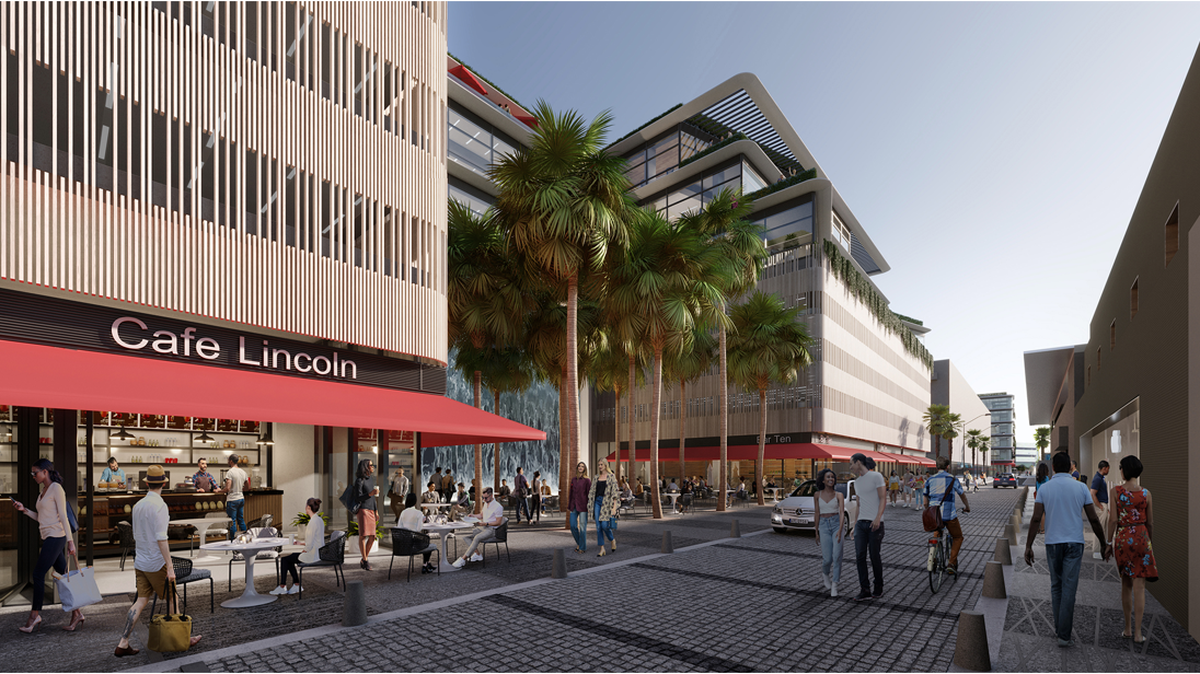
The Nov. 8 election in Miami Beach features eight ballot questions that include an up-zoning at the former Deauville Hotel site, a $159 million general obligation bond for arts and culture institutions, and leases of city-owned property near Lincoln Road.
To view a complete sample ballot, click here.
For the city’s explanation of each ballot question, go to www.miamibeachfl.gov/2022election.
Here is a look at each question.
▪ Question 1: The Deauville Hotel site
You won’t see the word “Deauville” in the referendum language. But this question would increase the allowable floor-area ratio — a method of regulating building size — at the site of the historic Deauville Hotel in North Beach.
If it passes, Miami Dolphins owner and developer Stephen Ross and architect Frank Gehry will move ahead with their plan for a 125-unit luxury condo tower and a 175-room hotel at the site with green space in between. Ross is proposing a 375-foot condo tower in an area with a current 200-foot height limit.
Further details of the project have not yet been released or approved by the city, which will negotiate with the developers if and when voters bless the up-zoning measure. The ballot question would also require the developers to provide an unspecified “public recreational facility” and access to the beach.
With demolition of the Deauville underway, some activists and historic preservationists say the city and developers need to do more to save the character of a local gem that fell into disrepair. Others say it’s time for a fresh start and that the project will help spruce up the North Beach neighborhood.
▪ Question 2: Arts and culture general obligation bond
This item asks whether the city should be authorized to issue up to $159 million in general obligation bonds for capital improvements at arts and culture facilities.
It reflects part of an effort by Mayor Dan Gelber and others to maintain and build on Miami Beach’s status as an arts and culture destination, and to try to change its reputation as a spring break party spot.
Among the funds that would be earmarked are $29 million for infrastructure upgrades at The Fillmore theater, $20 million to build a new wing at the Bass Museum, and $16 million for the Miami City Ballet, of which $4 million would go toward a workforce housing project with dorm space for dancers.
Taxpayers would shoulder the costs. According to the city, the cost in property taxes to an “average” homeowner if the measure is approved would be $138 per year, based on an average taxable value of $665,000. The estimated cost per $100,000 of taxable value would be $21 annually.
This is the second time since 2018 that Miami Beach residents will vote on a substantial general obligation bond issue. That year, voters approved $439 million in bonds for projects related to public safety, infrastructure, beaches and parks.
▪ Question 3: Voter approval for sale or lease of property in 41st Street corridor
This question asks if voter approval should be required before the city sells or leases property for 10 years or more in an area from West 40th to 43rd Street between Pine Tree Drive and Alton Road.
That area includes multiple city-owned surface parking lots that support nearby businesses.
The city charter already dictates several areas in which the sale or lease of city property must be approved by voters, including waterfront land and the surface parking lots near Lincoln Road that are the subject of Questions 4, 5 and 6.
▪ Questions 4, 5 and 6: Property near Lincoln Road
Perhaps the most controversial questions on the ballot, these three items concern two proposed 99-year leases of city-owned surface parking lots near Lincoln Road, as well as how the city will spend the rent if the leases are approved.
The two projects would redevelop a combined 3.4 acres across three surface parking lots to build three mixed-use buildings between six and eight stories high that feature high-end office space.
Question 5 deals with 1664 Meridian Ave., where at least half of the floor area in a six-story development would be designated as office space. There would also be about 43 market-rate apartments, ground-floor retail and a parking garage with about 290 spaces, including 151 to replace existing public parking spaces. That project is a joint venture that includes Don Peebles, Scott Robins and former Miami Beach Mayor Philip Levine.
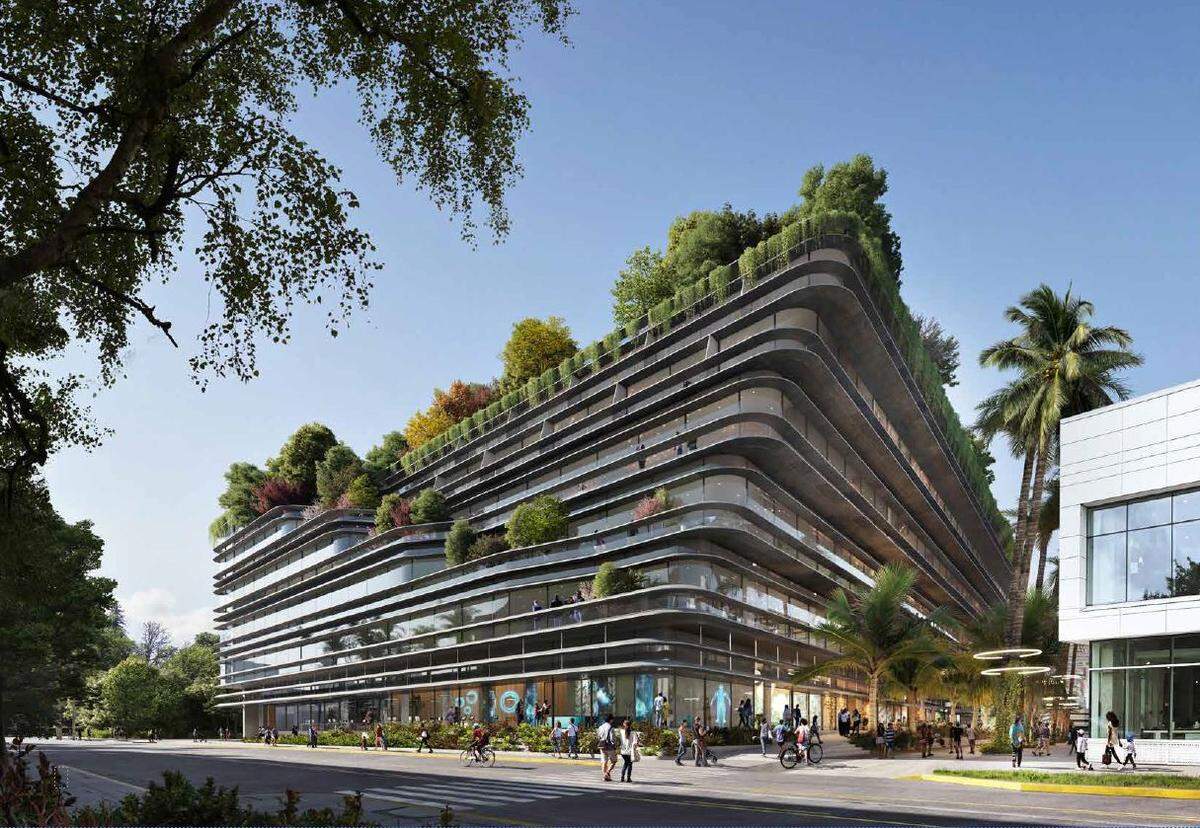
Question 6 involves parking lots at 1688 Lenox Ave., and 1080 Lincoln Lane North, where Integra Investments, Starwood Capital Group and The Comras Company are proposing two buildings that would also include office space, ground-floor retail and 425 parking spaces, 192 of which would be public to replace existing spaces.
Question 4 deals with how to spend up to $355 million over 99 years — or about $3.6 million per year on average — in rent from the two leases if they are approved. It asks whether the city should put the money in equal portions toward workforce housing, public safety, and “resiliency and sustainability infrastructure initiatives.”
Proponents say the developments would help diversify Miami Beach’s hospitality-based economy and bring new life to Lincoln Road.
Critics say there are better uses of city land, and also argue the city is getting a raw financial deal.
▪ Questions 7 and 8: Residential and office incentives South of Fifth
These items offer building-size incentives for owners in the South of Fifth neighborhood who use their property for something other than hotels or short-term rentals, part of the city’s ongoing effort to rely less heavily on tourism.
Question 7 would provide a maximum floor-area ratio increase from 2.0 to 2.7 for hotel owners in the so-called RPS-4 district who convert existing hotels to residential uses. This would likely include conversion of the Marriott Stanton Hotel on Ocean Drive into a residential property.
Question 8 would incentivize residential or office uses on Washington Avenue between First Street and Second Street. It would include a floor-area ratio increase from 1.0 to 2.0 in that area and a maximum of 2.7 for residential or office developments that prohibit hotels and short-term rentals. This could allow an existing office building at 119 Washington Ave. to expand its footprint.
The money
Several political committees have flooded residents with mailers, text messages and other political advertisements in recent weeks, with a particular focus on promoting the Deauville and Lincoln Road items.
The finances behind the mailers are still something of a mystery. Yes for a Safe and Strong Future, which is touting the Deauville redevelopment, and Yes for a Strong Miami Beach, a pro-Lincoln Road redevelopment group, have not yet published financial reports.
Yes for a Safe and Strong Future is chaired by Neisen Kasdin, a former Miami Beach mayor who is representing the proposed Deauville site developers. Yes for a Strong Miami Beach is led by Victor Ballestas, a principal at Integra Investments, a developer behind one of the Lincoln Road projects.
Another political committee, Friends of M.B. Arts and Culture, is promoting the $159 million general obligation bond and has already reported $274,000 in contributions and $155,000 in spending. Live Nation, which operates The Fillmore, has donated $100,000 to the PAC.
This story was originally published October 12, 2022 at 12:43 PM.