On South Beach, surfers wary over artificial reef project. It’s all about saving the waves
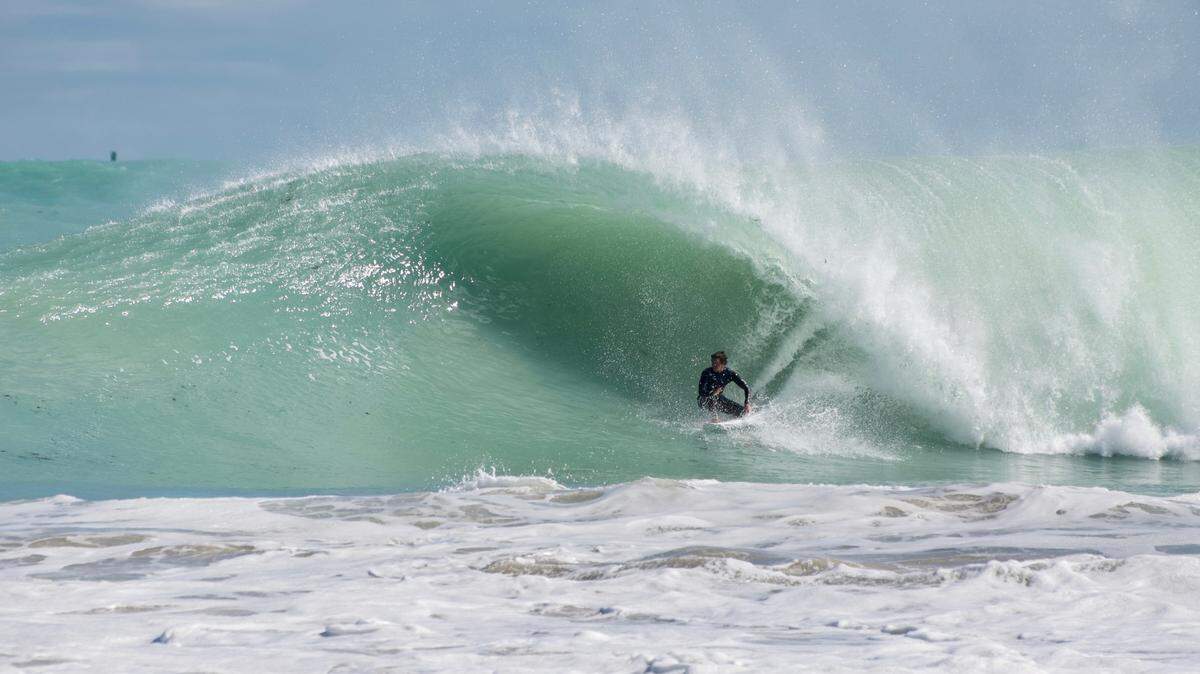
Jesse Bull took advantage of low tide on Memorial Day. The San Diego transplant brought his family to South Beach. He chose a perfect place to introduce his two young children to surfing — a stretch of beach south of Fifth Street where waves can sometimes grow tall enough to excite even Californians.
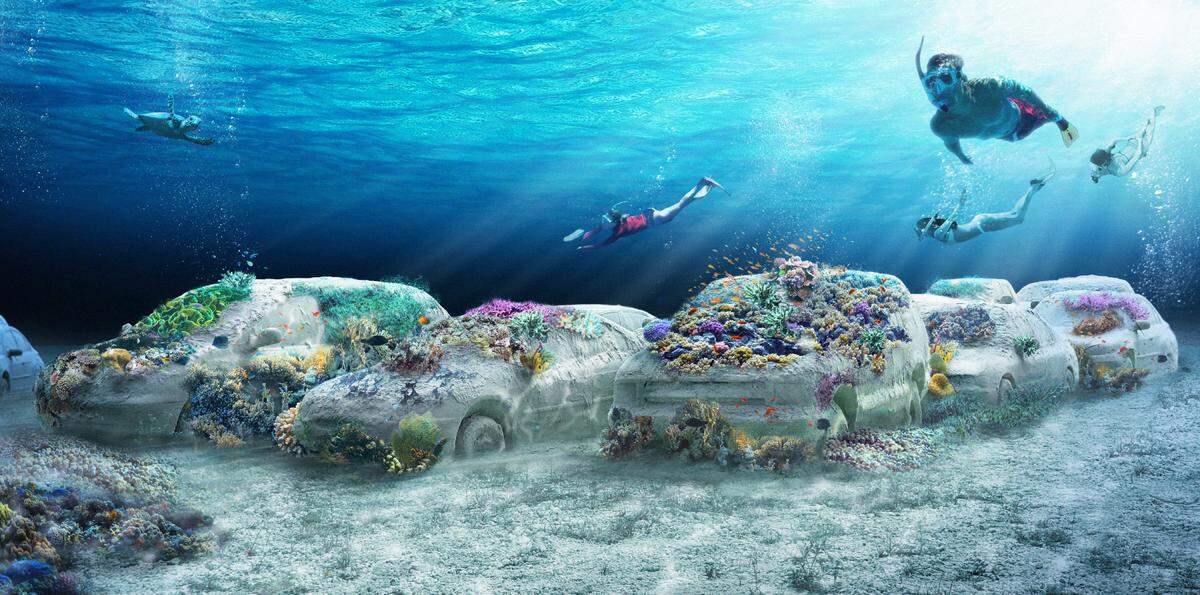
The waves were small that day but this surf spot is considered sacred in Miami-Dade County. It’s one of the few places where, when weather conditions are right, ocean swells bypass the Bahamas and produce waves worth chasing. So when a nonprofit proposed an unusual artificial reef project — featuring underwater art installations, including sculptures of cars — some 600 feet from the famed shoreline, it prompted a turf war.
The dispute, ironically, wound up pitting two nonprofit groups with ocean conservation agendas against each other. One wanted the beach south of Fifth Street to attract ecotourists through an artistic artificial reef project. The other prioritized the surf, and worried a cluster of sculptures would disrupt the wave energy that makes this small section of beach a rarity for Miami-Dade — a periodically gnarly destination for surfers.
The coral reef project, known as the ReefLine, is spearheaded by the BlueLab Preservation Society, which focuses on water pollution and water-related environmental issues through art. The BlueLab Preservation Society partnered with the City of Miami Beach, Miami-Dade County, the Knight Foundation, Coral Morphologic and other organizations for the ReefLine, which is also intended to boost coastline resiliency by employing coral reefs as a buffer from waves and floods.
Miami’s chapter of the Surfrider Foundation, the group that contested the ReefLine, has interests made clear by its name. The group has a stated goal of protecting public access and recreational enjoyment of open waters, most notably surfing. And the group argued the placement of the project could alter wave patterns.
But after months of debate and discussion and tens of thousands of dollars in research, the groups have recently reached a compromise. The reef-art installation will go forward but in a different offshore spot just about a block away.
Still, as the ReefLine edges toward its first phase of construction in early 2023, surfers remain wary.
“A lot of people I know who surf were approaching me about this and saying they were worried,” said Bull, a Surfrider core member. “The concern was really: why there? It’s such a good wave and so special to all of us. The general overreaching thing most people said is, ‘why can’t it be someplace else?’”
A quarrel over coral
Unlike beaches to the north, especially from Sebastian to Cocoa Beach, Miami-Dade doesn’t have much of a reputation in the surf community — except for those in the know who monitor the weather.
Bull said the county’s surf community is tight-knit but mostly underground, emerging only when conditions bring about favorable waters.
“When the surf is good you can go to Fifth Street and it’ll just be packed,” said Bull, who pushed his eight-year-old daughter and five-year-old son into waves on a longboard on a day when the tide was safe for kids. “There will basically be surfers shoulder to shoulder from Fifth Street all the way down to the jetties.”
The south of Fifth Street beach is so precious to Miami’s Surfrider chapter that the group formally appealed a permit issued to the project by the Miami-Dade County Department of Environmental Resources Management last August.
Surfrider argued that the location “generates rare, world-class surfable waves found nowhere else in Miami-Dade County.” It also pointed to the fact that the South Beach Park Subdivision is the only beach explicitly described as surf-friendly in the Miami Beach municipal code. There, the use of surfboards is permitted. Anywhere else, said use is prohibited unless otherwise decided by the city manager.
The year-old appeal led to conversations between members of Surfrider Miami and the ReefLine team. Bull and Mike Gibaldi, treasurer of the Miami chapter, asked BlueLab to fund a study to prove the artificial reefs would have no impact on the waves. In exchange for the study, Surfrider agreed to drop the permit appeal.
“From the Surfrider Foundation’s perspective, one of our main concerns is protecting special places, protecting waves, and protecting beach access,” Gibaldi said. “So we had no choice but to pay very close attention.”
A compromise
Ximena Caminos, founder of ReefLine and chair of BlueLab, agreed to pay for the study, which cost close to $20,000 and was conducted by the University of Miami’s Surge Structure Atmosphere Interaction (SUSTAIN) laboratory. The SUSTAIN lab contains wind and wave tanks capable of emulating coastal water conditions.
“We decided to do it because we just want to be good neighbors,” Caminos said. “We’re all trying to protect and preserve the same asset, which is our ocean.”
The study’s results were published in March. Surfrider announced the results earlier this year — and they did not amount to much.
“Surfrider was most interested in the question of whether or not the wave energy would be significantly reduced through shoaling and breaking as the wave went over the structure,” said Brian Haus, director of the SUSTAIN lab. “There’s not a lot of other potential impacts, at least from this project.”
Haus utilized scale models of the car sculptures that will be part of the ReefLine installation. He placed them into a wind and water tank to observe any change in wave energy or wave height. When the simulated waters passed over the sculptures and reached the mock shores, the recorded wave heights resulted in a less than 10% change — a change which, if anything, resulted in a slight bump to wave height.
“There were side effects that some of the waves would increase, but it would probably be a local impact because of the wave shoaling over the structure to some extent then going down again,” Haus said. “I don’t think it would change the weight impact or the shoreline.”
Though Haus’ final report found no substantial impact posed to surf conditions, Surfrider still maintained some of its concerns, with Bull and Gibaldi both wary that time and financial constraints of the study did not provide a complete projection of the reef’s impact.
So Caminos took the compromise a step further. She agreed to move the project away from the south of Fifth Street beach. Now, the project will begin north between Fourth and Fifth Street.
The ReefLine’s first phase of construction is slated for early 2023, and the seven total miles of artificial reef will avoid Fifth Street entirely.
Once Caminos secures the estimated $12 million necessary for the ReefLine’s infrastructure, she said the construction would take about four to five years to complete. Her hope is that those seeking diverse marine life and bountiful coral reefs need not venture out into the Florida Keys — that ReefLine can secure Miami Beach as “most environmentally aware art city in the world.”
The playful intersection of art and conservation that ReefLine proposes is now uncontested, so long as it does not make any unexpected detours toward Fifth Street.
“We’re going to be monitoring, communicating with them as necessary,” Gibaldi said. “We’re going to be watching very closely as it plays out.”
This story was originally published September 12, 2022 at 4:30 AM.