
American flag mosaic art displayed in Miami Beach for 50 years. Will it be demolished?
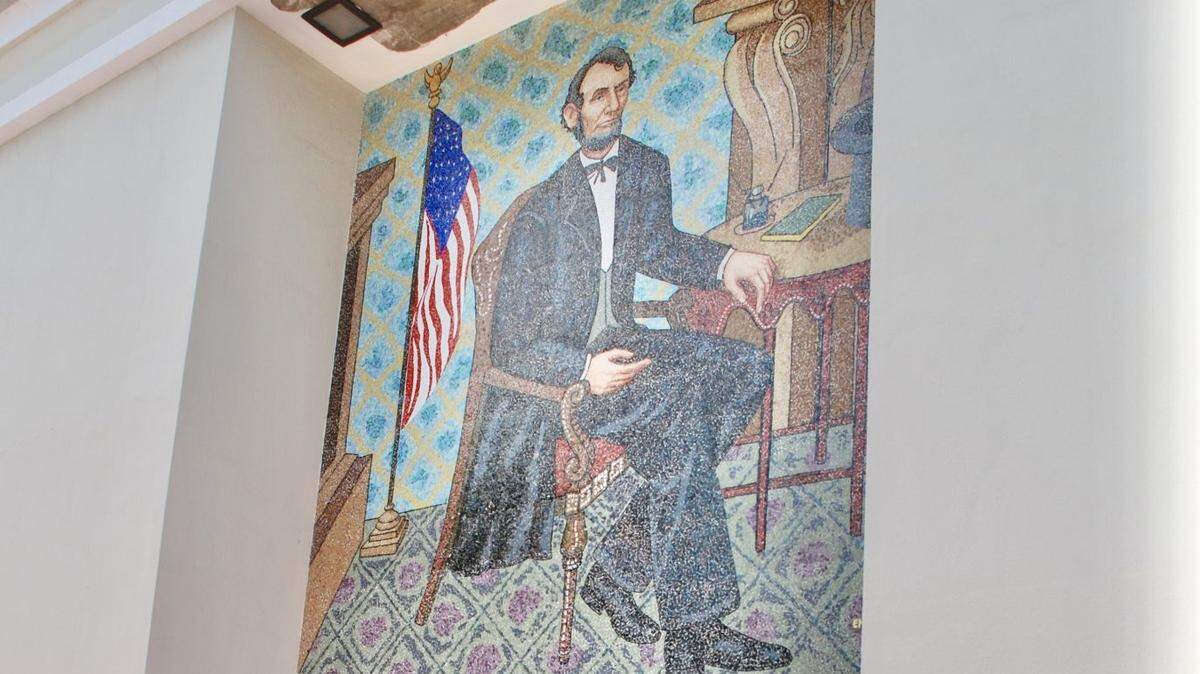
For more than 50 years, a collection of mosaic murals embodying American patriotism has adorned an old bank building in South Beach that is now headed for demolition.
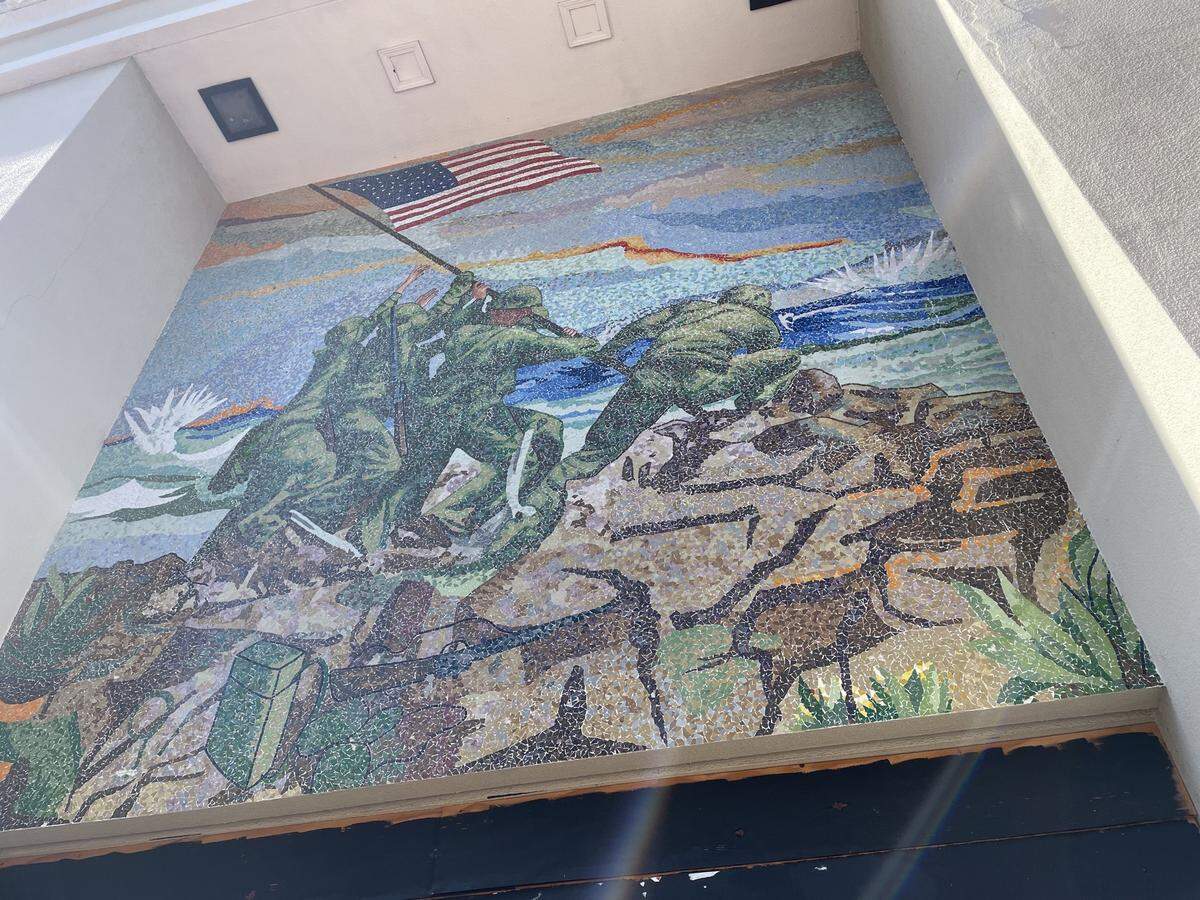
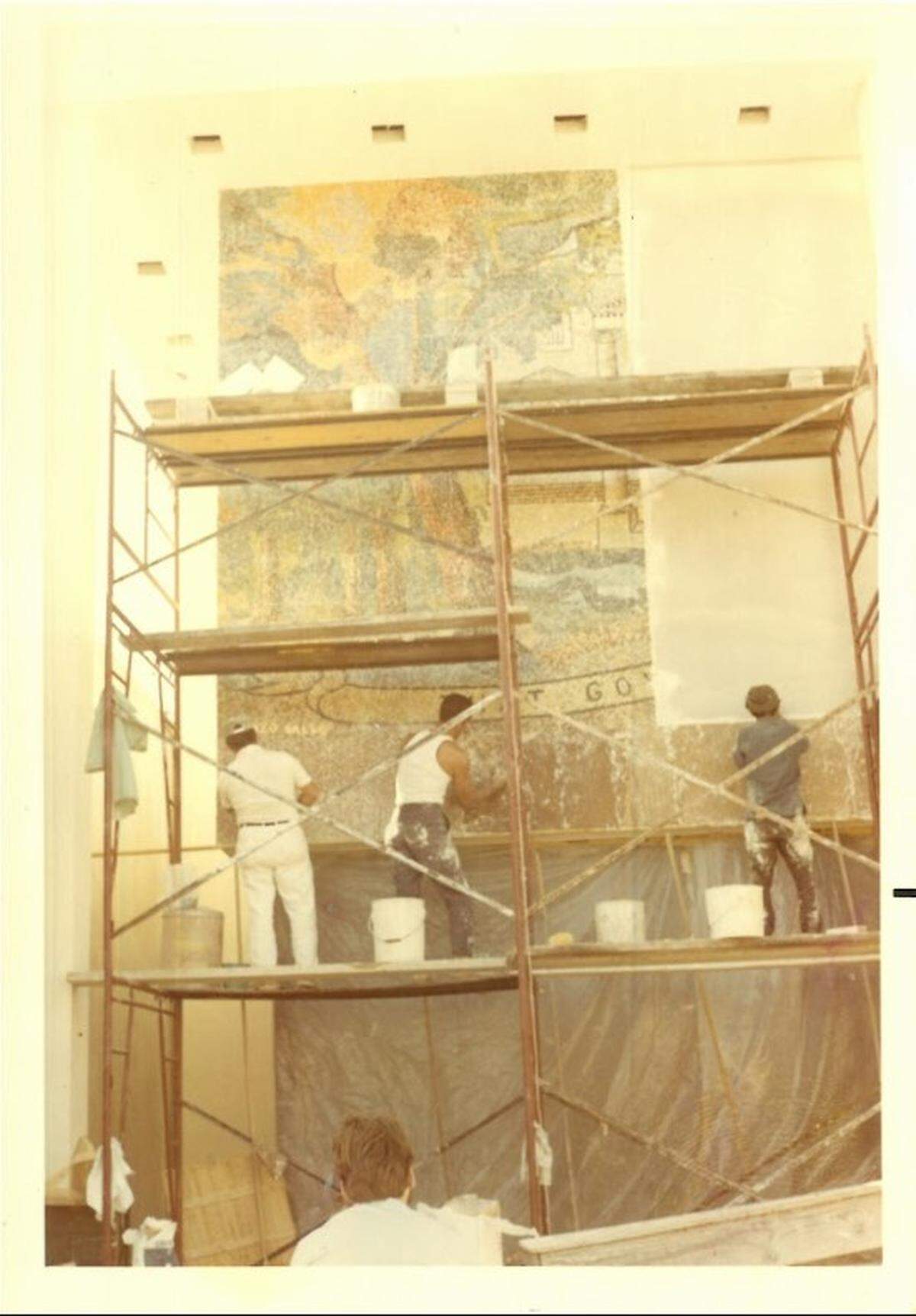
The 15-feet-high murals — which were created by artist Enzo Gallo in 1971 and feature depictions of the American flag, President Abraham Lincoln and the moon landing — wrap around the facade of the now vacant Wells Fargo branch at 1634 Alton Rd.
The bank building is set to be demolished for a new hotel, but Miami Beach preservationists are pushing to save the murals. And they’re getting help from an unexpected source: the hotel developer that plans to tear the building down.
The Dutch hotel chain that owns the land, CitizenM, has been working with the Miami Design Preservation League in the hopes of preserving the murals before demolition, said Eric Barnum, project director for the planned hotel.
“I am confident that we will come up with a way to save them in some way and get them down,” Barnum said.
Barnum said the demolition has been delayed while they determine how to take down the murals — or whether it can be done. The challenge, he said, is that the murals were installed directly onto the exterior walls of the building, which means their removal may involve taking off sections of the wall.
“They’re very delicate, so that becomes the challenge,” he said.
The team is doing exploratory testing, including cutting into the concrete, to determine the best path forward, said Daniel Ciraldo, executive director of the preservation group. Ciraldo said conservator Rosa Lowinger and structural engineer Youssef Hachem have volunteered their expertise in helping the team explore how to save the murals. CitizenM contractor Americaribe has assisted in the concrete testing, he said.
“All we need at this point is people putting their thinking caps on,” Ciraldo said.
There are six murals on the building, but the groups are focused on saving at least four of them — the murals fronting Lincoln Road that depict the history of the American flag — due to their size and location on the building. The panels depict Lincoln writing his inaugural address with the flag behind him, Betsy Ross stitching together an early version of the flag, astronauts Buzz Aldrin and Neil Armstrong planting the flag on the moon and a group of U.S. Marines raising the flag on Iwo Jima during World War II.
Ciraldo said the fate of the murals remains unclear but he appreciated the efforts of the CitizenM team.
“They’re being very gracious,” he said. “But we all know sooner rather than later this building is coming down.”
Where would murals go?
If the murals can be removed, decisions must be made on how to pay for it and where to store or display them.
Miami Beach Mayor Dan Gelber has said he wants the city to help look for locations for the murals, possibly overlooking a park or a school.
“I’d love to see them preserved and displayed,” he said. “They’re beautiful and they’re patriotic and they’re part of our history.”
But a city spokeswoman said the city is not involved in relocation discussions and that the murals are not characterized as historically significant because the building is not in a historic district. The building was constructed in 1940 but lies just outside the Flamingo Park Historic District so its demolition does not require preservation review.
Ciraldo said he is focused on getting the murals down but hopes to find a location for them afterwards.
The previous owner of the building, Miami development firm Crescent Heights, is developing a mixed-use project called 1212 Lincoln Road that will include the new CitizenM hotel. Managing Principal Russell Galbut said his firm paid to install a large electronic display on the corner of 16th Street that features the Gallo murals.
“They will live on forever in the digital format and are currently screened on that existing sign today,” Galbut wrote in an email.
Murals tell immigrant story
For Julio Gallo, son of the artist and a Miami Beach plastic surgeon, the artwork symbolizes the American dream that led his father to plant roots in South Florida. Enzo Gallo was born in Italy but studied fine arts and worked in Cuba before fleeing the Castro regime to South Florida in 1960. He died in 1999.
“I think the city of Miami Beach has to decide are we going to mature and develop a history, a past, a cultural memory or are we just going to sell out and build glass hotels for tourists?” Gallo said. “I think there’s a balance there, and I think there’s the possibility of coexistence on both sides.”
He said it was “commendable” that CitizenM was working with the preservationists to help save some of the murals.
“I think this is a good example of how a developer can show some good will toward the community and the history of the community, and still have progress with the development of other projects,” he said.
This story was originally published June 8, 2022 at 2:44 PM.
.JPG)