
What’s on Surfside’s March 15 ballot? Burying utilities and raises for commissioners
.JPG "People stand in line to vote at Surfside Town Hall in 2020.")
Along with electing a mayor and four commissioners in Tuesday’s election, Surfside residents will also make their voices heard on five ballot questions that will impact how much their elected leaders get paid, whether the town buries its utility lines and more.
The following questions are binding, which means they will become law if a majority of voters approves them.
More information on the ballot questions can be found on the town website. A video of the town hall Surfside hosted to explain the questions can also be found on the website.
Undergrounding utility lines
Voters will decide whether the town should issue up to $40 million in general obligation bonds to bury its utility lines. If approved, the town will impose a new debt-service tax to pay off the bonds, including interest.
The new tax will be between $73 to $156 per every $100,000 of a property’s taxable value depending on the life of the debt, according to a town estimate.
In 2020, a majority of residents approved a non-binding straw ballot asking whether they were in favor of undergrounding utilities for an estimated cost of up to $18 million.
The Town Commission could offset the tax increase by lowering the current operating tax rate, according to a town spokeswoman. Whether to lower the tax rate has become a point of contention in the election.
A raise for elected officials
Surfside’s mayor and commissioners essentially serve the public for free — they earn $1 per year in the form of a framed check. Voters will decide whether to raise their pay to $12,000 and offer them employee health insurance.
Storing beach furniture overnight
The storage of beach furniture — like chairs, umbrellas or cabanas — has been prohibited in the Surfside code since 2020. But that can be overturned by a majority vote of the Town Commission. Voters will decide Tuesday whether to add a ban on overnight furniture storage to the town charter. If approved, the restriction could only be overturned by 60% of voters in another referendum, according to the resolution to place the question on the ballot.
The enhanced restrictions would apply to the storage of privately owned property on the beach from dusk to dawn. There is an exception for public items like lifeguard stands and trash bins.
Preserving hedge heights
Residents who want to protect their tall hedges from any future restrictions would vote in favor of Ballot Question 4, which would amend the charter to make 6-foot hedges a right on single-family lots. The referendum would prohibit any future limitation on hedge heights to below 6 feet tall.
Height, density restrictions on beachfront buildings
The final ballot question would impose restrictions on building height and lot area for beachfront properties along Collins Avenue.
Voters will decide whether to amend the charter to require that all buildings be constructed with their first-floor elevations at the same level, known as the wave crest elevation. The town says that would close a loophole that allows developers to exceed the current 120-foot total height limit by building their first-floor elevations above the wave crest.
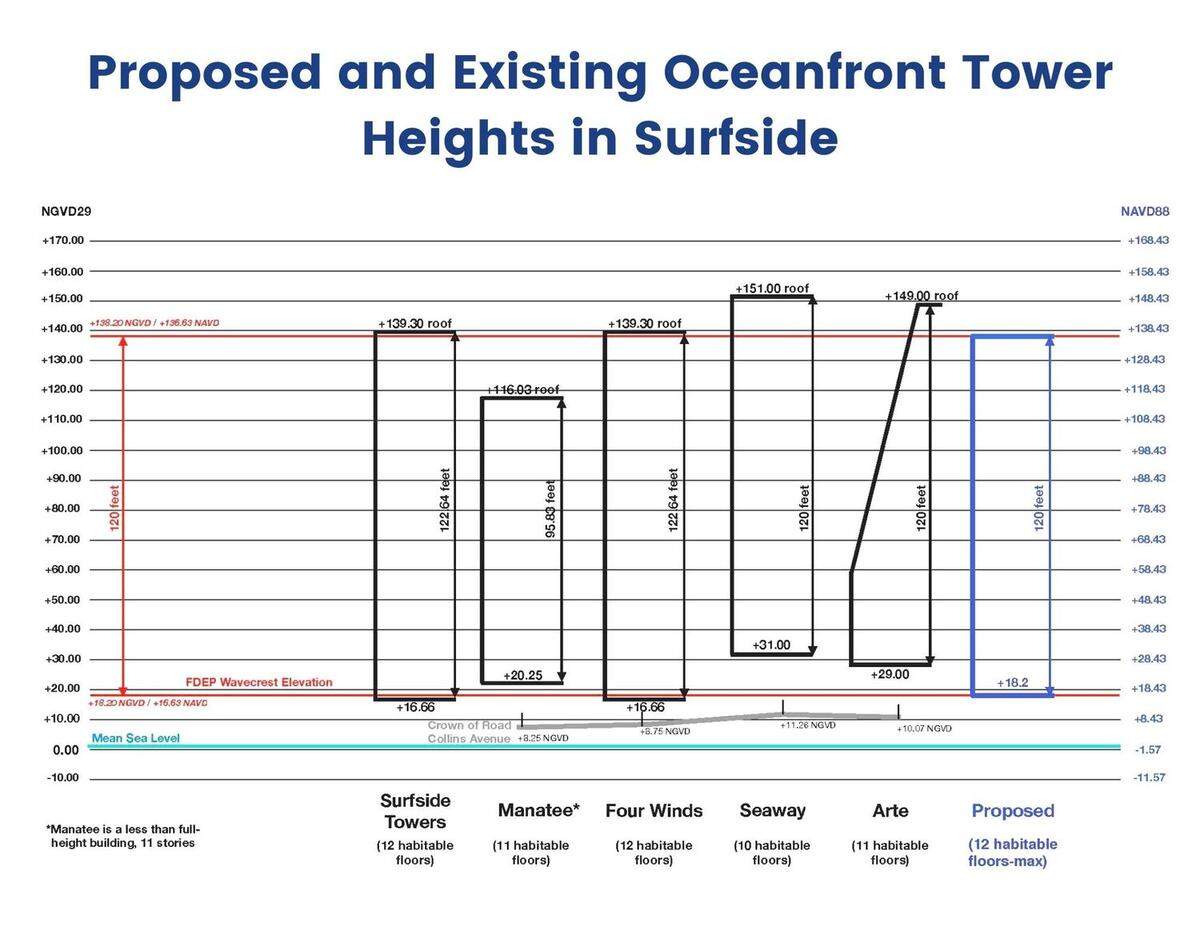
The question also asks whether the charter should be amended to require that lot area on beachfront properties be measured from the edge of the property, known as the bulkhead line, rather than near the beach dunes at what is known as the erosion control line. Using the bulkhead line for zoning calculations would result in smaller lots and a less dense building, according to the town.
Approval of the referendum would require a minimum of 60% voter approval to amend or repeal this section of the charter.
This story was originally published March 11, 2022 at 12:13 PM.
.JPG)