
South Beach apartment-hotel debate leads to lawsuits, ‘threat’ over child custody
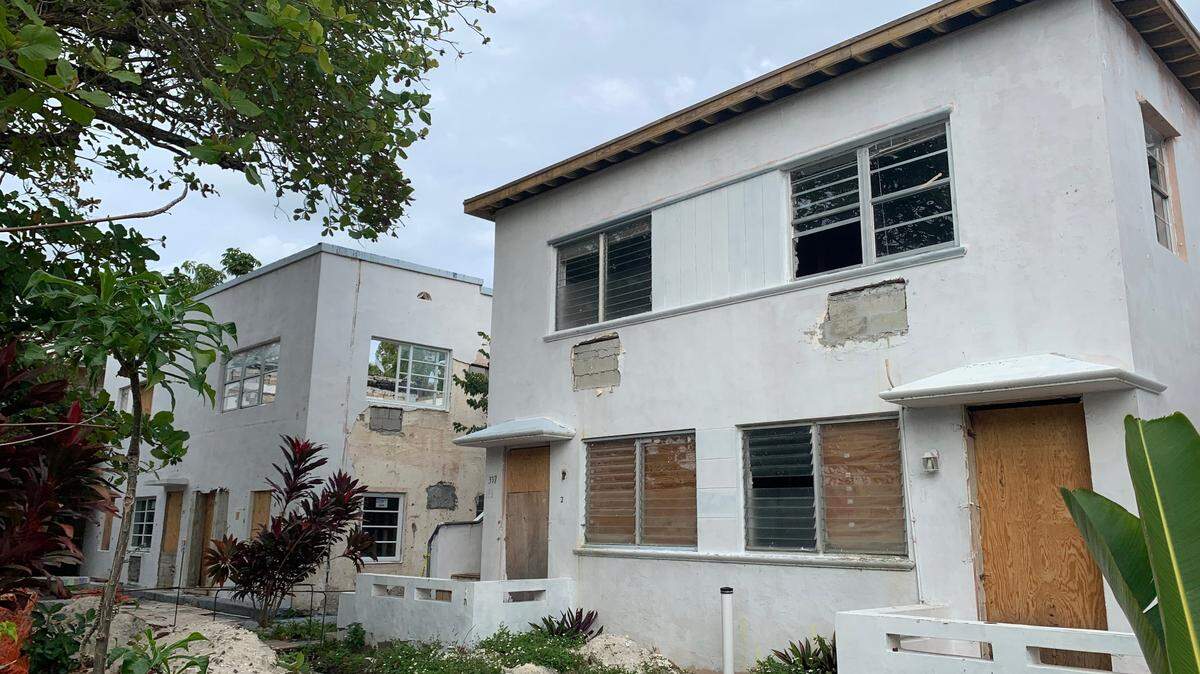
The fight over new hotels in a residential South Beach neighborhood has gone from zoning debate to courtroom drama, with dueling defamation lawsuits and a developer’s text to a politician suggesting a local activist could lose custody of his kid “if it gets real ugly.”
The saga between developer Louis Puig and resident-activist David Suarez began last fall when Suarez launched an online campaign to stop Puig from building what the city calls an apartment hotel on Third Street and Jefferson Avenue in Miami Beach’s South of Fifth neighborhood.
Apartment hotels are defined as having a mix of apartment and hotel rooms. Because a project needs only one apartment unit to be considered an apartment hotel, the city has said developers can exploit that to bypass local restrictions on hotels and short-term rentals in areas like Suarez’s neighborhood.
Suarez, whose Save SOFI campaign has also targeted a similar project by different developers one block over, has argued in media interviews, public meetings and email blasts that city staff improperly approved permits for the two historic properties. Suarez and his neighbors believe the applications should have gone to a public hearing before the Historic Preservation Board, and say they were not given proper notice or the ability to appeal the decisions until after construction began.
“Our lives shouldn’t have to change because of their mistakes and the fact that they’re not willing to acknowledge it,” Suarez said at a commission meeting last month.
The city administration has said its staff did nothing wrong, pointing to language in the code that allows for administrative approval if the proposed work includes “minor repairs, alterations and improvements.”
Still, Suarez’s campaign galvanized residents in the South of Fifth neighborhood, led the commission to outlaw apartment hotels and sparked an Inspector General investigation after the city said “hundreds of members of the public” requested further review. It also made him enemies at City Hall and in Miami-Dade Circuit Court.
Puig filed a defamation suit in early January, accusing Suarez of making “outlandish claims of impending doom, crime, drug use and lewd behavior” if his apartment hotel project were built. Because his permit was issued in 2020, the ban on apartment hotels does not apply to his project.
Puig, the former owner of Club Space in downtown Miami and current owner of La Casa de las Guayaberas in Little Havana, told the Herald in an email that residents should be thanking him for redeveloping what had been an abandoned property.
“We are investing millions of dollars and converting an old abandoned dilapidated hotel which once housed unsupervised homeless and stray animals into an upscale boutique short- and long-term property,” Puig said.
In his lawsuit, Puig said Suarez’s campaign led the city to stop construction at the project site. The city issued a stop-work order after concluding that the demolition work exceeded what the building permit allowed. The Historic Preservation Board, which met in January, kept the order in place and is expected to review the project again at its March meeting.
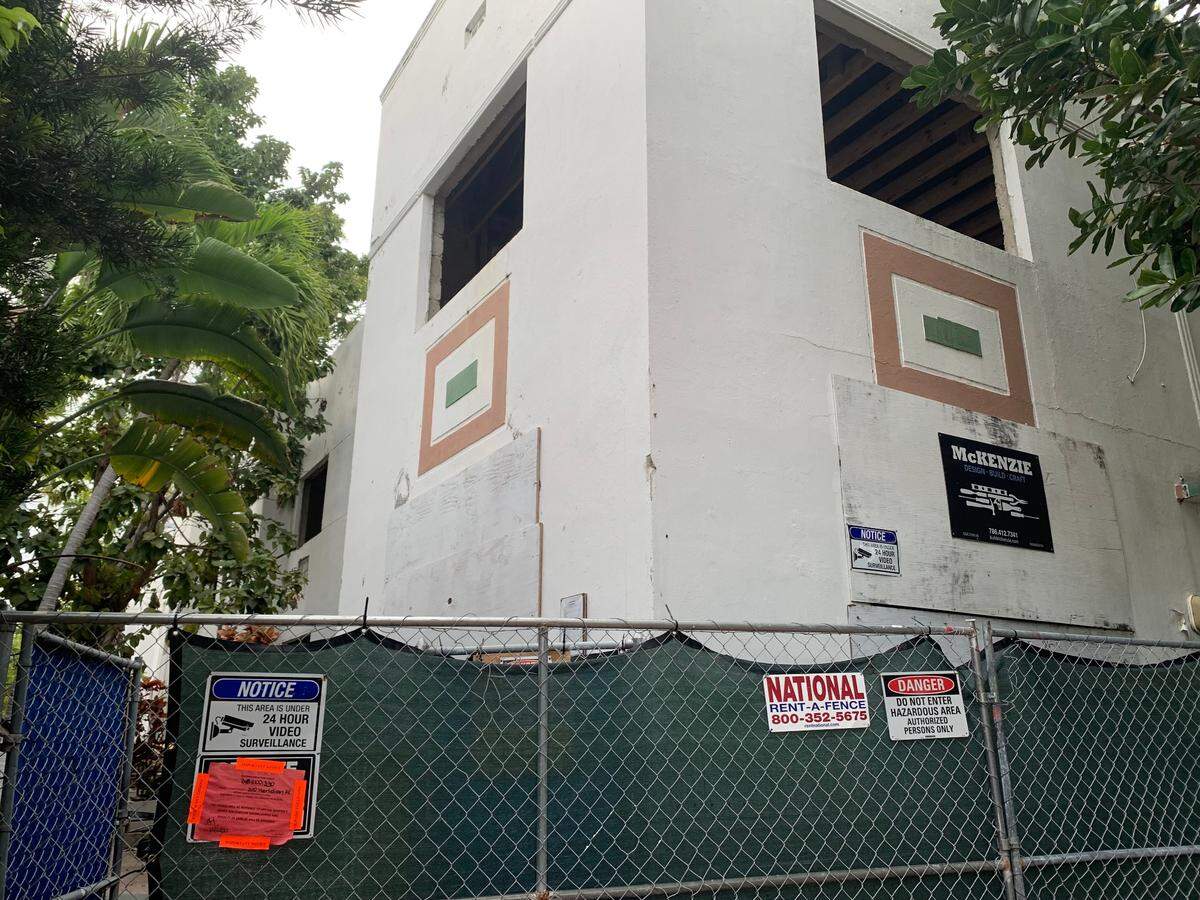
A second apartment hotel project at 310 Meridian Ave. is also under a stop-work order and the developers may be forced to scrap their plans completely. The city says the value of the renovation exceeded a set limit — 50% of the property’s total value — so the owners must reapply for their permits. Because commissioners have banned any future apartment hotels, the owners must change the use of the project to residential only, the city said.
Suarez said he has a First Amendment right to speak out and cited complaints against a nearby short-term rental project, Casa Sofi, to explain why it is reasonable to believe another transient building will bring parties and disorder to his neighborhood. Short-term rentals are defined by the city as properties that can be rented for less than 6 months.
His concerns are shared by elected leaders in Miami Beach. The city has banned short-term rentals in certain residential areas of the city and imposed steep fines on those who violate local restrictions until a court struck down the fines.
Some commissioners — and outside counsel hired by Inspector General Joseph Centorino — agree with Suarez that city staff made errors in approving the permits for 310 Meridian Ave.
The city code currently allows for residents to appeal written decisions of the planning director, but the city does not publish written decisions for administrative reviews of permits.
In a Jan. 5 report, Centorino said this process has led to the “denial of notice and a right to appeal.”
He recommended that the city consider requiring that, in certain cases, written findings be published after administrative reviews so residents can appeal the decisions.
Attorneys hired by Centorino concluded that the Planning Department failed to comply with its code by not publishing a written decision on the administrative approval and by not requiring separate applications for certificates of appropriateness and building permits. The outside counsel also determined that the Building Department did not comply with Florida Building Code by granting automatic permit extensions.
“This matter has exposed the public’s inability to timely access the necessary information to appeal decisions that are made administratively, which could impact their neighborhoods and quality of life,” Centorino wrote in the report. “It has also called into question the transparency and accountability of the Planning Department.”
City disagrees with IG report, defends issuance of permits
Assistant City Manager Eric Carpenter defended the actions of city staff in approving the permits.
“I think that they were well within their authority within the code to make these determinations,” he said in an interview. “And they certainly weren’t only making these determinations for these properties. They made these determinations consistently for all certificates of appropriateness.”
The city submitted a written response to the Inspector General’s findings, arguing that its permit process did not deny any resident the right to appeal.
The city notes that Suarez appealed the 310 Meridian Ave. permit to the Board of Adjustment, although that only came after City Attorney Rafael Paz wrote a memo to the City Commission detailing the issue in September — at the height of public outcry and two years after the permit was issued.
The board upheld the project in a Jan. 7 meeting.
“While informed minds would agree that the applicable code sections could be amended and improved upon, there was never any willful intention on the city’s part to deny due process or the right to appeal,” the city wrote in its response to the IG report.
At a Jan. 20 commission meeting, the debate led to a standoff between some commissioners who say the issue needs to be “fixed” and Paz, who said commissioners do not have the authority to direct their building official to revoke the active permits.
The outside counsel hired by Centorino also concluded that the building official is “solely responsible” for administering the Building Code “without interference from any person.” The actions of the building official can be appealed to Miami-Dade’s Board of Rules and Appeals.
Suarez had asked that commissioners impose a stop-work order on 310 Meridian and rescind any expired permits if they had been unlawfully renewed.
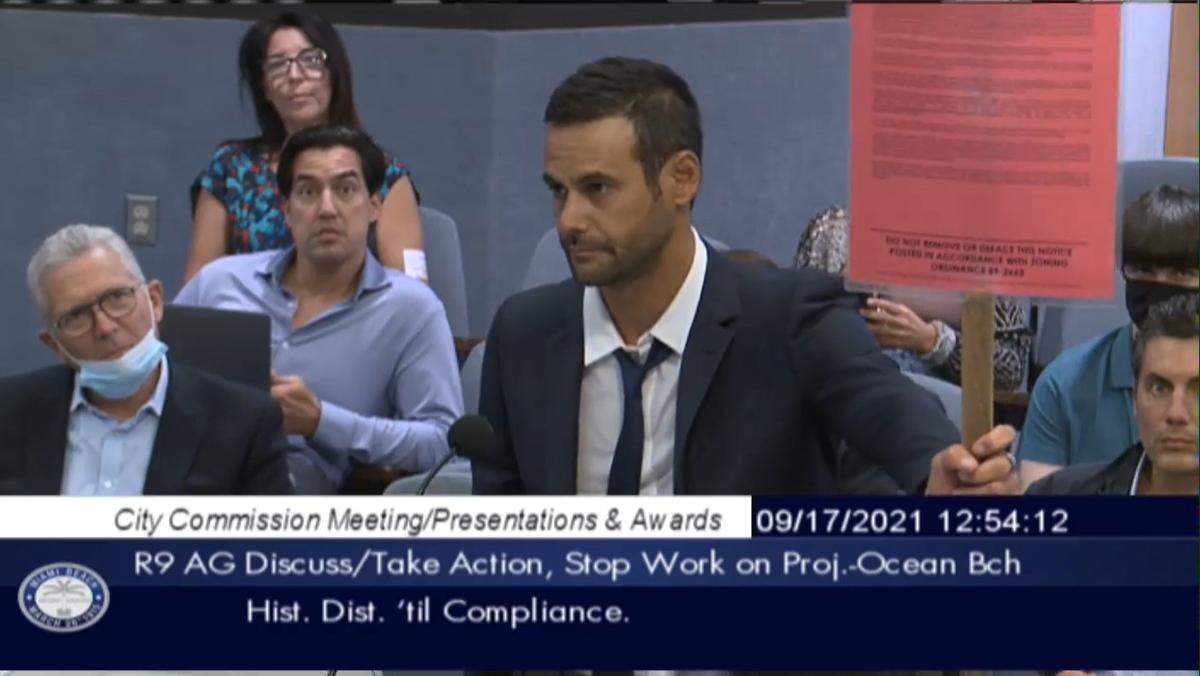
“I need there to be an avenue where we correct this if a mistake was done. I don’t feel that there’s something wrong with correcting a mistake that was done,” Commissioner Alex Fernandez said. “If we get sued, well it wouldn’t be the first time we’ve gotten sued.”
The commission voted to direct City Manager Alina Hudak to review the issue and ensure full compliance with all applicable law.
“It is clear your city attorney and your city staff is basically telling you you’re powerless,” Suarez told the commission. “What’s the point of having an Inspector General report if you’re not going to take it?”
The debate turned tense. And at one point, Carpenter said he took issue with anyone claiming city staff violated the law.
“This isn’t about breaking any laws, this is about a technicality that someone is trying to grab onto to achieve their goals and objectives,” he said. “I think that’s extremely unfair to the people that pour their heart out in this city every day to make it better for the residents.”
Developer texted Gongora about custody of activist’s child
On Jan. 18, Suarez filed a counter-claim for defamation that included a screenshot of a WhatsApp message Puig sent to former Commissioner Michael Góngora that Suarez says was a threat.
“I am going to have to sue him for slander and make his life public via a personal media campaign just like he did mine if we cannot find a middle ground,” Puig wrote, according to a photo of the message, sent in late December and obtained by the Herald. “He might end up losing custody of his kid if it gets real ugly. I really do not want that to happen. Maybe you can help prevent this unnecessary battle.”
The message also included a screen grab of what Puig said was Suarez’s criminal record. Suarez denied it was his and is now suing Puig over the text message. In his lawsuit, Suarez said the reference to his son was a “threat.”
“I always wanted to stick to the issues surrounding the validity of these permits and how they were approved,” Suarez said in a recent interview. “I think Mr. Puig understands full well now that his permits are not valid and was not properly issued. And he is getting desperate to the point where he is starting to threaten 5-year-old children.”
Puig told the Herald he sent Góngora the message “to see if he could mediate a resolution between the parties.” He said he first contacted Suarez three times but Suarez did not respond. Puig said he would “never want anyone to lose their parent or child.”
“I guess it is more important for some people to garner publicity, insult, argue and advocate their own selfish agenda by using their child than to sit and resolve differences,” Puig said.
In an interview with the Herald, Góngora confirmed Puig sent him the message. He took a screenshot of it and sent it to Suarez.
“I received the message from Louis and I assumed the intent was for me to pass it on to David and I did,” Góngora said.
In his lawsuit, Puig makes several statements that Suarez says are untrue, like claiming Suarez does not live in South of Fifth and that he runs a short-term rental business out of another building he owns in the neighborhood. Suarez said he does live in the neighborhood and rents out other units he owns on a yearly basis.
Puig also accused Suarez of stoking a “racial issue.” His lawsuit pulled quotes he said were from Suarez’s Save SOFI campaign, like one that says Puig’s project would be “pimping out the neighborhood for rooms less than $50 a night.”
Suarez said that’s a red herring.
“I don’t think transients have a race, I think he’s just trying to make up any excuse he can come up with,” Suarez said. “He’s sort of lost the moral high ground.”
.JPG)