
Political purity tests shake up Miami Beach race, while candidates push crime initiatives
In an election where just about every politician is talking tough on crime in South Beach, it can be difficult for candidates to distinguish themselves.
Bringing up Donald Trump’s name is one way to divide the field.
Miami Beach’s Group 3 commission race, like other races on the Nov. 2 ballot in the city, is non-partisan, but the two non-Democrats in the field of four seeking to replace term-limited Commissioner Michael Gongora have faced political attacks about whether their “values” align with Miami Beach’s liberal voting base.
“Trump. DeSantis. Beattie. Here we go again,” reads one attack ad targeting Melissa Beattie, a registered independent and first-time political candidate. The mailer labeled Beattie an “extremist” because her campaign manager — once chief of staff to a Democratic former Miami Beach mayor — has worked for Republican candidates.
“A Republican in a No Party Affiliation disguise,” reads another ad, which targeted Planning Board member Alex Fernandez, a former Republican who is now registered as an independent. Fernandez changed his voter registration in 2020 and said he voted for President Joe Biden.
Stephen Cohen, who along with Michael “Mike B” Barrineau is one of two Democrats in the race, is linked to both attack ads. Cohen’s campaign paid for the mailer criticizing Beattie as a “conservative extremist.” He also contributed $15,000 of his own money to a political committee that mailed out three different ads attacking Fernandez.
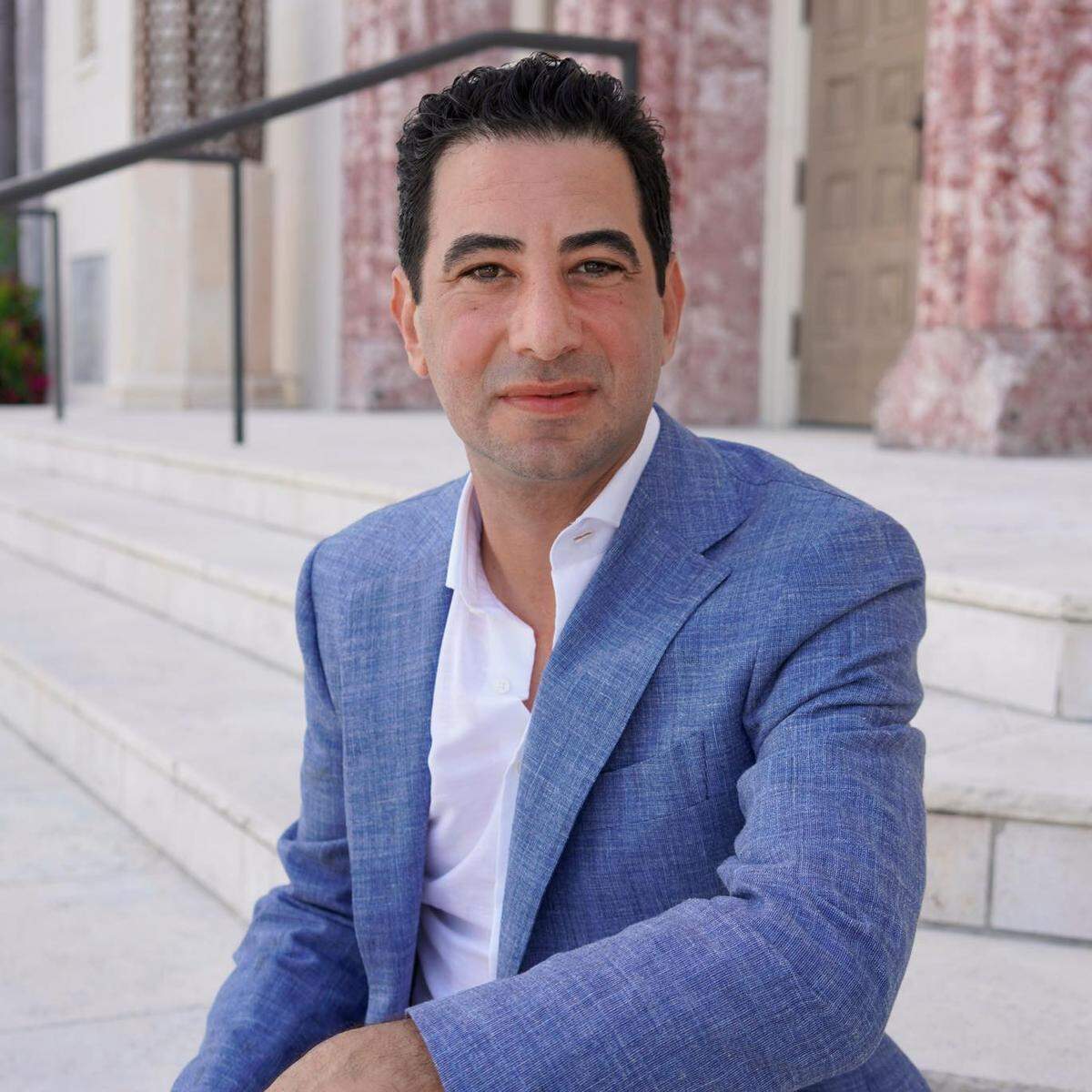
In an interview Monday, Cohen distanced himself from the political committee, a Tallahassee-based group called Common Sense, and said he didn’t have any control over what the group blasted to voters.
He told the Miami Herald he made the donation after political consultant Randy Hilliard — who refers to himself as the “Prince of Darkness” — called to say he could help Cohen’s campaign. Within days of Cohen’s donation on Sept. 17, Common Sense paid Hilliard’s Ministry of Information $8,900 to send out mailers.
“I didn’t have any involvement,” Cohen said. “I just donated to Common Sense.”
Cohen also slammed Fernandez, saying it seems like “he’s trying to hide that he was a Republican.”
Barrineau, meanwhile, has stayed above the fray. He said most voters would rather talk about issues that affect them locally instead of political ideology.
Backlash and counter-attacks
Beattie and Fernandez denounced the ads Monday, calling them an inaccurate attempt to distract voters from the issues they want to hear about from candidates, like increasing police and code enforcement in South Beach or addressing sea-level rise.
Beattie, who would not say whom she supported in the 2020 presidential election, called Cohen’s ad “desperate” and said that as an independent she supports candidates regardless of their party.
“It’s not about being a Democrat or a Republican, it’s about getting things done and fixed,” said Beattie, who is the president of the Venetian Islands Homeowner’s Association.

Cohen said Beattie’s campaign manager, Alex Miranda, worked on Gov. Ron DeSantis’ campaign. The DeSantis campaign was listed as a client on Miranda’s company website Monday before the website was taken down. Miranda, who worked as former Miami Beach Mayor Philip Levine’s first chief of staff and said he later worked the Republican Party of Florida in 2018 and 2020, said he never worked for DeSantis’ campaign and that his website would be corrected.
As for Fernandez, the candidate noted that Democratic Rep. Debbie Wasserman Schultz officiated his 2015 wedding to husband Robert Wolfarth, grandson of former Miami Mayor William Wolfarth, in Washington, D.C. days before the U.S. Supreme Court case of Obergefell v. Hodges legalized same-sex marriage.
The mailer claimed Fernandez — who works as a senior communications aide and legislative assistant for Miami-Dade Commissioner Rebeca Sosa, a registered Republican — supported Republican Rep. Maria Elvira Salazar in her election, but Fernandez said he endorsed former Democratic Rep. Donna Shalala in that race.
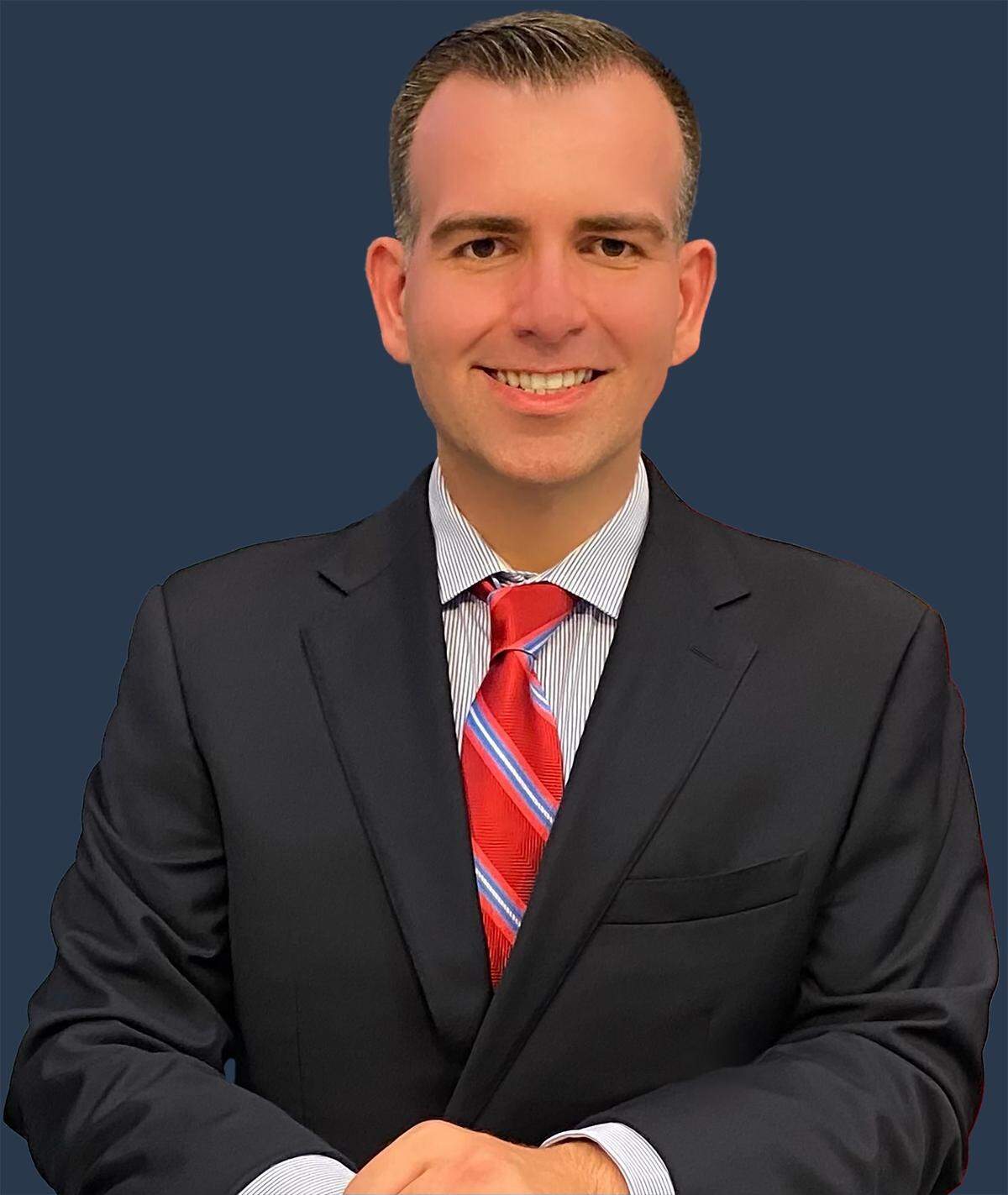
Fernandez, who said negative campaign mailers are “plaguing” the election, said voters deserve to hear the truth from the candidates. The Commons Sense committee also attacked Fernandez for traffic infractions from 2007 and 2008, including a careless driving violation and the suspension of his license. Another mailer has claimed that he was sued by Ford and Capital One for nonpayment, but Fernandez said he has never been sued for nonpayment and that the PAC confused him with someone else with a similar name.
Fernandez was misleadingly and inaccurately attacked for a different person’s financial problems in 2009 when he ran for city commission against then-opponent Michael Gongora. The two relentlessly criticized each other, with Gongora coming out on top. Both made issue of the other’s driving infractions.
In 2009, Hilliard was consulting for Gongora. This year, Gongora — blocked from seeking reelection by a judge — has endorsed Fernandez.
“Who cares about my driving record? Who cares about somebody’s political affiliation in a non-partisan election?” Fernandez said, adding that his driver’s license says he is a “safe driver.”
“It’s an insult to the intelligence of the voters.”
Where do candidates stand on the issues?
To win on Nov. 2, a candidate must earn more than 50% of the vote. Otherwise, the two candidates who earned the most votes will face each other on Nov. 16. Early voting in the Nov. 2 election starts on Oct. 18 and ends Oct. 31. The last day to request an absentee ballot is Oct. 23.
Partisan divisions aside, the four candidates are split on whether the commission should stop alcohol sales at 2 a.m. citywide, a question voters will consider this election as part of a non-binding referendum.
Beattie and Barrineau support the rollback. Cohen is against it. Fernandez declined to take a position.
All candidates agree that crime in South Beach’s entertainment district is a top priority for voters, and they have made public safety a pillar of their campaigns. They have all proposed hiring more officers and increasing the police and code enforcement presence in South Beach.
Beattie, 46, has proposed deploying daily license plate readers and conducting random traffic stops to pull the city out of its crime “crisis.” She said the city should invest in a marketing strategy to warn party crowds that they will be arrested if they break any laws. An earlier alcohol sales cutoff would help send that message, she said.
Her campaign put out an ad recently that features a dramatic play-by-play of a fake 911 call, in which a burglar breaks into a woman’s home. The ad, which doesn’t feature a disclaimer saying the call is fictitious, is similar to a 2020 Trump campaign ad stoking fears against defunding the police: The imaginary 911 dispatcher tells a caller that it would take 20 minutes for police to arrive “due to increased crime in South Beach” redirecting resources.
Beattie said the ad served as a warning of how bad Miami Beach’s crime problem can get if issues are not addressed and was not “meant to be misleading.”
“It’s a wake up call,” she said. “We have to make sure our police have all the resources to be able to respond to our residents in timely manner.”
Beattie is self-employed but said she has worked previously in accounting, marketing and product development.
Her husband, E. Scott Beattie, served as chairman of cosmetics giant Elizabeth Arden, which was acquired by Revlon in 2016. Beattie said she did marketing work for one of Arden’s cosmetic line launches.
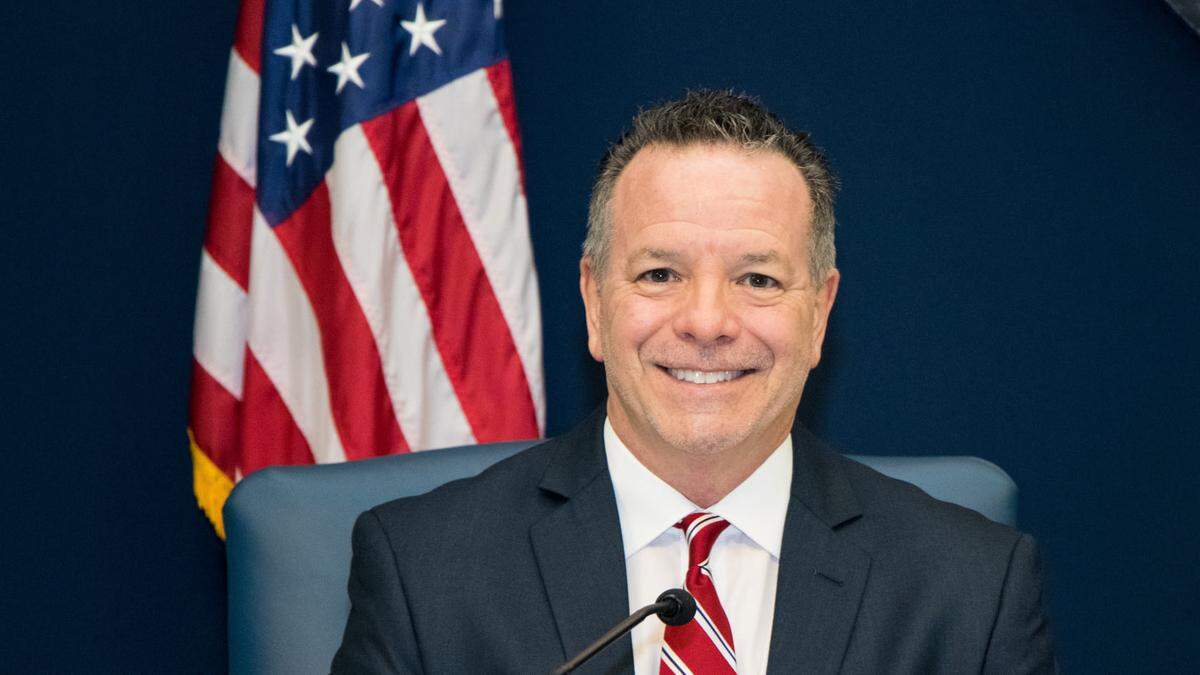
Barrineau, a 63-year-old real estate broker, said he wants to listen to resident concerns and build consensus around solutions to the city’s issues.
He has served on the city’s Planning Board and was previously president of the South of Fifth Neighborhood Association and the Miami Beach United community advocacy group.
During his time at Miami Beach United, he said, the group convinced the commission to pass a “Resident’s Right to Know” ordinance allowing residents to sign up for email alerts when the commission is scheduled to vote on projects that can impact their quality of life.
If elected, he said, he would want to host regular town halls to discuss big topics in the community, such as the potential redevelopment of the vacant West Lots in North Beach, the proposed sale of the North Beach library or the fate of the Byron Carlyle Theater.
It’s an idea he said he came up with when he led the South of Fifth residents group. He used to lead community meetings and pack hundreds of people in a room to discuss pressing issues.
“I was most proud when everybody got a chance to speak,” he said. “It’s very powerful when you ask folks what they think and you get the community involved. You can almost always come up with better answers.”
While he supports a 2 a.m. rollback, Barrineau said voting Yes on the referendum is just the first step in the process of eventually enacting a law rolling back alcohol sales.
He said one possibility would be granting businesses who wish to serve later than 2 a.m. conditional use permits, which would require that businesses follow specific rules — like having a certain number of security guards, maximum occupancy limits or noise levels — at the risk of losing their permit.
“I think if you take the standard back to 2 a.m. with exceptions, that’s going to be a lot more manageable than everybody is guaranteed 5 a.m. and then we try to punitively say, ‘No you can’t do it here, no you can’t do it there,’” he said.
Barrineau, a former home-builder in Texas, moved to Miami Beach in 2010 after he said his business took a hit following the 2008 recession. He said banks foreclosed on the land he owned for future projects and he was sued multiple times for not being able to pay off promissory notes for the properties. Refinancing was not an option due to the recession, he said. One of the lawsuits, filed in 2011, said Barrineau and his business associates failed to pay off a $2.3 million promissory note.
In an email to supporters during his last campaign, in 2019, Barrineau shared his story and said he didn’t want his opponents to use it against him.
“It’s not something that I made a poor decision about,” he told the Herald. “The analogy I use is a tornado hitting your house.”
Cohen, a 43-year-old community activist and investor, said he would support hiring more police, but he also wants to see civilian community liaisons — think yellow shirts and walkie-talkies — mobilized in the street working with police to keep an eye on crowds. He said it would be an inexpensive initiative that would help increase law enforcement visibility.
He said the city should ask the state and federal governments for matching funds to hire more police due to Miami Beach’s money-making tourism industry.
Cohen, who founded a community Facebook group that now has nearly 7,000 users, said his digital activism has made Miami Beach voters more informed and better connected.
He said the city should invest more in communicating with residents like he does through social media.
“The number one thing is I want to make sure is that everyone is more active,” he said.
If elected, Cohen said he will not accept any compensation or pension benefits from the city. He said he has largely self-funded his campaign, except for friends and family. Cohen, who is against the 2 a.m. referendum but has said he would support what voters decide, said he turned down an offer by hoteliers and other business owners, like Mango’s Tropical Cafe owner David Wallack, to support his campaign because he doesn’t want to accept any special-interest money.
“He said that he would like to help my campaign. I told David Wallack I don’t work with special interests,” Cohen said. “I am funding this whole entire thing myself.”
Fernandez, 35, said beefing up the city’s enforcement doesn’t just mean hiring more police. He thinks the city should hire more code enforcement officers and parking staff to maintain a level of order even during the busiest tourism periods. He said the city should maintain its enhanced staffing until residents feel safer, regardless of crime statistics.
“We measure it by how safe the community feels,” he said.
Increased enforcement extends to the city’s bars, restaurants and other tourist attractions, he said. Fernandez said he supports holding businesses to a higher standard, and leveraging the city’s permit powers to coerce operators to be better partners in improving the quality of life in the city.
He said before the city renews an operator’s business tax receipt, a yearly process, the city should check how many times police were called to the business or how many code violations were reported there.
While Fernandez would not say whether he supports the 2 a.m. last call, he said he would move forward with a rollback if the voters approve it. He said one way to enact a rollback would be establishing a criteria that businesses must follow — and limiting alcohol sales to midnight or 2 a.m. if operators fail to follow the rules. Those businesses that have no issues or that have an enclosed party area should not be punished, he said.
“The problem is those specific establishments that are causing problems,” he said. “Those are the ones that we need to be closing up at 2 a.m.”
He said with consistent enforcement and a more visible police presence, tourists will get the message that Miami Beach is not an anything-goes destination. On top of the issue of short-term rentals in residential neighborhoods, Fernandez said he is also concerned about the oversupply of hotel rooms — and how older, historic hotels are struggling to compete with newer projects. More run-down hotels, with cheaper room rates, attract a party element, he said.
“We have a number of hotels — old historic hotels, beautiful jewels of properties — that can no longer compete with the new modern facilities that have been built,” he said. “We need to find a way to encourage historic preservation and adaptive reuse of hotels into other uses.”
Fernandez, who previously worked as an aide in Miami Beach to former Mayor Matti Bower and former Commissioner Deede Weithorn, said his government experience makes him uniquely qualified to take swift action proposing new legislation if elected commissioner.
“I just didn’t decide to wake up the day I filed and start my civic involvement,” he said. “I love our community. I have been dedicated to serving our community. The challenges we face today require experienced residents running for office to address them.”
.JPG)