Surfside is a beachfront town with a rich history. It’s the home of a Nobel laureate and a landmark social club. It’s a place that has attracted the retired, young families and Canadian tourists.
Even with taller condos on the beach, Surfside, just north of Miami Beach, has a small-town feel, with an intimate business district with boutiques and cafes. The town also has a community center and well-tended streets filled with older homes, many stretching back to the ‘40s and ‘50s.
Here is a look at Surfside through the years, featuring photos and articles from the Miami Herald archive.
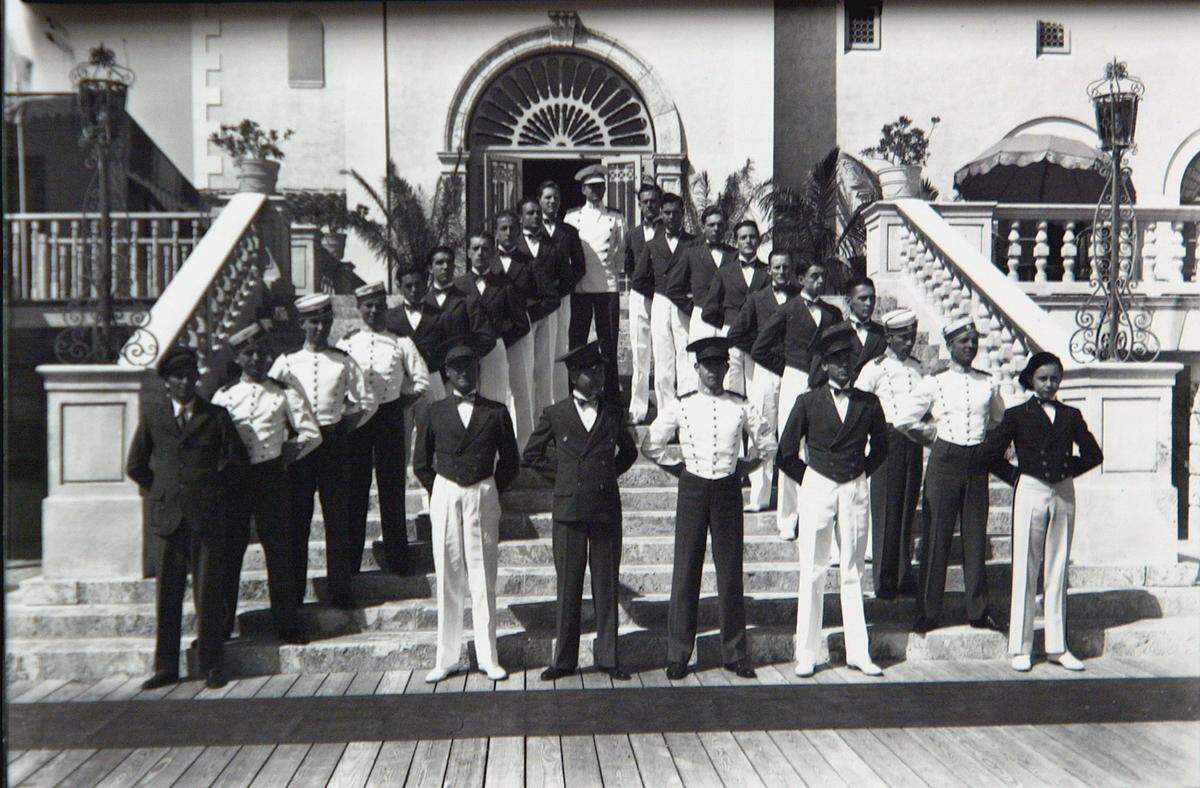
1931
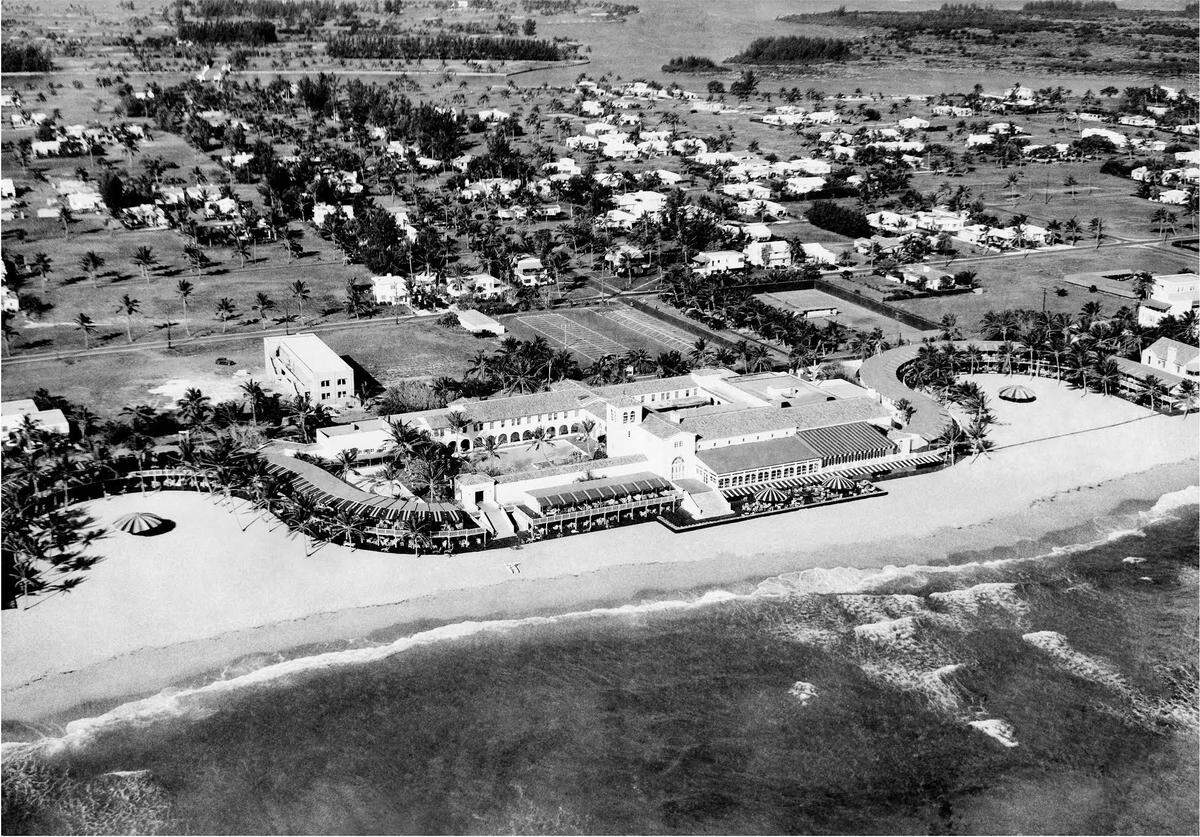
Staff members at Miami Beach’s Surf Club, circa 1931. Miami Historical Society
1935
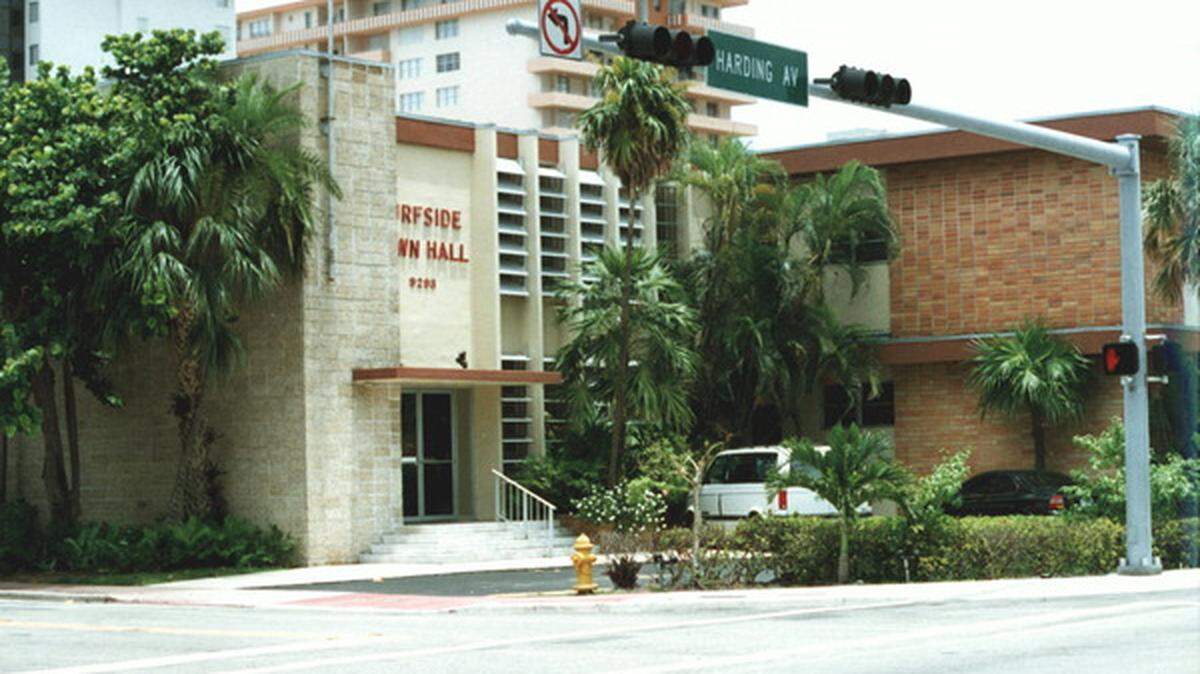
Surfside’s first Town Hall in 1935. State Archive of Florida.
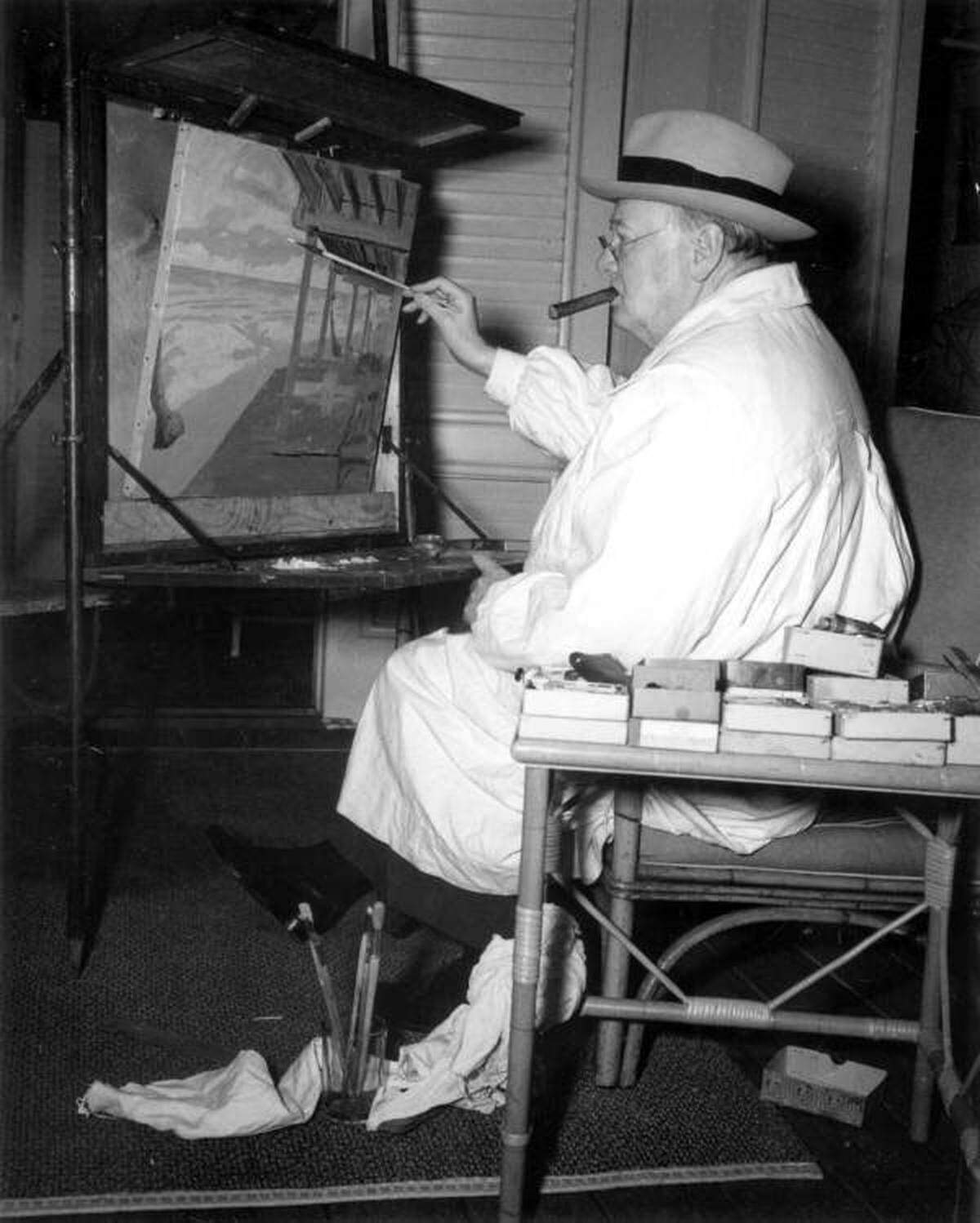
1946
Winston Churchill painting at the Surf Club in 1946. State Archives of Florida
1950
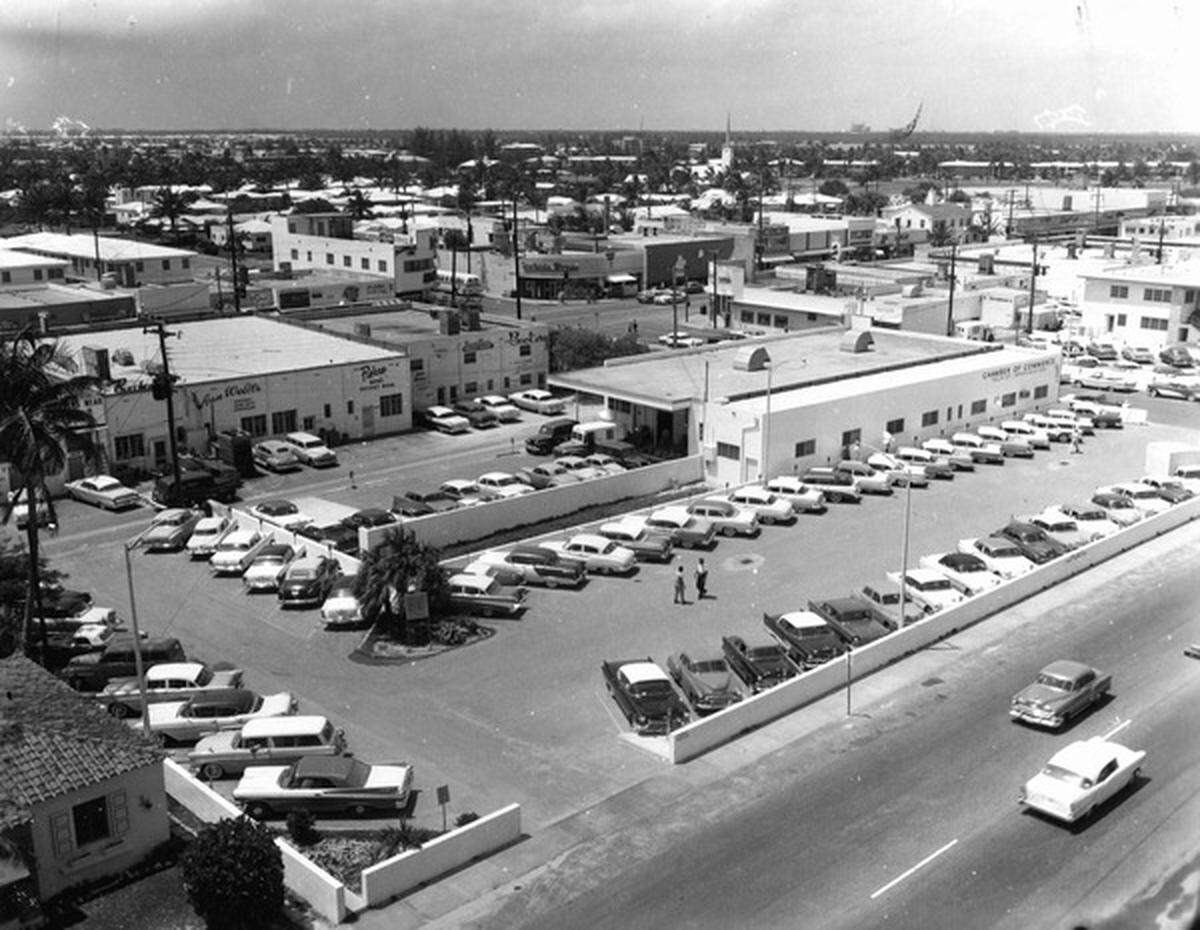
Harding Avenue business district in 1950. State Archives of Florida
1956
Post office and surrounding building in the Surfside business district in 1956. State of Florida Archives
1959
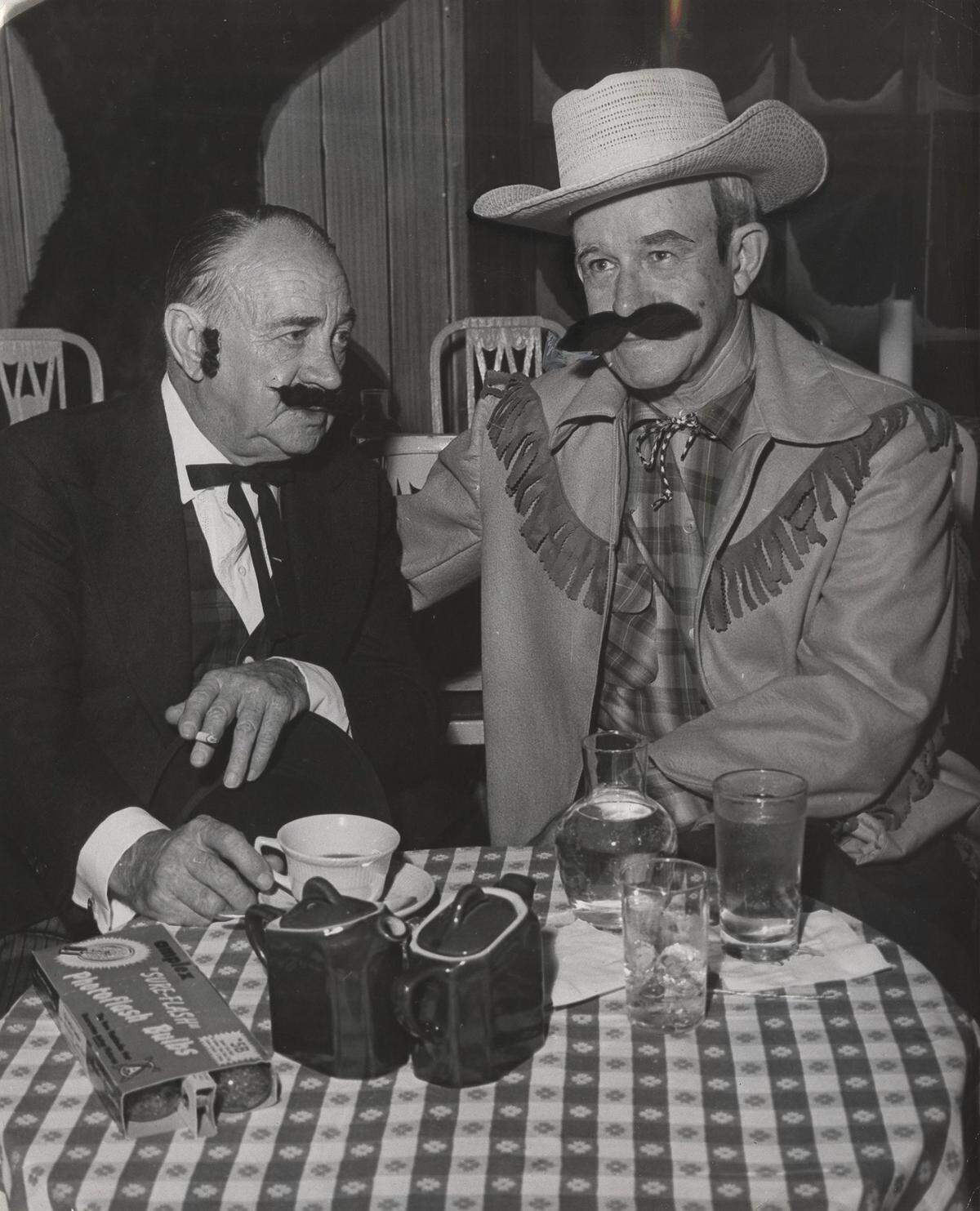
Spratt Mangus and Gen. Omar Bradley dressed in costume for an event at the Surf Club in Surfside on March 7, 1959. Ray Fisher Miami Herald File
1994
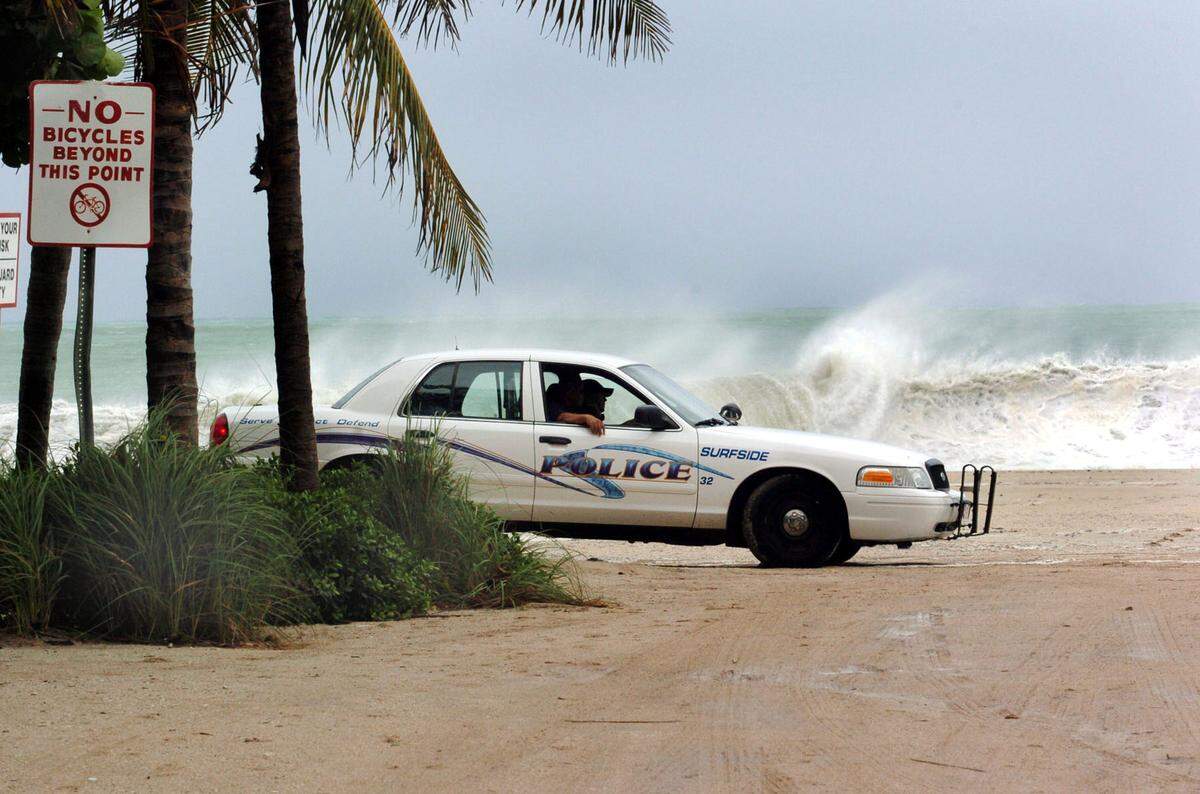
Surfside police guard the entrance to the beach at 96th Street in 1994. Donna E. Natale Planas Miami Herald File
1995
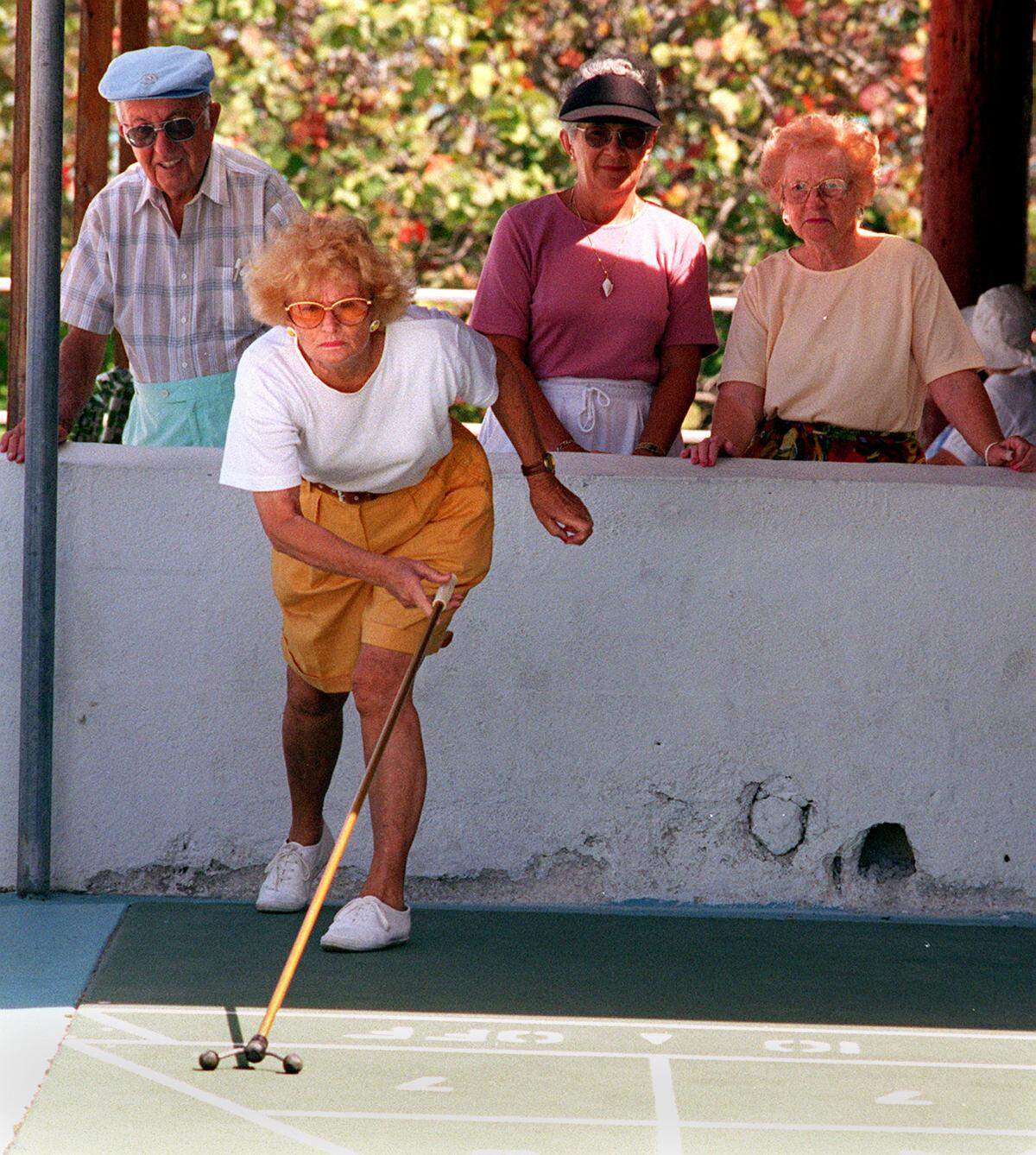
Lucienne Roy, from Canada plays in a shuffleboard tournament in 1995 at the Surfside Community Center where they are sponsoring a Salute to Canada week to thank them for their patronage. Tim Chapman Miami Herald File
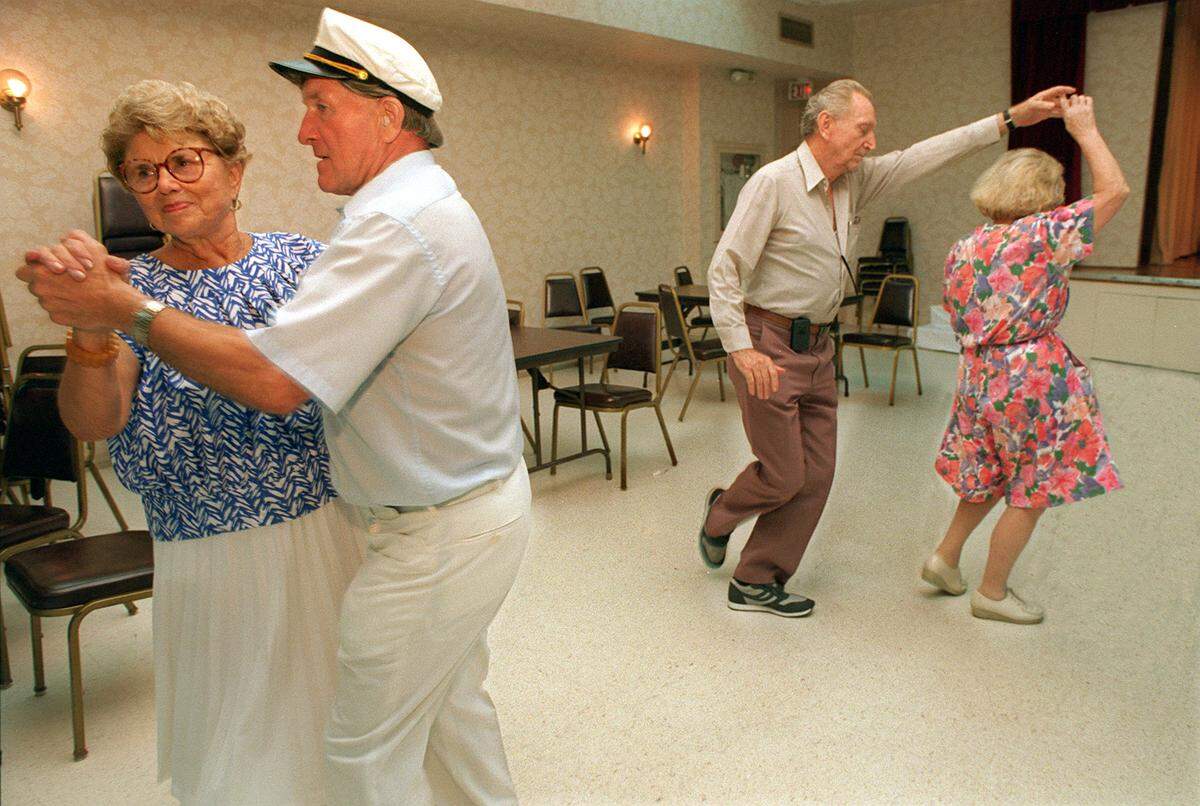
Tina and Edmond Szymura, left, Standley and Eugenia Brzeski enjoy Polka dance in 1995 at the Surfside Community Center during the Surfside annual International Festival-Octoberfest. Miami Herald File
1996
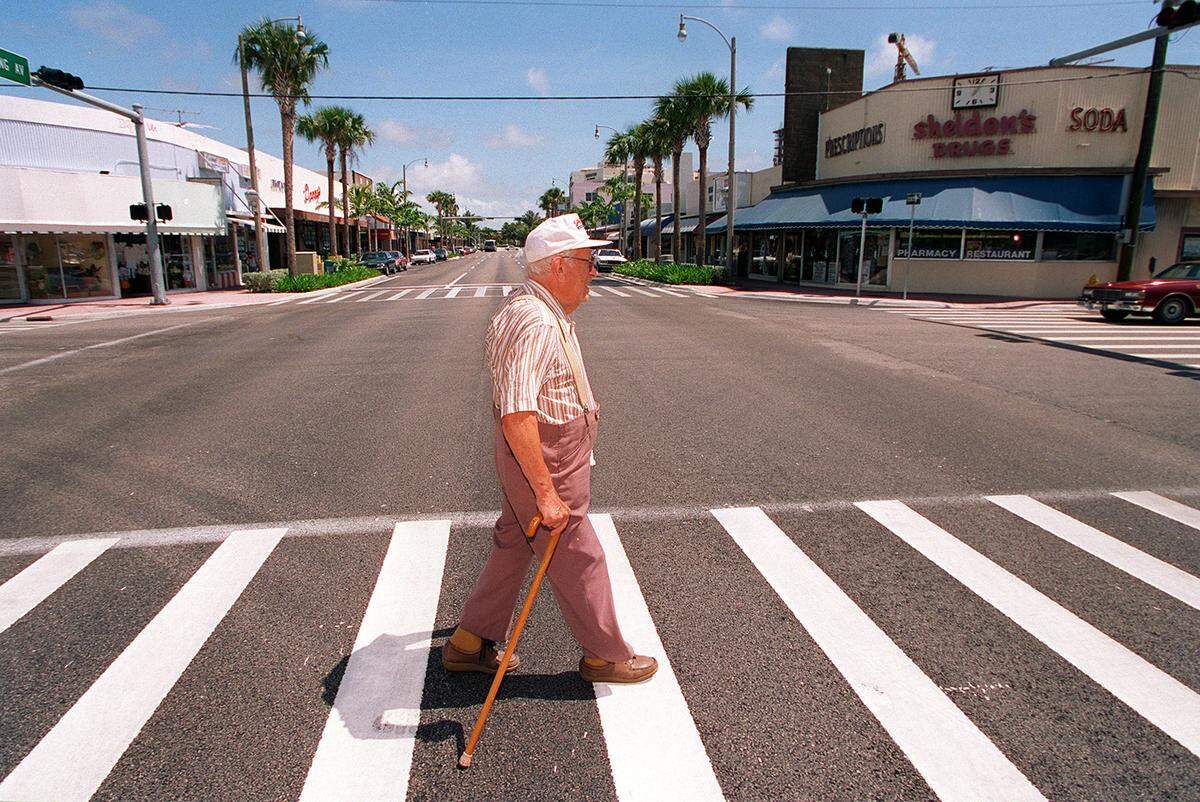
Bernard Laszlo, 89, walks across Harding avenue in the newly renovated business district of Surfside in June 1996. Miami Herald File
1999
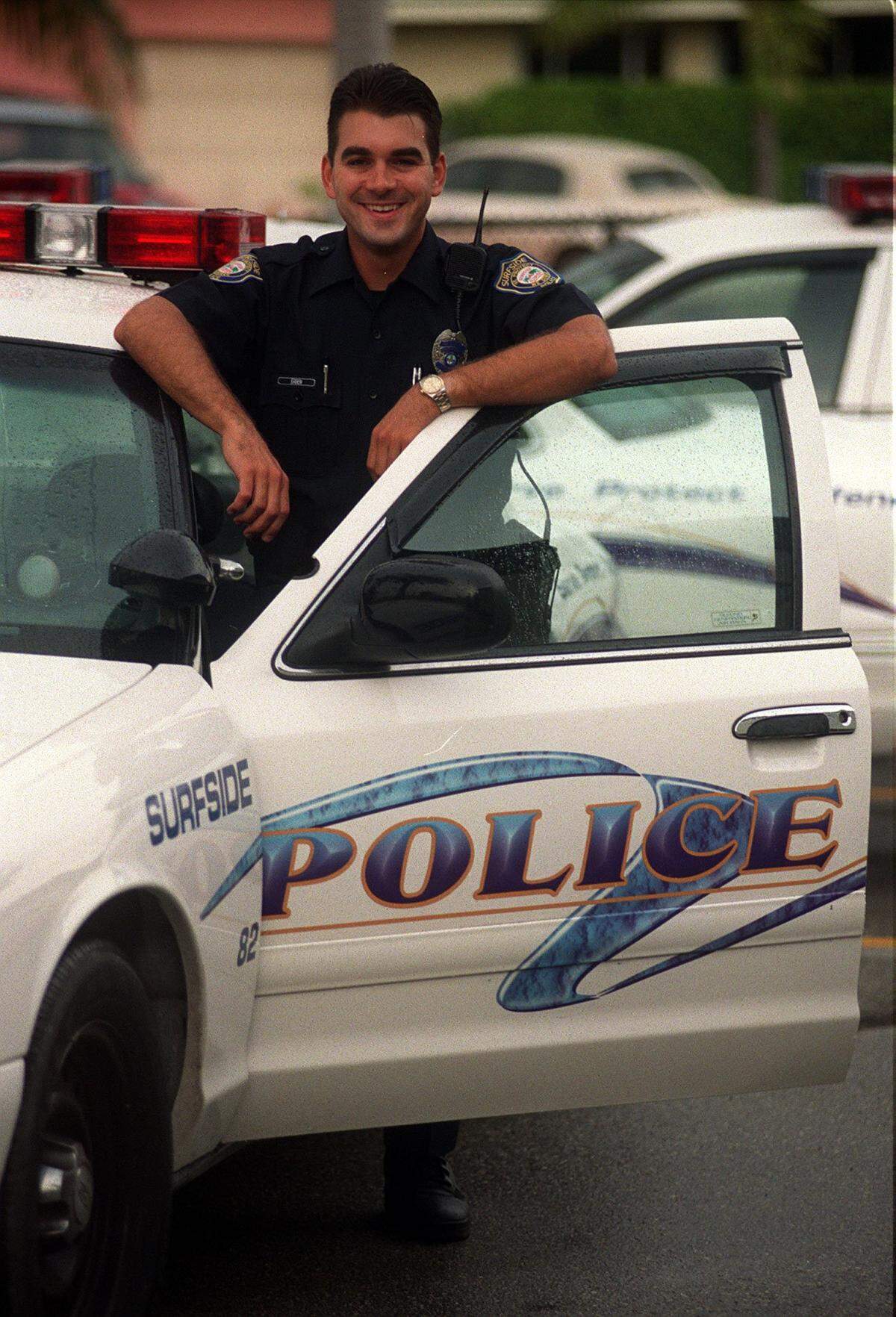
Surfside Police Officer Daniel Erben in 1999 with one of the departments new spiffy police vehicles. Peter Andrew Bosch Miami Herald File
2004
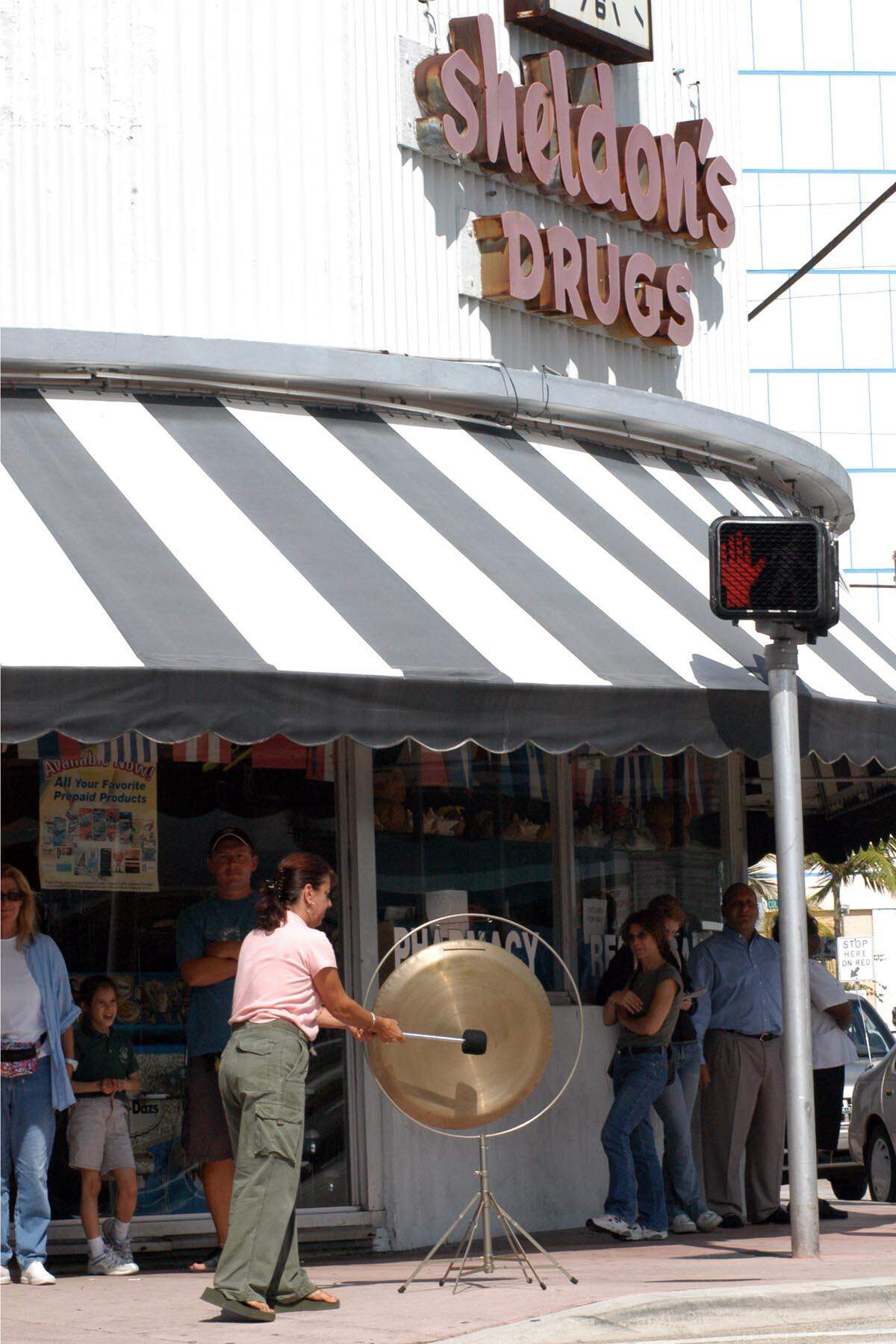
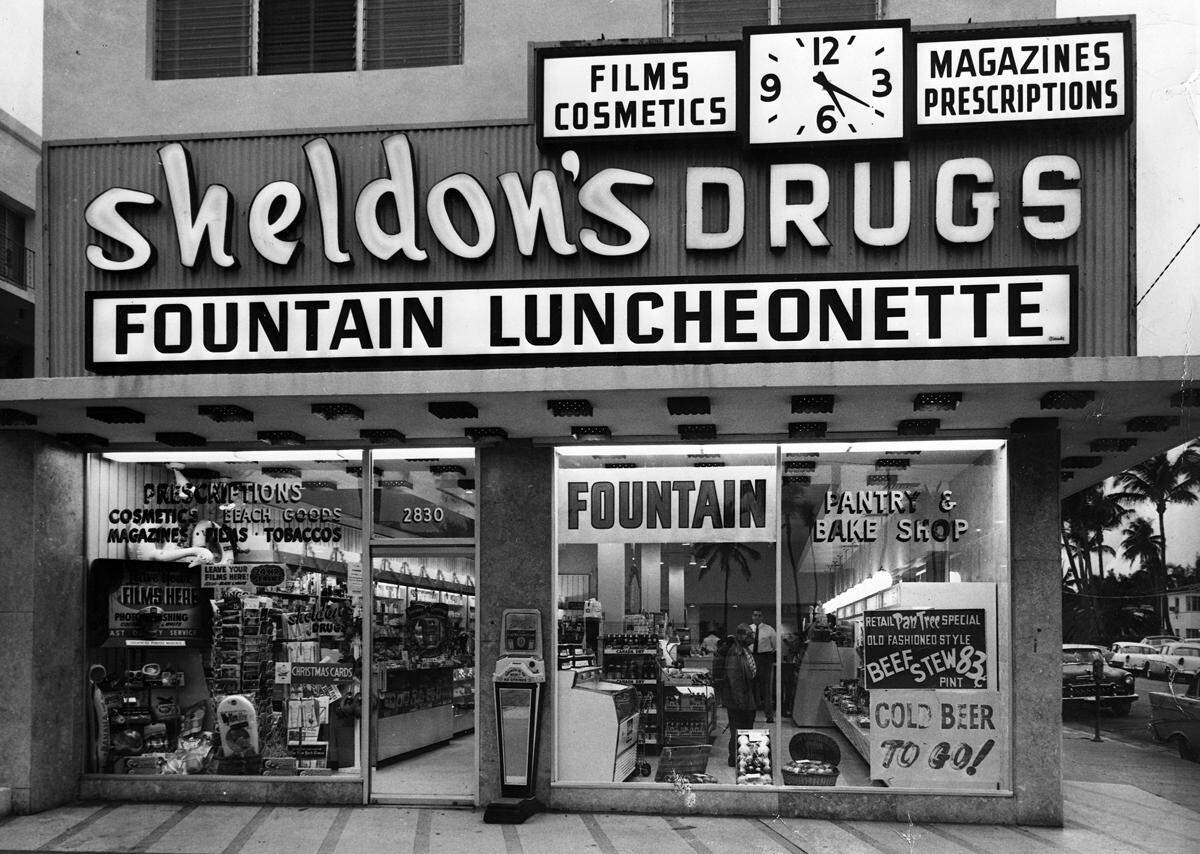
Sheldon’s Drugs, a dime store with an old fashioned lunch and milkshake counter, closed in May 2004 after 55 years in business. Longtime customers and the owners and their family struck a gong 55 times, one for every year in business. Noelle Theard Miami Herald File
2016
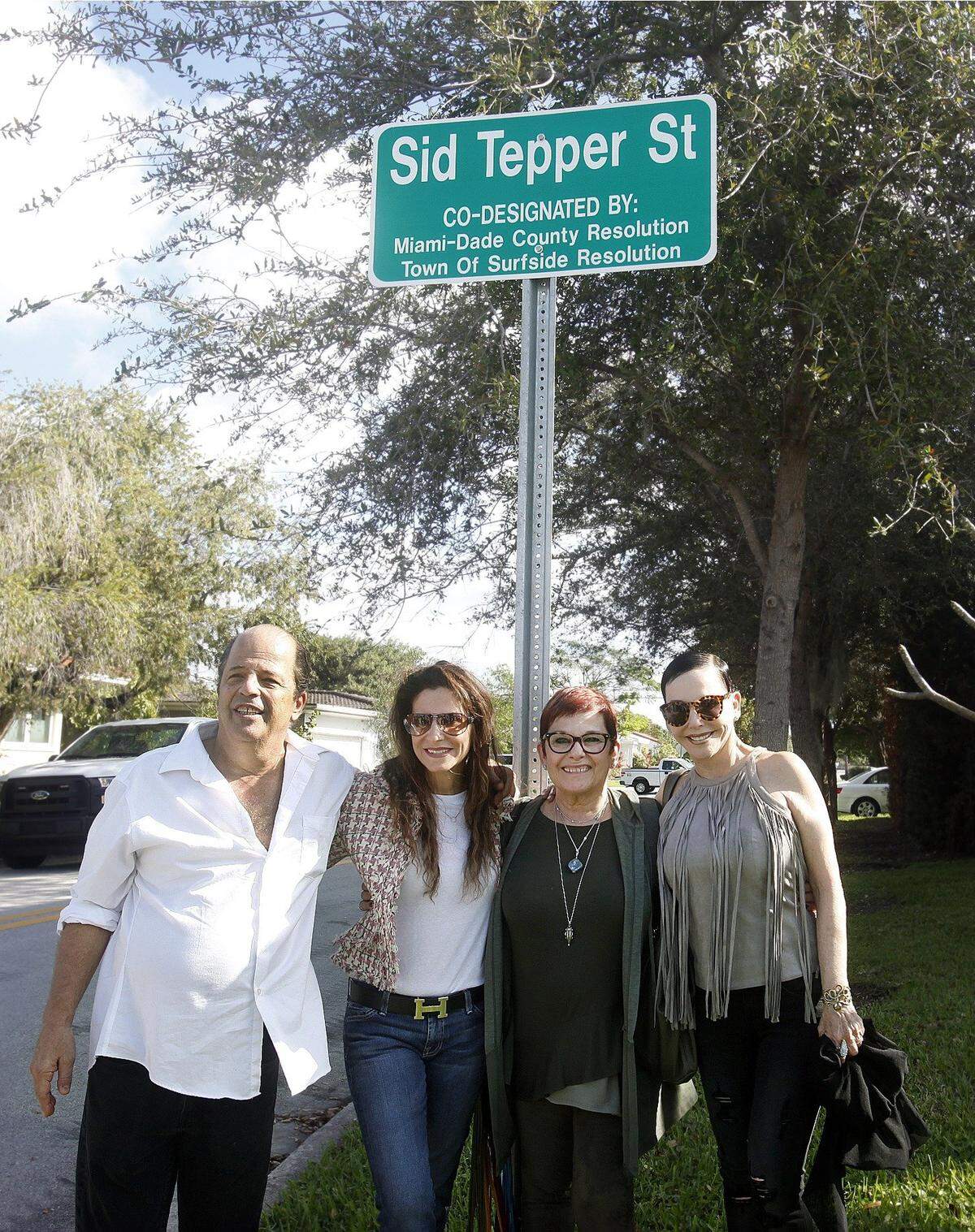
Four of songwriter Sid Tepper’s children-- Brian Tepper, left, Jackie Tepper, Susan Tepper, and Michelle Tepper - pose for photos at the new Town of Surfside street sign designating 89th Street at Irving Avenue as Sid Tepper Street on Dec. 16, 2016. The Tepper siblings (brother Warren Tepper could not attend) joined dozens of family, friends and officials at the street designation ceremony to honor their father. Sid Tepper composed the song ‘Red Roses For a Blue Lady’ and many other popular tunes. He died in 2015 at age 96. Tepper lived in Surfside for more than 40 years, and most recently at Williams Island in Aventura. The street renaming extends several blocks along 89th Street (now Sid Tepper Street) east to Harding Avenue. MARSHA HALPER mhalper@miamiherald.com
And now for the archive articles ...
Mark Davis helps Jorge Mendez with his karate stance during lessons in 1998 at the Surfside Community Center. Nuri Vallbona Miami Herald File
Changing face of Surfside
By Betty Cortina
Published July 12, 1990
Four years ago, when Richard and Jeanette Waserstein married and moved to Surfside, they were one of few young couples living in the small community composed mostly of retirees.
Today, Richard, the town’s 28-year-old vice mayor, Jeanette, 25, and their 2-year-old daughter Erika are among numerous young families who have rejuvenated Surfside.
Tucked between the bustle of Miami Beach and the serenity of Bal Harbour, Surfside, a one-square-mile town, has gotten younger through the years with a surge of young professionals and their families, adding spice to the town’s small economy and bedroom politics.
The town recently underwent one of the biggest growth spurts in years when a rise in demand for Surfside homes led to an 11.9 percent increase in the value of taxable property.
“I think a lot of young families are choosing to come here instead of the Gables or the Grove. There’s less traffic and crime, and it’s a small-town atmosphere,” said Richard Waserstein.
The community is seeing young couples starting families, teens flocking to the beach and children spending time at summer camps sponsored by the town.
Neighboring public schools have learned to endure rising enrollment. And residents in March elected the youngest commission in town history.
“People wanted to see new, young faces with new ideas,” said Eli Tourgeman, who was elected mayor. “They were the ones who wanted to see the change.”
Voters ousted the 83-year-old former mayor, Eli Lurie, who served the commission 18 years, and 78-year-old Ben Levine, a commissioner for eight years.
Mickey Novack, a former commissioner who didn’t seek re- election, gave way to her 32-year-old son, Paul Novack, on the commission. Voters also re-elected the two youngest incumbents from the previous commission -- Tourgeman, 44, and Mitchell Kinzer, 39.
And to promote the change in government, a civic organization dedicated to giving young professionals a stronger political voice formed two months before elections. Proud Residents of Surfside, a nonpartisan organization of about 200 members, has goals that include establishing Boy and Girl Scout programs, reviving the town’s community center and business district and improving parks.
“We just wanted to change government, get better and more representation,” said Alan Berry, a member of PROS. “We take any members any age, but we are getting mostly young professionals who want a strong government.”
Hal Cohen, who as town manager for 12 years has witnessed Surfside’s youthful transition, said the clearest indicator of young energy is the number of building permits Town Hall issues.
During the first five months of this year, 318 building permits were issued, compared to 514 in all of 1989. In 1985, the town issued 345 permits. During the last five years, city records show nearly 60 houses have been built.
“That’s a pretty amazing number since five years ago we considered the town 90-some percent full,” Cohen said.
By recently approving five variances that allow the Shul of Bal Harbour, the town’s only synagogue, to tear down three neighboring buildings and construct a larger temple, the commission encouraged an expansion that’s expected to bring in even more young members.
“We are very focused on children,” said the Shul’s Rabbi Sholom Lipskar. “And when parents see that their kids can feel comfortable with us, they will want to send their kids.”
Young Jewish singles from around the county flock to the Shul Tuesday nights for Lipskar’s Torah lectures. What started as small sessions eight years ago at his home grew rapidly. A session now attracts 250 to 400 people, half of whom are under 40.
In Dade County Public Schools’ local classrooms, numbers are growing as well.
Bay Harbor Elementary officials said they operate at 137 percent capacity. To relieve the crowding, the school has added three portable classrooms and is asking the county for more, Assistant Principal Edith Hall said.
The school enrolled 513 students in the 1987-88 school year, 530 students in the 1988-89 term and 582 the recently ended school year, county records show. School officials expect to enroll at least 600 students this fall.
“I think much of the reason young families are moving in is because of the schools in the neighborhood,” Jeanette Waserstein said. “I know the schools are good and I know I’d like my child to attend there.”
The town’s community center, previously geared to older residents, has updated its roster to include teen dances, summer camps and family get-togethers.
“We need to make sure that there are events geared for younger families,” Vice Mayor Waserstein said.
Overall, incoming residents say they are making the move to small Surfside because they can enjoy the benefits of small-town living without leaving behind the excitement of life in an urban city.
Joe Maya, a Miami Beach resident, is looking for a home in Surfside.
“Where else can you find a home for $100,000 in a good neighborhood and on a main road?” said 29-year-old Maya, who is married and has a 9-month-old daughter. “I haven’t been able to find that anywhere else.”
Frank Fagiano, 48, has owned a house in Surfside since 1954 but only moved into it three years ago after renting it out.
“I originally bought it because of the serenity,” said Fagiano, who lives there with his wife, Angela, and their two children, ages 4 and 6. “We decided to keep it because the neighborhood is quiet, clean and safe.”
Here are figures that reflect the increase in young families moving to Surfside:
- Bay Harbor Elementary enrolled 513 students during the 1987-88 school year, 530 students in the 1988-89 term and 582 in the recently ended school year. School officials expect at least 600 students this fall.
- Assessed taxable property value increased 11.9 percent this year over 1989.
- During the first five months of 1990, Town Hall issued 318 building permits, compared to 514 issued in all of 1989. In 1985 it issued 318.
- Nearly 60 houses have been built in the last five years.
he Surf Club in its early days. State Archives of Florida
Surf Club makeover
By Andres Viglucci
Published Oct. 14, 2012
The venerable Surf Club, among the last of the grand jazz-age Miami-area private clubs, is on the verge of a transformation that would restore the faded luster of its historic Mediterranean Revival building and crown it with a trio of crystalline hotel and condo towers.
The fast-moving plan, which goes to a vote at the Surfside Commission on Monday, comes months after the club - afflicted by shrinking membership and growing maintenance costs - agreed to a $116 million buyout by the Koc Group, a Turkish conglomerate.
In public hearings and forums leading up to Monday’s vote, Koc and its local partners pledged to open the club and its facilities to the public for the first time. Their project also promises a fiscal windfall to Surfside, a once-sleepy beach town north of Miami Beach that is undergoing a wave of upscale beachfront development.
The ambitious plan has been embraced by preservationists, town leaders and the Surf Club’s 122 remaining owner-members in part because it would embark on a radical renovation of the landmark 1929 building. The developers propose to strip away substantial and unsympathetic later additions, including an entire service wing and a long wall along Collins Avenue that hides the club from view, and restore or recreate original murals, light fixtures and doors.
By the end, they say, the building will appear much as pioneering Miami architect Russell Pancoast designed it, both inside and out. Architect Kobi Karp, whose firm is handling both the restoration and the design of the new buildings, said the process was aided by the availability of Pancoast’s original plans, which elucidate details as minute as moldings and doorknobs.
At the same time, the developer proposes to add significantly less building density to the 6-acre club property, which spans both sides of Collins, than allowed by Surfside’s code, so that neither the historic building nor its low-scale Surfside neighbors will be overwhelmed by the new structures, supporters say.
The scale of the additions has nonetheless taken some long-time residents aback, and residents of an eight-story condo directly to the south, the Surf House, are mounting a last-minute campaign objecting to a service and garage entrance at 90th Street that would face their building’s front entrance. But there has been little public opposition to the project.
“This deal was designed backward - we really considered the relationship to the community and the members first,’‘ said Robert Zarco, an equity Surf Club member who, as its general counsel, negotiated what he described as a complex transaction with the developers. “This group was the most amenable to preserving the history and heritage of the club.’‘
That history has been long and colorful. The club, which opened in 1930, predates the founding of Surfside and was designed by Pancoast in the highly ornate, and authentically detailed and proportioned, high-Mediterranean style then in vogue, with high beamed and vaulted ceilings, majestic colonnades and massive fireplaces.
Though it lacked a golf course, it boasted a broad stretch of virgin beach and quickly established itself as an exclusive center of social activity, beach lounging, and dining and dancing for local grandees and equally grand winter visitors, including the Duke and Duchess of Windsor and, later, stars like Elizabeth Taylor. But its most famous guest, in 1946, indisputably was Winston Churchill, who spent his time at the club painting seascapes.
The club was linked by 91st Street directly to exclusive Indian Creek island and its golf-course estates, where many of its members lived. Over time, its membership embraced the eminently respectable and the somewhat racy. Still today its roster of owner-members includes some big names, including legendary retired Miami Dolphins coach Don Shula, an Indian Creek resident; investor and former corporate raider Carl Icahn; and Charlie Cavalaris, longtime owner of the famed S&S Diner near downtown Miami, which the city designated a historic landmark after he sold it.
As part of the deal with Koc, Zarco said, the proprietor-members will automatically receive memberships for life in the new Surf Club, though most of the original building and its amenities will be available for use to walk-in visitors.
Koc and its local partners, Ford Capital Management, promise direct public beach access through the club’s vaulted, cathedral-like central hallway, known as Peacock Alley, which stretches from the Collins Avenue entrance to the waterfront.
They also pledge to enhance public beach access at the dead-ends of 90th and 91st streets, which form the club property’s south and north boundaries and are heavily used by town residents to walk to the shore.
The historic building, legally protected as a designated historic structure by Miami-Dade County, would function as the free-standing hub of a new 285-unit luxury condo-hotel. The new units, obeying the town’s strict height limits, would be spread mostly throughout three 12-story, glass-sheathed towers on the beach side.
Across Collins, on the current site of the club’s parking lot and tennis courts, would rise two four-story buildings, one of them a parking garage designed to look on the outside like an apartment house. The other building would have two floors of residential units over parking.
Although the new buildings are out of scale with the one- and two-story historic club, county preservation officer Kathleen Kaufman wrote in a report, the project represents a reasonable balance. The proposed renovations to the historic building, she wrote, are “meticulous’‘ and “to the highest standards of preservation.’‘
At the historic building, the developers plan to restore a wide keystone staircase leading down to the beach from a broad terrace now taken up by a latter-day bar and dining room, which will be removed.
The developers will also rebuild the club’s famed horseshoe-shaped row of wooden cabanas, a key condition of the county preservation board’s unanimous approval of the project. Churchill is believed to have made an oil painting of the beach entitled The Surf Club, Miami, from the deck of one of the cabanas.
One cabana will be designated as the Winston Churchill cabana and will be decorated with Surf Club artifacts and memorabilia.
The cabanas, however, will be moved closer to the shoreline to make room for the project’s southernmost tower. That tower will be curved both to echo the shape of the row of cabanas and, because it recedes from the beach at its southern end, to preserve at least a portion of the ocean vista for the Surf House to its south. The 1966 building is oriented west-east and most of its windows, as well as its main entrance, face directly north.
At a four-hour September hearing before the town’s planning board, which unanimously endorsed the project, some residents expressed reservations about the new buildings’ scale and effects on its lower-height neighbors, including the potential for blocked water views and shadows on the beach.
Surf House resident Tom Brothers praised the planned historic renovation but called the proposed new buildings “gargantuan,’‘ adding: “It will completely alter and change not only the skyline of Surfside but the spirit and essence of this community.’‘
But town manager Roger Carlton said the plan meets existing zoning, and noted that he and his staff helped shape the project to harmonize with its surroundings as much as possible in hours of in-house negotiations. The developers are seeking no variances, he noted, but the town and the county preservation board attached 67 conditions to the plan.
The development will add $2.7 million annually in tax revenue to the town’s bottom line, Carlson said, and the developers have also promised $1.5 million in contributions to town projects and improvements.
Sheldon’s Drug Store: As it was in 1961, this North Beach landmark was where writer Isaac Bashevis Singer, a regular at the Surfside location, learned he had won the Nobel Prize for literature in 1978. Miami Herald File
Sheldon’s Drugstore
Published Aug. 8, 1999
Since 1948, Sheldon’s Drugstore has stood on the corner of 95th Street and Harding Avenue. Stalwart as neighboring businesses have come and gone, the family-owned five and dime remains the rough diamond in Surfside’s setting.
When it first opened as Eskay’s, you could get a deluxe cheeseburger - one of its most popular items - for 55 cents. Today, it costs $5.75.
While the prices and the name have changed, Sheldon’s remains much of what it was in the early post-war era. The small lunch counter and soda fountain shop still serve thick milk shakes, malted milks and old-fashioned ice-cream sodas. The waiters wear black pants and white short-sleeve shirts with a black vest.
Restaurant owner Ethyl Spector has been involved in its operation since the beginning. Spector speaks with an air of nostalgia about the period from the late ‘40s to the early ‘60s.
Not only was the family business doing quite well - at one point, Spector and her husband, Sheldon, who passed away a little more than a year ago, owned 18 retail drugstores - but the Beach was booming.
“It was the most glamorous place in the world,” said Spector, her silver hair held up in a bun with her makeup perfectly set. “The stars sat among the people.”
In those days, before there were restaurants such as Sushi Republic and Pinocchio’s, the area known as downtown Surfside was mostly barren.
“There was hardly anything,” said Spector, who prefers to be called “Ma.” “There was a police station where Bal Harbour Shops is now.” Slowly but surely, she said, more businesses began to move in.
The opening of an Elizabeth Arden salon and signature stores, including Saks Fifth Avenue in the 1960s, ushered in an era of prosperity, she said.
In the more than five decades that Sheldon’s has been in business, it has caught the attention of a few notables.
Nobel Laureate Isaac Bashevis Singer was a regular before his death in 1991. The Polish-born author who wrote in Yiddish was sitting at a table in the back of the restaurant when he learned he won the Nobel Prize for literature in 1978, Spector said.
Former senator and presidential candidate Bob Dole, who owns an apartment in Bal Harbour, has been known to show up on occasion. So, too, TV newsman David Brinkley. Sheldon’s was even mentioned in a 1994 New York Times article about the North Beach area.
The rise of shopping centers and store chains in the 1980s took its toll on the family business, which was reduced to Sheldon’s and a popular restaurant on Biscayne Boulevard and 34th Avenue called “The Toast of the Town.”
The restaurant finally closed its doors in 1991 as a result of the increase in crime and drugs in the surrounding area, Spector said.
A few years ago, the Spectors’ son Toby came on board to help manage the drug store. Toby Spector is heir to an entrepreneurial strain that runs deep in the family. Sheldon Spector’s uncle was the late Julius Kasdin, father of Miami Beach Mayor Neisen Kasdin. Until the 1960s, Sheldon Spector and Julius Kasdin co-owned a number of drugstores, including Sheldon’s, Neisen Kasdin said.
“I have a lot of fond memories [of Sheldon’s] going back to when we were kids,” Kasdin said. “It’s probably the last of the old-fashioned drugstore luncheonettes left on the Beach.”
Employees and customers said they are not surprised Sheldon’s has managed to stay afloat this long as other businesses in the area have come and gone.
Gine Buisine, who tends the register, has worked at Sheldon’s for three years. A licensed bartender, Buisine said although she could probably earn more tending bar or working somewhere else, she is quite content to stay in her present job. “[The Spectors] are beautiful people. We’re all like a family,” she said.
Longtime customers, including Lillian Miller, echo the sense of familiarity. On a recent Saturday morning as she finished a bagel with cream cheese, Miller - originally from New Jersey - said she has breakfast at Sheldon’s a few times a week.
“They know me. I know them, and the service is very good,” she said.
With its homey but quirky atmosphere, Sheldon’s could be the setting of a sitcom ala “Cheers,” quips Cherylanne Islas, the head waitress.
Dozens of postcards from all over the world sent in by diners who have eaten at Sheldon’s while visiting the Beach decorate the back wall of the restaurant.
The most recent form of praise: the publishers of Berlitz Travel Guide to Miami recommended the restaurant drugstore in the guide’s 1999 edition.
In a world that increasingly is homogenous, there is a craving for places like Sheldon’s, Ethyl Spector said.
With new developments coming in and plans under way to renovate the Town Hall and beautify the area, Spector said she feels a sense of vitality. “It’s re-energizing. I feel like I’m being reborn.”
Home of the Nobel winner
Published June 26, 1994
Friday was a day to remember the late author Isaac Bashevis Singer, who was honored at two events.
The Surfside Towers, 9511 Collins Ave., was dedicated as a literary landmark by the Friends of Libraries U.S.A. and the Florida Center for the Book. A plaque that will hang by the front door was presented to Alma Singer, Isaac’s widow, who still lives in the condominium. The Towers was Singer’s winter home for 14 years before he died in 1991.
More than 50 people turned out to honor the writer and the building where he created many of his stories. Friends, neighbors and admirers showed up to honor a man who created his own place in the literary world.
“It will be a long time before the warm presence of Isaac Bashevis Singer leaves this building, this corner, this neighborhood,” said Gordon Weel, who is writing about the writer. “Very possibly, he was the greatest short-story teller of the 20th Century.”
Singer won the Nobel Prize for literature in 1978 and was considered one of the world’s best Yiddish writers. Some of his best-known works include The Magician of Lubin, Gimpel the Fool and The Manor. His short story Yentl, the Yeshiva Boy, was used as the storyline for the Barbra Streisand movie, Yentl.
At Friday’s ceremony, Alma Singer recalled how the couple chose to settle in Surfside.
“Living here was a total accident. My old neighbor said, ‘Why don’t you come live here?’ and my husband and I fell in love with the building,” she said. “He loved the apartment. He didn’t like to go out, it was his place. His work grew here by leaps and bounds.”
The dedication coincided with the American Library Association’s convention, which is meeting through Tuesday at the Miami Beach Convention Center.
Surfside Towers is the 18th landmark to be dedicated by the Friends of Libraries U.S.A., joining such sites as William Faulkner’s home in New Orleans and Stephen Crane’s in Daytona Beach.
Later Friday at Wolfie’s Restaurant, 2038 Collins Ave., the doors were closed to the public for two hours to unveil a portrait of Singer.
The 24-by-30-inch black and white picture was hung next to Judy Garland in the celebrity room to help preserve the memory of one the all-time greats who lived on the Beach, said owner Joseph Nevel. A group of 200 Friends of the Library attended the presentation.Singer, a vegetarian, frequented the restaurant, munching on the cheese blintz, potato pancakes and knishes.
“This was one of his favorite spots to eat,” Nevel said.
This story was originally published July 26, 2021 at 12:39 PM.

.jpg "we001 (1).jpg")
.jpg "we005 (1).jpg")