Your child is talking about the Surfside condo collapse. How should you handle it?
On airplanes, passengers are told to put on their own oxygen masks first before helping others. The same is true when it comes to coping with trauma like the Surfside condo collapse. To help others, check on your own mental health first, experts say.
“We are empathetic beings,” said Grettel Suarez, associate director of research & evaluation for The Children’s Trust, a nonprofit in Miami-Dade County. “We tend to try to be very selfless.”
If you don’t take care of yourself first, you can burn out and might not be able to be give your time, attention and care to others, Suarez said.
And while people might experience similar emotions, the way they react can vary.
“The building collapse was tragic, sudden, and overwhelming,” said Dr. Carolina Raeburn, a licensed clinical psychologist who owns a private practice in Miami. ”It’s normal for people to feel sadness, anxiety, anger, and grief after a tragic event.”
Kids can also be affected by tragedies and “are especially vulnerable to stress reactions related to media,” according to the American Red Cross.
The way children react will depend on age and previous experiences, and also how they typically cope with stress. Their reaction can also be influenced by how their parents and other adults in their life are responding, the Red Cross said.
“There’s no right response. So everybody is going to experience this differently, they’re going to run the gamut of emotions and experience based on their experiences and there’s no right or wrong,” Suarez said.
How to cope with trauma

Here are some tips from experts to help support yourself and others during this difficult time:
▪ Understand and accept what you’re feeling. Tragedies like the one in Surfside can send people into shock, followed by anger, frustration, sadness, guilt, uncertainty or anxiety, especially given the unknowns of what’s to come, according to Raeburn. It’s important to remember to be patient with yourself and others and that it’s OK to feel what you’re feeling. For parents, understanding and accepting your own emotions will help you assist your kids in coping with the situation.
▪ Don’t forget to take care of yourself. Eat healthy, drink water and get enough rest. Practice relaxation techniques and move your body. Even something as simple as a walk or taking deep breaths can help reduce stress and lower blood sugar, Raeburn said.
▪ Try to establish a routine. When disasters happen, people are thrown off balance, but finding some kind of routine can be helpful, according to Suarez. Try to make time for things that bring you enjoyment and a sense of well-being. As a parent, if you establish your own routine, you can transmit this sense of well-being and hope to your children.
.jpg "CONDO COLLAPSE (5).jpg")
▪ Spend more time with family and friends and watch for signs that they might need help. If you see someone struggling, offer support and make sure to listen to one another.
People’s responses to trauma can vary. Some symptoms include changes in appetite, loss of interest, irritability and numbness, Raeburn said. Sometimes grief is easier to see: excessive crying, children clinging to their parents, inability to sleep, headaches. Others may express their grief in less obvious ways, including not wanting to talk about it, or, in the case of younger children, expressing their feelings through the way they draw or play, Suarez said.
After a traumatic event like the collapse, people might experience recurring and vivid memories of the event, difficulty concentrating, disrupted sleep and eating patterns, and physical reactions like a rapid heartbeat, Raeburn said.
If you or someone you know experience these symptoms for two or more weeks, or if your symptoms are affecting your social or work life, you should seek help from your doctor or a licensed mental health professional, Raeburn said.
▪ Follow up with others. Asking them how they’re doing once isn’t enough. Make sure you keep communication open. Parents should also continue to check in and notice whether their children’s behavior differs from what is usual for them, Suarez said.
▪ Stay informed, but find ways to limit news consumption.
How to speak with children about disasters and traumatic events
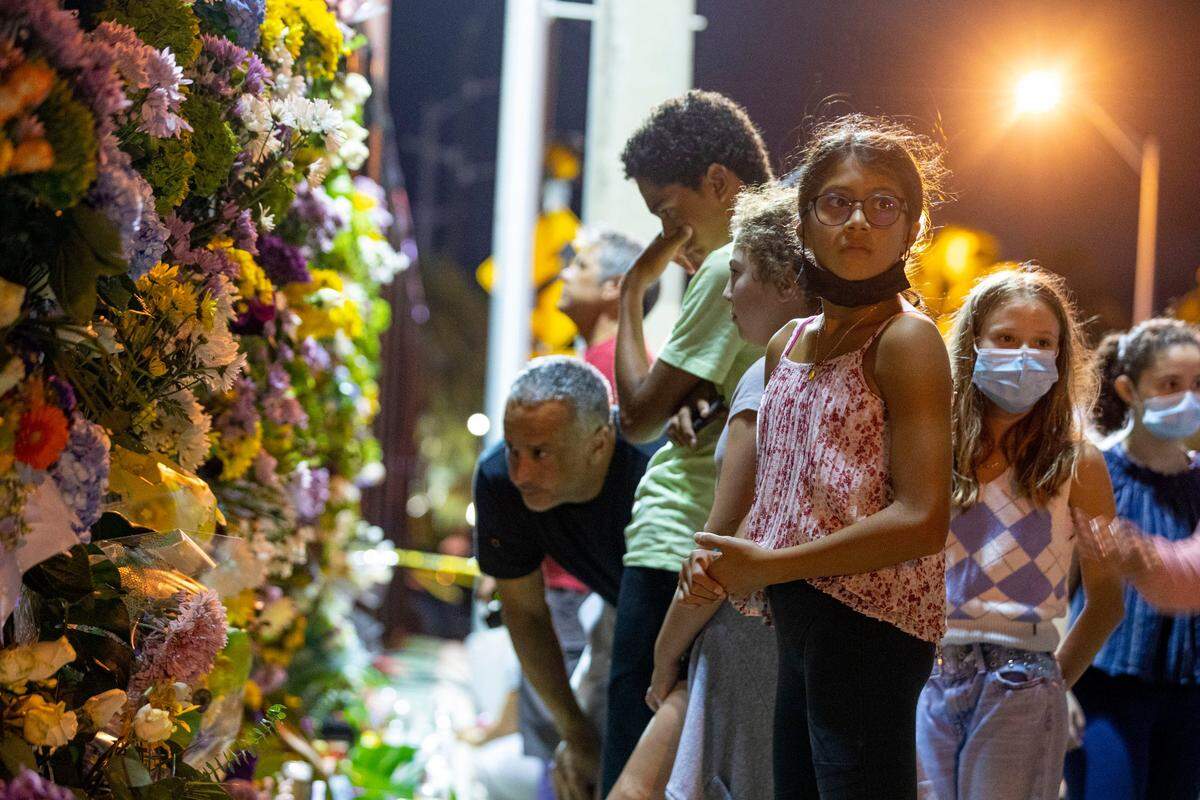
The American Red Cross recommends letting children guide the conversation. Have them talk about their fears and then reassure them about their safety. Make sure you explain the situation in a way they can easily understand.
Suarez, from the Children’s Trust, says parents should first ask children what they already know about the situation. This way you can clarify any misconceptions they might have and avoid offering more information than is necessary, which could add to their anxieties.
With smaller children, keep the information basic. If you have older children or teenagers, the conversation could be an opportunity for them to share their feelings about life and death, but, most importantly, Suarez said, let them lead the conversation.
Hotlines and other support
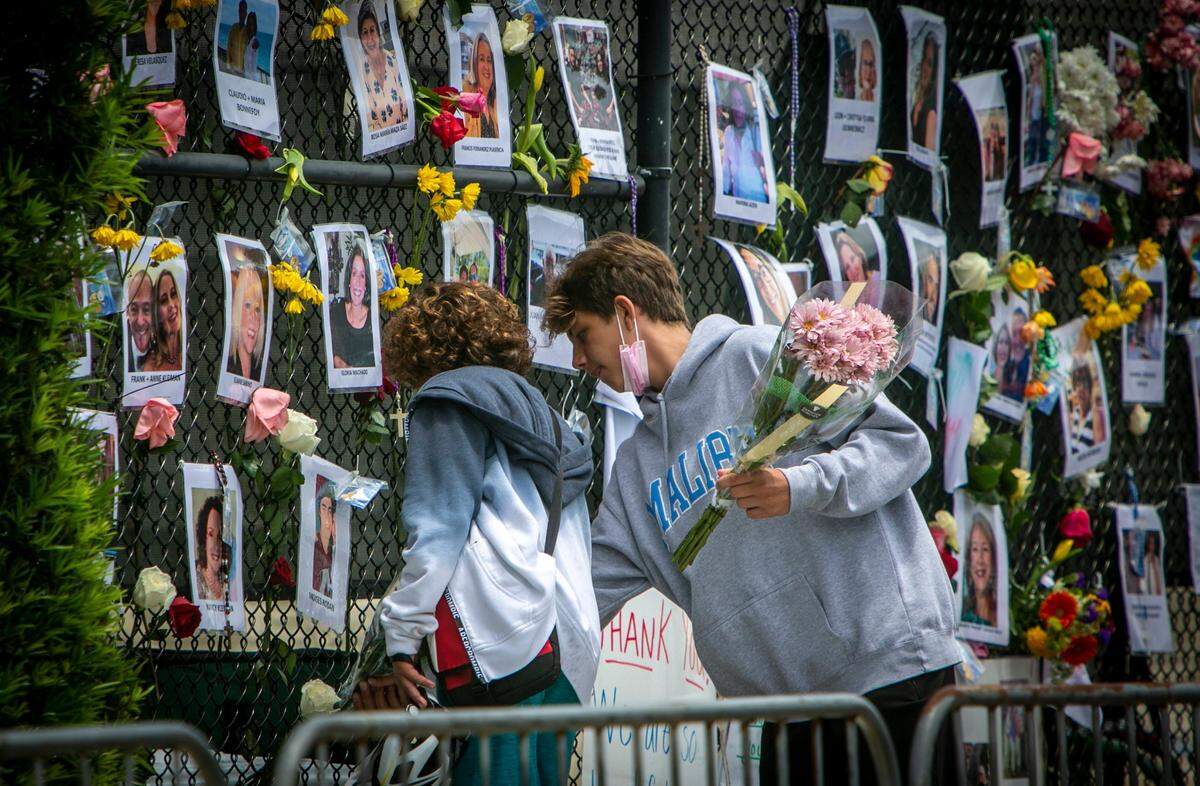
If you or a loved one need help, get it. Here are some resources:
▪ Florida has created a website, SurfsideReunite.com, with different resources, including counseling, for survivors, families of the missing, first responders and community members.
▪ Red Cross’ Disaster Distress Helpline offers free 24/7 support by calling 800-985-5990 or texting TALKWITHUS to 66746.
▪ Call 211 for 24-hour support in English, Spanish and Creole. It is anonymous and offers more than 4,000 programs and resources including mental health, food insecurity, legal help, homeless shelters and financial assistance programs.
▪ Florida International University’s Center for Children and Families offers a free, evidence-based treatment program where children ages 3 through 17 can learn healthy ways of coping with their feelings. It also teaches caregivers stress management, parenting and behavior management skills, and communication skills. The program helps caregivers learn to better manage their own emotional distress and support their child more effectively. Call 305-348-5885 or email tfcbt@fiu.edu for more information.
▪ The National Suicide Prevention Lifeline — Call 800-273-8255 or visit https://suicidepreventionlifeline.org
▪ Crisis Text Line provides free 24/7 support through text — Text HOME to 741741 from anywhere in the United States. Learn more at crisistextline.org
▪ National Veteran Crisis 24/7 Hotline — Call 800-273-8255, then select 1. You can also text 838255 or call TTY 800-799-4889. Confidential chat also available online at mentalhealth.va.gov.
This story was originally published June 30, 2021 at 3:15 PM.