
Miami’s once-moribund private clubs are swarmed. Blacks and Jews are welcome now, too
When R. Donahue “Don” Peebles, the prominent Black real estate developer, bought Miami Beach’s historic, exclusive and exclusionary Bath Club for $10 million in 2000, he was in for a bit of a personal surprise.
Now that he’s relaunching the 1927 landmark as a highly selective private membership club for a new generation of the uber-wealthy, he’s telling the story — a reflection, he says, of how far Miami and Miami Beach have come since then, and how different he intends the new Bath Club to be.
For decades the winter beach playground of industrial titans bearing the names of Honeywell, Firestone and Maytag, among others, the Bath Club was known as much for its obsessively guarded privacy as it was notorious for something far less flattering, yet hardly secret.
Its membership was, as the euphemism went, “restricted.” Like its handful of surviving hoitier-than-thou peers on Indian Creek Island, Miami Beach and Coral Gables, the Bath Club — along with its ballrooms and its famous saltwater pool and cabanas — was for decades not open to Jews, Blacks or members of other minority groups, no matter how rich or well known.
That has slowly changed, and Peebles was a member of the club before he bought it. But what he didn’t learn until then, he says, is that he had been the veryfirst Black member of the Bath Club. No one had wanted to tell him, avoiding an awkward acknowledgment of the club’s former, baldly discriminatory though entirely legal practice.
The irony is not lost on Peebles.
Nearly a decade after buying out the declining club’s remaining members and turning its Mediterranean Revival home into a rental event space, Peebles and his wife and business partner, Katrina, are taking advantage of resurgent interest in Miami’s truly exclusive private spreads to return the Bath Club to its origins.
As wealthy newcomers and some boldface names in finance, sports and entertainment pour in to Miami and its tonier suburbs from New York City, California and other centers of untold affluence, at least two of the Bath Club’s golf-centered rivals find themselves with rosters capped tightly and increasingly besieged by supplicants, insiders say.
At the beachfront Bath Club, the Peebleses say they are banking on history and authenticity to distinguish themselves from their competitors. They are spending up to $8 million to restore a warm Mediterranean luster to its clubhouse, a protected historic building that retains its original architecture and fittings.
Only now the membership will be racially and ethnically — if not economically — diverse. Katrina Peebles, who is white, is intimately involved in the relaunch.
“As a biracial couple, we liked the symbolism of buying a club that had been restricted. This place has existed since 1926. It just needed to be reinvented,” Don Peebles said.
Peebles said the quietly reopened and extensively refurbished club has filled its allotment of 50 handpicked founding members. They expect to fill the 150 other slots quickly. Membership will be strictly capped at 200 individuals or families.
You need not apply, however.
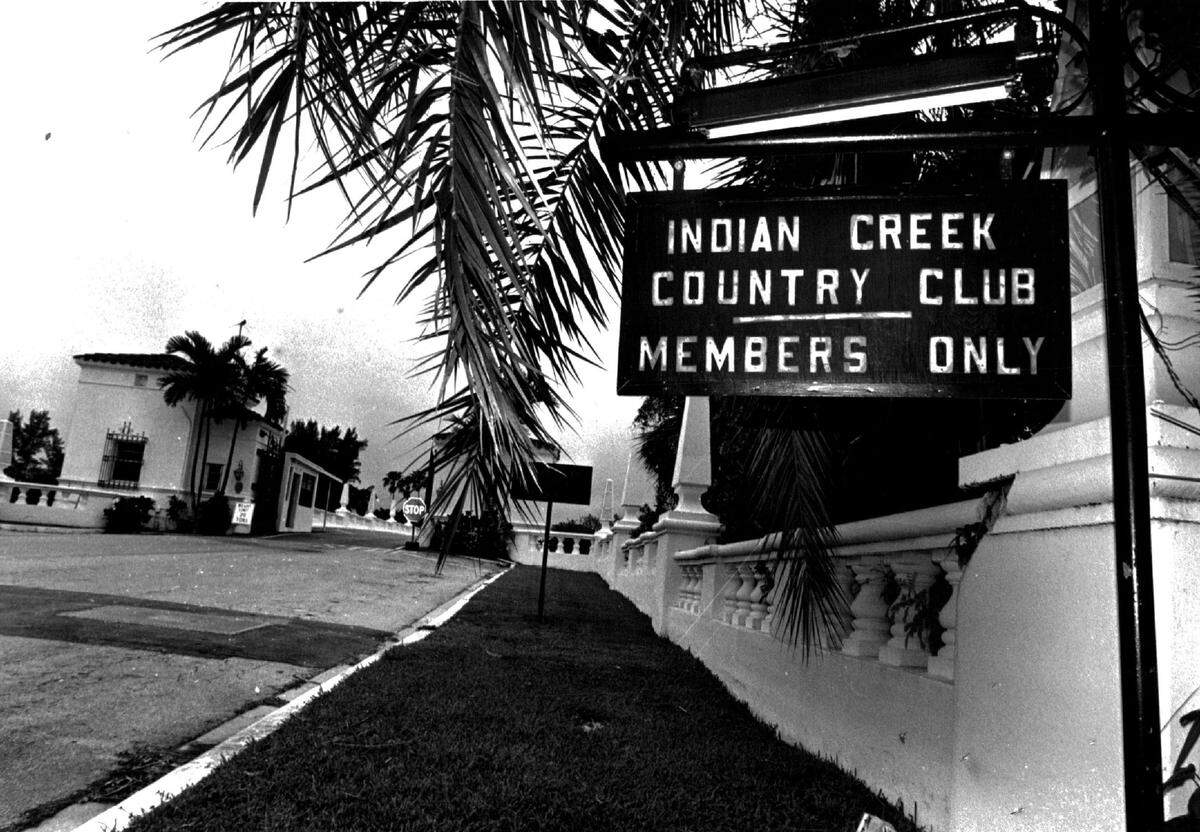
Entry is by invitation only, as it is at the troika of comparably exclusive private clubs in Miami-Dade: Indian Creek Country Club on nearby Indian Creek Island, the Beach’s La Gorce Country Club and Coral Gables’ Riviera Country Club. Anyone invited to join must also be known and endorsed by others in the clubs. Traditionally, one dissenting member can blackball a prospect.
Visit the websites for Indian Creek, La Gorce and Riviera, and there’s little to no information to be had beyond a members’ log-in box.
Even so, at least two of those clubs, La Gorce and Riviera, have seen it necessary to maintain growing waiting lists. Insiders and people familiar with their operations say invitations to join are outpacing the rare slots that become available when members leave.
Ed Williamson, a prominent Miami-Dade auto dealer, is a longtime Riviera member and former club president whose father once belonged to Indian Creek. He is often invited to golf as a guest at other ultra-exclusive clubs. He said all three clubs appear to be thriving anew, Riviera and La Gorce in particular, after some fallow years.
“It’s unbelievable now,” Williamson said of La Gorce and Riviera. “Everyone wants to be a member.”
At Riviera, he added, few give up a membership and instead press friends and family members to join: “That’s a problem for the waiting list, because it keeps getting longer.” He estimated the current wait at up to two years for coveted golf and social memberships.
The specifics are difficult to nail down. Bath Club aside, club managers uniformly declined to speak to the Miami Herald. La Gorce’s manager politely declined an interview, citing members’ overriding interest in keeping their business private. Riviera’s did not respond to messages.
Indian Creek’s acting general manager nearly hung up on a reporter after a terse “no comment” before bidding goodbye with a congenial “have a nice day.” Indian Creek, perhaps the hardest nut to crack for wannabe members and outsiders, is the club that most zealously guards its privacy: The penalty for any member who speaks to the press about the club is expulsion, according to one member who asked to remain anonymous..
Gossip still leaks out on occasion. The New York Post’s Page Six reported recently that Ivanka Trump and husband Jared Kushner, who bought a $30 million lot on the island after serving as special aides to President Donald Trump, were effectively blackballed from the club. According to the Post, the couple inquired about joining but discreetly was told not to bother applying after Ivanka Trump called insurrectionists who attacked the U.S. Capitol “American patriots.”
Indian Creek is unusual in other ways, too. It was founded in 1930 on a small private island separated by a short bridge from the town of Surfside, north of Miami Beach. At first, only club members could buy property along the residential lots that ring the island, but that policy was declared illegal by the courts long ago.
The club’s splendid golf course occupies most of the island, which is also a tiny municipality with its own police force, a few dozen voters and an elected five-member council, only one of whom is known to be a club member. A village representative, however, said no city official would speak about the club in any detail.
What’s generally known, however, is that all three clubs, along with the Bath Club, had seen plummeting interest in membership until a few years ago because of changing tastes and demographics and, in the Beach, because of the resort town’s then-fading fortunes.
Exposure of the club’s exclusionary policies didn’t help. In 1985, after an award-winning series ran in the Miami Herald detailing the policies and some club members’ openly racist and anti-Hispanic attitudes, the clubs came under intense pressure from elected officials and the local business establishment to diversify membership.
By then, membership rolls were shrinking, members aging and slots went begging. One wag was quoted in the Herald series: “It’s like the joke about Miami Beach. The average age at these clubs is deceased.”
Peebles said he decided to wind down the Bath Club in 2012 by stopping new memberships, in part because of declining participation, but also with an eye to starting fresh at the right time.
The other clubs carried on, buoyed by a loyal base, but found it hard to fill open slots. All have, to a greater or lesser extent, admitted Jewish, Black and Hispanic members — provided they can pay initiation fees and membership dues greater than the net worth of most Americans.
Riviera, for instance, carried several dozen vacancies for years, members say. But the club reversed its fortunes with construction of a palatial new $37 million clubhouse, which opened at the end of 2018.
La Gorce had torn down and replaced its old clubhouse in 2004, but memberships have only lately become a hot commodity as the Beach becomes saturated with ultra-high-net-worth individuals, as they’re called in the world of money management.
Joining, even for those rare individuals invited in, is not for the faint of wallet.
Several sources say La Gorce is under such demand that it jacked up its initiation fee significantly, making it by some distance the most expensive to join. One informed source put the initiation fee at $500,000, though others have heard it’s closer to $300,000.
That hasn’t been a deterrent to prospects. Cooling their heels on La Gorce’s dozens-long wait list, according to a leaked partial copy, are such luminaries as Roger Barnett, founder of California-based natural nutrition company Shaklee Corp., who recently bought a Fisher Island condo for $17.4 million with his wife.
Also on the list for a founder’s-level membership: prominent New York litigator Randy Mastro, a former deputy under Mayor Rudy Giuliani. Last year, the entrance to Mastro’s Upper East Side townhouse was splattered with obscene graffiti after he represented residents controversially trying to shut down a Manhattan hotel housing men who would otherwise be homeless.
New York restaurateur Jeffrey Zalaznick, whose Major Food Group is opening five new restaurants in Miami, including a local version of its flagship Carbone, is waiting for a “junior” membership at La Gorce.
La Gorce’s general manager, Michael Rosa, declined to make club president Peter Gatof, a New York tech exec, available for an interview and did not respond to emailed questions. Florida corporate records show that also on the board, as treasurer, is another former corporate big name, Stanley O’Neal, controversial former CEO of Merrill Lynch, who is Black.
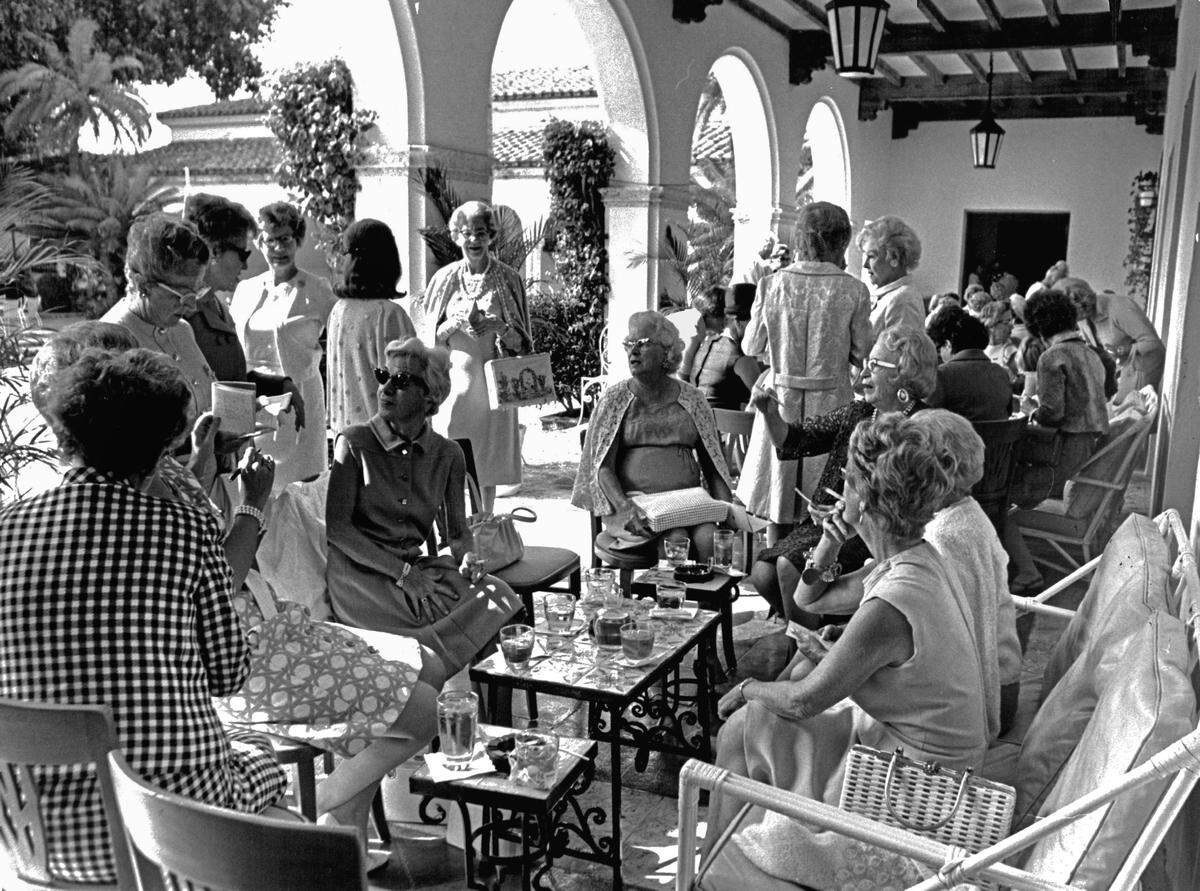
Indian Creek, with a stable membership and scant turnover, is reportedly at capacity at 300 members. But the club decidedly keeps no waiting list, one inside source says. The club’s initiation fee is $200,000, and annual dues run to $20,000, the source said. Club rules, the source said, state members must seek “congenial” people to join when openings do occur.
Riviera is the most “affordable,” and by far the largest of the highly selective golf clubs with a total membership of 1,200. Initiation fees are now said to be $35,000 for a social membership, $95,000 for gold, with annual dues at $15,000 to $16,000 a year. Social members ante up around $5,000 a year, according to the member, who did not know the initiation fee.
The club’s increased popularity and low turnover means the wait for an open slot for a golf or social membership has grown to several dozen and may extend for years — a sign of its appeal to families that tend to be local, and heavily Hispanic, some members say.
“Riviera is solvent. It built a beautiful new clubhouse without a special assessment,” said longtime member John Schulte, whose father-in-law was a founding club member. “It’s amazing. The pool facilities are magnificent. They have a gym with everything in it. There is a huge ballroom.
“And there is no animosity among the members,” he added, hinting while declining to elaborate that it’s not so at some rival clubs. “The members all get along very well.”
The obsessive privacy, selectivity and high bar to entry are key features that distinguish the Bath Club and its tradition-bound peers from other high-ticket clubs around Miami-Dade, including golf-centered clubs like Trump National in Doral and Deering Bay in deep south Coral Gables, the beach and golf Fisher Island Club, or sand-focused enclaves such as Soho Beach House in Miami Beach.
Another differentiator: Only club members and guests can use the traditional clubs’ facilities at the ultra-private clubs. At the commoner run of clubs, members generally share greens, dining facilities and pools with strangers — unscreened hotel guests, wedding parties or day golfers, among others.
The once ultra-exclusive and restrictionist Surf Club in Surfside, a longtime Bath Club rival, no longer counts in that most-elite rank. It was redeveloped in 2017 as a Four Seasons Hotel and Residences. Club members were bought out or offered lifetime memberships in the hotel club. A spokeswoman said in an email the club is accepting new members but did not respond to followup questions.
Unlike the “very polished” renovation of the Surf Club’s original and equally emblematic 1930 Mediterranean Revival building, Katrina Peebles said she and her husband wanted a cozy and historically true if still grand look and feel for the revived Bath Club, which was the first of its kind in the Miami area when it opened.
Don Peebles first came to Miami Beach to build a new convention hotel under a deal to end a tourism boycott organized by Black Miamians angry over local elected officials’ rebuff of recently freed South African anti-apartheid leader Nelson Mandela during his 1990 visit. After years of disputes with the city, Peebles sold off the hotel, the first Black-owned convention hotel in the country, to an investment fund.
Peebles made another deal with the city of Miami Beach when he bought the Bath Club property. He agreed to preserve and restore the faded 1927 original, designed by Espanola Way architect Robert Taylor, along with a harmonious 1940 ballroom addition.
In exchange, he got permission to tear out the Olympic-size saltwater pool and original cabanas, replacing them with a 116-unit luxury condo tower and six beachside villas. An initial clubhouse restoration was carried out in 2002 and a new pool and cabanas built, but deterioration set in over the years.
In preparation for reopening as a private facility, the Peebleses built out a new high-tech kitchen, renovated leaky, water-damaged pool cabanas and fully restored the Moorish-influenced historic building, which the Miami Architecture guidebook calls “a balance of sophistication and rusticity.” The restoration extended to its original heavy wooden doors, ironwork fittings and chandeliers, and clay-tile and terrazzo floors. A spa and gym were updated, and a well-known food and beverage provider brought in to manage sit-down and poolside dining and a picturesque enclosed courtyard cafe.
Miami designers Antrobus + Ramirez furnished the interiors in an updated version of the club’s classic Jazz Age sumptuousness. Under high, pointed Moorish arches and beamed ceilings, rooms like the intimate, cozy Governors’ Lounge are appointed in plush, colorful seating and lamps with fringed shades.
Its chief attraction may be its 550 feet of Beach frontage — not entirely private since the sand and water are public, but the furnishings have been spruced up with new European-style shaded daybeds and canopies. Peebles promises beachside spa-style massages.
“It’s such an iconic property,” Katrina Peebles said. “It has all its former glamour and now few of its issues.”
The reopening has not been without friction. Long-running legal disputes between Peebles and the condo association next door over his management of the club facilities culminated in $1 million in sanctions issued against the developers’ company last month by a Miami-Dade judge. The association contends Peebles failed to maintain the cabanas and did not offer promised quality poolside dining service, among other complaints.
Peebles said he will appeal the order but is also working out an “understanding” with the association so that condo residents can enjoy some limited use of the club (The club and condo already share two clay tennis courts and an outdoor spa area). Peebles, who lives mostly in Wellington in Palm Beach County, said he is selling his longtime Coral Gables home and buying a unit in the tower so he can closely supervise the club operations.
“The idea is to have us all live in harmony,” he said. “The club is open. They see it’s going well. They want to use it.”
The reinvention extends to the club’s new membership. The Peebleses say they have recruited new members with an eye not just to racial and ethnic diversity, but age and professional background as well. That means banking and financing but also arts and fashion, with an emphasis on those with families.
New founding member Lauren Geduld, who joined with her investor husband and two young daughters, said she was looking for a welcoming and intimate club to entertain friends and let her girls play in safety and privacy.
“They love it. They love the chicken fingers,” said Geduld, who lives in Aventura and also belongs to Turnberry Isle Country Club. “The beach is what attracted us. It’s located in such a special part of Miami Beach. The service is great. The food is great. It has such a magical environment.”
The price to join, the Peebleses noted, is a relative bargain when compared to its principal competitors for the creme de la creme: Initiation is a mere $20,000, with annual dues at $18,000. Don Peebles said he has no doubt the club will soon be full.
“I know there are 200 families out there that will appreciate having their own place. There has been a lot of demand,” he said. “This is a place for them to get out of the hustle and bustle. Basically, it’s like your home away from home.”
Herald staff writer Rob Wile contributed to this report.
This article was updated to correct the relationship between John Schulte and a founding member.
This story was originally published March 16, 2021 at 7:00 AM.