
Activists oppose turning ‘iconic’ Beach theater into housing. Commission will decide.
It’s been two years since Miami Beach put the city-owned Byron Carlyle Theater on the market, seeking bids to redevelop the cultural landmark after it had fallen into disrepair.
Ahead of a key vote this month, a group of concerned North Beach residents is urging the City Commission to reject a proposal to build rent-controlled apartments and a cultural center at the shuttered theater. Under that plan, the city would give away the 28,000-square-foot theater at no cost.
The opposition, led by former Commissioner Nancy Liebman and resident-activist Manning Salazar, wants the city to retain ownership of the land and fund the theater’s redevelopment itself. They said they are optimistic that they will have the necessary votes Feb. 24 to dump the current proposal and put forward an alternative for the North Beach landmark, which the city purchased in 2001 for $1.7 million.
“We feel very optimistic that we’re gonna get enough votes to turn down the bid and to move forward with a plan to build a cultural center at that location that has some sort of tie to the past, to the building that was there,” Salazar said.
Because the proposal involves the leasing of public property, it would only take two negative votes from commissioners to block the deal. For it to pass, affirmative votes from six of the seven commissioners are required.
City leaders have not revealed how they will vote later this month, citing the uncertainty of ongoing negotiations between city staff and the development team, Menin Hospitality and KGTC. When city staff last presented the project to the commission in December, there were multiple points of disagreement between the parties. A financial valuation of the proposed lease is also pending.
Two commissioners have signaled their concerns with the proposal as it is currently constructed.
Commissioner Mark Samuelian said he is unconvinced by the proposal and would be open to considering a “fully thought-out alternative plan to achieve the same goal of making it a cultural gem.”
“I would say I’m highly skeptical of this proposal at this time,” Samuelian said. “The thing that’s most important to me is that precious city land needs to be protected.”
Commissioner Michael Góngora said he would vote against the proposal in its current state.
“I want the city to negotiate the best deal possible,” he said. “The deal needs to get better for me to consider it.”
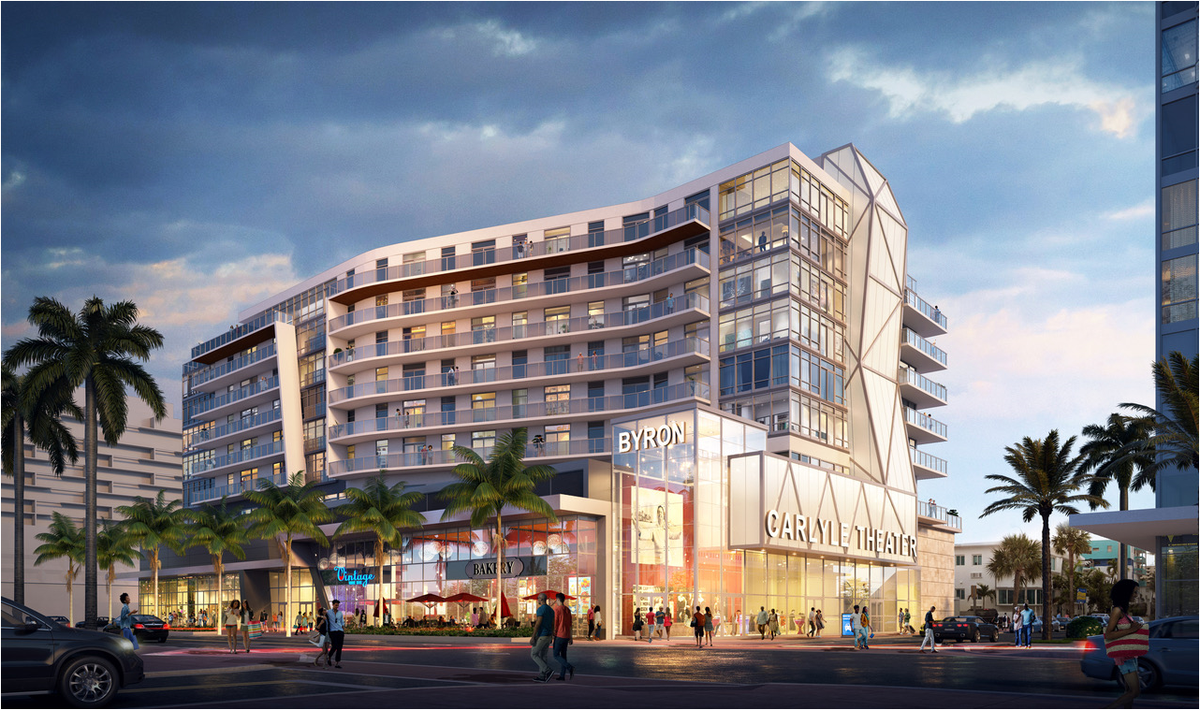
A 2018 city assessment found that it would cost at least $3 million to renovate the Byron Carlyle and bring it up to code. The theater, which opened in 1968, closed in 2019 after the city declared it to be uninhabitable. Salazar, who recently toured the space, said it may cost up to $8 million to redevelop the space, adding that he is not opposed to tearing the theater down if the city incorporates the original design or materials in the new facility.
“The building is pretty far gone,” he said.
To finance the redevelopment of the theater, Samuelian said the city could tap into the newly formed community redevelopment agency in North Beach or the multimillion-dollar payment that the city may receive if it vacates a portion of the 21st Street right-of-way along the front of the Seagull Hotel.
“The city could take action and could work to do that in a different manner,” Samuelian said. “I don’t think we’ve gone down that path in a way that we need to.”
Liebman, the former executive director of the Miami Design Preservation League, said she hopes the city can preserve the theater, which she called an “iconic relic from the days of long ago.”
“Our fondest wish would be that the city would just take the Byron and rehabilitate it or rebuild it...into a cultural center,” she said.
“The money is there, what we need to have is the will and the vision,” Salazar added.
City, developers disagree on key issues
In exchange for the 99-year lease of the theater property and an adjoining city parking lot, which will cost the developers $1 per year, they propose to build and give the city the “shell” of a 10,500-square-foot cultural center, develop 151 units of rent-controlled workforce housing and keep the rents below market value for 30 years, according to the most recent term sheet. The developers will also pay the city $1.5 million toward the build-out of the cultural center. The building will be no taller than 125 feet.
At the Dec. 9 commission meeting, city staff said they still don’t see eye to eye with the developer on issues like a lack of parking, income mix at the workforce apartments and how long the apartments would remain rent-controlled.
The developers proposed offering 80% of their apartment units to tenants earning 140% of the average median income, or $89,600. City staff noted that 70% of North Beach residents earned under $75,000 and would be unable to afford those units, so they suggested making the units more accessible across a wider range of income levels.
Instead of offering rent-controlled units for 30 years, the city proposed that the developers offer it for half of the lease period, or about 50 years.
Samuelian said it is “hard to have conviction that this is the absolute best deal for the city.”
Matis Cohen, a project developer with KGTC, said his team has “done more than the city asked for” when it solicited bids to redevelop the theater.
“We’ve offered to the city everything that we can,” he said. “If the city decides not to go in this direction, we only want to see that there is a real plan that the city has to actually do something.”
Mayor Dan Gelber said the city’s initial request of at least 10,000 square feet of cultural space may have been “too small,” and that the city is now asking for a larger space. The goal of the project, he said, is to build a “world class cultural space” with black-box theaters.
“I think we’re trying to pull this thread to the end,” he said. “We’re not going to support a deal that doesn’t provide the one thing we want.”
Commissioner Ricky Arriola, who said he is open-minded about making a deal, argued that rejecting the current proposal would keep the theater vacant for longer than it needs to be.
“If they have the votes then they’ll kill it, but that building will sit empty for years,” he wrote in a text message.
.JPG)