
Miami Beach considers rent-controlled apartment projects. Will residents buy in?
Less than 1% of Miami Beach’s government workers live in the city.
To bring more of them onto the Beach — and to attract area teachers, health workers and artists — the City Commission is considering approval of two rent-controlled apartment complexes.
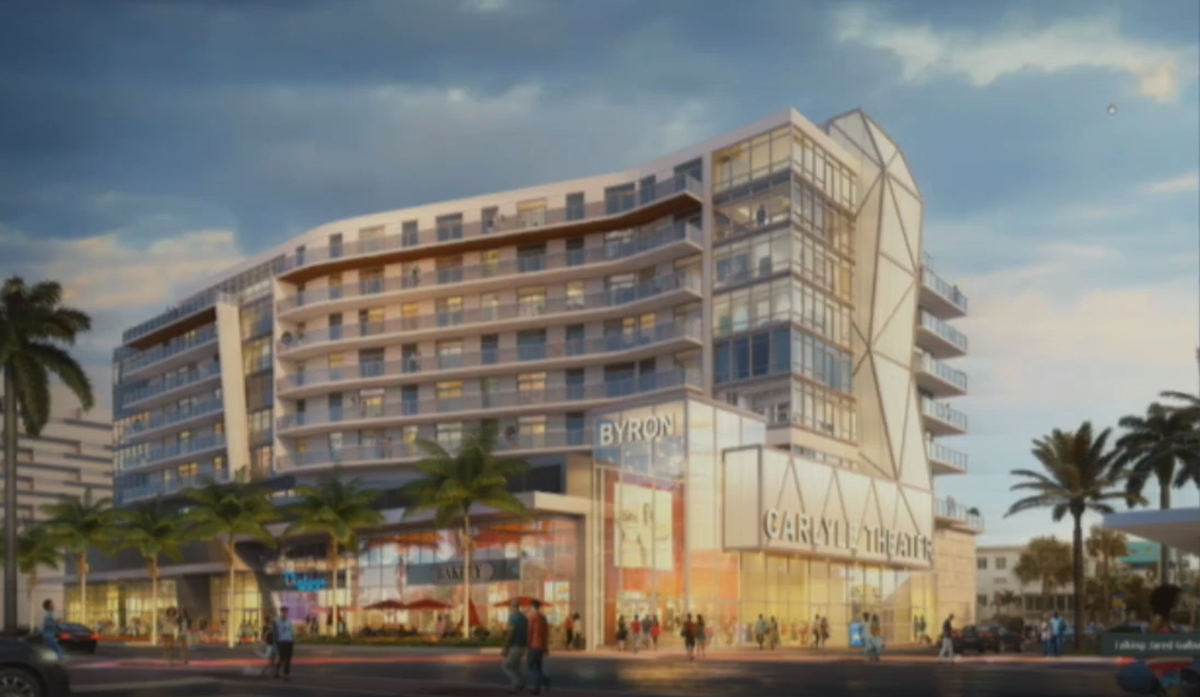
The projects, proposed for the Byron Carlyle Theater site in North Beach and the Collins Park neighborhood in South Beach, both seek to build “workforce” housing and cultural benefits on city plots. But the projects don’t have equal support from area residents, specifically in North Beach, where they want to see the city-owned Byron Carlyle renovated and reopened as a stand-alone theater.
Miami Beach has affordable housing, but no workforce housing.
Workforce housing is for incomes up to $89,600 for a single person or $127,960 for a family of four. Affordable housing, or public housing, is for incomes up to $51,200 for a single person or $73,100 for a family of four, according to Miami-Dade County.
Across the bay, Miami-Dade Public Schools is incorporating 10 workforce housing units in the construction of a seven-story school building in Brickell.
“It creates a better community feel when people who work in service as teachers, firefighters or medical workers actually live in that community,” said Miami Beach Mayor Dan Gelber. “It has so many advantages.”
The Miami Beach projects
Both proposals call for the city to lease public land to developers for little to no annual rent.
Under the current terms of the Byron Carlyle deal, the city will pay at least $350,000 in up-front costs for environmental remediation. The developer, who will construct a bare-bones cultural facility to give to the city, commits to spending $1.5 million developing the center. The city is responsible for all other costs and expenses related to the build out, operation and maintenance of the center. The developer will lease the property for $1 per year.
Under the current terms of the Collins Park deal, the city may be on the hook for up to $800,000 if the project fails before a lease is signed. If the city wishes to use the ground floor of the building for a cultural space, the city must pay up to $150,000 annually to lease the space. The city, which will receive net revenue generated by the project, estimates it will receive up to $500,000 annually for the first few years.
The Byron Carlyle project, which is proposed on 71st Street, would involve the demolition of the iconic 52-year-old theater that is vacant and in disrepair. The city estimates it would cost millions to renovate and modernize the space, so it solicited outside proposals in 2019. Residents, who argue the building should be preserved, created a petition that has amassed about 1,150 signatures.
The developers, Menin Hospitality and KGTC, have proposed building a 125-foot-tall building with 151 units. The project would also include a 10,500-square-foot cultural space to be operated by the city.
The City Commission won’t vote on the project until at least February.
The developers, who seek to lease the land for 99 years with 30 years of rent-controlled housing, propose that 80% of tenants earn more than $59,000, the average median income, and that 20% of the units be reserved for those earning less than that. The lowest rent for a one-bedroom apartment would be $1,158, and the lowest rent for a two-bedroom would be $1,984.
Tenants would be selected via lottery, but the developers have proposed giving priority to city employees, teachers and medical personnel.
The city, which has not made a recommendation on the project pending an independent financial analysis, remarked in a memo to the City Commission Dec. 9 that the proposed tenant mix reflects “above-market” rates for North Beach.
“The administration recognizes that the developer deserves credit for proposing to introduce workforce housing in North Beach, but the proposed tenant income mix reflects above-market rates for North Beach, an area where 20.1% of individuals are categorized by the U.S. Census Bureau as below the poverty level [2019],” the memo reads.
If the City Commission approves the project, the city would be on the hook for “yet-to-be-determined environmental costs” and costs related to building out the cultural center, the memo states.
Gelber, who called the Byron Carlyle project “complex,” said the city is considering virtual town hall meetings to discuss resident concerns.
“Ideas are great, but execution is what ultimately matters. We have some more work to do with the Byron Carlyle project,” Gelber said. “It is a bit more complex because that facility has challenges, and we need to make sure it is a true cultural activation that the community is going to enjoy.”
Collins Park project caters to ballet dancers, artists
The Collins Park project, which will be operated by the nonprofit Community Finance Corp., received tentative commission approval Dec. 9. It would be up to 75 feet tall, provide about 80 apartment units and contain a 32-bed dormitory for Miami City Ballet students and dancers. The complex units would include studios, one- and two-bedroom units.
Rent would be capped at 30% of the average median income, or $480 for a studio apartment based on Florida’s 2020 rent limits for workforce housing. The developer would commit to providing workforce housing for up to 90 years, or the duration of the lease.
Half of the units would be rented to tenants earning less than $51,000, or 80% of the average median income, and the remaining units will go to tenants earning up to $76,800, or 120%
The proposed project site, a parking lot at 224 23rd St., is located across the street from Miami City Ballet and the recently constructed Collins Park garage. Fifty spaces at the garage will be reserved for tenants of the building.
John Shumaker, the finance director for the Miami City Ballet, said the project will provide the dance company a “silver lining” after cutting its budget by about 50% due to COVID-19.
“This project from the beginning was conceived as an opportunity to provide workforce housing but also to support cultural institutions,” said company attorney Michael Llorente at the Dec. 9 meeting.
There would also be lottery held to place tenants at this complex. The developer proposed three tiers of priority: At the front of the line would be artists, teachers and city employees; followed by hospitality workers in Miami Beach, and then any income-eligible workers in Miami-Dade County with priority to Miami Beach residents.
The Collins Park Neighborhood Association supports the project.
Ray Breslin, the group’s president and a longtime resident, said the project will create a unified cultural campus in the neighborhood, especially with the prospect of a new cultural center at the Collins Park garage. The Bass art museum is nearby as well. Breslin said he has waited years for the city to approve one “final piece to solidify the important of artists and hopefully keep them here.”
“I’ve been through four mayors and many commissions to get to where we are today,” he said. “We are the art and cultural epicenter of Miami Beach.”
.JPG)