
Deceptive land grab or needed investment? Marina Park referendums divide Miami Beach
A developer’s plan to sell voters on the redevelopment of the Miami Beach Marina has all the elements of a made-in-Miami political drama: robotexts from the mayor, paid consulting from a state representative and zoning changes that favor a bigger, taller project.
The proposed overhaul of the city-owned South Beach marina, led by developer David Martin of Terra Group, calls for the construction of a 385-foot condo tower, an upgraded retail complex and a new public park at the 300-390 Alton Rd. property, which is under lease to a private operator. The complex would be demolished and its retail tenants displaced.
The City Commission voted unanimously in favor of the project in July, but Miami Beach voters will have the final say on Nov. 3 when they decide on three citywide ballot referendums that will either make or break the real estate project known as Marina Park. Mail-in and early voting is underway.
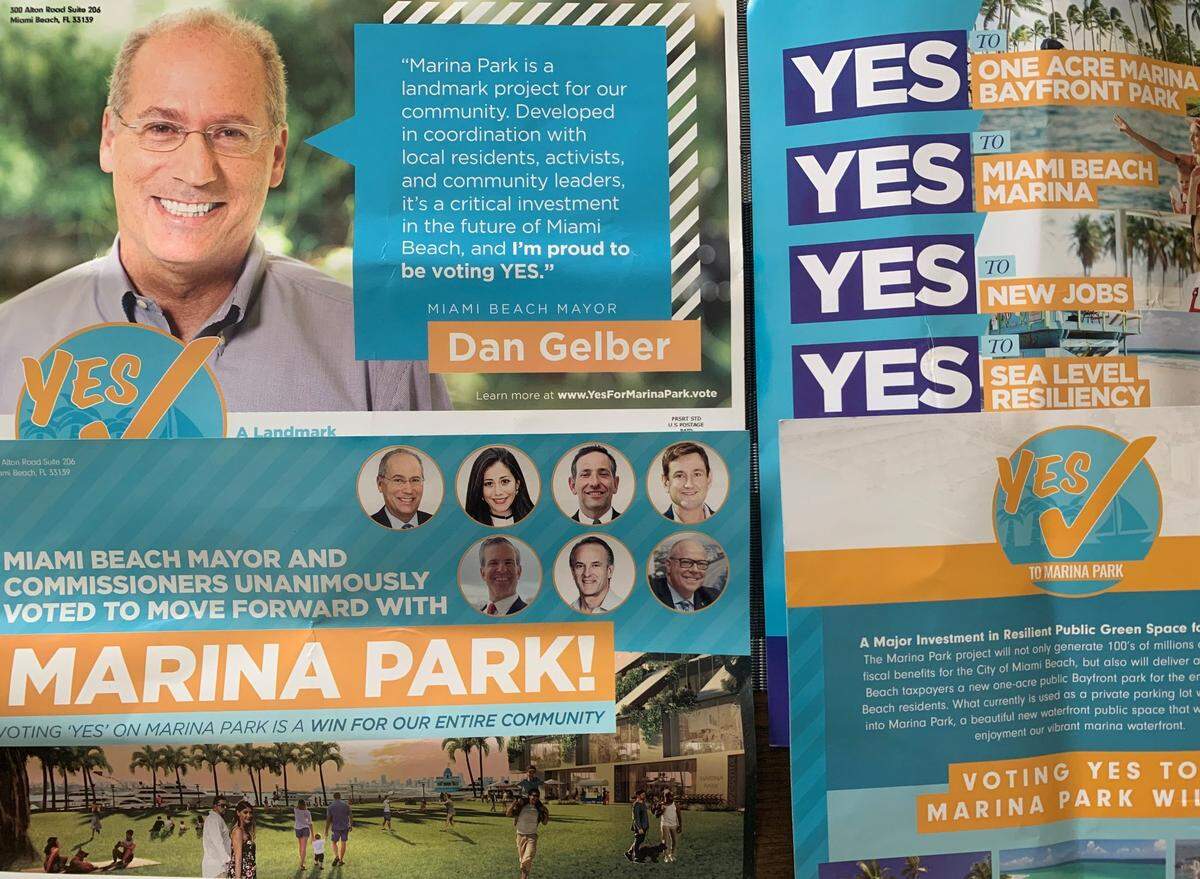
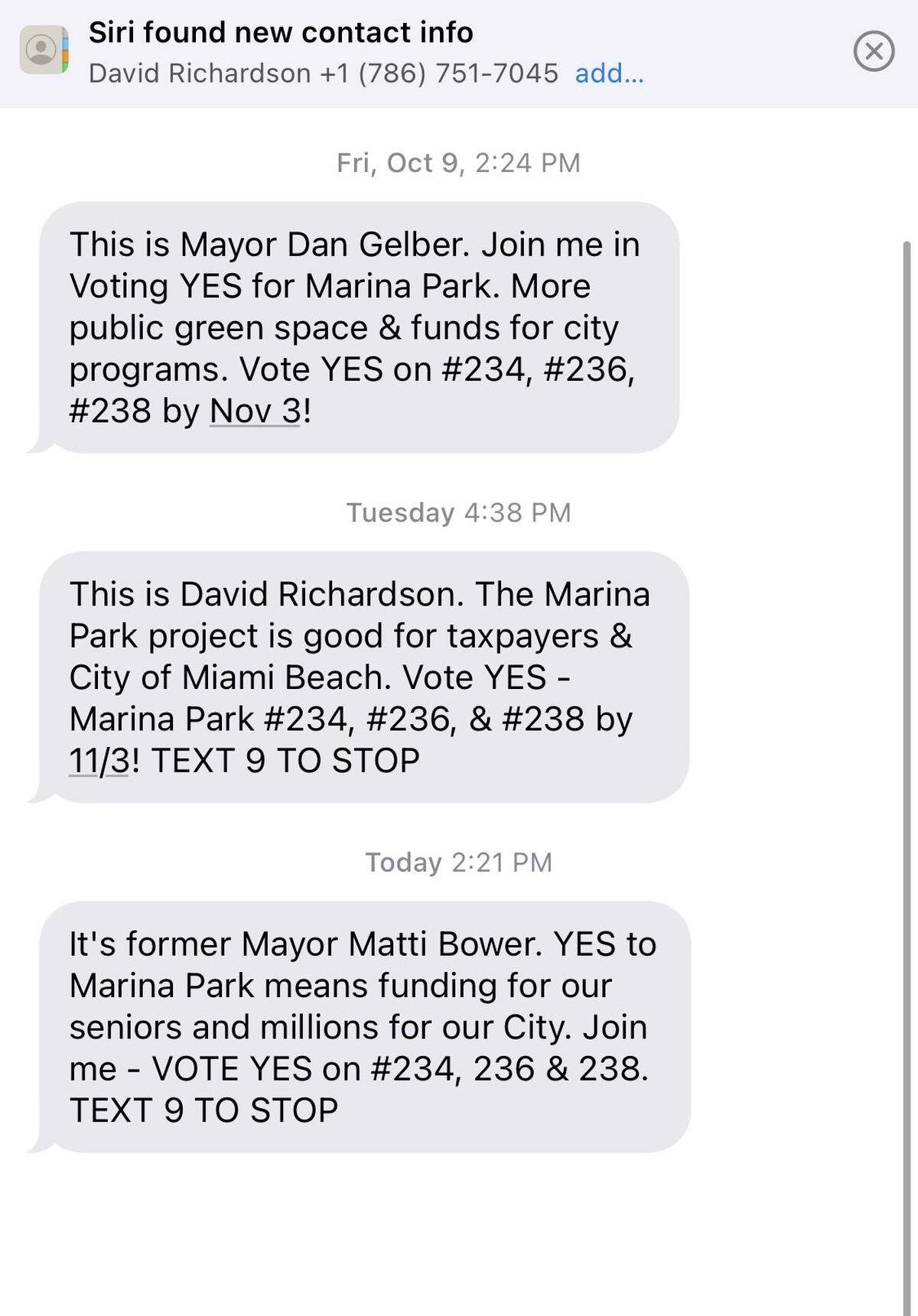
To reach voters, Martin’s firm hired local State Rep. Michael Grieco and spent at least $100,000 on a political committee, Yes for Marina Park, which has mailed out glossy ads and sent residents automated text messages from Mayor Dan Gelber, former Mayor Matti Herrera Bower and Commissioner David Richardson urging that they vote in favor of the project.
In its ads and on its website, the campaign has downplayed or ignored the construction of a 60-unit luxury condo, emphasizing the one-acre park and the slumping city budget instead.
While Martin said he enjoys broad support from residents, Marina Park has divided the city. Those opposed to the project have spoken out against the proposal and derided the campaign that underpins it as misleading.
“The enticement is a park for the residents to let them do more than they should’ve been zoned for,” said Michael Frank, a 68-year-old South Beach resident. “They neglect to show the size of the building. They’re emphasizing the park because they know that’s the way to sell this.”
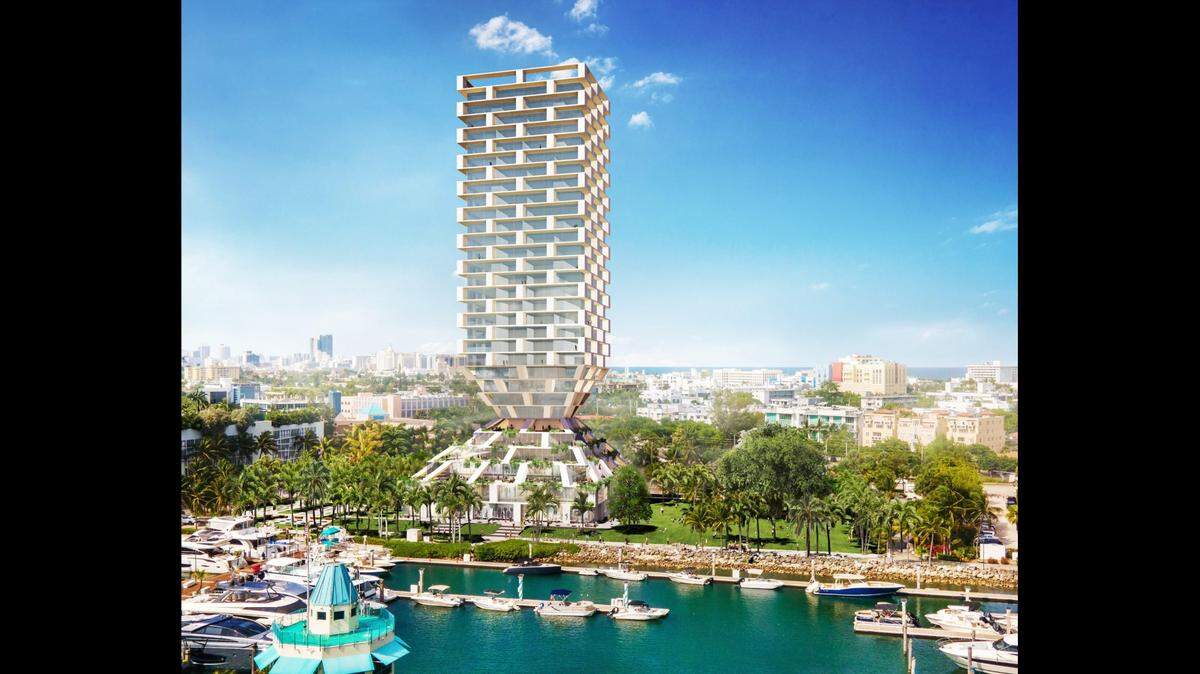
Frank said he would hate to see a luxury condo tower replace the modest marina building, which houses one of his favorite restaurants, Monty’s Sunset.
“I don’t mind that it looks like a Key West dump,” Frank said of the retail complex. “I don’t own a boat so I don’t need it to be spiffy.”
If the project is approved by a majority of voters, the developer will pay the city $55 million for a parcel of land and air rights at the marina site, and commit to $62.5 million in renovations to the marina facility and its upland retail complex.
For its part, the City Commission voted to allow the developer to build taller and more densely than otherwise allowed by zoning rules. Commissioners agreed to vacate part of Alton Road to give the project 25% more usable floor area and increase the project’s maximum permitted height to 385 feet from 150 feet, a 156% increase.
The vacating of Alton Road, labeled a “sleight-of-hand tactic” by community group Miami Beach United, allows the developer to count the public right-of-way as part of the project site for floor-area purposes but does not allow for any construction on the street itself. Such vacations “appear to violate the spirit” of city law, which requires that any increase in floor-area must first be approved by voters, the group said in its published opinion on the marina project.
The city, which has 32 years left on its current lease, estimates that it would receive more money in annual lease payments under the renegotiated lease, following a four-year construction period during which the lessee will pay a reduced amount. If approved by voters, the new lease would span 99 years.
“This is easy to support,” Gelber said. “We are renegotiating a lease that was negotiated in the 1980s when the city was begging for people to invest in South Beach.”
The $55 million payment to the city, most of which is due when construction begins, will be used to increase the city’s budget reserves and fund resiliency efforts, affordable housing and elderly programs.
What do the residents think?
The vocal opposition to the project, headlined by former Miami Beach Commissioner Kristen Rosen Gonzalez, has condemned the deal as being too favorable to the developers. The campaign strategy is aggressive and misleading, they say.
“Don’t let them write their own rules, Miami Beach is not for sale,” Rosen Gonzalez said in a political advertisement against the project.
Martin, who boasts the support of community leader Frank Del Vecchio, believes the project has earned widespread resident support, including from those who live near the project site in the South of Fifth neighborhood. Over the last six months, he said, the development team has organized community meetings and set up information hubs online and at the marina.
On its website, the Marina Park team states it has received “letters, emails and petitions of support” from 250 residents, including in the South of Fifth neighborhood where the marina is located.
“The community getting behind this project was one of the most important things for us,” said Martin, who lives in Miami Beach. “What we wanted to do was think about, ‘Well how can we make this a win-win for everyone?’”
At the July 29 City Commission meeting, several members of the public spoke for and against the project before commissioners pushed it through unanimously.
Irina Pindelea, who has lived in the city for 20 years, called in to say that the project provides a needed investment to the city amid the economic fallout of COVID-19 closures.
“Hopefully putting this beautiful building in our neighborhood is going to bring back tourists and world-class people,” she said.
Residents who have spoken out against the project said they oppose the idea of conceding density and height variances for a developer to build another condo in the area.
They have taken to community Facebook pages to voice concerns with replacing the modest marina building with a luxury tower, especially if it means selling public land.
On the Miami Beach Community page on Facebook, which has nearly 5,000 members, some have criticized the developer for enlisting elected officials to sell the project.
Stephen Cohen, a former commission candidate who runs the page, said some voters are repelled by the campaign strategy.
“All of that negative electioneering and PAC [political action committee] stuff turns them off,” Cohen said. “In my personal opinion, it’s not the mayor’s job to make sure its passed. He’s turning people off by pushing so hard.”
Still, the project has a “good chance of passing” because of how many voters the campaign has reached through digital, text and mail ads, Cohen said. The automated texts are “designed to mislead people,” he said.
“I personally think the city wants to control the message,” Cohen said. “I think they may be upset the opposition is ruining their plans.”
Some residents have expressed their frustrations to the city directly.
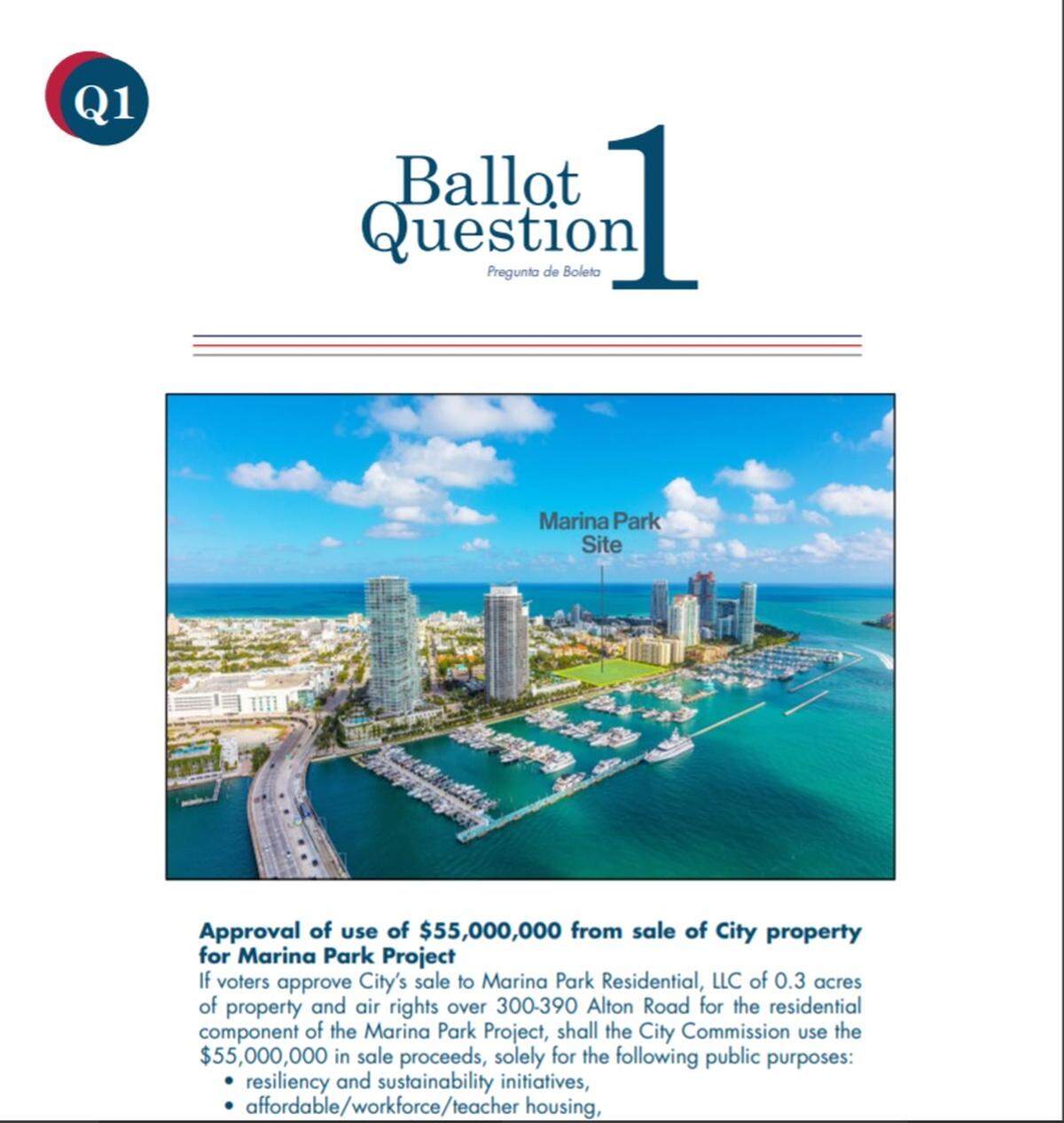
In an email to Gelber on Monday, resident Claudia Kotchka accused the city of deceiving voters by not including any renderings of the proposed condo tower in the voter’s guide published online and mailed to residents. Instead, the city used a green square to depict the project site.
“That measure is not really about a park, it’s about a hideous high rise in an area already overcrowded, with an excess of housing inventory on the market,” she wrote. “Frankly, it should be illegal to deceive voters this way — calling it a new park and only illustrating green space.”
Residents launch Save Monty’s effort
Another segment of the opposition has focused their energies advocating for Monty’s, a bay-front restaurant known for its cheap drinks and live music. Signs calling to “Save Monty’s” have popped up around the city, after one resident created her own political committee by the same name. The group has spent about $12,000 in early October. Rosen Gonzalez said the committee funded the ad in which she is featured.
Monty’s has served as a sort of last refuge for long-time residents eager to avoid tourists, said Frank, the South Beach resident.
“I’ve been going there for a long time, I’d say over 10 years,” he said. “I like the fact that it’s on the bay side, and there’s a lot of locals.”
The development team has invited Monty’s to “be a part of” the redeveloped complex, but the restaurant is in litigation with the landlord for nonpayment of rent and a rash of health violations. The lawsuit, filed in November, alleges that Monty’s owes $656,000 in rent and has been cited for more than 300 health violations since 2013.
An attorney for the restaurant declined to comment for this story. Martin sent a letter to Monty’s in June offering to discuss the possibility of the restaurant’s occupancy in the new marina complex.
“If you are interested in occupying one of the premier waterfront dining venues at Marina Park, we again extend our offer to engage in forward-looking discussions,” Martin wrote.
Martin said it’s “ironic” that his detractors say he is looking to kick out the restaurant permanently.
“All the small business owners are going to be given an opportunity to be a part of this, and that’s our role and responsibility,” Martin said. “It’s something that we believe in.”
For some residents, opposition to the project is about the “bad deal” they believe the city is entering.
The $55 million price tag for the marina site is cheaper than the $68 million listing price for a penthouse at Martin’s Eighty Seven Park project in North Beach.
“This is a trophy property that needs to be marketed properly,” Cohen said.
Two city-ordered appraisals, conducted by the firms Walter Duke and CBRE, valued the residential parcel at $70 million and $87 million, respectively. Under a renegotiated lease, the net present value of the marina lease could increase by as much as 118%, Walter Duke estimated.
Martin said he considers the appraisals to be “somewhat inflated in value,” and thus in the city’s best interests.
“I wish they would understand that and appreciate that because we need projects like this in our community,” he said. “We have people that have agendas, and some of those agendas are not pure and sincere.”
Gelber, Grieco stump for Marina Park
They once faced off in a bitter race for Miami Beach mayor, but Gelber and Grieco are now working toward the same goal this election cycle.
Grieco, a former Miami Beach commissioner who lost to Gelber in 2017, was hired by Martin’s team early this year to advise the project team’s resident-outreach strategy. Grieco, who lives in the South of Fifth neighborhood, has helped the development team meet “many of his neighbors and other residents,” Martin said in a statement. Neither answered questions about Grieco’s compensation.
“After educating himself about our Marina Park proposal, Michael offered to assist our development team in ensuring our commitment to community engagement was meaningful,” Martin said. “Michael has since introduced us to many of his neighbors and other residents. Our community outreach has helped us earn widespread neighborhood support for Marina Park, and we look forward to winning the trust of all Miami Beach voters in November.”
Grieco resigned from the commission in 2017 after pleading no contest to a misdemeanor charge stemming from a campaign finance scandal. During the mayoral race, Gelber criticized Grieco as having “a total disregard for the truth and little respect for our city and its residents.”
In a statement, Grieco said he supported the project before taking the advisory position.
“I’ve been privately working with the development team in a non-lobbying advisory capacity since the beginning of the year,” Grieco said in a statement. “I live [one] block away from the site and I have unique knowledge of the neighborhood and the property and I was supportive of this project before my involvement.”
Gelber said he did not know about Grieco’s involvement in the project, but both agree the deal would benefit the city amid budget shortfalls caused by the pandemic.
“It’s always easy to demonize something that is unknown,” Gelber said. “I urge people to go through the term sheet, which is available.”
In robotexts that purport to be from Miami Beach elected officials past and present, Gelber and others have been urging residents to vote in favor of the project.
“This is Mayor Dan Gelber,” reads an Oct. 9 text. “Join me in Voting YES for Marina Park. More public green space & funds for city programs.”
While Gelber said he dislikes robotexts, he agreed to take part in the Marina Park campaign because he wants the project to pass.
“I’m not a big fan of them even if I do them,” Gelber said. “If I’m going to support something, I’m the mayor, I can’t hide from it.”
The political committee behind the campaign is fully funded by Martin’s Terra Group firm, and it is headed by political consultant Christian Ulvert, who has worked as a campaign manager for Gelber and Richardson during their most recent runs for office.
In a statement, Richardson said he studied the terms of the Marina Park deal and finds them “fair for the city of Miami Beach, its residents and taxpayers.”
“I support this project and want to make sure voters have all the facts,” he said “including the fact that the item passed unanimously by the commission in July.”
This story was originally published October 20, 2020 at 12:51 PM.
.JPG)