
The year both the Democratic and Republican conventions converged on Miami Beach
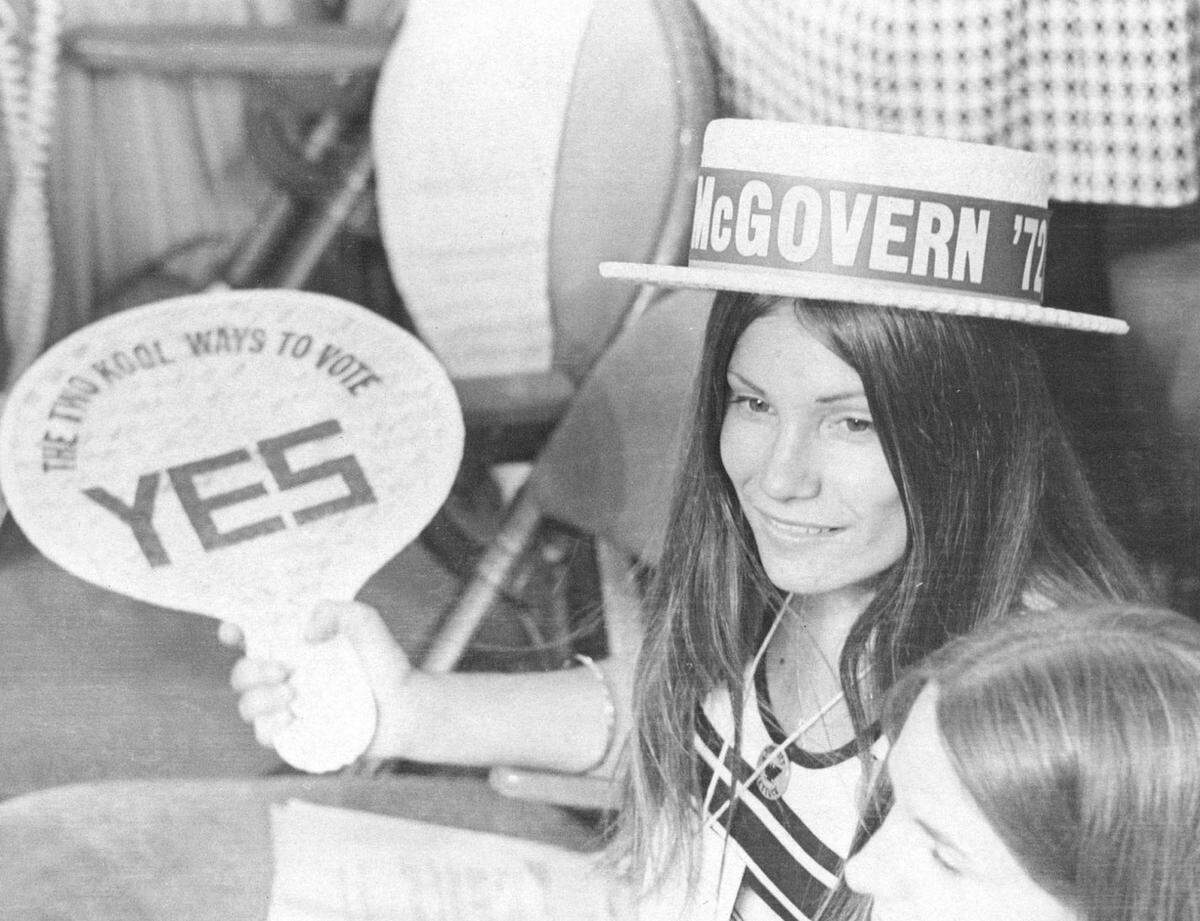
In the summer of 1972, Miami Beach hosted the Democratic and Republican national conventions, the last time one city hosted both conventions. For a few days, as the Democrats met in July and the Republicans in August, the Miami Beach Convention Center became the center of American politics. The national political scene was turbulent. The nation was torn by the war in Vietnam. The 1968 Democratic convention in Chicago had shocked the nation with its violence.
Four years later, Republican President Richard Nixon was running for reelection and Democratic opponent George McGovern was campaigning on a platform of withdrawal from the decades-long conflict in Vietnam. Wide-scale protests were predicted, hippies pitched tents in Flamingo Park and Miami Beach’s tiny police force, led by Chief Rocky Pomerance, was reinforced with Secret Service agents.
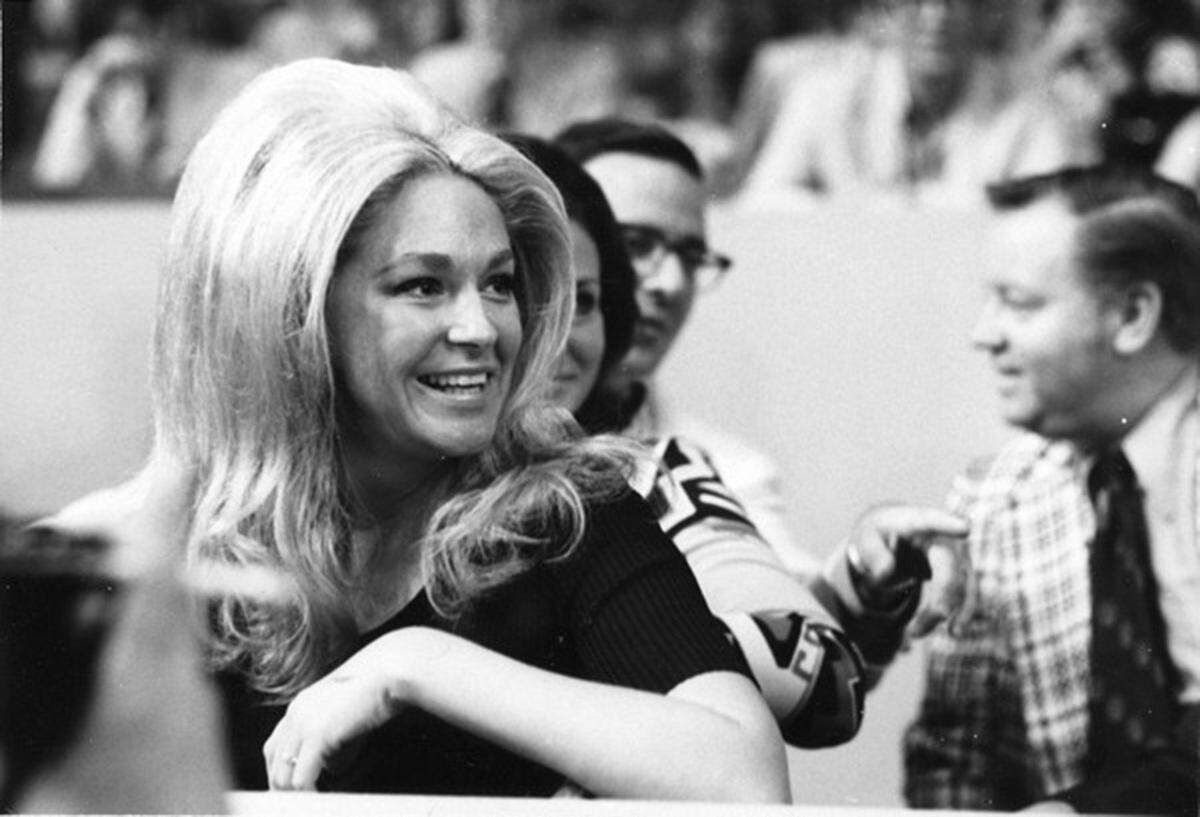
The Democrats brought a lot of celebrity firepower with them to Florida, with Gloria Steinem, Shirley MacLaine and Henry Fonda making appearances. Although the mood outside the convention center remained relatively peaceful, the party suffered from internal turmoil that led to McGovern’s acceptance speech being delayed until almost 3 a.m.
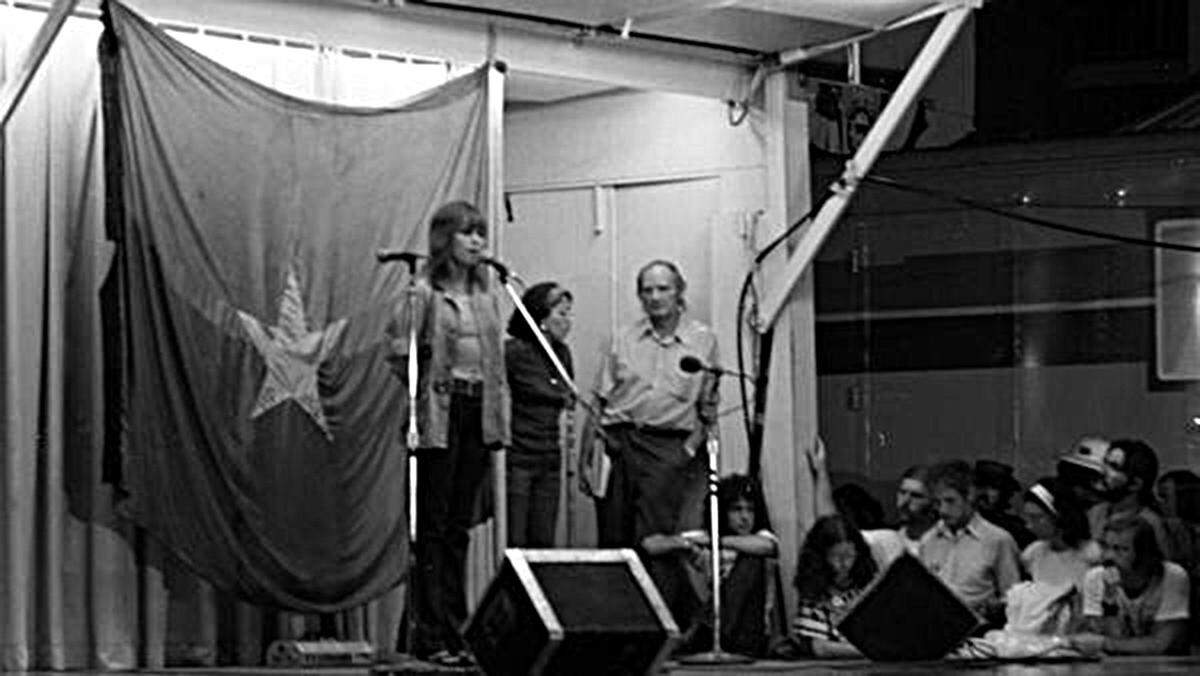
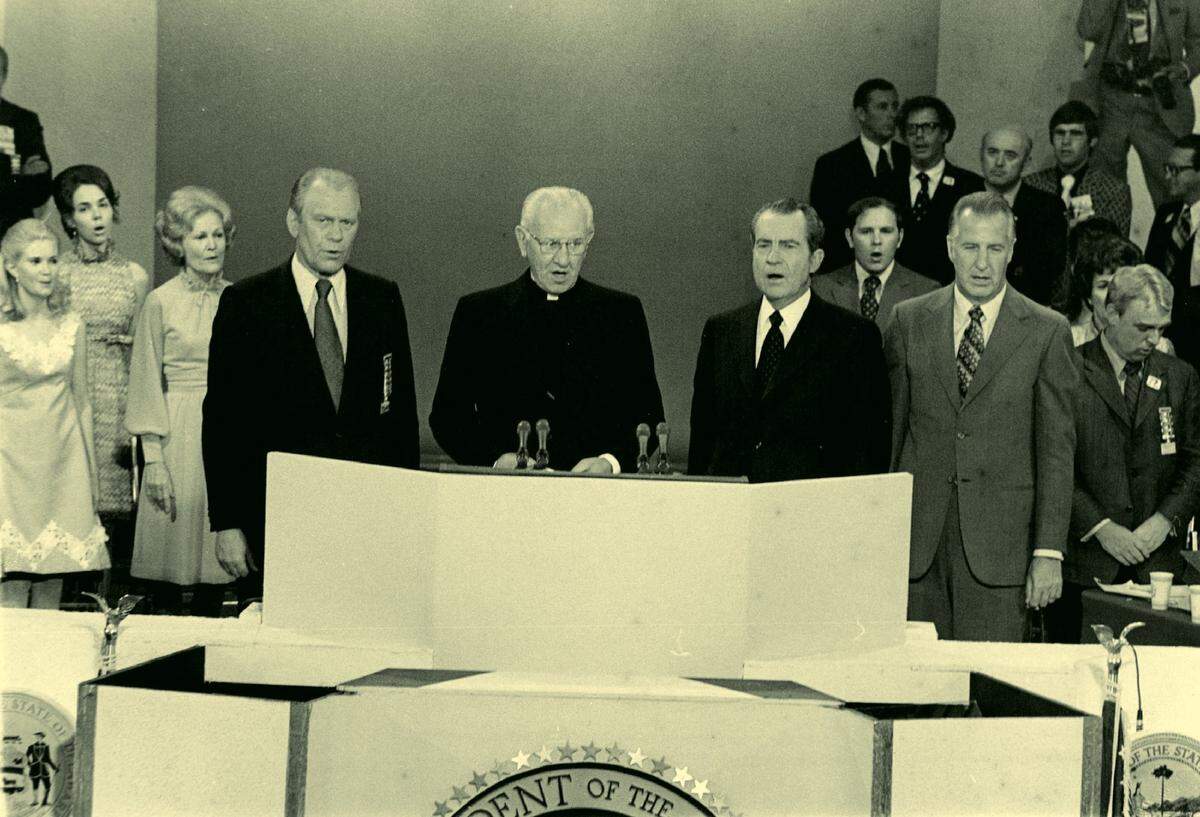
The Republican convention faced the opposite situation. Inside the convention center, the nominating process ran smoothly. Nixon was a slam-dunk as the nominee, with Spiro Agnew his new running mate. Other politicians on the rise, such as Ronald Reagan, played strong roles in the convention. But outside, in the steamy August heat, protestors erupted, shutting down traffic, tear gas was deployed and police began arresting people. Yippie party leader Abbie Hoffman roamed the streets of Miami Beach, Jane Fonda spoke against the war and protesters staged sit-ins.
PHOTOS: A look back at the 1972 conventions in Flashback Miami
Here is a look at the conventions from the archives of the Miami Herald.
.JPG "0207081662 (2).JPG")
Pomerance, pomp and the protests
Published July, 2002
Warren Beatty came to town. So did Julie Christie, Shirley MacLaine, Jerry Rubin, Abbie Hoffman, and the Democratic Party’s heaviest hitters: George Wallace, Edmund Muskie, Hubert Humphrey, Ted Kennedy and a South Dakota senator named George McGovern.
When it was the Republicans’ turn six weeks later, Jane Fonda arrived fresh from a two-week tour of North Vietnam - to help galvanize the anti-war protests. The other entertainers who showed up - Sammy Davis Jr., Frank Sinatra and Jimmy Stewart - came to support the president. That would be Richard Nixon. He was running for reelection, along with his vice president, Spiro Agnew.
Thirty years ago this week, first the Democrats, then the Republicans held their national convention in Miami Beach. With memories fresh of the riots at the 1968 Democratic Convention in Chicago, local police were given riot helmets, three-foot-long billy clubs, chest-high plastic shields and masks for tear gas.
But the riots materialized only briefly, in large part because of the tactics of Miami Beach’s gregarious police chief, Rocky Pomerance.
The 275-pound Pomerance was a former mailman whose face, according to a Herald profile written then, “still bears traces of the boxing ring.” He liked to quote Shakespeare and Tennyson, and he didn’t adhere to the typical police approach of the times to street disturbances: cracking the heads of everyone in sight, as Chicago police had done. Pomerance emphasized nonviolence, negotiation and turning a blind eye to minor infractions such as smoking marijuana in public.
With the nation’s eyes upon South Florida twice in one year - first in July for the Democratic gathering, then in August for the Republican event - Pomerance’s approach worked, except for the final night when the anger and the passions of the turbulent time couldn’t be stilled.
Miami is currently bidding to host both conventions again, in 2004. The Miami-Dade County Commission will vote Tuesday on whether to finance both events. Beginning on July 15, a Democratic site committee will tour Miami and the proposed convention site, the AmericanAirlines Arena. The Republicans will visit in August.
In 1972, both conventions were at the Miami Beach Convention Center. It was a different time, a different era.
The Vietnam War still raged, and so did protesters in the streets. They promised to come to Miami Beach in full force. Local authorities were on edge even before the Democrats were gaveled to order on July 10.
One rumor had anti-war protesters planning to cause havoc by dumping LSD into the local water supply. They were also said to be planning to scatter marijuana seeds from the air so pot plants would be plentiful.
Jerry Rubin and Abbie Hoffman, who led the Youth International Party - the Yippies - told Pomerance at a public meeting that they planned to lead 10,000 naked protesters down Collins Avenue.
“If you can get 10,000 people to walk naked down the asphalt on a hot July day, I’ll lead the parade,” Pomerance responded. “And wait until you see what I use for a baton.” Everyone laughed but Rubin and Hoffman.
Yippies, Zippies, Vietnam Veterans Against the War, the People’s Pot Party, the Young Socialist Alliance, Students for a Democratic Society - all came to Miami Beach to attract attention for their causes.
On Pomerance’s recommendation, Miami Beach City Commissioners made Flamingo Park available to what were called the “nondelegates.” Uniformed police would stay out.
Several thousand youths set up tents and lean-tos in the park five blocks south of the convention center. They were free to smoke marijuana, or do just about anything else that was peaceful.
Murray Dubbin, a dapper Democratic state representative, smoked a pipe as he walked in the park one day.
“Hey, man, what have you got in that pipe?” a protester called out. “I’m smoking the usual,” said Dubbin.
“Your usual or our usual?”
That kind of stuff appalled law-and-order types such as Harold Rosen, a World War II and Korean War veteran who was Miami Beach’s vice mayor. Just before the convention began, a Yippie tried to toss a 39-cent pumpkin pie into his face at a City Commission meeting. Rosen decked him with a right to the jaw.
“I didn’t want them sleeping in Flamingo Park,” Rosen said recently.
But Pomerance figured that he could control protesters more easily if they congregated in one place. He also made it a point to befriend Rubin, Hoffman and other leaders. He even provided them with bullhorns.
Pomerance understood that they wanted the attention of television cameras and newspaper reporters, not a nightstick to the head. So with the help of Seymour Gelber, who worked for the state attorney’s office, Pomerance negotiated the details of each day’s protests in advance.
But to acquire more information, he sent undercover cops to the park.
“We’d float into Flamingo Park and go from tent to tent,” said Richard Barreto, then a 23-year-old cop who later became Miami Beach’s police chief. He wore a tie-dyed shirt and bell-bottom jeans with flowers and peace signs sewn in them. He had a headband around his afro. Neighbors thought he was a drug dealer.
Flamingo Park “was a Woodstock-like atmosphere,” Barreto added. “They would organize with their bullhorns. We’d provide information to our superiors so they’d have a heads up.”
Later in the convention, when he wore a uniform, Barreto picked flowers on Lincoln Road and gave them to demonstrators. “It would take the wind out of their sails.”
During the four-day Democratic Convention, only two people were arrested and two others injured. Four years earlier in Chicago, 680 people were arrested and 1,381 were injured. “A Triumph of Maturity,” The New York Times headlined. Pomerance received kudos from Walter Cronkite on down.
The action inside the convention hall was peaceful, although unruly.
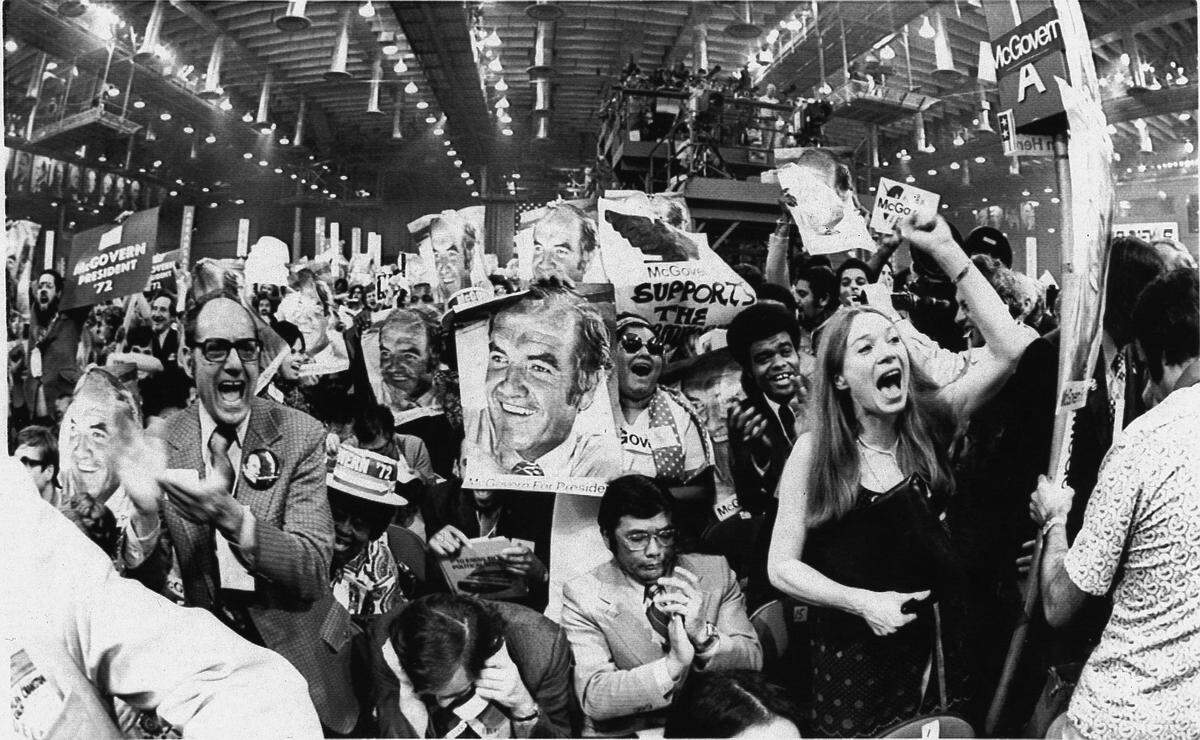
Senator McGovern, a preacher’s son who promised to end the war, arrived in Miami Beach just short of the delegate vote count needed to win the nomination. Sen. Humphrey, Gov. Wallace and Sen. Muskie each held out hope that he could deny McGovern a first-ballot victory and win the nomination himself. But with his 34-year-old campaign manager, Gary Hart, managing the action, McGovern won a floor fight the first day to claim the necessary delegates.
He picked a little-known senator from Missouri, Thomas Eagleton, as his running mate. But the schedule spun out of control on the final night of the convention, when McGovern was to accept the nomination before a nationwide television audience. Delegates insisted on voting for 80 people for vice president - sitcom character Archie Bunker among them - so McGovern spoke long after most Americans had gone to bed.
“It was the best 2 a.m. speech you never heard,” said Mike Abrams, then a young party activist and later a state representative.
In winning the nomination backed by peaceniks, women activists and black supporters - typically labeled “insurgents” by the press - McGovern smashed the aging coalition that had carried the Democratic Party since the New Deal. In the process, he alienated Big Labor’s boss, George Meany, and such big-city bosses as Chicago’s Richard Daley.
McGovern never had the chance to unify the party. Before the month was out, Eagleton had stepped aside following disclosures that he had undergone electric shock treatments in the 1960s. Sargent Shriver, a Kennedy-brother-in-law, replaced him.
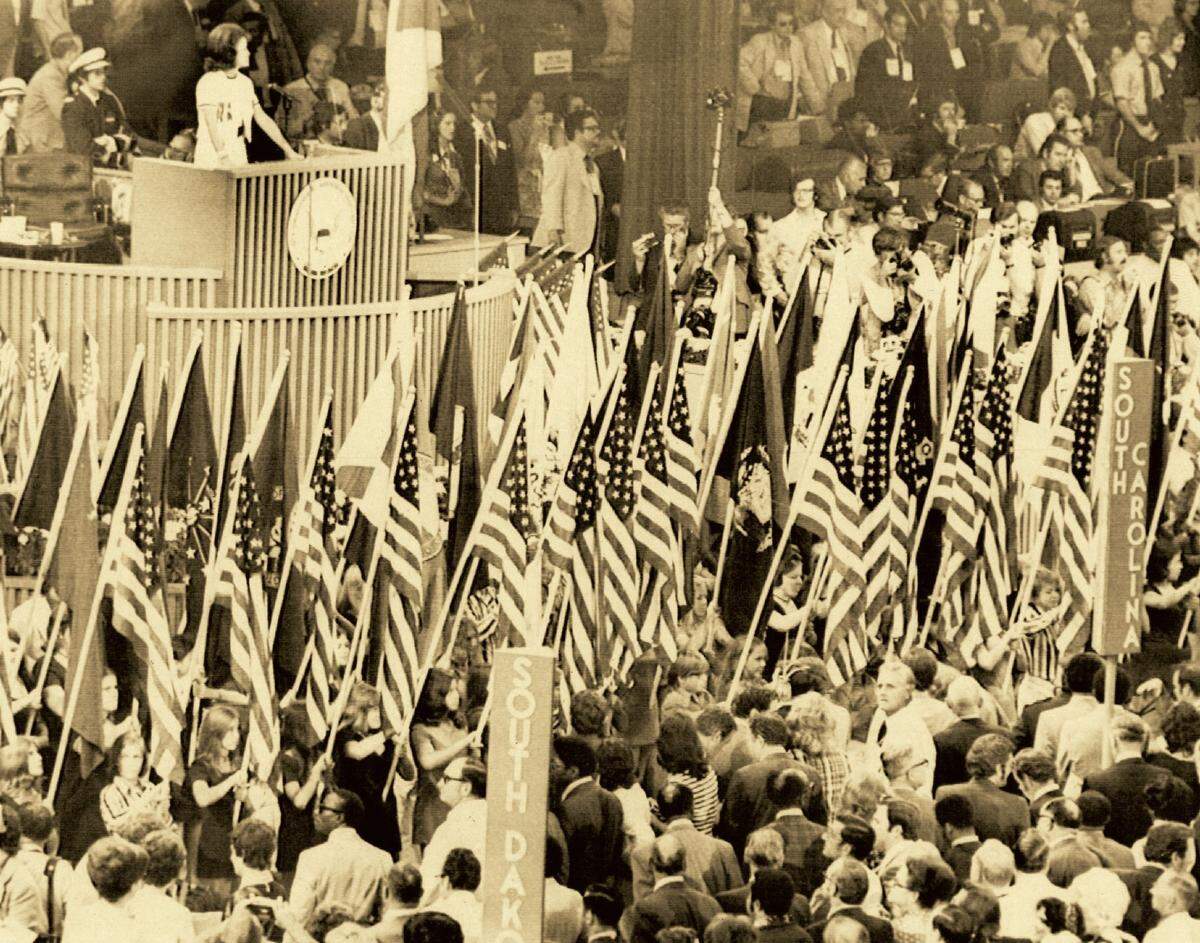
By the time the Republicans met in Miami Beach beginning on Aug. 21, Nixon held an insurmountable 26-point lead over McGovern. His aides carefully scripted the convention, minute-by-minute, even allowing time for “spontaneous” laughter.
Once again, Pomerance and city officials opened up Flamingo Park to demonstrators, “though protest groups figure to make more trouble this time,” Newsweek reported.
The protesters’ numbers had nearly doubled, and they were angrier, given that it was Nixon’s war.
On the night before the Republican Convention began, protesters surrounded Mike Thompson’s new Lincoln Continental as he drove five other orange-jacketed Florida delegates by the Fontainebleau Hotel. The demonstrators pounded on the car. “We were scared for our lives,” he recalled. He stepped on the accelerator. They fell by the wayside.
The following night, hundreds of Vietnam veterans marched on the convention center in the rain, chanting, “Bring our brothers home.”
A night later, when delegates formally nominated Nixon, the protesters turned the heat up a notch, shattering windows and denting cars outside the convention hall. For the first time, Pomerance ordered widespread arrests. In all, 212 men and women were detained.
Authorities learned that the antiwar demonstrators planned to disrupt the convention the following night, Aug. 23, when Nixon would end the gathering with a prime-time acceptance speech. The officials brought in 50 buses to seal off an area fronting Meridian Avenue where protesters planned a sit-in blockade. They also decided to bus in all delegates from their beach hotels.
That night, one group of protesters marched on the Fontainebleau, a prime locale for delegates. Another group headed to the convention center. Many of these protesters were looking for trouble.
They succeeded in forcing delegates off several buses. “Twenty hippie girls surrounded me,” one young female South Carolina delegate told The Herald. “They bounced me around like a ping-pong ball.”
The Republican delegates felt terrorized. But all of them made it into the hall, and the convention went off as planned. Police did arrest 934 people, but only 33 people were injured.
Chicago is remembered for its violence. Miami Beach is not.
“Afterward, we felt like we had done our job,” said Gelber. “They had been entitled to protest, and they had protested. There were no major injuries, and we got them out of Miami Beach safely.”
Pomerance - who died in 1994 - won such acclaim that he was hired to help plan future conventions, and his methods became standard operating procedure. “Rocky was a dominating figure,” Gelber said.
TWO CONVENTIONS, ONE CITY
Published Aug. 26, 2012
The last time Florida hosted a political convention, Richard Nixon was in the White House, Archie Bunker was in our living rooms and the nation was torn apart by Vietnam.
It was 1972, and Republicans and Democrats both held their conventions in Miami Beach, known as “the sun and fun capital of the world,” thanks to its biggest booster, Jackie Gleason (a Nixon supporter).
It was the last time both conventions were held in the same city.
San Diego was originally scheduled to host the Republicans, but the GOP abandoned California after the embarrassing revelation that technology company ITT would give $400,000 to the convention in return for favorable treatment in a pending antitrust investigation.
Instead, Miami Beach - a garish strip of oceanfront hotels seven miles long and a mile wide - was the center of the political universe that summer.
Hippies and yippies, neo-Nazis and “women’s libbers,” Jane Fonda and Jerry Rubin, Strom Thurmond and Dr. Spock, H.R. Haldeman and John Ehrlichman - they all descended on what was then retirement haven of 87,000.
Florida’s population in 1972 was 7.4 million, slightly more than a third of what it is now, and politically, the state was the opposite of what it has become: Republicans had virtually no power in state politics, like Democrats today.
“It was an entirely different atmosphere,” recalls Al Austin, the Tampa developer and chief architect of this year’s Tampa event. As chairman of Hillsborough County for Nixon, he attended his first convention in 1972 and remembers Tampa friends treating him like “a total whacko” for getting so active in Republican politics.
Then, as now, Florida was “in play.” It was a Democratic state that Nixon wanted to win as part of his “Southern strategy,” and Democrats saw George McGovern as too liberal. George Wallace had won the state’s presidential primary that March with 42 percent of the vote.
Democrats nominated McGovern in mid-July, and Republicans renominated Nixon (“Now More than Ever”) in late August at a Republican event that became a magnet for protesters, officially known as “nondelegates.”
They pitched tents at Flamingo Park, which, at 13th Street and Meridian Avenue, is about five blocks from Miami Beach Convention Hall, and some of them burned the American flag, smoked pot in public and skinny-dipped in a city pool.
“It was awful. They were a terrific nuisance,” Austin says.
Covering the convention for The Tampa Bay Times (then The St. Petersburg Times), Eugene Patterson described the contrast of “bra-less SDS girls in blue jeans denouncing capitalism and Nixonettes in trim blue and red uniforms.

A dominant figure at both conventions was Rocky Pomerance, the pipe-chewing, 275-pound Miami Beach police chief, who oversaw security and made small talk with everybody from Bobby Seale to Barbara Walters.
Mindful of the violence at the 1968 Democratic Convention in Chicago, Pomerance discouraged confrontation and accommodated protesters, even giving radicals free bullhorns.
“He really understood young people,” said Talbot (Sandy) D’Alemberte, the former Florida State University president who ran McGovern’s Florida campaign. “He didn’t believe in the ‘lock everybody up’ approach that was so popular around that time. Rocky was a great guy.”
Security in Miami Beach was decidedly low-tech. To keep protesters from disrupting the GOP Convention, the Army rounded up 35 derelict buses in West Palm Beach, towed them to Miami Beach and positioned them around the hall perimeter.
That detail and thousands more were recorded in a personal diary kept by Pomerance’s assistant, Seymour Gelber, a time capsule that runs for 285 pages. Gelber, a former Miami Beach mayor and circuit judge who is now 92, was a familiar presence in his dark suit and bow tie, quietly mingling among the protesters.
“They were just kids. They had a cause,” Gelber said. “They weren’t out to hurt anybody, and we treated them with respect.”
The Florida delegation to the Republican Convention stayed very close by. But delegates at the Barcelona Hotel, a fading Art Deco landmark, complained of balky air conditioning and cockroaches in their rooms.
“It was a crummy hotel. That I do remember,” Austin said.
.JPG "IMG_19_IMG_20160311_0011_3_1_KAE0AVHG_L400001356 (1).JPG")
The scene
Published April 22, 1984
Ah, what might have been. Ten thousand naked protesters led by a 250-pound police chief wearing nothing but size 12 flip- flops, marching down Collins Avenue on Miami Beach while the world, as they say, looked on.
Cruel words: what might have been. It would have been a memorable sight.
“I told war protest leader Jerry Rubin that if he could get 10,000 people to walk naked down Collins Avenue, I’d lead it,” said the redoubtable Rocky Pomerance, Miami Beach’s most famous police chief, smiling at the recollection and, perhaps, at its photogenic possibilities. “Everybody started laughing except Rubin and Abbie Hoffman. And I suddenly realized they were not the real leaders any more.”
The walk of the naked living didn’t take place during the political conventions of 1972. But just about everything else did.
.JPG "IMG_P11_REP_march_megaph_1_1_178ADTMJ_L227104410 (2).JPG")
It was the summer of our discontent. Vietnam churned the national soul. In its gory wake, respect for authority had sunk from sight. Four years before in Chicago, protesters, police and Mayor Richard Daley had turned the Democratic Convention to carnage.
And now the Jerry Rubins and Abbie Hoffmans of the world had proclaimed Miami Beach and its two summer political conventions the “beginning of the revolution.”
“Those were pretty heavy days,” says Richard Reeves, syndicated political columnist and author. “Rocky was the police after Richard Daley. To understand what he accomplished>, you’ve got to understand what that means.”
The Democrats still understand. Which is why the party has hired Pomerance and his consulting partner, Jim McDonnell, as security advisers for the San Francisco convention, which begins July 16. For Pomerance, this will be the seventh national political convention he’s worked.
The two have co-consulted for the Democrats and Republicans in 1976 and for the Democrats again in 1980.
Pomerance, who is on the board of a security alarm system company, will advise on outside security: marches, protests, police actions, strategy. McDonnell, president of a security guard company, will advise on inside security: internal flow of delegates and press, credentials, safety.
It’s a long way from Miami and the heat of 1968 and 1972. But the mission, Pomerance says, will be the same: make certain local residents’ rights are protected, make certain delegates can pursue their business safely and make sure the rights of legitimate dissent are protected.
“This effort they’re making in San Francisco to deal with the gay groups that want to protest at the convention> to avoid confrontation, Rocky was the first one to do that. It saved a lot of trouble. And a few heads,” Reeves said.
Praise of Rocky Pomerance is easy to come by.
“His advice, his knowledge, its depth and breadth have been invaluable to us,” says the man in charge of convention security, Kevin J. Mullen, San Francisco’s deputy chief of police for staff services. “He literally wrote the book on convention security. He’s a very special guy.”
“He’s shrewd. He has this wide peripheral vision. He could shift gears. And he would anticipate responses,” says Dade Circuit Judge Seymour Gelber, who in 1972 was the assistant state attorney attached to Pomerance’s office to help with convention details.
“We met with Jerry Rubin one day and Rubin was literally flustered. He thought he’d be dealing with this hard, tough cop, and Rocky started talking to him like a social worker trying to save the world. Rocky took the play away from him.”
In a time of “tremendous pressure,” Gelber says, Pomerance began to experiment. His theory: Communicate with protesters, police and the public. Make them understand the game rules. Tell them what would happen if the rules were broken. And do it in a way that convinces but doesn’t threaten.
“He started this whole process of educating police officers so they could react to Yippies without violence,” Gelber says. “And he met with the kids every day. He made them feel they were part of the system and constrained by it, rather than it being an excuse for them acting out.”
Pomerance received a great deal of publicity from his stint as convention commandant. It glowed.
Reeves called him “the thinking man’s cop.” He starred not only in the local media but in The New York Times, The Washington Post, national news magazines, radio, television and even the Doonesbury cartoon strip.
“He earned all of it, and probably more than he got,” Gelber says.
Pomerance’s wife, Hope, was impressed.
“That’s wonderful, El Jefe Chief,” Pomerance says Hope told him. “Now how about taking out the garbage.”
On one level, all the attention pleased the ebullient, gregarious Pomerance, who is, Hope says, “the best public relations man I ever met.”
On another level, however, he still is mildly embarrassed that he reaped the public attention for work done by scores of people during the conventions.
“I had enormous support during 1968 and 1972,” Pomerance says.”
Former Dade County Manager Ray Goode is a perfect example. He coordinated all the other parts of this. I wasn’t looking for more, I was looking for less. I didn’t want to be the boss over anything else. I just wanted the convention to work.”
To make it work, Pomerance’s skill as public relations man, diplomat and social psychologist became as important as his skill as policeman. The Democratic and Republican conventions of 1972 were a victory of style as much as substance, Reeves says.
“On the other hand, I think style is substance,” Reeves says. “And I believe public relations is about 80 percent of a policeman’s job.”
“Rocky tiptoed through all the problems, danced at all the weddings,” Gelber says. “And he did it with a diplomacy that would put Henry Kissinger to shame.”
Yet substance was there when he needed it.
“People forget that in 1968, the Chicago police made 350 arrests. In the 1972 Republican convention, we made 1,400 arrests,” Pomerance says. “Many had a commitment to be arrested. I decided I would honor that commitment. What I had to decide was what level of action would allow the demonstrators to save face, but still ensure that the next day the city would still be there.”
How he came by these diplomatic skills is as much a mystery to Pomerance as it is to those who know him. He was born poor and Jewish in the Bronx in 1927. His given name is Arnold, not Rocky, something he changed legally during a six-year sortie into Beach elective politics in the 1950s.
He fought on the street and boxed as an amateur during tours with the Merchant Marines and the Army. He began his public service career not as a cop, but as a postman on Miami Beach. He applied to the police force not through a passion to serve society, he says, but because it paid more.
He stayed a policeman for a reason that won’t show up on his resume. As a 17-year-old seaman, he took an unauthorized (albeit accidental, he contends) stay in Panama and learned Spanish from a uniquely patient daughter of delight.
In Miami Beach in the early 1950s, he was the only beat cop who could talk to the growing number of South American tourists. His chief hired him full time, he says.
“Whenever my kids he has three would get a little angry, I would tell them no matter what the adversity is, profit by an experience. If I hadn’t been with a Panamanian...er, lady, as a 17-year-old, I wouldn’t be the police chief today.”
Brilliance has played a smaller role in his career, Pomerance believes, than serendipity has.
He was appointed chief in 1963. In 1965, he arrested and charged his first boss, then-city manager O.M. Pushkin, in a drinking and driving scandal. Oddly, that incident imbued his career with a special quality.
“All the old timers in the city said, ‘Jesus, stay away from that guy Pomerance. He arrested his boss, he’d probably arrest his mother.’ Politicians obviously decided I was no one to, quote, deal with or confide in. I felt very badly for the city manager, but at the same time the incident set a tone for my career.”
That doesn’t mean his reign was without its problems. In the mid-’70s, Miami Beach policemen were accused of looting crime scenes. A major on Pomerance’s force refused to testify before the grand jury. Pomerance asked him to resign.
Today, Pomerance includes among his best friends Clifford Perlman, a wealthy attorney and former owner of Caesar’s World casino in Atlantic City, N.J., who lost his gambling license after the state of New Jersey accused him of having business dealings with former Miami attorney and restaurateur Alvin I. Malnik.
Malnik, the state contended, had “ties” with reputed mobsters Meyer Lansky and Samuel Cohen of Miami Beach.
With Perlman’s financial backing, Pomerance helped create a program for the rehabilitation of juvenile offenders after he retired from police work.
“He’s my friend,” he says of Perlman, “and I’ll tell anyone who wants to know.”
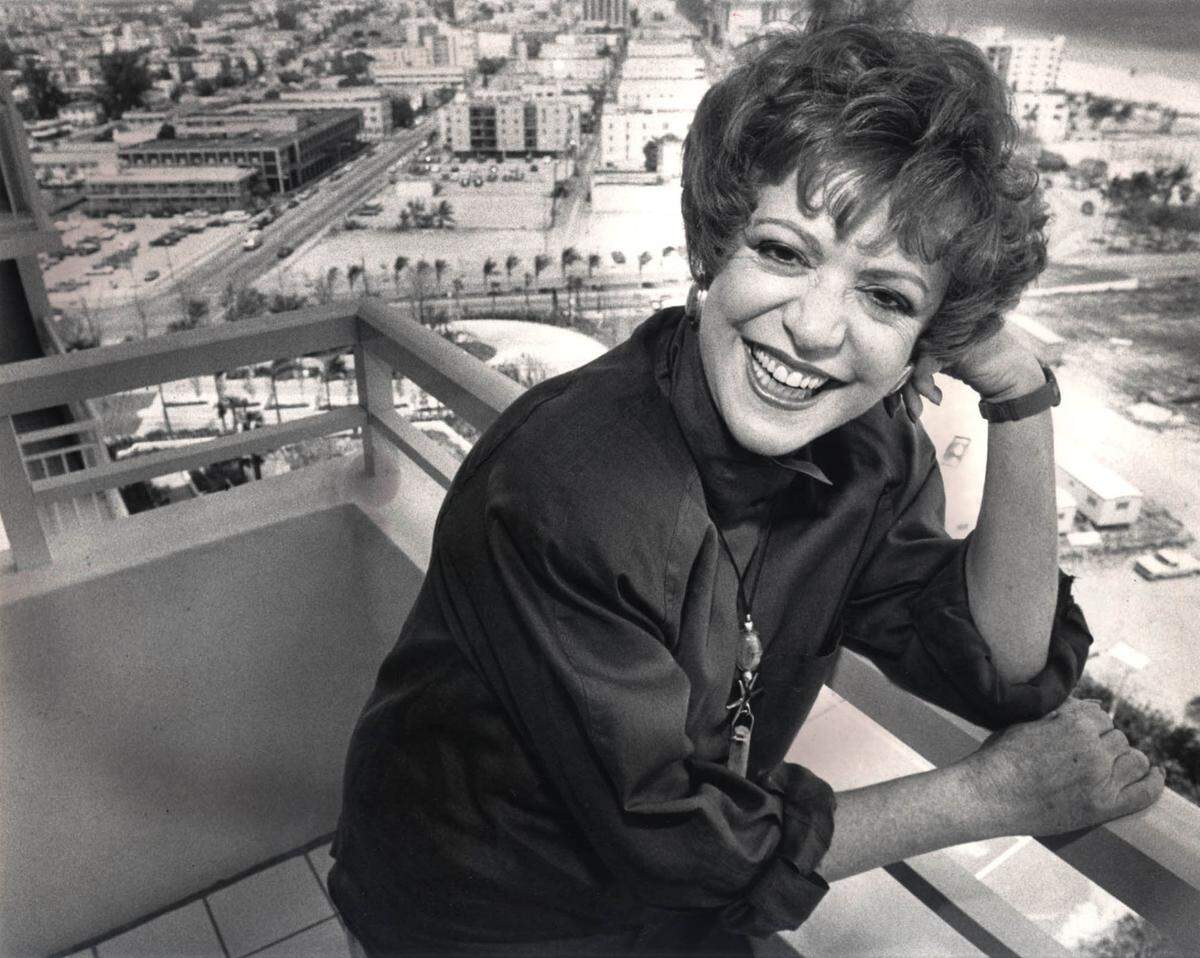
Today, Rocky and Hope live in the same nine-room, Spanish style two-story stucco home on Alton Road they have owned since 1957. “You say ‘condominium’ to Rocky and he starts to sweat and shake,” Hope says.
She is an actress, outgoing and, at times, intentionally outrageous. She calls herself his “commie, symp pinko.” She calls him her “fascist pig.” Actually, both are registered Democrats.
When he told her he wanted to retire in 1977, he recalls she asked him to promise just one thing.
“What’s that?” he asked, suddenly concerned.
“That you’ll leave the house every morning. I married you for better or worse. But not for lunch.”
Her only moments of real terror were not during the conventions of the ‘70s, but last year when Pomerance “came this close to actually running for mayor of Miami Beach,” she says, holding her index finger and thumb a millimeter apart.
For those who hold her husband in high esteem she has a story: “He bought me a large, clanging charm bracelet,” she recalls. “It was a lovely gift he had made, three little heads, two little boys and a little girl’s head representing their children>, and on the back he had their names and birthdates. He got them all wrong.”
Consulting and his journey into the business world have not been unkind to a man who, until he resigned as a policeman, says he lived from paycheck to paycheck. Now there is a Cadillac and Jaguar in the driveway beneath the neat yellow canopy on Alton Road.
Their home bulges with antique books, newspapers and magazines. They collect 18th and 19th Century ivory miniature portraits. Early American art hangs from the living room walls. A brass shoeshine kit sits on the carpet before the couch. A huge Franklin Globe is in the corner, Pomerance’s favorite piece.
Hope acts whenever she can get work. And she performs even when she’s not working.
“I just did a commercial for British television,” she says, and begins to sing, “Veddy, veddy tasty, Veddy, veddy tasty...”
Hope makes her husband giggle, then chortle, then laugh in loud bursts. They have been married 33 years.
And even after all those years, the praise keeps rolling on.
“He has a policeman’s gift and flair for giving something to everyone. Nothing is too much for Rocky Pomerance,” Reeves says. “You ask him where a good place to eat is in Miami, and you’ll get a 20-minute Michelin Guide to dining in Miami. Rocky is a helluva nice guy.”
“What you see,” Hope says, waving one of her perfectly manicured hands toward Pomerance’s corpulent form on his living room couch, “is what you get.”
This story was originally published June 28, 2020 at 8:00 AM.