
‘Spring break is over’: Miami Beach declares state of emergency due to coronavirus
After saying Miami Beach would remain open for business despite coronavirus fears, the city administration declared a state of emergency Thursday and publicly called off spring break.
In a press conference outside City Hall, Miami Beach Mayor Gelber said City Manager Jimmy Morales had declared a state of emergency in the city, giving him the special powers to close private clubs, limit beach access and institute curfews for the next 72 hours. The City Commission can extend the emergency powers in regular or special session.
Gelber said the city will suspend or refuse to pull special-event permits for large gatherings of more than 250 people for the next 30 days. That includes the city-sponsored spring break concerts in South Beach and the LGBTQ festival Miami Beach Pride.
“To the extent that anybody can declare spring break is over, it is over this year,” Gelber said. “We are the point of an economic engine, and it’s incumbent on us to make sure that we lead the way in this effort.”
Public beaches will remain open for now, but as the virus spreads, the city will consider tougher restrictions on public gatherings, Morales said.
“Obviously there is concern [because] large groups go out there,” Morales said at the press conference. “As the mayor said, the spring breakers are here. We’re not yet at that point, but certainly it’s something we think about as we move forward.”
In the case of an apparent public emergency, the administration has the power to purchase up to $100,000 in emergency supplies outside formal bid procedures, according to city code.
To soften the “significant” blow coronavirus is expected to have on the city’s budget, Morales ordered a budget freeze for “non-essential” expenditures and a suspension of hiring.
All expenditure requests over $5,000 will now require approval of an oversight committee, he wrote in an email to city staff first reported by Susan Askew of RE: Miami Beach.
Coronavirus purchases, along with grants and capital projects, are not affected by the budget freeze, Morales said.
His directive to freeze hiring means that the city will be without a director of tourism and economic development following a pair of resignations in February.
Beginning Friday, the Fillmore Miami Beach at Jackie Gleason, Colony Theatre, the North Beach Bandshell and the Jewish Museum of Florida-FIU will be closed indefinitely. The Bass museum, Wolfsonian-FIU and the Miami Beach Botanical Gardens will remain open, but all of their events are canceled.
Gelber and city commissioners have discussed possible cancellations all week. But Miami-Dade County Mayor Carlos Gimenez’s decision Thursday to shut down the most popular events to be held in March, including the Miami Open and the Youth Fair, informed the city’s decision, Gelber said.
“We’re not approving special event permits and we’re talking with the hospitality industry about curtailing events that are large gatherings,” Gelber told the Miami Herald. “We are trying to really limit the activity that is happening.”
The city-sponsored spring break events, dubbed Myami Beach, were scheduled to resume after a short hiatus on Thursday, but Gelber said the fenced-off program area on the beach between Seventh and 10th streets on Ocean Drive would be dismantled.
“We are confident that changing our actions for a short period of time will help reduce long-term impact,” Morales said in a statement. “We fully understand the extraordinary economic implications that these measures will have throughout our community, but feel it necessary to take these actions now so that we can bounce back as quickly as possible.
Miami Beach Pride canceled
Miami Beach Pride, a revered festival and parade that has brought hundreds of thousands of visitors to South Beach since 2009, said in a statement that organizers would reschedule much of the 2020 event, with the exception of smaller, outdoor activities scheduled for March 30. About 145,000 people attended the festival in 2018.
The festival had been scheduled to run from March 28 to April 5. The parade, which last year featured 35 floats and 4,000 participants, was supposed to take place on the last day of the festival.
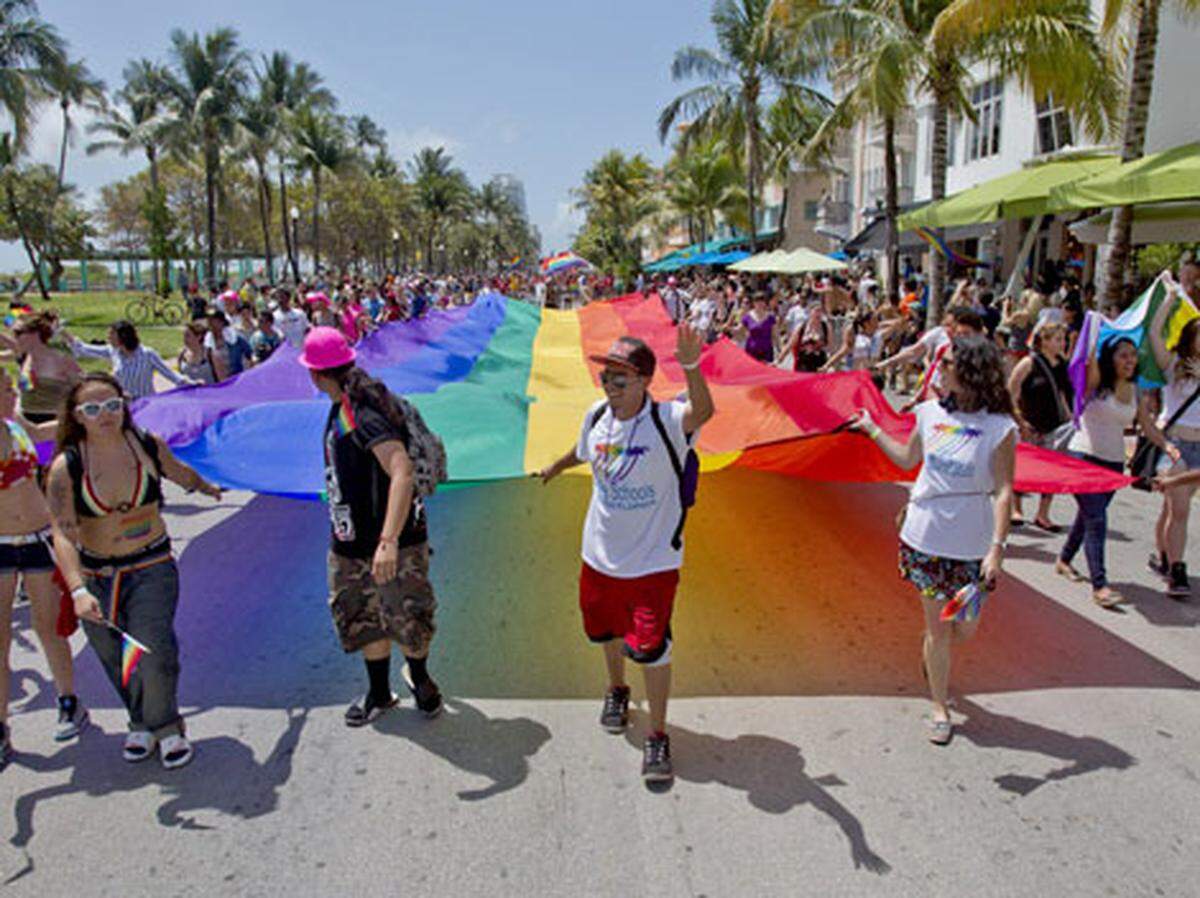
“Upon further collaboration today with the mayor of Miami Beach and our health-related partners, the Board of Directors of Miami Beach Pride has announced the rescheduling of the 2020 Pride event, with the exception of the smaller, outdoor events scheduled for Monday, March 30,” a statement from organizers says. “The decision was based on safeguarding the health of the event’s guests, sponsors, volunteers, staff and community-at-large.”
“Monday night’s events will go on as scheduled as a symbol of solidarity with the LGBTQ+ community. Those events include the rainbow flag raising ceremony at Miami Beach City Hall, the Pulse Nightclub remembrance ceremony at 1111 Lincoln Road and the pop-up art gallery exhibition at the rooftop of 817 N. Lincoln Lane.”
State health officials on Wednesday announced the first case of COVID-19 in Miami-Dade County, bringing the total number of known Florida cases to 26. There are six known cases in Broward County.
Gelber said the city is treating the coronavirus like an impending natural disaster.
“We’ve treated this no differently than an approaching hurricane, so we’re trying to moderate our response so that it’s consistent with the risk as it’s been explained to us,” he said. “We have to take decisive action pretty quickly.”
Coronavirus and the tourism economy
Commissioner Ricky Arriola said the county’s declaration of emergency Wednesday was a “catalyst” pushing the city to take more precautions.
“News and events are happening so rapidly that we need to be able to adjust just as quickly as we are able to get information,” he said. “It looks like for the next month or two this is going to be the new normal.”
Arriola said the spread of COVID-19, the disease caused by the new coronavirus, has already seriously impacted the tourism industry that so consistently sustains the economy of Miami Beach and of South Florida.
“Our hotels are reeling and all our businesses are reeling,” he said. “The more deep-pocketed ones can weather the storm, but businesses that really are thinly capitaled and struggle to pay bills, they are going to have tough choices to make with payroll and rent and bills.”
Ceci Velasco, the director of the Ocean Drive Association, said some hotels her business association represents have already laid off staff.
“It is going to have a long-term economic effect on not only us but all the international tourist destinations,” she said.
If visitors cancel trips and stop spending money at restaurants and hotels, the city will lose valuable resort tax money it needs to fuel capital projects and city services.
“It’s gonna hit really hard, but we’ll get through it,” said Commissioner David Richardson. “It’s going to be a devastating year.”
Arriola said city leaders have discussed the possibility of financially supporting hotels and restaurants struggling through the coronavirus outbreak, through tax breaks or waived fees.
“The economic effect of this may be far more harmful to our society than catching the virus,” he said. “That’s what I’m really struggling with at this point.”
This story was originally published March 12, 2020 at 2:09 PM.
.JPG)