
What did Lincoln Road look like before cafes and chains? Let’s enter the time capsule
Lincoln Road has reinvented itself through the years.
High-end shopping street. Pedestrian mall. Movie capital. Discount corridor. Artist colony. Cafe society. Culture stop. Chain-store central.
FLASHBACK MIAMI: See more photos
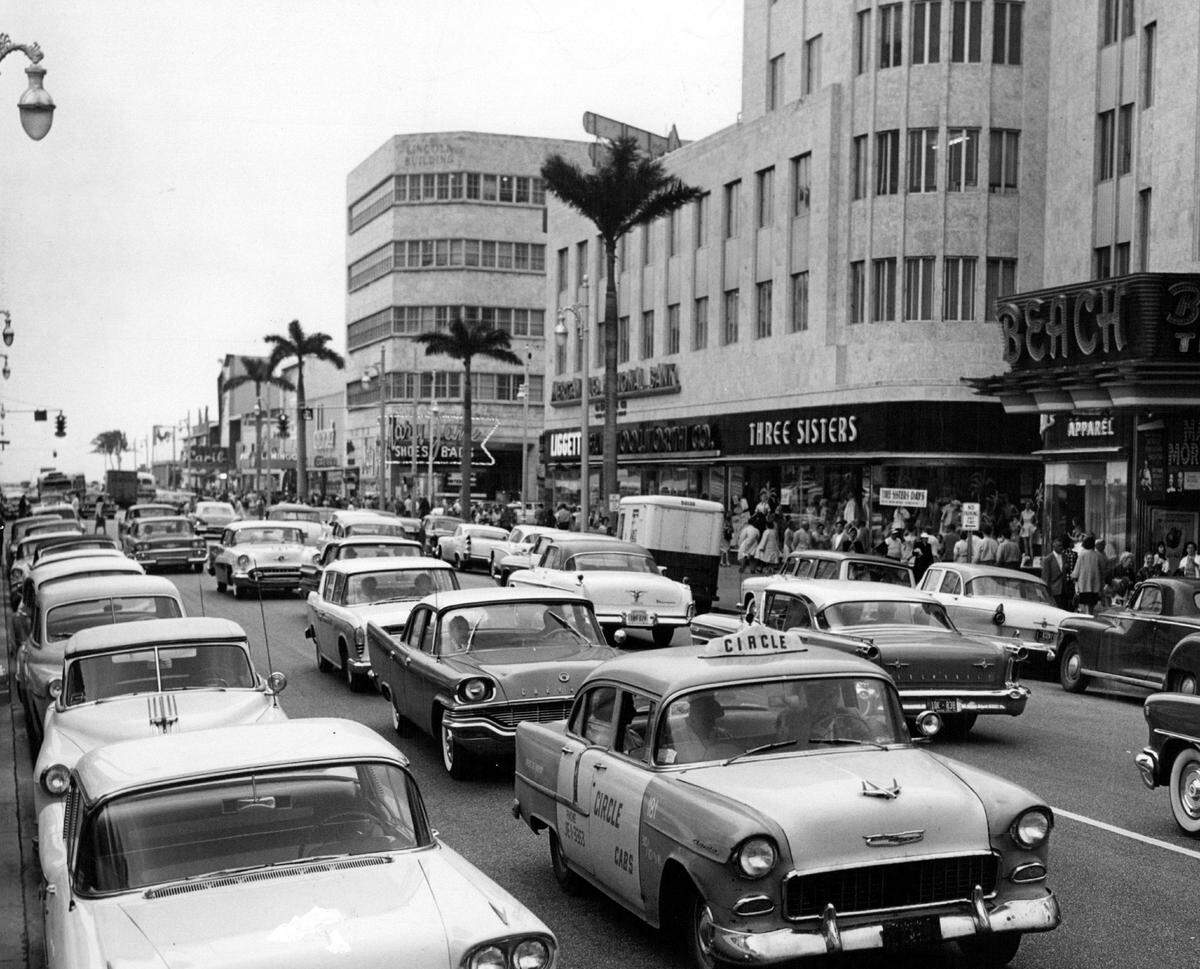
Lincoln Road, stretching from Collins Avenue to Bay Road, was paved during the 1920s and within a decade the shopping district became known as the Fifth Avenue of the South. During its heyday, such exclusive stores as Saks Fifth Avenue, Bonwit Teller, the Cadillac Salon and Elizabeth Arden all prospered on Lincoln Road between Washington Avenue and Alton Road.
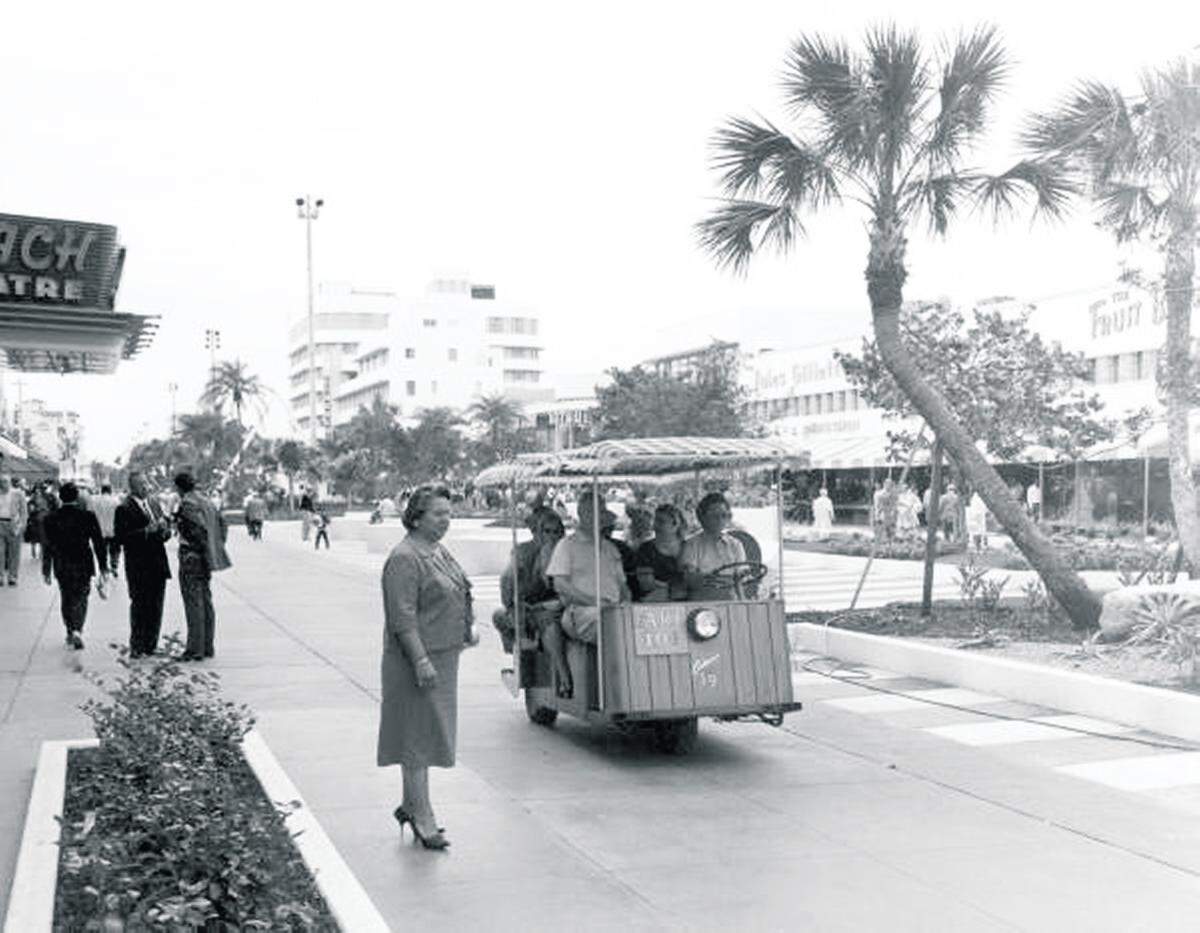
In 1962, following a national trend, eight blocks of Lincoln Road — from Washington Avenue to Alton Road — were repaved and revamped as a pedestrian mall, no cars allowed.
By the late ’70s, the mall, like much of South Beach, hit hard times with the deterioration of housing and the decline of affluent shoppers.
New life began to stir in the mid-’80s, when artists moved in.
By the early 1990s, Lincoln Road had become Miami Beach’s living room, a locals’ hangout where artists milled about, models walked their dogs after returning from shoots and in-line skaters paused at outdoor cafes for bottled water.
In recent years Lincoln Road has once again reached critical mass, gaining recognition from retailers and investors as one of the great shopping streets in America.
Here is a look at Lincoln Road through the years as we open the Miami Herald archive vault.
THE ROAD TO VACANCY
Published Dec. 22, 1983
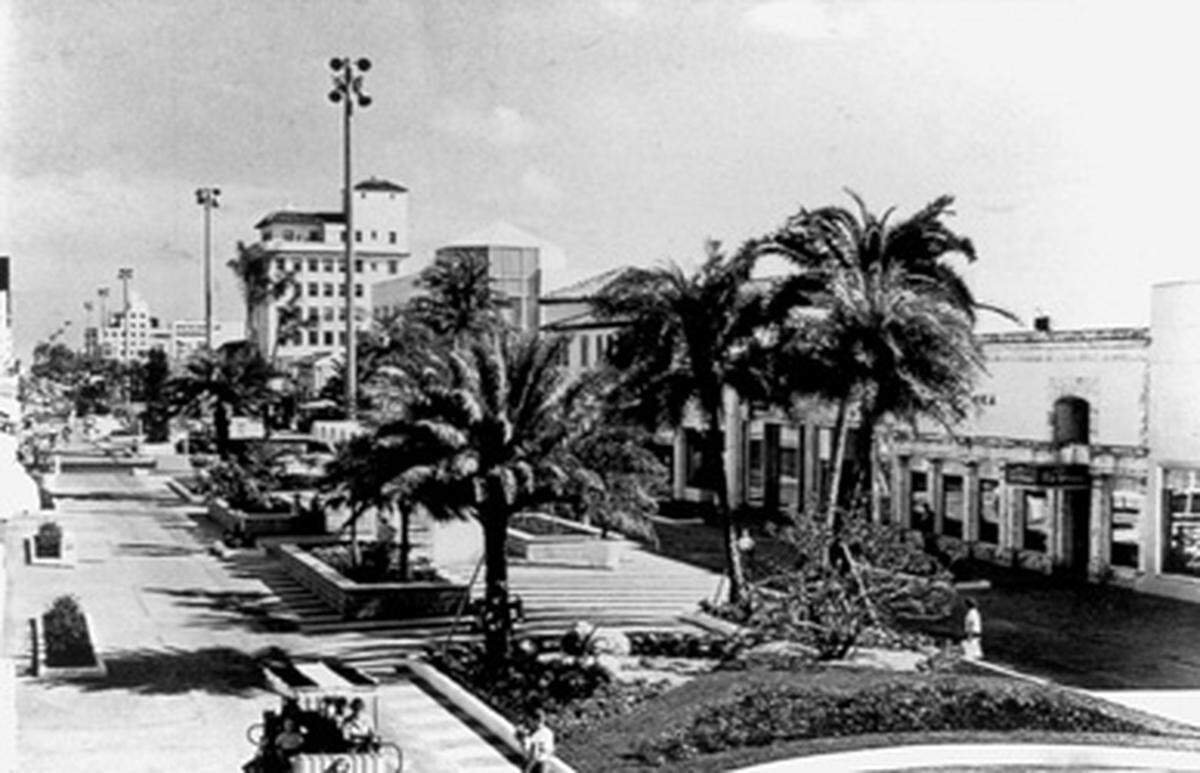
Sixty-three years ago, Lincoln Road was a swath of pines, palmettos and mangrove swamps. It was a jungle, plagued by mosquitos and uninhabited by man.
Carl Fisher, who made a fortune in the auto business and built Miami Beach, wanted to create a Fifth Avenue for his vacationland.
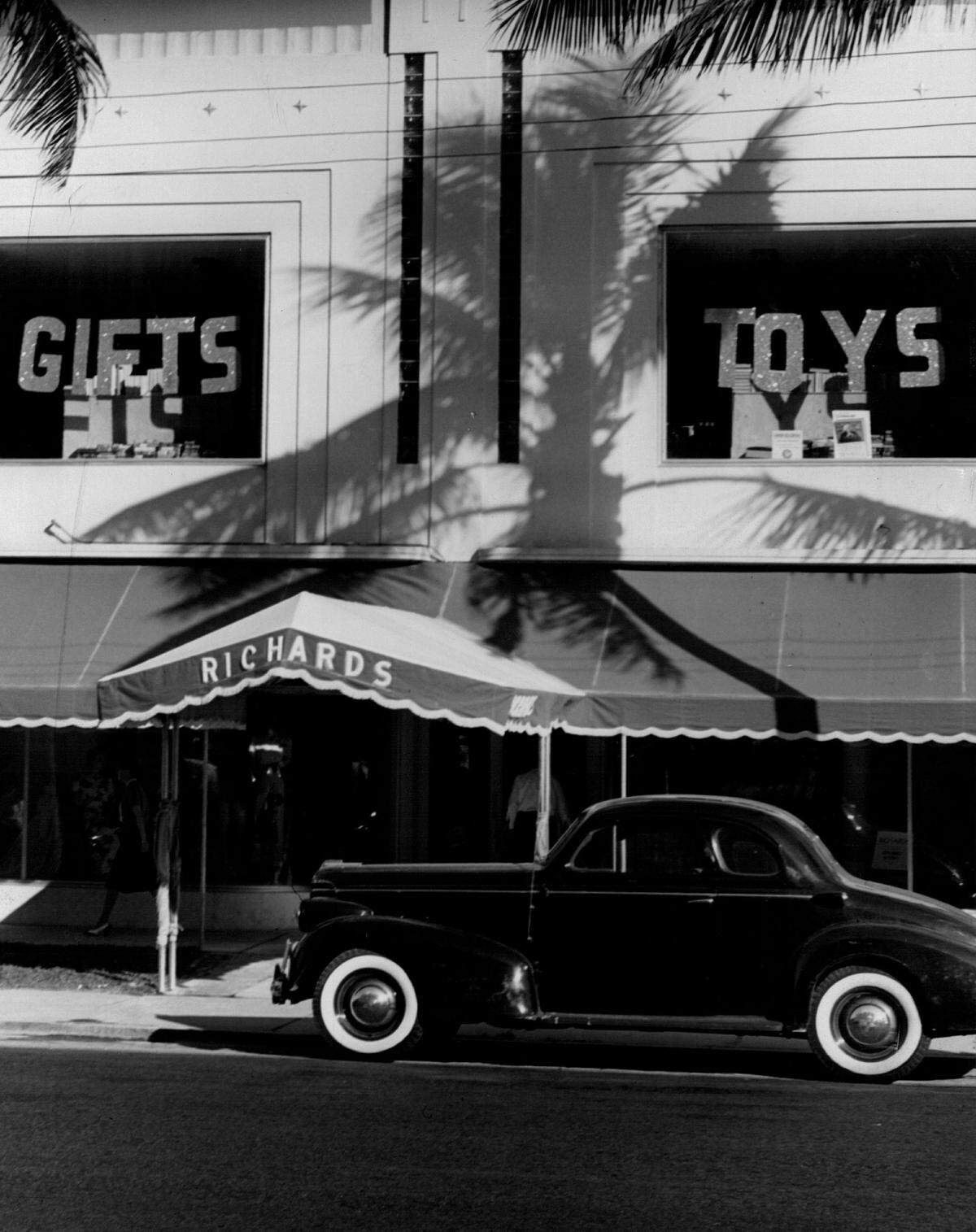
By 1928, Lincoln Road fulfilled the dream: Saks Fifth Avenue built a three-story shop and held huge fashion shows. Dozens of smaller but no-less-elegant shops catered to an elite winter crowd.
One travel writer called it “the most fabulous shopping center south of Fifth Avenue.”
The stores’ marble and stucco facades were elegantly designed in Spanish or Art Deco styles. Coconut palms lined the sidewalks, Cadillacs parked at the curb. Customers were greeted by doormen who ushered them into shops to view Parisien fashions.
“It was the most wonderful place to be,” Zelma Butler the dressmaker recalled. “The woman in their finest gowns; the men in their evening best. Oh, it was so lovely.”
The first signal of decline came in 1947, when Bonwit Teller left. In 1950, Stanley Whitman sold his property. He saw the wealthy moving north; 15 years later, he developed the Bal Harbour Shops.
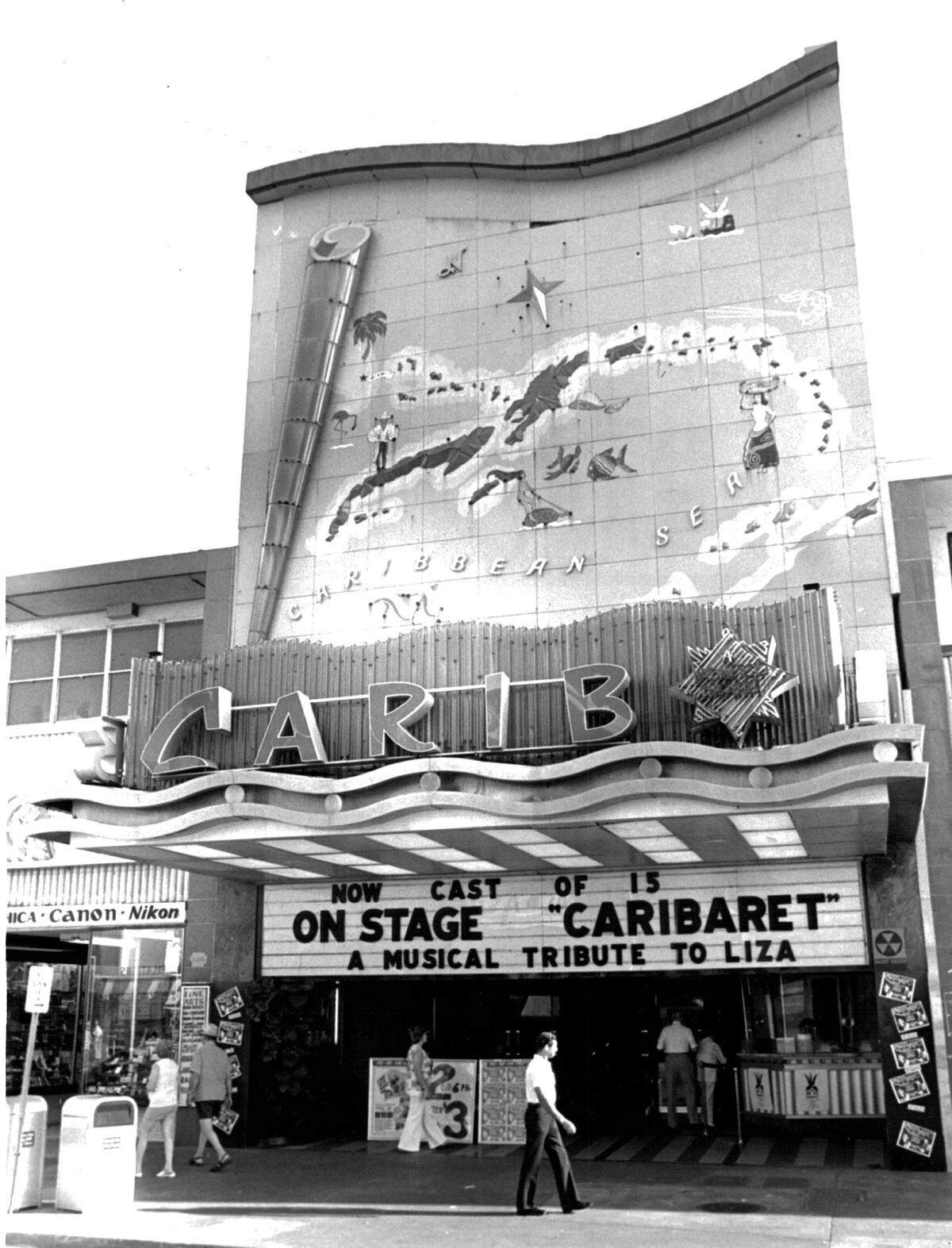
But in the early 1950s a comeback seemed imminent as Miami Beach blossomed with high-rise hotels. Cars and taxis jammed Lincoln Road. Wometco, seizing a share of the growth, built a 2,250-seat cinema and billed it as “the world’s greatest theater.”
By 1959, as the nation’s downtowns emptied and stores moved to suburban shopping centers, Lincoln Road merchants decided to act. Led by civic activist Hal Hertz, they closed the mall for eight blocks.
Only one other city had tried it. Soon, 200 cities followed Miami Beach’s lead.
The renamed Lincoln Road Mall would entice shoppers to stroll the mall in a “World’s Fair” type atmosphere of exhibits and constant attractions, architect Morris Lapidus proposed. For several years, it worked.
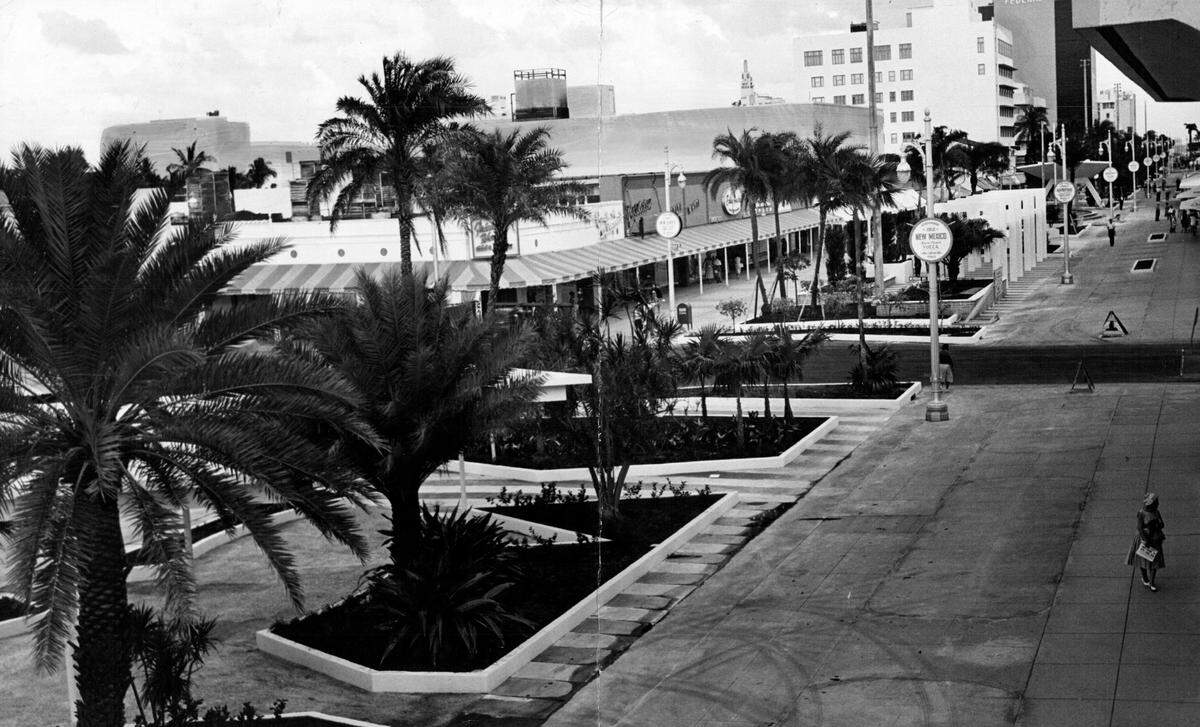
By 1968, however, merchants worried aloud that their high- class customers were moving away. One by one, shop owners left for modern shopping centers -- just as civic leaders had feared a decade earlier.
In 1979, after 51 years in the same location, Saks decided it could no longer survive on Lincoln Road Mall. After eight years of trying to cater to bargain-seekers, the manager said: “Saks can’t exist on that kind of business.”
There were plenty of recovery plans. Some merchants, saying the mall kept away customers, called for reopening the road to traffic. Others said the mall should be upgraded.
Nothing was done.
But that same year, Latin American tourists arrived seeking bargains. Mayor Lenoard Haber and some partners, seeing the trend, bought the Wometco theater. They would turn it into a shopping center. Haber said his mall would become a crossroads of the Caribbean.
Soon, few shops catered to the locals. Almost overnight, the road was filled with electronics outlets and jewelery stores.
By 1982, the Latin American tourist trade dropped in half.
Lincoln Road now exists in a city with a dwindling tourist trade and a permanent population that is the nation’s oldest and second-poorest.
Even the Carib Mall, Haber’s celebrated enclosed-mall- within-a-mall, was half empty.
“It’s the economy,” Haber explained.
Jules Marcus Shoes, a 13-year standby, left two months ago for a strip shopping center in Plantation in Broward County. “Our customers had moved away and we followed them,” Marcus said.
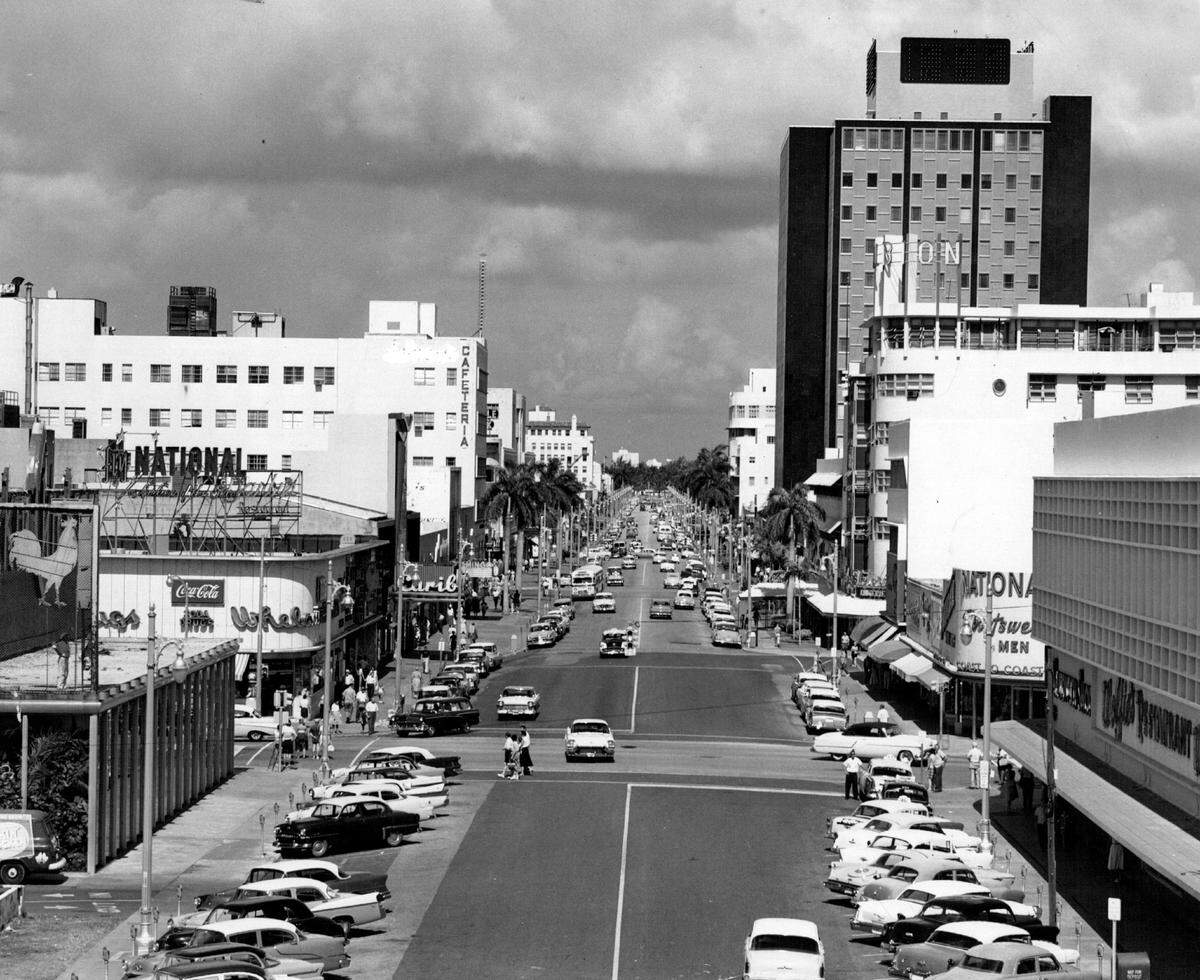
In September 1983, the 195-shop Lincoln Road had 22 vacancies.
In November, there were 44 vacant storefronts.
After Christmas, more are expected.
MISSING THE SHOPPERS
Published Aug. 7, 1983
A group that wants to revive Lincoln Road Mall is promising clowns, free parking and ice cream vendors, but shop owners say only a massive infusion of Latin American tourists will beat the business slump.
“Clowns will only bring clowns,” said Albo Tache, manager of Karol’s Cameras and Electronics on the mall. Without Latin tourism, Karol’s business has ground to a halt. Next week the store is going out of business -- becoming one of about 20 empty stores on the mall.
“They could bring Lady Godiva naked and it still wouldn’t do anything,” said Margaret Mayo, who was helping Tache stuff radios into packing boxes.
Undaunted, the Lincoln Road Management and Development Advisory Board has raised about $3,000 from merchants to promote the mall. More than 100 10-second ads will run on all the major television stations starting next week.
“We are on our way up,” said Robert Quittner, chairman of the advisory board. He talked of holding dance-a-thons and egg- drop contests at the mall. “I’ve heard these have been very successful,” he said.
Some shop owners are skeptical. “It might give amusement, but we need real things,” said Alberto Malkani, assistant manager of Casa De Oro Jewelers on the mall.
“We need protection for the people,” Malkani said. “We need someone to take care of the mall. I’ve been here seven years and when I look at the sales figures, I get depressed. They have to do something major or otherwise we will go down the drain.”
The board has other schemes. Robert Rich, a board member, wants to bring musical entertainment to the mall. He said the board is talking with a few local groups, but he wouldn’t reveal any names.
The board is also negotiating with Daniel Patrick Gannon, a lone street musician who plays his violin for spare change each evening at the mall. “He’s very good,” Rich said. “It’s funny how much talent we have right here.”
Gannon said he would play for them.”What’s good for the merchants is good for me,” said Gannon, packing his cigaret box back into his cowboy boots.
Also up for recruitment is a guy who plays the bongo drums and a homeless woman who lugs her guitar to the mall each evening.
Claudia Iacona, whose guitar case was looking pretty empty Thursday evening, said musicians could save the mall. “If they see musicians, the old people wouldn’t be scared to come here at night,” she said.
To encourage night shopping, the city has agreed to offer free parking and free tram rides from 3 p.m. to midnight through Sept. 5. The board is also asking merchants to stay open until 10 p.m.
In the second week of the five-week long promotion, most stores were not bothering to stay open that late. As early as 7:30 p.m., 73 of the 147 stores had closed. By 10 p.m., “it is like ghost city,” Rich said.
A makeshift sign to announce free parking in the municipal lots got ripped down by vandals, Rich said. “We had it wired up again. But then it rained and the styrofoam got warped.” Thursday evening, most of the used spaces had money in the meters.
Joe Heres, vice president of the Lincoln Road Merchants Association, said the survival of the mall depended on local customers now that the Latin trade had fallen off. “If we had our share of local people, we would be doing OK.”
But many local people complain that the prices are too high and the mall is too dangerous for them to shop at night.
Beach resident Herman Bliss hopped off the tram Friday afternoon, cigar in one hand and tote bag in the other. But he wasn’t shopping.
“I just use the tram to ride from Alton Road to Washington
Avenue>,” Bliss explained. “I never go shopping here. I can go to Miami and get the same stuff for half the price. I wouldn’t come here at night and neither would my neighbors. The first thing we think is, ‘I’ll get mugged.’ “
A TASTE OF EUROPE
Published Sept. 27, 1992
Amid the galleries, boutiques and cafes on Lincoln Road Mall is a new store that offers customers a slice of Europe.
Lyon Freres Et Companie at 600 Lincoln Rd. is a French market where patrons can purchase gift baskets, kitchen utensils and other items.
But the heart of the store, which opened Friday, is the food: pastries for breakfast, finger sandwiches for lunch and precooked meals for dinner.
“This is quick. This is fast, for people on half-hour lunch breaks,” said co-owner Jeffrey Lyon.
At the entrance of the store is a capuccino bar that offers at least six flavors of coffee as well as 30 types of natural juices, tea and other drinks. About 10 types of bread including baguette, ficelle and boule also are on sale for 90 cents to $4.50. Customers can choose from about 20 brands of bottled water to wash it down with.
Everything is prepared to go. No special orders.
“This is not a deli,” Jeffrey Lyon said. “You can’t come in here and get a roast beef sandwich on rye. But you can get a pint of homemade tomato sauce or a precooked chicken or lasagna.”
The store’s name in English, Lyon Brothers and Company, explains its inception.
Jeffrey, 40, and Kenneth Lyon, 35, are brothers and they own the store with Robert Michel Alminana, 36, a native of Lyon, France.
The three got together when Kenneth Lyon, a chef for 15 years, came to Miami Beach a year ago to visit his brother Jeffrey, who was working in Miami Beach organizing group trips around the world.
In February, the two came up with the concept to sell precooked gourmet food in a market. Alminana joined them after hearing about the idea from mutual friends.
The three decided to specialize in French food because, “When you think of good, good, good food, it’s usually from France,” Alminana said. “The best chefs in the world are from France.”
But the store is not exclusively French. It also sells Italian, Tex-Mex and American food, for example.
Their target market: “From the Rollerblade, Spandex crowd who want prepared food because they don’t cook, to the north of 41st street patrons who want to have a dinner party.”
Prepared meals sell by the pound or in portions, depending on the food. Also available to go are 30 types of teas, 14 flavors of coffee beans, fresh fruits and vegetables, Italian and French cheeses, cured meats and pate.
And a slew of spices and herbs.
“This is a cook’s shop,” said Kenneth Lyon. “Yes, you can buy precooked food . . . but if you’re into cooking, you’ll find the things in here that you’ve dreamed of.”.
BRIMMING WITH NEW BUSINESSES
Published Oct. 2, 1994
A year ago, Leonardo Marchini came to Miami Beach and knew Lincoln Road was the place to reopen his family’s trattoria.
With longtime friend Axi Abramovita and fellow Italian Mario Patroni, Marchini opened Da Leo Trattoria Toscana at 819 Lincoln Rd. in July.
“We thought Lincoln Road was the ideal place to open a restaurant,” Marchini said. “Usually good culture goes together with good food and we have very good cultural events.”
Marchini, like the other nine new merchants on Lincoln Road, are opening just as the Miami Beach cultural and tourist season kicks off.
Popular cultural fixtures on Lincoln Road, like the Miami City Ballet, New World Symphony and the South Florida Art Center, attract both Dade and Broward audiences. The road’s European-style sidewalk cafes, galleries and shops also draw more and more visitors.
“I love Lincoln Road and I always come with the kids and take my son to the South Florida Art Center for art classes,” said Karen Needle, South Beach resident and mother of Katie, 4, and Logan, 7. “We frequent a lot of the shops and walk around the road while Logan is in class.”
New merchants include Motor Oil, a clothing store at 530 Lincoln Rd. Among new galleries are Belvetro Glass Gallery, 934 Lincoln Rd., and Abacus Fine Art, 1659 Michigan Ave.
“More and more people are visiting Lincoln Road from our own area and becoming more aware of Lincoln Road,” said Christine Burdick, president of the Lincoln Road Partnership. “Lincoln Road also has more to offer.”
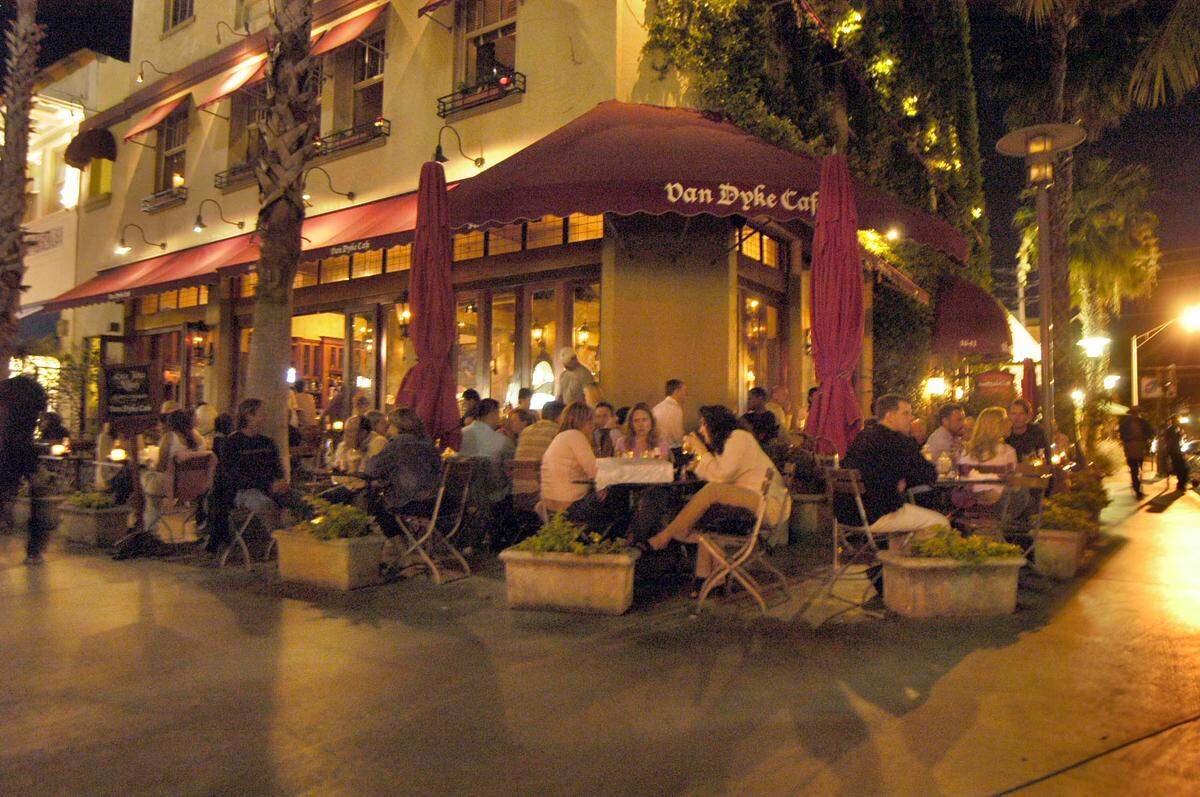
The Van Dyke Cafe, which opened Sept. 21 in the former headquarters of Beach pioneer Carl Fisher at 846 Lincoln Rd., beckons customers with its casual atmosphere and Friday and Saturday night jazz sessions, said owner Mark Soyka.
“I hope that a lot of old Miami Beach people, the ones that shy away from Ocean Drive, say, ‘Hey, Lincoln Road is coming back, so let’s go where we used to go,’ “ said Soyka, who also owns the News Cafe at 800 Ocean Dr.
Jazz and piano melodies also emanate from Gertrude’s coffee house, at 826 Lincoln Rd., on Saturday nights.

At World Resources, where food and art come together, every full moon is serenaded with monthly concerts. Hosted by local artist Nil Lara, the concerts usually draw 100 to 150 people.
“Music is a universal language,” said Steve Rhodes, owner of World Resources. “I’m trying to connect and reach people.”
“World Resources is varied, which is what makes it so different,” said South Beach resident Carmen Del Valle, 35, who speed walks through Lincoln Road every day.
The latest variation is the Cuban raft Tio B, which washed ashore in South Dade at the height of the recent refugee exodus. Rhodes found the raft Sept. 1 and plunked it in the fountain outside the cafe. The Tio B display will remain about two more weeks.
For the art lover, Lincoln Road has a monthly Gallery Walk, when galleries hold their opening night receptions with artists, and shops open till late. The next Gallery Walk is coming up Saturday. “I like it because it’s so culturally enriching and it’s free,” said Gail Warning, a South Beach artist.
But all this culture on the road is met halfway with a little fun at Gertrude’s coffee house.
Bingo nights, hosted by female impersonators such as Shelley Novak, benefit the Community Research Initiative of South Florida. Prizes are donated by stores such as CONDOMania and Salon 1000.
Other upcoming events include a Home Furnishings Walk, where patrons can preview the latest in home design, from 7 to 10 p.m. Oct. 15 at the different stores and studios.
“We’re keeping a monthly calendar of cultural events where there are no more than two or three nights a month that something isn’t happening,” Burdick said.
THE HUB OF RENEWAL
Published Sept. 12, 1999
Once a place where Carl Fisher negotiated real estate deals, today the Van Dyke building at 846 Lincoln Road has been reinvented as a romantic cafe where, after having a bite to eat, customers can listen to cool jazz and sip wine. It was built on Lincoln Road back when its walkways were paved streets trafficked by cars instead of people.
ts original owner, Carl Fisher, was a developer whose coups included founding the Indianapolis 500, according to a mini-profile on the Van Dyke’s menu. He arrived in the Beach in 1912 and wasted no time nurturing the growth of a baby Beach. In 1916, he built one of his first buildings, the Lincoln Apartments, at 420 Lincoln Rd.
In 1924, the Van Dyke building was constructed by Fisher to house his real estate offices. This was where Fisher planned to sell land that he literally created. As repayment for a $50,000 loan Fisher gave to John S. Collins to complete his bridge to the mainland, Fisher received 200 acres of land south of 19th Street. Fisher spent 10 years uprooting mangroves and hauling sand from the bottom of Biscayne Bay to fill in swamp area in order to create valuable real estate.

The Van Dyke’s penthouse, located at the top of the building’s seven stories, served as a viewing area where prospective buyers were treated to a panoramic vista of Fisher’s land. Clients must have been impressed by the acres of barren land waiting to be developed, waiting to become Miami Beach.
For many years, the Van Dyke stood as the tallest building on Lincoln Road. This Mediterranean revival building was the first on Miami Beach to have its own elevator.
Initially, however, it wasn’t named the Van Dyke. When Fisher was unable to complete payments to the construction-company that built it, the company foreclosed on the property and in 1930, the building assumed the company’s name.
By 1930, Lincoln Road was fast becoming one of the Beach’s premier shopping districts. In 1931 Bonwit Teller and Co. made way for an even grander retailer, Saks Fifth Avenue of New York. Saks opened at 830 Lincoln Road and would be a mainstay for decades to come. Many more stores came to populate Lincoln Road in the ‘40s and ‘50s, stores that mostly catered to highbrow clientele. Throughout this time, the Van Dyke remained on the scene. It is likely that the building served as office space which was in high demand as business in the Beach switched into high gear.
In 1960, Lincoln Road was turned into America’s first pedestrian mall after a 2-1 vote in favor of the change during a 1959 municipal election. Beach architect Morris Lapidus designed unique structures to accentuate the mall’s space. After enjoying decades of prosperity, the Lincoln Road area declined and many shops closed in the ‘70s and ‘80s.
As Miami Beach crawled back from oblivion in the late ‘80s and early ‘90s, many recognized the potential of the long neglected shopping district. The Van Dyke was headed for a glamorous makeover when, in 1992, Mark Soyka purchased the building. At the time, it was an apartment building that housed an architectural firm in the penthouse.
“When he bought it, it was run down and not well taken care of,” said Soyka’s assistant, Ryan York. “He bought it with the foresight that Lincoln Road was going to get better.”
After a two-year restoration project, the Van Dyke was brought back to life as a European-style cafe that has become the hub of revitalized Lincoln Road. The cafe is located on the first floor and a jazz club, Upstairs at the Van Dyke, is on the second floor. The building also houses four commercial lofts and one residential loft rounding out the seven original stories constructed in 1924.
Having just celebrated its five-year anniversary Sept. 9, the Van Dyke looks to its future as another one of Miami Beach’s great new old buildings.