
Animal advocates call to free Lolita, 45 years after capture
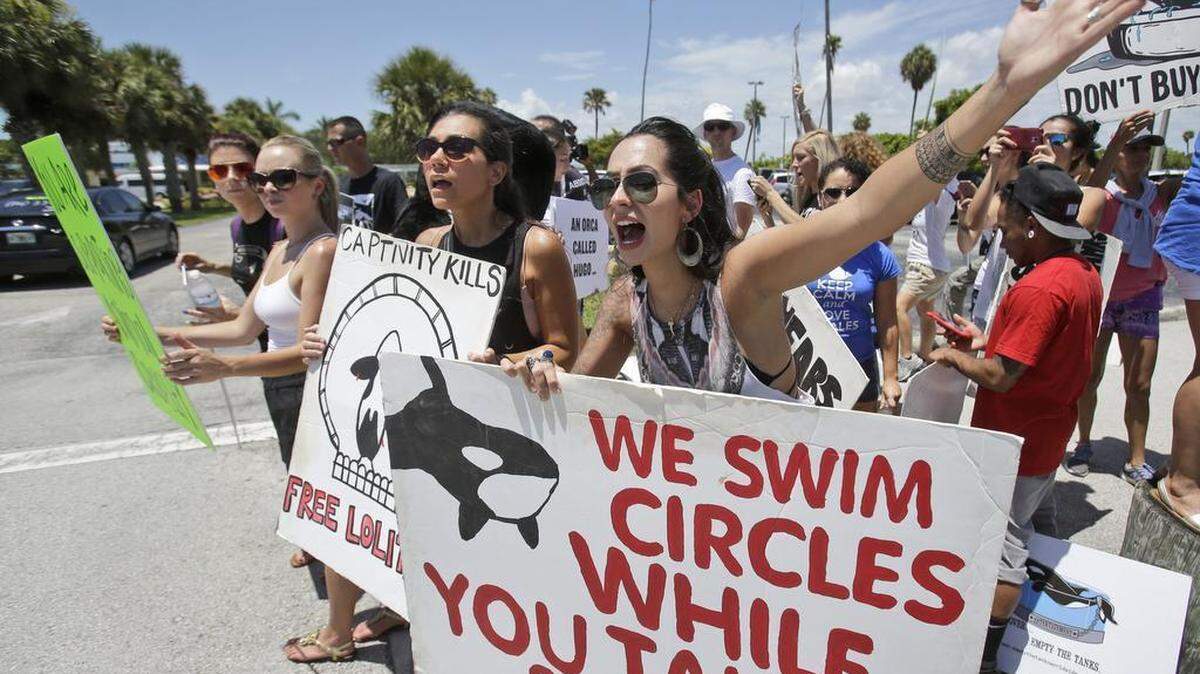
Under the searing August sun, about 65 protesters stood at the entrance of Miami Seaquarium on Sunday with large signs and loud voices, attempting to persuade park guests to turn their cars around and not buy a ticket.
The protesters, members of PETA and the local Animal Activists Network, chose Aug. 9 because the weekend marks 45 years since Lolita, a killer whale and famous park attraction, was captured off the coast of the Pacific Northwest. Activists argue that the 20-foot-deep inside the park on Rickenbacker Causeway is too small for the 7,000-pound orca, and lacks shade.
"It's long-term torture," Marian Prio of Miami said.
Prio gladly accepted the task of donning an orca mascot costume provided by PETA, People for the Ethical Treatment of Animals.
Between her furry fins, Prio, 69, held a sign that read, "Free Lolita Now," and occasionally took off the cumbersome orca head for a drink of water.
The protest was punctuated by the beat of drums and original songs and was a bit larger than the usual weekly group organized by the Animal Activists Network.
The event continues a long-running battle between animal-rights groups and the Miami Seaquarium. Tensions heightened earlier this year when Lolita was added to a federal endangered species list, spurring legal action by animal-rights activists in March pushing to free Lolita, and another suit in July, which claimed the park attraction violates the Endangered Species Act.
Miami Beach Mayor Philip Levine publicly spoke about Lolita's conditions but did not attend the protest.
"Miami should be known as the beautiful, modern city that it is — not as the home of the smallest orca tank in North America," Levine said in a statement. "This endangered animal must be released as soon as possible from the appalling conditions at the Seaquarium and moved to a sanctuary in her home waters."
Despite protesters, the theme park was business as usual on Sunday, with a parking lot full of young families with hats, sunscreen and strollers.
Sara Bravo of Miami was putting her 4-year-old into a double stroller in the parking lot when a protester offered her $20 not to enter the park and instead watch Blackfish, a documentary on the problems of animal treatment at sea parks. Bravo was not persuaded and continued into the Seaquarium.
"They're upsetting me," she said.
Bravo said the protesters should visit schools, instead of preaching from the border of the park.
"I'm here to bring my kids to see the animals and people that come here have already made up their minds."
This story was originally published August 9, 2015 at 4:26 PM with the headline "Animal advocates call to free Lolita, 45 years after capture."