
Charity ends partnership with Key Biscayne government over alleged ‘smear campaign’
One of the more prominent attorneys in Miami-Dade County filed a legal complaint Tuesday that hinges on an issue that would seem unlikely to reach his desk: An 80-year-old retiree, in an ad this summer in his local Key Biscayne paper, made accusations while in conversation with a fictional talking parrot about a charity’s use of funds.
Eugene Stearns, whose name is first on the Stearns Weaver Miller masthead, is pursuing a defamation case against Islander News columnist-turned-advertiser Tony Campaigne on behalf of the Key Biscayne Community Foundation, a non-profit behind the annual Aqua Party on the tony island enclave south of Miami Beach.
Campaigne’s paid columns have already been halted by the publication. But the underlying tensions — allegations that the foundation is abusing public funds and operating as a “shadow government” — continue to boil over. In late July, the foundation moved to end a decade-long partnership with the village that turned taxpayer dollars into COVID testing, public shuttles and other free programs.
The feud, framed by the foundation’s critics as a fight for good government, is roiling the normally tranquil island paradise, with barbs penetrating village council meetings, the neighborhood website Nextdoor, WhatsApp groups and the pages of the local paper. But the foundation’s leader, CEO Melissa White, said it all feels personal.
“How is it not personal when it’s a small organization that I have been the CEO of for 11 years in a small town?” White said in an interview. “It’s my career, it’s my profession, it’s my work.”
Mayor Michael Davey said the foundation’s decision to sever ties with the village by October will likely cost taxpayers around $100,000 in administrative expenses quietly covered by the non-profit.
“The foundation has done nothing but good things, but I understand entirely why they felt the need to step away,” he said, blaming the fallout on a small group of residents’ “petty jealousies.”

Campaigne’s attorney, David Winker, however, said the whole situation strikes him as highly unusual, with a village vendor “suing residents over them asking questions about the relationship” between the non-profit and government.
“There’s this perception, okay,” he said. “If you didn’t have anything to hide, why would you terminate your contract” with the village?
A longtime partner for the village
Incorporated in 2004, the Key Biscayne Community Foundation’s work is far from the sort of efforts typically associated with litigation and headline-splashing controversy. The group’s most prominent project started in 2015 as a bus ride-sharing system called Freebee and has since spread to other cities within the county. This past year, the foundation led the effort to get locals access to free COVID-19 testing and, according to Stearns, spearheaded programs to help the elderly combat isolation and food insecurity amid the pandemic.
From October 2019 to March 2021, public records show the village contracted with the foundation on 35 separate occasions and made payments to the group totaling at $850,979.34 — which comes out to around 2.5% of the village’s annual budget.
The invoices, provided to the Herald in response to a request for records, refer to the foundation as a village vendor and show public funds allocated to the foundation for an array of events and programs. The village spent $14,763 on a piano festival in June of 2020, $5,913 on a children’s business fair in March of this year and $7,510 on fitness opportunities for older adults in October of 2019. The village also funded COVID-19 testing to the tune of $94,575 and the Freebee rides system, at a cost of $235,291.
Stearns says the foundation’s work with the village council is only a small fraction of what it does. Last month, for instance, White said her group was among those charities at the Surfside family resource center, providing aid to those impacted by the fatal building collapse. The foundation’s most recently available 990 tax form, for 2019, states that the non-profit spent $3 million that year, with a core mission of raising funds to pay for programming “that addresses community needs and effects positive change.”
But friction has been building for years, as some in the village began to vocally question how the foundation was spending taxpayer money — and whether it was becoming too political. In June, when White was asked to present during a virtual budget workshop, the tensions came to a head.
An incident at a budget workshop
During the online forum, when Councilmember Luis Lauredo, a former ambassador to the Organization of American States under ex-President Bill Clinton, began asking questions about a $30,000 budget item for the celebration of the village’s 30th anniversary of its 1991 incorporation, the mood in the virtual room became tense.
White responded that the foundation would happily shift its efforts to projects beyond the island where “actually people thank” them for their efforts. She said the only people “confused” about how the village’s reimbursement process for the foundation works are “10 people in a chat” — presumably an allusion to a “small group” the foundation is now claiming defamed them.
Then, the subject shifted entirely to the contested village council election from nine months prior. In the election, Key Biscayne passed a contentious $100 million bond for infrastructure projects meant to protect the island community from sea-level rise. Lauredo was among those who criticized the bond as a “blank check” and voted against it. White along with others at the foundation had voted “yes” on the bond, but say the foundation itself took no official stance. Betty Conroy, an 83-year-old former councilwoman, claims the foundation “worked very hard to get the bond passed.”
As a nonprofit, “are you allowed to be politically involved in elections?” asked Lauredo at the workshop. White responded, “I think you have taken this meeting where it’s not supposed to go.”
Ten minutes later, Jennifer Stearns Buttrick — Stearns’ daughter and another attorney for the foundation — took a window for public comment as an opportunity to passionately defend White from Lauredo and the “small group” who are “against virtually everything” and “continue to attack Melissa.”
This incident became the spark that lit the flame — or as White and Stearns see it, the straw that broke the camel’s back. On July 26, White wrote to the village administrator to say the foundation would end its partnership with the city once the new fiscal year began on Oct. 1.
The “constant barrage of false information in an orchestrated smear campaign promoted by a small group in our community” had caused the foundation “irreparable damage,” wrote White, who according to the foundation’s 990 tax form earned a $94,000 salary in 2019.
But first, on July 13, the foundation’s board of directors publicly accused Lauredo in a signed letter of launching “petty and ridiculous comments” at White and said the foundation “will not tolerate this any longer.”
This statement, in turn, led to a response in the Islander News from Conroy, who alongside Stearns led the push to make Key Biscayne the first new Miami-Dade municipality in more than 50 years. In a column, she said that while “we all emphatically agree that the KBCF does great things,” it cannot operate without “public scrutiny” — and defended the right of councilmembers like Lauredo to “scrutinize the expenditures of public funds.”
Meanwhile, as councilmembers received demands to turn over texts, emails and WhatsApp chat messages about the foundation, Conroy received a letter from her old colleague, Eugene Stearns. Her former close neighbor urged her to immediately apologize and retract her column, calling it “defamatory and patently untrue.”
When she didn’t reply, Stearns wrote to her 10 days later: “I deeply regret your unwillingness to try to undo the harm you have caused and frankly, wonder what made you so bitter you would find it acceptable to declare war on people whose good works are simply beyond intelligent debate.”
Reached for this article, Lauredo called the whole affair “almost un-American” and “truly sad and regrettable,” saying the foundation’s actions amounted to a “coordinated attack on the integrity of the institution of the Village Council.”
“A democratically elected councilmember has an obligation to ask questions in his/her duty to oversee the prudent expenditures of tax payers money,” Lauredo said in an email. “If when he/she tries to carry out that trust by making inquiries it triggers inaccurate and unfounded public accusations, in personal and petty language, then the victim is normal transparency and good governance. When it comes from the Board of a Foundation, then it becomes a serious breach of institutional respect and norms.”
What the parrot said
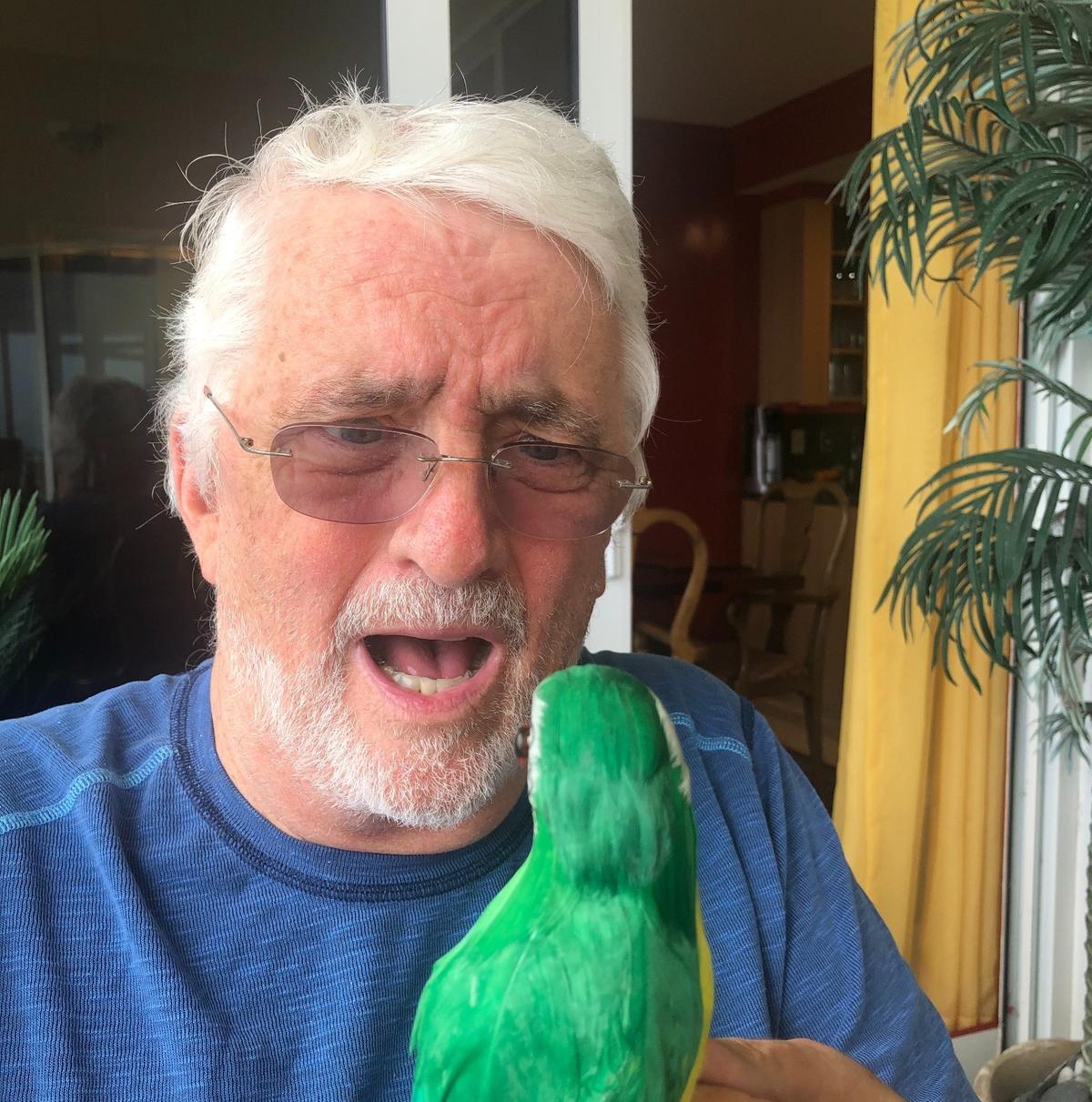
Amid the criss-crossing records requests and retraction demands, Campaigne paid the Key Biscayne Islander to publish a small column in the ads section called “Pepe’s Perch,” styled as a fictitious conversation about the foundation between the writer and a talking parrot.
Campaigne suggested the foundation was misusing public funds, strongly insinuating that a retirement party for Police Chief Charles Press hosted by the foundation had been paid for with public money. In a different column, he also questioned whether Key Biscayne tax dollars were being used to fund a foundation program helping kids in Liberty City — and suggested the town fronted “over $700,000” for the foundation’s COVID-19 testing program, which village records show in fact cost less than $100,000.
“I bet they charge off their expenses to their program of ‘giving prepared meals to needy seniors’ so they could justify not spending Foundation money,” Campaigne had wrriten in the voice of the parrot. “After all, the town pays all Foundation bills without questioning them.”
Public records show the village did not fund any programs in Liberty City, and the foundation and village chief financial officer say Press’ party was funded entirely by private donations to the foundation.
Campaigne’s original intention with the “Pepe’s Perch” ads, he now says, had been to share his “satirical view on the Key.”
The foundation was not amused. On Aug. 3, the non-profit sued Campaigne, alleging defamation.
“I think it would be a very sad thing if Pepe, so to speak, was killed,” Campaigne told the Herald.
According to the 20-page complaint, a “small group of residents,” including Campaigne, has with “pure malice” undertaken a campaign to “damage the reputations” of the foundation and of its director, White.
Stearns Buttrick said in a letter to the editor on July 8 that the initial column read as though “written by someone angry that he did not receive a personal invitation to the party.”
After receiving a warning that litigation was coming, Campaigne typed out an email to Stearns, saying, “As you know, ‘truth is a defense’ to any libel action, and I believe that during the discovery process of your suit a lot will come out that would be of great interest to Key Biscayne taxpayers.”
Winker, Campaigne’s attorney, said the complaint exemplifies a “press release with filing fees,” and that his client “will be seeking dismissal and attorney fees from the Foundation in accordance with the Anti-SLAPP law.” Anti-SLAPP laws are intended to prevent the use of courts to intimidate people exercising their First Amendment rights.
‘Mother Teresa’
The foundation’s critics also dismiss allegations that they are trying to damage White’s reputation.
Conroy, who said she feels on the cusp of facing litigation from the foundation, had only positive things to say about White herself and commended her charitable efforts. Louisa Conway, an unsuccessful village council candidate who has been one of the most vocal in criticizing what she sees as the village “outsourcing its self-governance” to the foundation, stressed that for her, “Melissa White was not the issue, and neither was the foundation.”
“You’re talking about public funds,” Conway said. “It’s a problem with the village government.” She wanted to see the village set up a clearer protocol for how the foundation can allocate the public funds it receives and transparency guidelines it must follow.
But the columns in Islander News — of which Stearns himself has authored a few — the legal notices by his firm, and Stearns Buttrick’s defense at the July 29 workshop all allege damage to White personally and an intent by residents’ to harm her standing.
Stearns called White “Mother Teresa,” and the mayor said he doesn’t know a better person — “except maybe my wife.”
The foundation has also repeatedly argued that they already provide detailed accounting records of all expenditures to the village — a claim Davey echoed. As of Aug. 5, the village turned over non-itemized invoices to the Herald on its transactions with the foundation, but said that the line-by-line accounting is not digitized and would take a week and more than $400 to process.
Calls for transparency, in Stearns’ view, are a smoke screen for something else.
“The ‘I am doing this for good government’ argument is not even a thin veneer on a transparent desire to maliciously inflict harm,” Stearns wrote to Conroy.
In the meantime, the foundation and the village are both preparing for the coming split.
“We have so much more important work,” White said. “It’s an opportunity to move forward and focus on the good work that we do.”
This story was originally published August 6, 2021 at 3:51 PM.