
They look like cute, snuggly puppies. But they’ll be capable of taking down an antelope
They may look cute and snuggly, but these puppies aren’t house pets.
On Thursday, a 6-week-old litter of highly endangered African Wild Dogs — also called painted dogs — made their debut at Zoo Miami.
Born Jan. 23, the male and four females have been in seclusion in a den with their mother. Zoo staff observed the new mother with her pups through closed circuit television cameras.
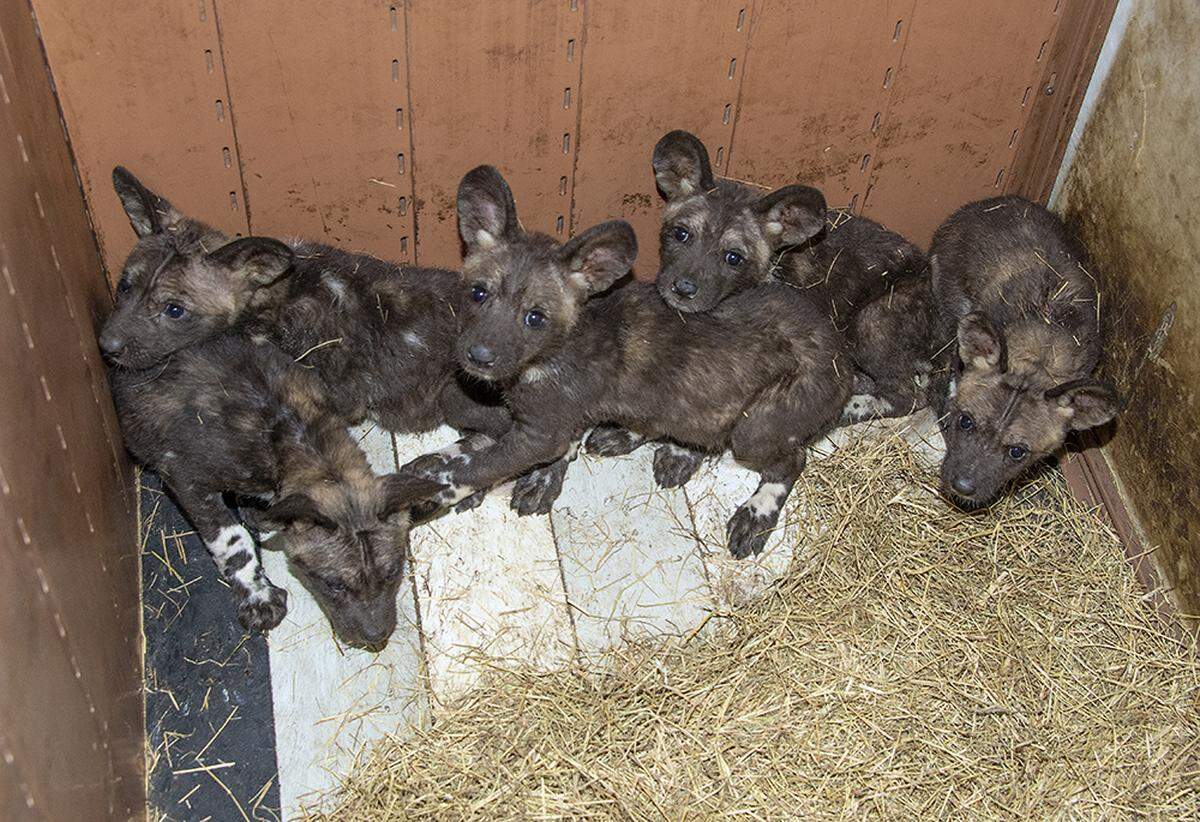
“Because this was the first litter for the 2-year-old mother, named Little Foot, extreme caution was exercised in ensuring that mother and puppies were not disturbed for the first several weeks of the puppies’ lives,” Ron Magill, the zoo’s communications director, said in a news release.
On Wednesday, the five puppies were given neonatal exams, which included collecting blood, general physical exams, deworming treatment and the placement of a microchip for identification. It was the first time they were handled by anyone, the zoo said.
.jpg "5 (2).jpg")
“Following the exams, the puppies were given access to the exhibit with their mother and father for the first time,” Magill said. “After initial trepidation, they followed their mother out onto the habitat.”
Their father, Evander, who was born at the Perth Zoo in Australia in May 2011 and arrived at Zoo Miami in November 2015 via Disney’s Animal Kingdom, showed interest in the pups, but their mother did not allow him to get close.
The puppies will now have limited exhibit access under observation “until they have learned to navigate the exhibit without any issues,” Magill said.
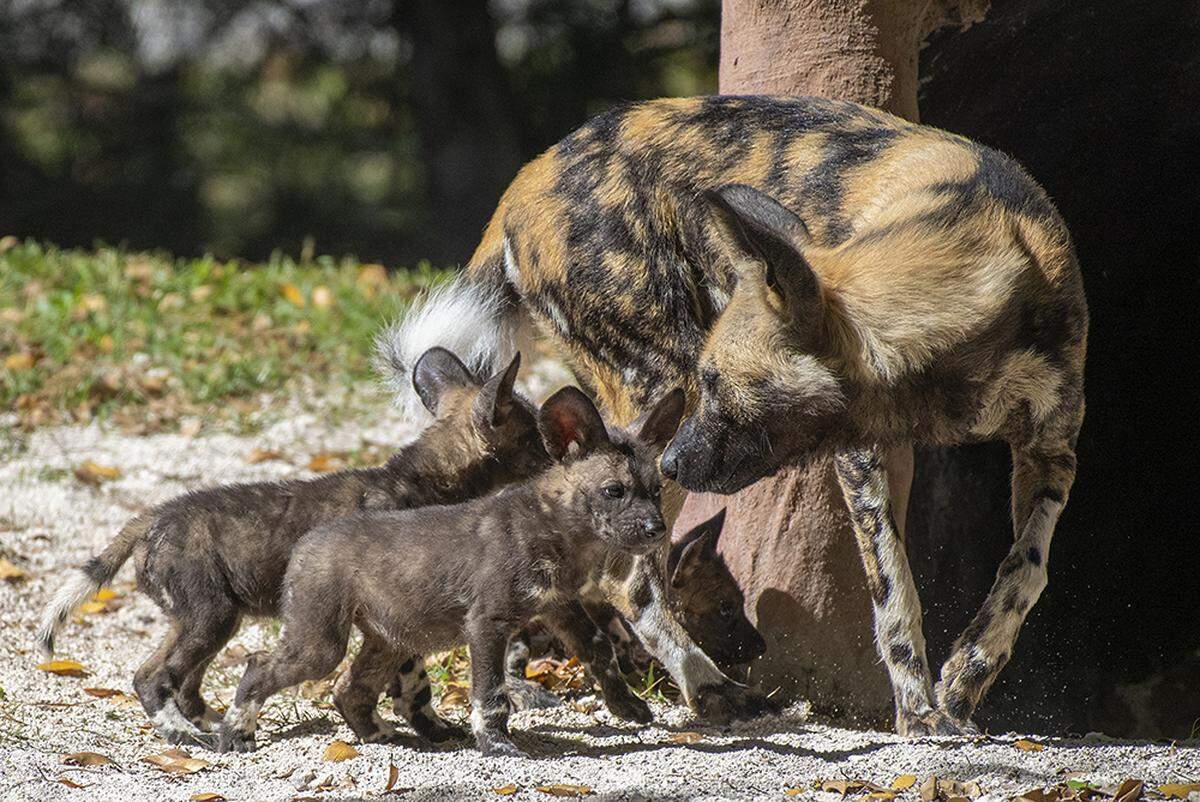
According to Magill, fewer than 6,000 African painted dogs are left in the wild, making the species one of the most endangered carnivores on the continent. African painted dogs, which are found in pockets of eastern and southern Africa, are cooperative hunters and usually are in packs of six to 20. As a group, African painted dogs can often take down large animals, including wildebeests and antelopes, Magill said.
“These are the first successful births of these endangered carnivores at Zoo Miami in nearly 20 years and are a very important part of a carefully planned breeding program to help ensure the survival of these amazing animals,” Magill said.
This story was originally published March 7, 2019 at 7:55 PM.
