‘I really thought I was going to die.’ Plant nursery workers sick with COVID-19 report dangerous conditions at work
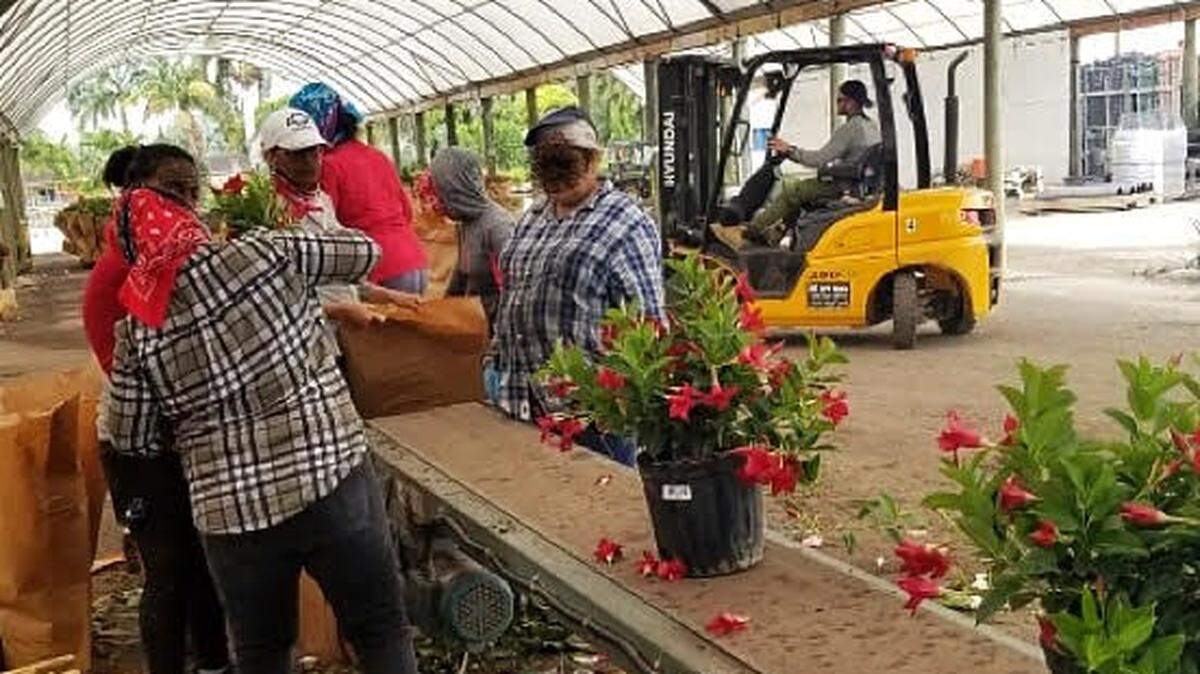
In mid-June, during her most recent day on the job at a Homestead nursery, Claudia, an undocumented farmworker from El Salvador, was unable to appreciate the scent wafting from the fragrant jasmine plants surrounding her.
But a stunted sense of smell was the least of her worries. Claudia, who is in her 40s, also felt feeble and short of breath. By that day, a Friday, Claudia had been feeling unwell for over a week.
“I was feeling really bad, like I could barely hang on,” said Claudia, who declined to give her real name for fear of reprisal. “But being a single mom I had to work. I just had to work,” she said in Spanish. “I live off of what I make every single week.”
Claudia had been tested for the coronavirus at Homestead Hospital three days earlier, but it wasn’t until late that Friday that she got her positive results. She hasn’t returned to her $10-an-hour job since then; company policy requires that she first test negative.
Claudia believes she got sick at the nursery, where laborers typically work in groups of 20. A pair of gloves and two cloth masks was all the protective gear she said she received from her employer, Costa Farms, a Miami-based producer of ornamental plants that employs more than 5,000 people across the American Southeast, the Dominican Republic, and China.
A Costa spokesperson said the company has strictly followed CDC and OSHA guidelines and provided personal protective equipment.
“We try to find ways to separate a little bit at work,” said Claudia. “But there are things we can’t do without clumping together.”
For months, advocates and organizers have been sounding the alarm. Despite being designated as “essential” by the federal government, agricultural workers are particularly vulnerable to COVID-19. Workers spend hours laboring in close quarters, and many live in cramped housing conditions, commuting to the fields in crowded buses. Nationwide, nearly half of all agriculture workers lack legal immigration status and work authorization, making them ineligible for benefits that could allow them to stay home when sick. Access to health insurance is also limited, while many farmworkers have pre-existing conditions.
Conditions stretch beyond the winter vegetable fields to Miami-Dade’s 1,500-plus ornamental plant nurseries, where work continues year-round.
“Nurseries can be a problem because you have a lot of people working in them at the same time,” said Guadalupe De la Cruz, Homestead native and Farmworker Program Director at AFSC Miami, a pro-immigrant nonprofit. “So even though some nurseries are very large in size, there are some tasks like pulling weeds or transferring plants or loading trucks that still require many folks to come together to push and pull the work forward.”
Limited access to wash stations or bathrooms stocked with toilet paper and soap are, according to De la Cruz, “pre existing problems that just continue to be a problem now” that increase workers’ risk of infection. Also at issue are crowded comedores, or lunch break areas.
Elvira Carvajal, former South Florida farmworker and current lead community organizer with farmworker advocates Alianza Nacional de Campesinas, says she has heard from more than 20 Costa Farms employees in Miami-Dade who have become infected with COVID-19. And according to Carvajal, Claudia, and other people connected with Costa Farms who spoke with the Herald, there has been at least one coronavirus-related death among its workforce.
“They ignored the problem, they ignored the pandemic. [In March] they weren’t providing masks. There was zero social distancing or protective measures taken. Now the governor is making racist remarks against farmworkers, because they have to look for a scapegoat, but it’s not that easy,” Carvajal said, referring to a June statement by Gov. Ron DeSantis that Hispanic migrant workers were then driving the rise in COVID cases.
“The necessary measures weren’t taken,” she said. “Farmworkers are never taken into account.”
A Costa spokesperson disagreed, providing the Herald with the following statement.
“The health and safety of our workers at Costa Farms is our first concern. We have communicated regularly if not daily with our valued employees. Throughout the ongoing COVID-19 pandemic, we have strictly followed CDC and OSHA safety guidelines. Safety measures we have implemented include providing PPE such as face coverings, eye protection, and gloves; conducting temperature checks before every shift; increasing the cleaning frequency of all areas of high contact with CDC-recommended sanitizing materials and adding professional deep cleaning in some locations; implementing social distancing; alternating break times; providing extensive COVID-19 testing and performing contact tracing; among others.
“We have also modified our paid time off policy to include additional sources of paid time off for employees that are infected with the COVID-19 virus, so that those affected can stay home and focus on their recovery. Finally, we have been working closely together with government agencies including the CDC as well as local county health officials in all of the locations where we operate. We will continue to closely monitor the situation and follow all safety guidelines needed to protect our employees.”
Over the weekend, Claudia’s own condition gravely deteriorated. She had trouble breathing, and was beset by nausea, headaches and violent coughing fits.
“For a moment, I really thought I was going to die,” she said, her voice still hoarse. “I had a really, really bad day.”
Antidotes to her current, less severe symptoms are limited to over-the-counter painkillers and endless cups of ginger tea, which she insists on her five children drinking as well as a precaution. All five live with Claudia in a three-bedroom house. The two youngest are 14 and 2 years old.
“I pray to God they won’t get sick as well,” Claudia said
Taking care of a toddler while battling COVID-19 has been challenging.
“On Sunday my boy fell off the bed, and my heart broke because I couldn’t pick him up,” Claudia said. “I felt too weak; I couldn’t do it. Thankfully I’m doing better now.”
FOUR MEMBERS OF THIS HOMESTEAD FAMILY WORKED AT COSTA FARMS. ALL FOUR GOT SICK
Maria, an immigrant from Guatemala, has worked at Costa Farms for more than a decade. In mid-June, three months into the coronavirus pandemic, she developed a small cough and persistent body aches. Since she shares a small duplex with six other family members, Maria thought it prudent to ask for a day off from the nursery to get tested. Like Claudia, Maria preferred to be identified with an alias to avoid retribution from their employer.
At Homestead Hospital, Maria was told to stay home until the test result came back. Six days later, on June 24, Maria’s COVID-19 diagnosis was confirmed, which meant at least two additional weeks away from work.
During that time, Maria’s symptoms intensified.
“The days got harder and harder. My body hurt all over. I was vomiting. My throat hurt. I had coughing fits.
“I also felt my eyes get very swollen as if they were about to pop off from my skull,” she said. “You want to feel better but you just can’t do it.”
To manage her symptoms, Maria took pain medications and some antibiotics she had lying around the house, from before the pandemic broke out. The only food she could stomach was water, coffee, and plain tortillas.
Like Claudia, Maria believes she caught the disease at the nursery.
“I am sure that I got sick at Costa. They didn’t give us masks for a long time. The eating area wasn’t cleaned.
“Many of us were saying, ‘Oye, there’s too many people in this comedor, especially with everything that’s going on,’ ” she said. A couple of weeks before her own positive test, a colleague who works in a different section of the nursery but eats at the same comedor had gotten sick. “The bosses don’t eat there but it’s the only spot available for us to have lunch. I was very worried.
“Things like sanitizer or disinfectants were never offered to us, we had to buy those things ourselves. ... Many people are getting sick there,” she said.
Maria’s sister and her two daughters also work at Costa. All three have tested positive. Her oldest daughter is in her early 20s, and pregnant.
So far her daughters have experienced only fevers and headaches. “Thank God it hasn’t hit them as hard as it hit me,” said Maria.
Though she is worried about the collective financial hit of having many family members forgo wages during long, unpaid quarantines, Maria says she is motivated to get better by prospects other than being able to return to work.
“My daughter is going to give birth [later this summer], and I need to be there for her,” she said.
As for her employers, she said, “What they care about are the plants, not social distancing, not if people are getting sick or not. ... But regardless we had to go to work, because we have bills waiting for us.”
HOW WE GOT HERE
Although the Florida Department of Health, in collaboration with AFSC Miami and other local organizations, has been working to bring free COVID-19 testing directly to farmworker housing projects in South Dade, public health experts note that concerted efforts to test agricultural communities took too long to materialize. As a result, COVID-19 likely has been silently spreading through places such as Homestead, Florida City and Naranja for months.
“I believe we have a really big undercount of cases,” said De la Cruz. There’s no “true representation of how many people have COVID-19 because of the barriers to getting tested that exist within the farmworker community.” One such barrier, De la Cruz explained, is “access to transportation,” as most farmworkers do not own cars and cannot be tested at the state’s drive-thru sites.
There are also economic incentives that encourage farmworkers to forgo testing and even ignore symptoms. Florida’s agricultural employers are mostly exempt from having to compensate workers who stay home sick.
“Farmworkers don’t have the luxury of staying home, coronavirus or not. And that has always been true,” said Carvajal. “When folks get sick, they still have to show up to work, because if they don’t, they get fired. Fear of losing a job is a big factor here.”
The specter of lost paychecks looms especially large for those with COVID-19, as workers know that a positive test automatically triggers at least two weeks of unpaid leave.
“People hide their symptoms to be able to stay on the job,” said Luis, a Homestead resident from El Salvador, who asked that his last name not be published because of his immigration status.
Although Luis isn’t a farmworker, his 50-year-old mother has spent the past decade working at a Costa Farms nursery in unincorporated Miami-Dade.
He says she has told him about workers not reporting symptoms like fevers “to avoid having to rest for weeks.”
Luis’ mother has herself tested positive for COVID-19. Although she and her son aren’t too worried about her health — her symptoms haven’t been “that serious” — they are worried about her financial situation. Her second test, taken two weeks after the first one, came back positive as well, meaning her quarantine will have to be at least a month long.
“When you are in that situation where you don’t work and you don’t have an income, your savings just disappear,” Luis said.
SAFETY GUIDELINES IN THE WORKPLACE
Plant nursery workers and labor advocates say employers failed to implement the expert-recommended sanitation and social distancing measures, and they claim that access to personal protective equipment (PPE) has been spotty. This follows longstanding exclusion of farmworkers from federal labor protections.
“The biggest worry is that companies who operate these ranches and these nurseries are not taking responsibility, they are choosing not to provide adequate protections within the workplace or provide PPE or keep social distancing,” said De la Cruz. “They have deep pockets. There is no reason why they wouldn’t be able to implement some of these measures ... to really protect workers.”
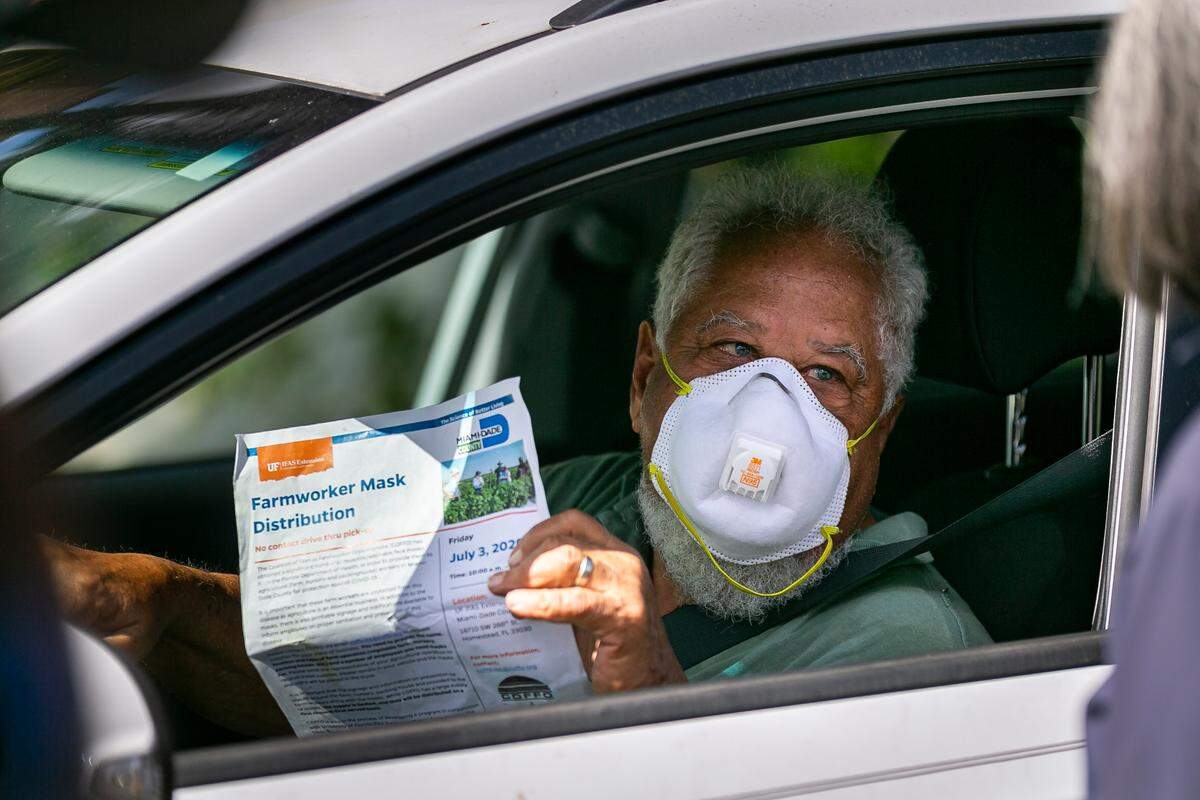
It’s unclear how much local authorities have enforced — or even communicated — safety guidelines.
At the county level, Miami-Dade’s “New Normal” dashboard contains extensive sets of safety guidelines for many types of businesses and industries, ranging from hotels and retail to tattoo parlors and childcare facilities, but there is no safety information pertinent to nurseries or agricultural worksites.
At the state level, a statement from Florida Department of Agriculture and Consumer Services spokesman Franco Ripple notes that Commissioner Nikki Fried “has recommended that the Governor work with her to ensure that PPE, healthcare, and COVID-19 testing for farmworkers be provided, but has not received any response.”
In reaction to the growing outbreak among its staff, Costa Farms has recently begun coordinating diagnostic testing of its workers with Community Health of South Florida, a nonprofit healthcare center. That’s how Maria’s 18-year-old daughter got tested.
De la Cruz welcomes the testing initiative, but says more steps need to be taken.
“It’s one thing to get tested, but then what’s the support that they are making available for their workers after they test positive? Are they going to be paying them during that time off?” she said. The testing initiative “is good, but I don’t think it’s enough.”
HOW TO HELP
▪ In addition to working with the Department of Health on mobile clinics for COVID-19 testing, AFSC is also distributing masks, meals, and cash assistance to farmworkers who’ve tested positive for the coronavirus. To support that work, you can donate to AFSC’s Miami Immigrant Rights Program here.
▪ The Alianza Nacional de Campesinas has started a COVID-19 Emergency Relief Fund to support the health of farmworkers in Florida and across the country and help them “cope with [the] economic hardships created by this health crisis.” You can contribute to that Fund here.
This story has been updated to include a statement from a Costa Farms spokesperson.
This story was originally published July 8, 2020 at 6:00 AM.