Hialeah in turmoil as city council clashes over tax cuts, deadlocks on budget
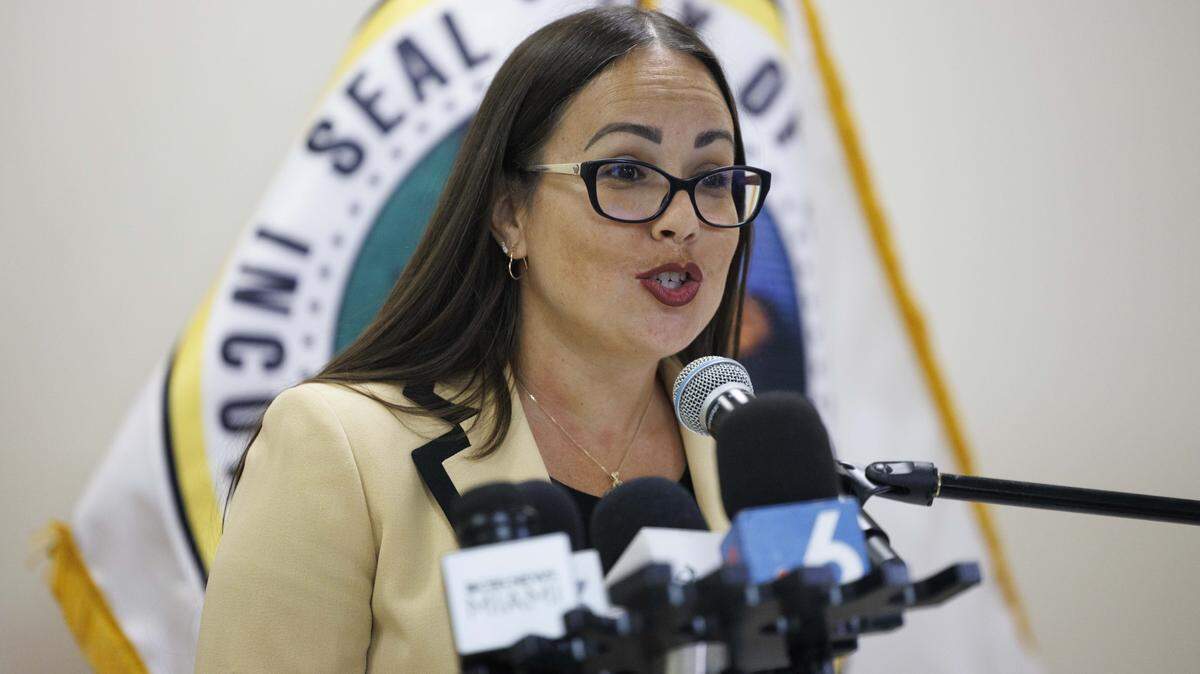
Hialeah’s government is at a standstill after a bitter political deadlock over the city’s budget paralyzed the city council, exposing deep fractures in the leadership.
The absence of a seventh council member to break ties is preventing any progress on approving a fiscal plan. Interim Mayor Jacqueline Garcia-Roves, who is running to keep the seat, has proposed lowering the millage rate used to set property taxes by 1%, a move that would cost the city an estimated $1.3 million in revenue. Meanwhile, Councilman Jesus Tundidor, also a mayoral candidate, is pushing for a much steeper 10% cut, which according to his own estimate would result in more than $13 million in lost revenue.
Since Mayor Esteban “Steve” Bovo stepped down in April, Hialeah’s political landscape has fractured, leaving a weakened and divided City Council struggling to govern effectively. This year, five council seats, including the mayor’s, are up for election.
Hialeah, the most Republican city in Miami-Dade County, handed Donald Trump a commanding 75% of the vote in last year’s election and, in 2023, even renamed its main street “Donald J. Trump Avenue.” Now, in the first year of Trump’s second term, the city’s leadership is facing increasing pressure to respond to the mounting economic strain on residents.
In a city that traditionally avoids subsidies, Republican leaders are now considering tax relief measures in what appears to be a bid to win over voters through direct economic relief.
“The residents are exhausted. It is our responsibility to find ways to support them,” said Councilwoman Monica Perez.
Garcia-Roves’ plan is estimated to save residents about $11 and businesses more than $248 annually on their property taxes. But it extends beyond the tax cut: she has also proposed that the city absorb the increased water and sewer fees passed down by Miami-Dade County, costs projected to exceed $12.5 million in the upcoming fiscal year. Additionally, she wants to eliminate the franchise fee, a tax included in water and sewer bills that generates about $3.7 million annually that was suspended last year under Bovo’s administration, and cover an $852,000 increase in solid waste fees. That would mean a total of $306 annually for the average homeowner.
Tundidor supports the idea of absorbing the county’s water and sewer increases as well, but he proposes funding it through the Public Works Department’s reserves. However, city officials insist that those funds cannot legally or logistically be redirected to cover those operating costs. His proposal could save residents over $200 annually.
“I think this year has been very difficult for everyone, starting with an 11% increase in electricity, water, sewer, and everything around us,” Tundidor said. “I’m not fixed on a 10% reduction, but I believe 10% would have a much greater impact than 1% or just saving residents $11 a year.”
Garcia-Roves responded that, while she would like to provide more relief to residents, such a steep reduction simply isn’t affordable for the city.
According to the Finance Department, Tundidor’s proposal could have serious consequences for public safety, potentially leading to the elimination of 88 firefighter positions or 63 police officer positions. However, Tundidor argues those cuts would only occur if the city insists on funding relief from the general fund as currently structured.
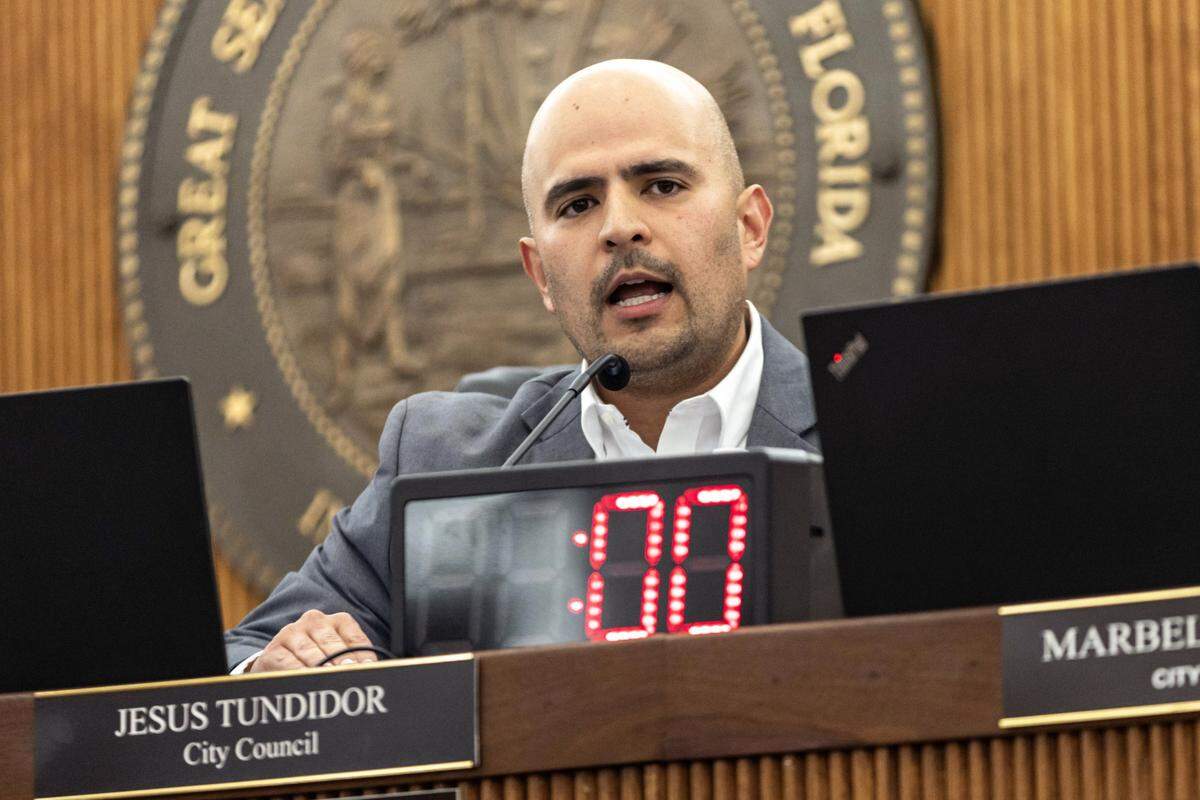
“A 10% reduction only works if the budget is administered differently,” Tundidor told the Miami Herald. “The $13 million in relief for water and sewer bills doesn’t have to come from the general fund. It can come from the Public Works Department, which already has more than $30 million in reserves. We also have over 35 projects on the books—not all of them are urgent.”
He added that he wants to conduct a thorough review of each project, representing roughly $17 million in spending, to determine which ones can be delayed.
Finance Director Ruth Rubi stated that Hialeah is a “poor city” and, in her view, “shouldn’t even do a 1% reduction” in the millage rate.
The city has a long history of financial distress linked to lowering the millage rate, which is fueling fears of another potential crisis. The last time Hialeah reduced its millage rate was in 2013, under Mayor Carlos Hernandez. That tax cut slashed city revenue by $3.2 million and left Hialeah scrambling to recover. The rate reduction triggered citywide furloughs, mandatory pay cuts, closures of parks and libraries, pension eliminations, and the loss of more than a hundred first responders.
More than a decade later, the effects of those cuts still linger, manifested in neglected infrastructure, shuttered pools, and deteriorating parks. Over the past three years, the city has begun to address long-overdue repairs, reopening pools, restoring lighting, and fixing building roofs, efforts that were largely neglected during Hernandez’s administration.
Eric Johnson, president of the Hialeah Firefighters Union and a longtime critic of millage-rate reductions, expressed visible frustration over the ongoing deadlock. He warned that city officials are repeating past mistakes.
“We are here today because of bad governance in the past,” Johnson said. “We have to find a way, as elected officials, to work together and ensure these mistakes don’t happen again. Continuing to do the same things and expecting a different outcome is the definition of insanity.”
The city has scheduled a new budget meeting for Monday and has until Sept. 30 to approve the budget for the next fiscal year. If an agreement cannot be reached, the city will revert to the prior year’s budget, including the previous millage rate.
This story was originally published September 12, 2025 at 2:17 PM.