Hialeah approves expansion of charter school on public park despite residents’ concerns
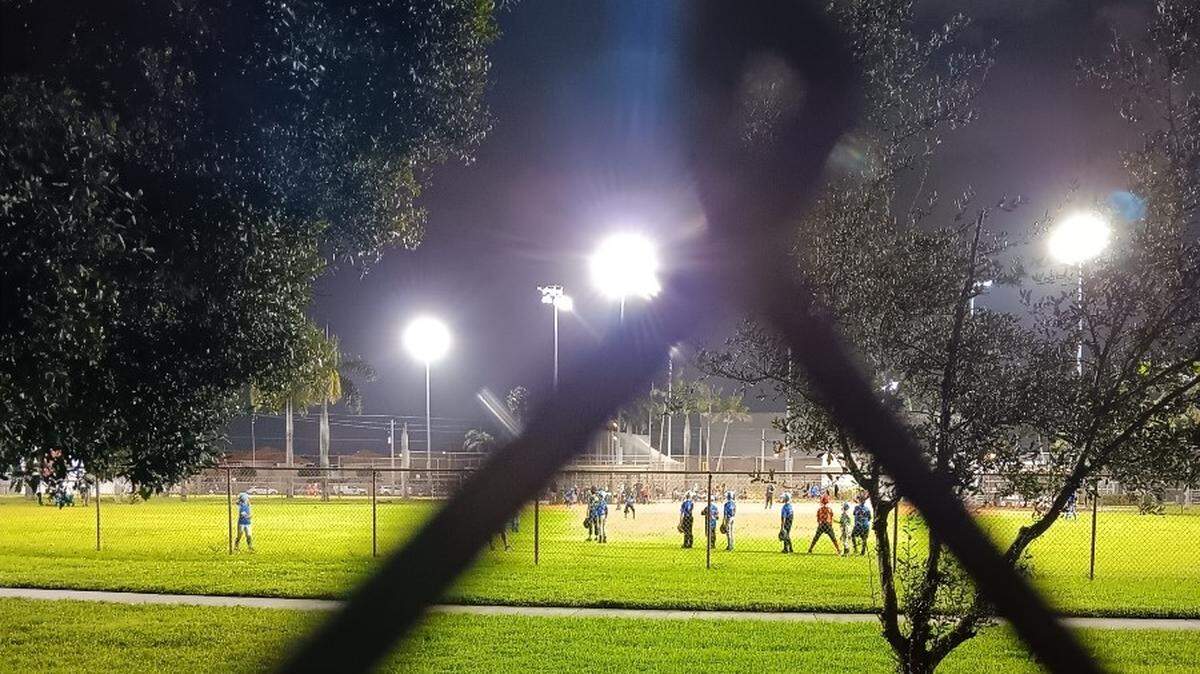
The Hialeah City Council has approved an expansion plan that will give even more public land to a charter school that has gradually overtaken a once-vibrant city park.
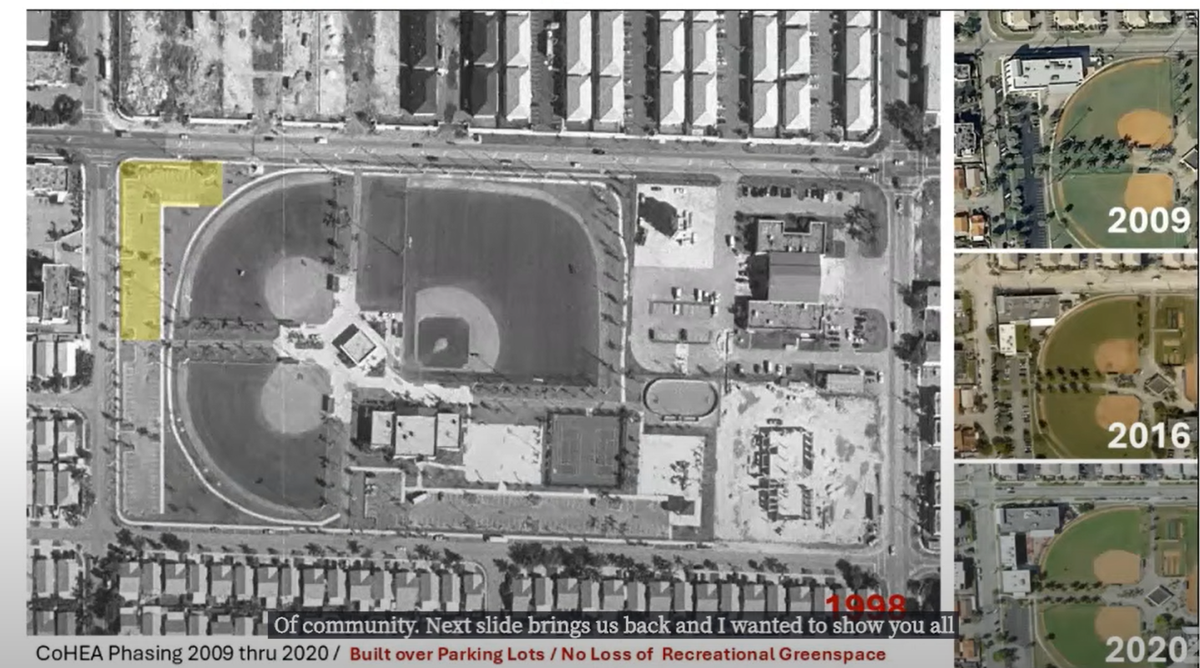
Since 2008, the City of Hialeah Educational Academy, affiliated with the large charter school network Academica, has expanded its footprint on public property, transforming parts of Slade Park into classrooms. Now, the city has approved a four-, five- and six-phase expansion of the school, a move that raises pressing questions: Will this be the final expansion, or is further growth on the horizon?
The original agreement, made in 2008 under former Mayor Julio Robaina — who became Academica’s chief operating officer shortly after leaving office — allowed the charter school to build on a portion of Slade Park. Over the years, the school has grown from a small institution into a thriving educational complex serving almost 1,000 students in grades 6-12. The school plans to expand its enrollment, accommodating up to 1,250 students.
After years of expanding into public space, the school is now poised to enter the next phase of development—a move that will permanently change the character of Slade Park. The approval of the expansion limits residents’ access to the park, even though they will continue to pay taxes on the land. The shift raises concerns about the long-term impact on the community’s ability to enjoy public spaces that were once intended for everyone.
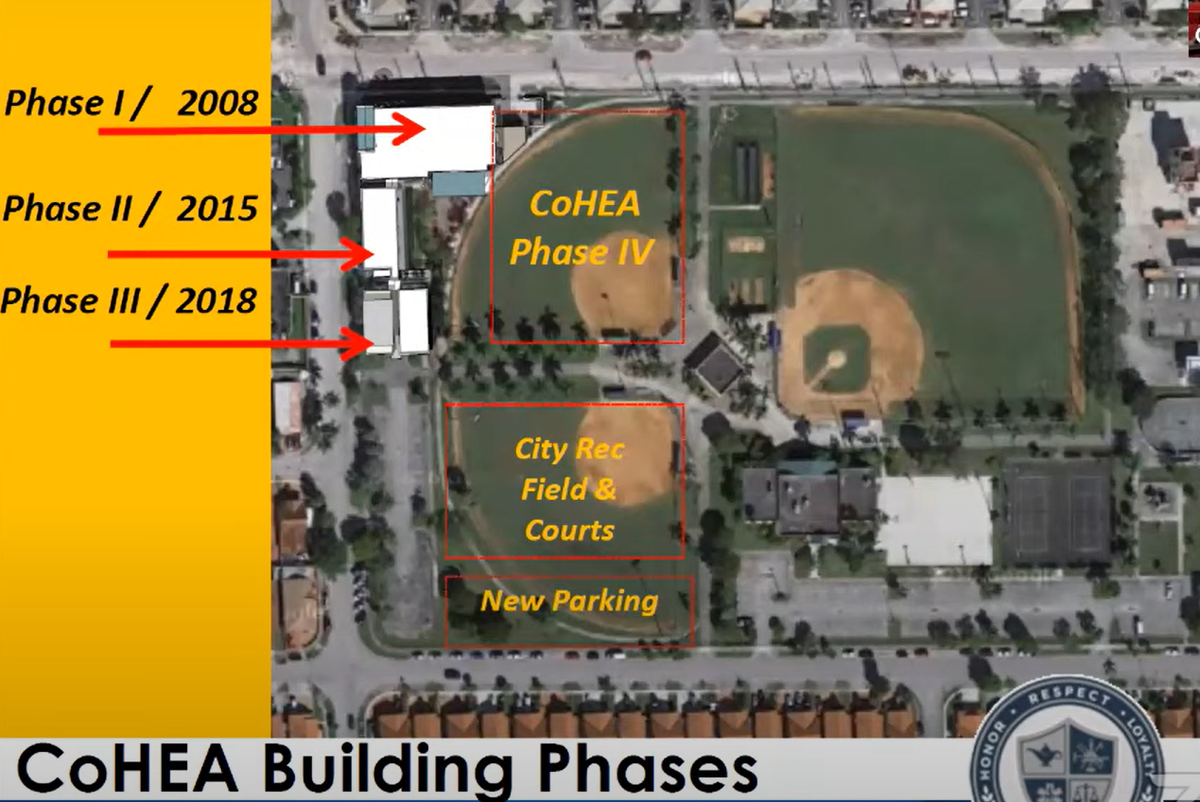
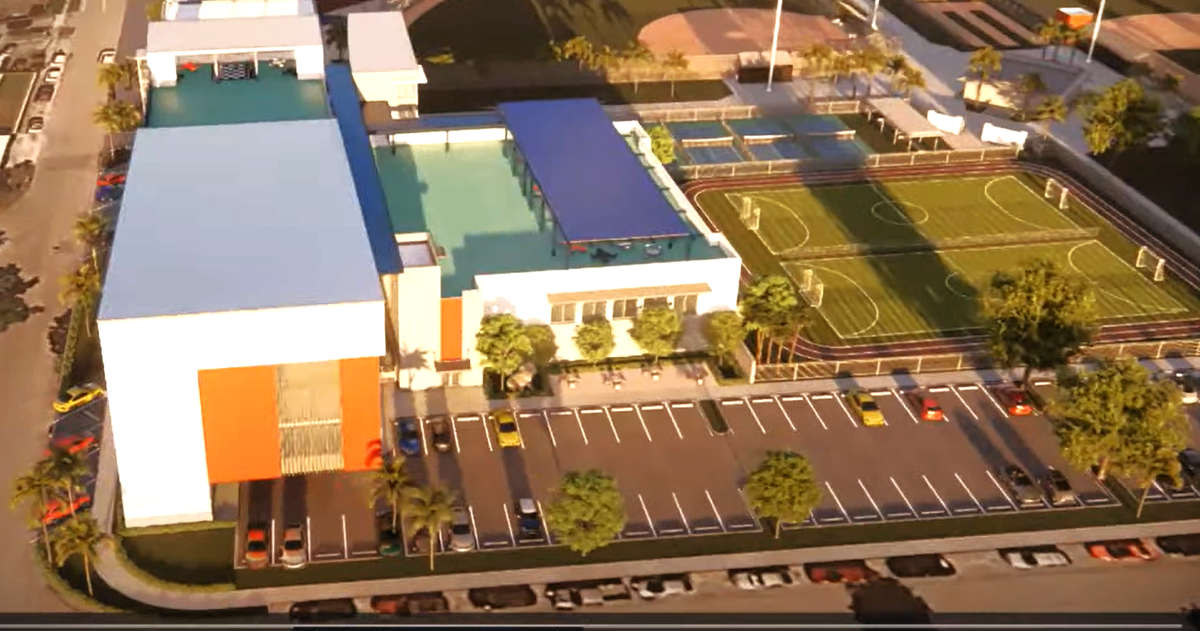
The original expansion plan, proposed in December and later tabled, included the construction of new buildings in the northwest section of Slade Park, along with a soccer pitch and four pickleball courts in the southwest area, which would have affected two multipurpose fields. That proposal sparked strong opposition from both council members and residents, who voiced concerns over further encroachment on valuable public land.
In response to the backlash, the school revised its plans to reduce the impact on green spaces by focusing development on the western side of the park. The updated proposal made at Tuesday’s council meeting includes the construction of a gymnasium, turf field, track, soccer pitch, pickleball courts and additional parking. The revised plan was ultimately approved 4-1, marking a significant step toward the school’s continued expansion on public land despite ongoing concerns about the loss of community recreational areas.
Councilwoman Monica Perez was the sole voice of opposition. She had previously expressed concerns about the diminishing availability of public and green spaces during the prior meeting. Council Members Jacqueline Garcia-Roves and Jesus Tundidor, who had opposed the parkland expansion in December, were absent for the vote.
Councilwoman Melinda De La Vega, who had previously expressed reservations about the expansion, indicated that she was satisfied with the revised proposal.
De La Vega said she believes that the current multipurpose field, as it stands, limits the number of kids who can practice at a time. However, she views the new soccer pitch and pickleball courts as valuable opportunities to increase participation and provide more options for community activities.
“I definitely see that as an improvement. And it’s been built for the city,“ she said.
De La Vega also mentioned that, under the revised proposal, city residents could potentially have access to the gymnasium four days a week, instead of the three days initially suggested.
School lobbyist Hugo Arza said the city is regaining access to the recreational center’s courts, the existing courts and the library. Currently, students from the charter school use these city facilities on a daily basis. The school has said that the actual arrangement compromises student safety, though no incidents have been reported during the 17 years the school has been in operation.
Arza suggested that after the family of Carl F. Slade, for whom the park is named, opposed the proposal in a letter, the school might reconsider plans to add his name to the gymnasium building.
“This requested expansion does not serve the citizens of Hialeah who live near Carl F. Slade Park,” the letter said.
Councilman Luis Rodriguez, who campaigned on preserving parks and green spaces in 2021, was among the key supporters of the charter school expansion. Despite his past advocacy for parkland, Rodriguez argued the expansion will benefit the community in the long term.
According to the mayor’s office, the lease agreement between the city and the school is valued at an estimated $100 million over the next 50 years. However, the city has not disclosed the full details of the agreement, even to council members. The final vote on the expansion is scheduled for Jan. 28.
For many residents, who have long raised concerns about the erosion of public spaces for private development, the revised proposal represents a small but significant victory.
By saving a recreational field that was initially slated for construction, the city has managed to hold onto a vital piece of public land, ensuring that future generations will still have access to green spaces for sports and leisure.
This story was originally published January 15, 2025 at 1:59 PM.