Hialeah’s water and sewer system is obsolete. How people are paying the price
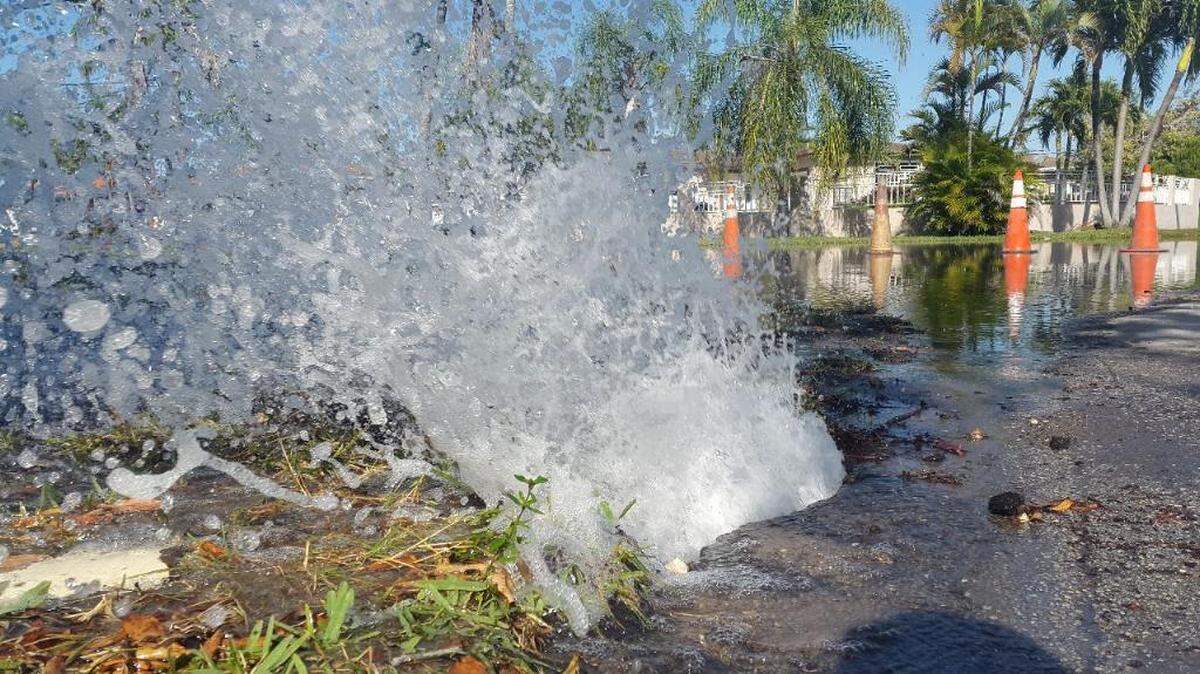
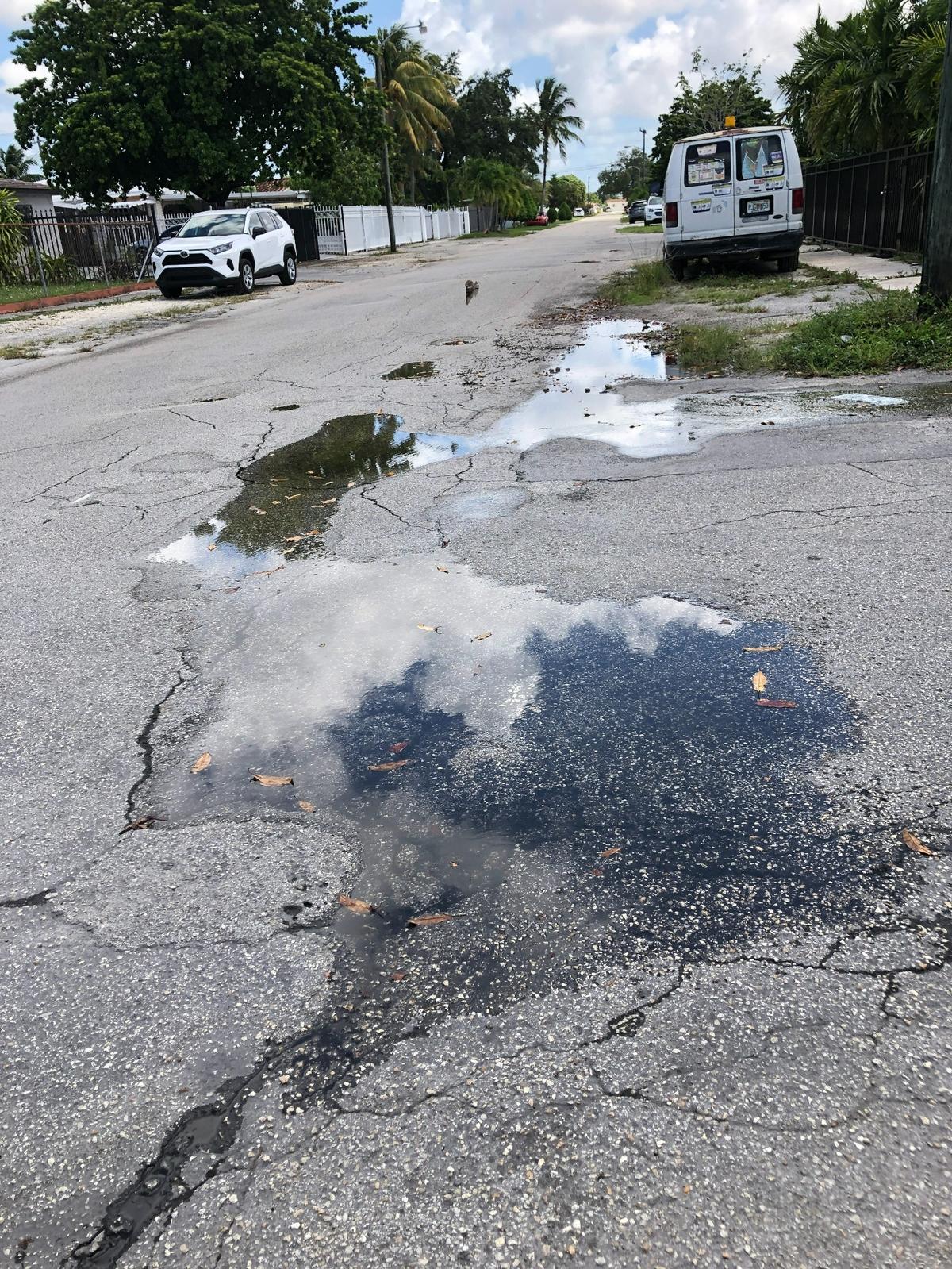
Hialeah’s water and sewer system has become obsolete. Hardness inside the pipes blocks adequate pressure. The sewage seeps out. Leaks are patched to stop flooding.
It’s not only liquid spilling, but also money. Residents feel it every two months when they get their water service bills.
More than 100 galvanized metal pressure feed pipes are leaking in the western area of the city, between 72nd and 76th streets, according to information provided by employees of the Hialeah Department of Public Works who preferred not to be identified for fear of reprisals.
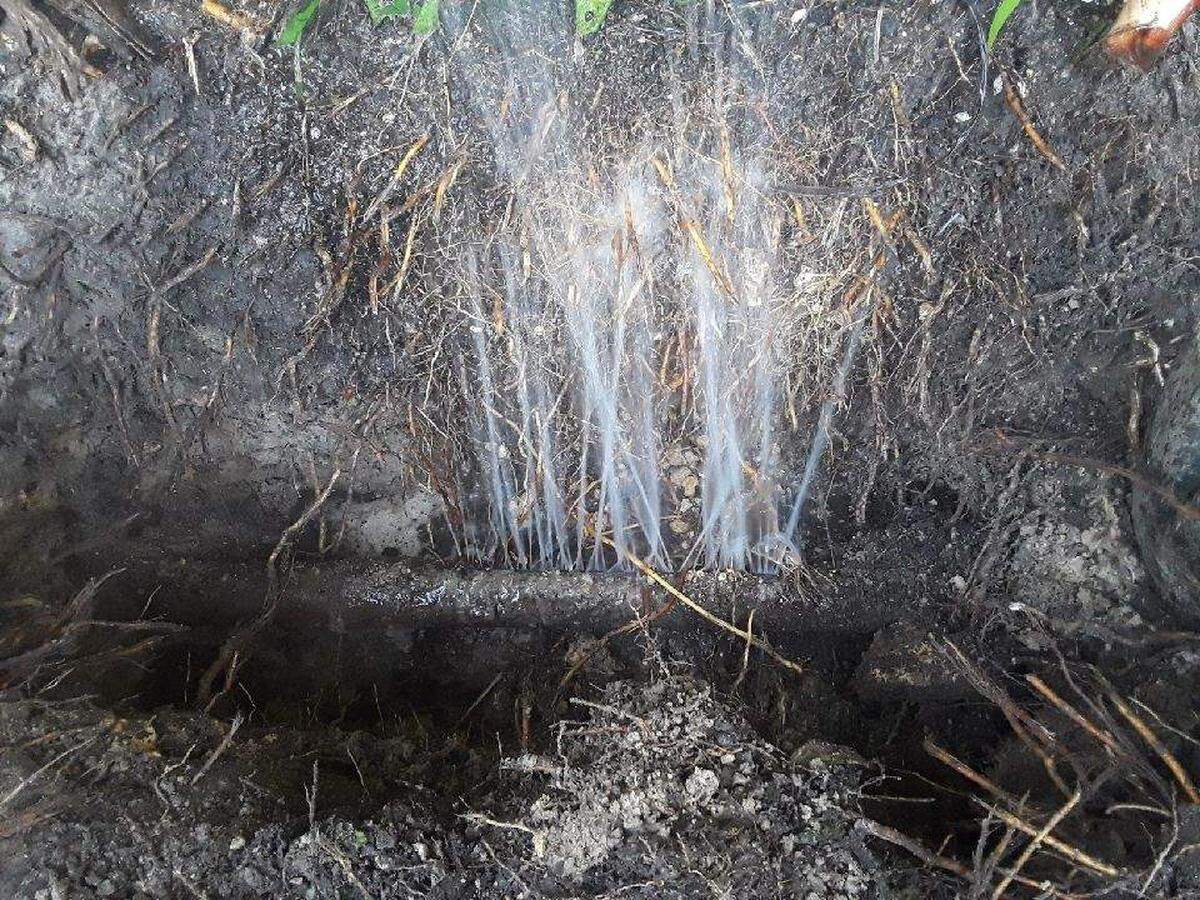
The mayor’s office acknowledged the problem in statements to el Nuevo Herald, explaining that “this line was reported to the Operations Supervisor in November 2021 and to the Director (Armando Vidal) on April 28, 2022, who has instructed the staff to proceed with the replacement of the line, following the recommendations of its personnel.”
However, the authorities did not specify when these 100 pipes would be repaired or replaced.
This is not the only area of the city where the pipes are deteriorated. Seventy percent of the water mains along West 12th Avenue have exceeded the recommended useful life of 40 years.
Mayor Esteban Bovo Jr.’s office was unaware of the problem, stating that he “didn’t know that the lines had reached their useful life. The director has been asked to investigate and report.”
Bovo recently approved two appropriations to the department to continue funding these improvements, one of $22.1 million for the current year and another of $28 million for 2023.
Last year, the city announced it would put $63.8 million in federal aid into water and sewer projects.
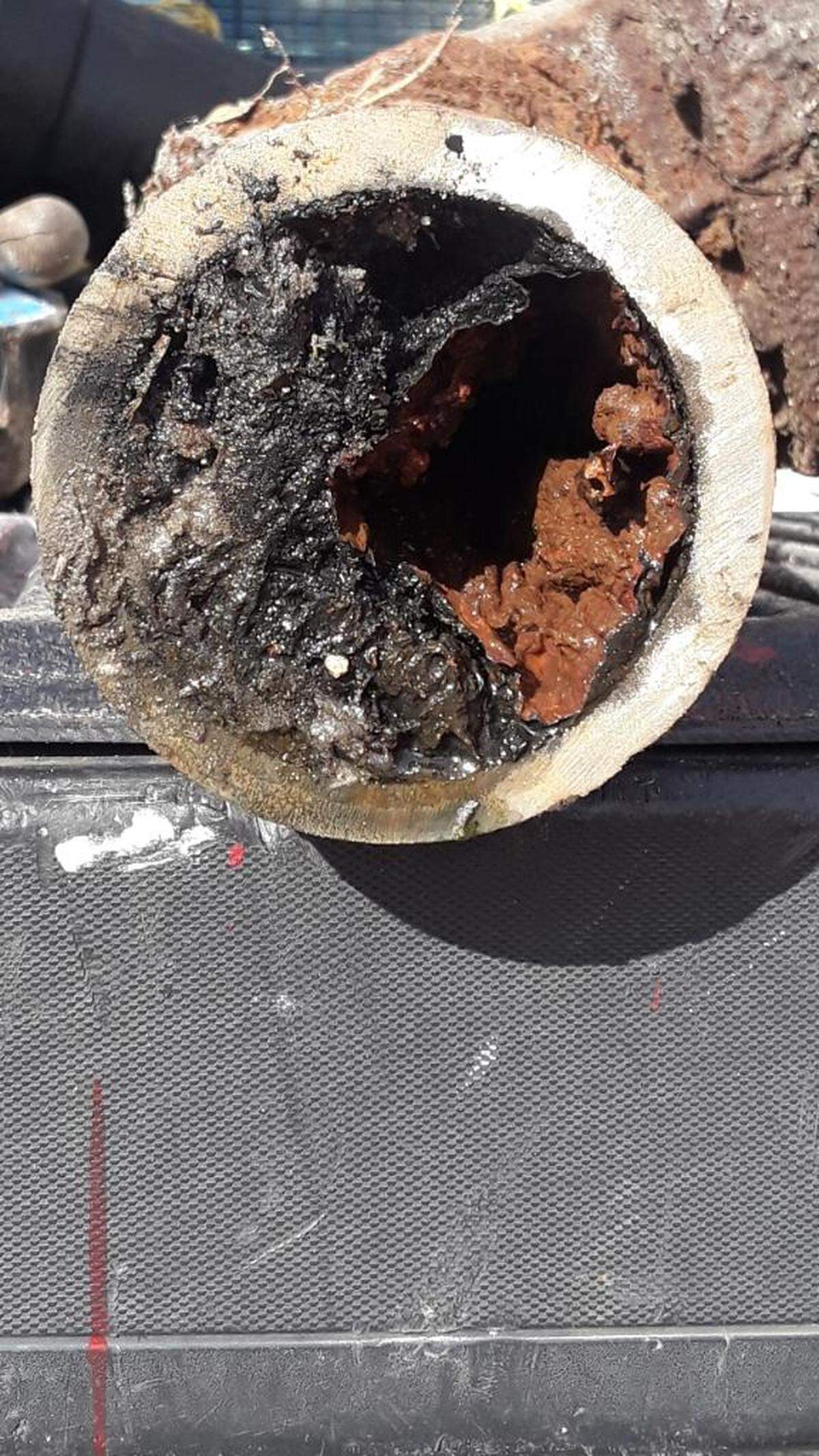
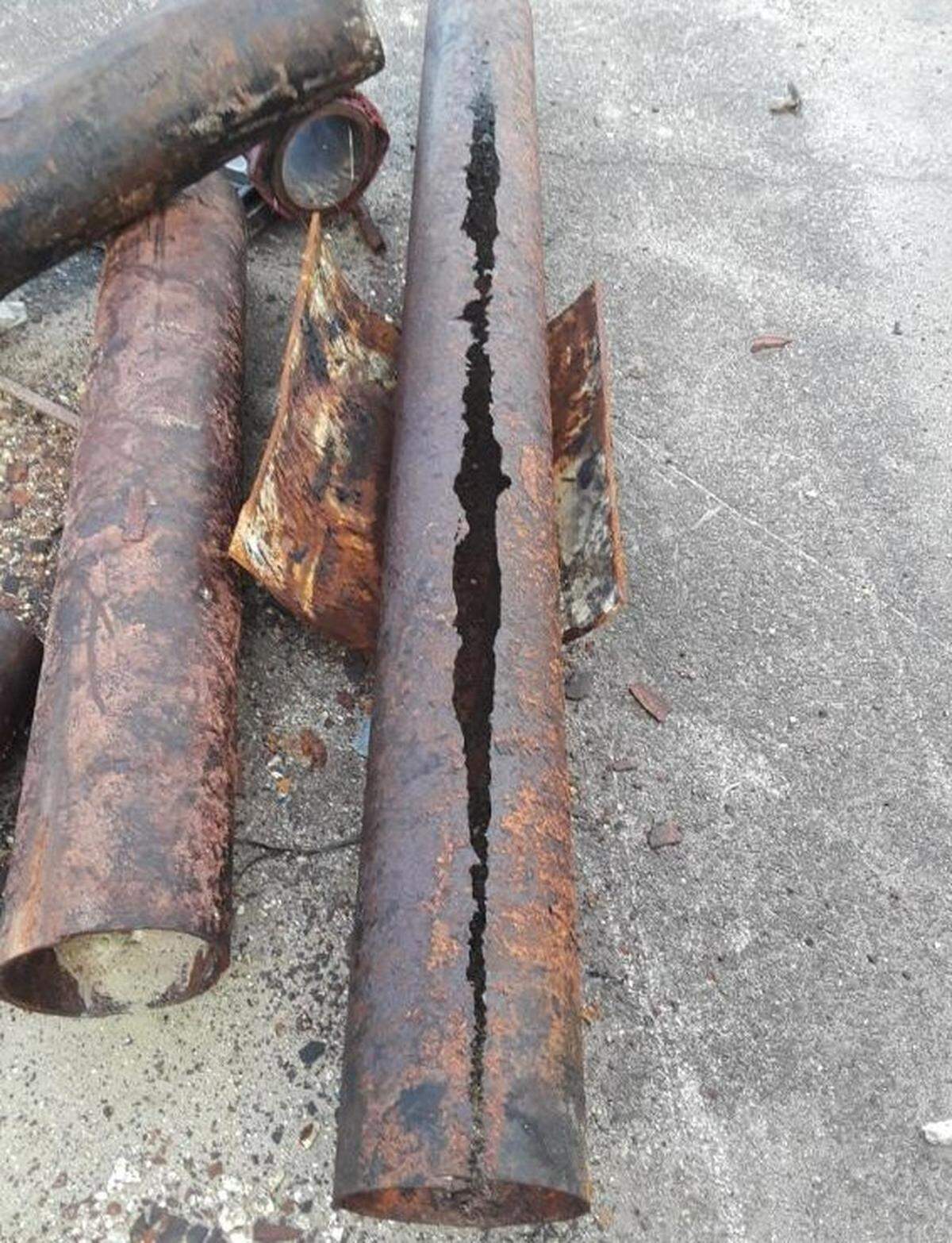
Images obtained by el Nuevo Herald show that Hialeah has an old plumbing system, most of which was installed in the 1960s, especially in the eastern part of the city, and maintenance has not been done as often as recommended.
Lack of personnel, equipment in disuse
Twenty years ago, the Public Works Department had three telescopic boom trucks to check sewer lines with cameras. According to information provided by the city, there is now only one truck to perform the same routine and emergency inspections.
“The department has a TV unit for the inspection of sewer lines used for routine and emergency inspections,” explained the mayor’s office, while reporting that the department has 52 people available for maintenance, and 13 private contractors.
These workers represent a third of the staff that was there two decades ago, when the system was not so deteriorated.
A source inside the department warned that “we are not televising the city’s systems. We used to televise them every year, but the camera truck hasn’t moved in the last five years. Smoke tests (to determine leaks and illegal outlets) have not been done for 20 years. We only do emergencies, not maintenance,” he said on condition of anonymity because he was not authorized to speak to the media.
The mayor’s office indicated that “the department has completed smoke tests throughout the city in accordance with the regulations of the Department of Environmental Resources Management (DERM). The last ones were completed in 2012, with the next cycle planned for the latter part of 2022. It is anticipated that new unauthorized connections will be found during the 2022 cycle.”
Basins with seepage
To determine the overall flow of the city-generated wastewater system, the Miami-Dade County Water and Sewer Department collects and tabulates monthly the bills paid by the city for the treatment and disposal of its wastewater.
“The annual average daily flow from January to December 2021 was 32.2 million gallons per day, identifying 35 of the city’s collection deposits in excess of the 5,000 gallons per day limit,” according to Hialeah’s 2021 Annual Sanitary Sewer Report, conducted by Hazen and Sawyer.
The city’s wastewater collection system is composed of 99 sewer basins or pump station service areas, about 336 miles of gravity sewer mains, and more than 6,800 manholes.
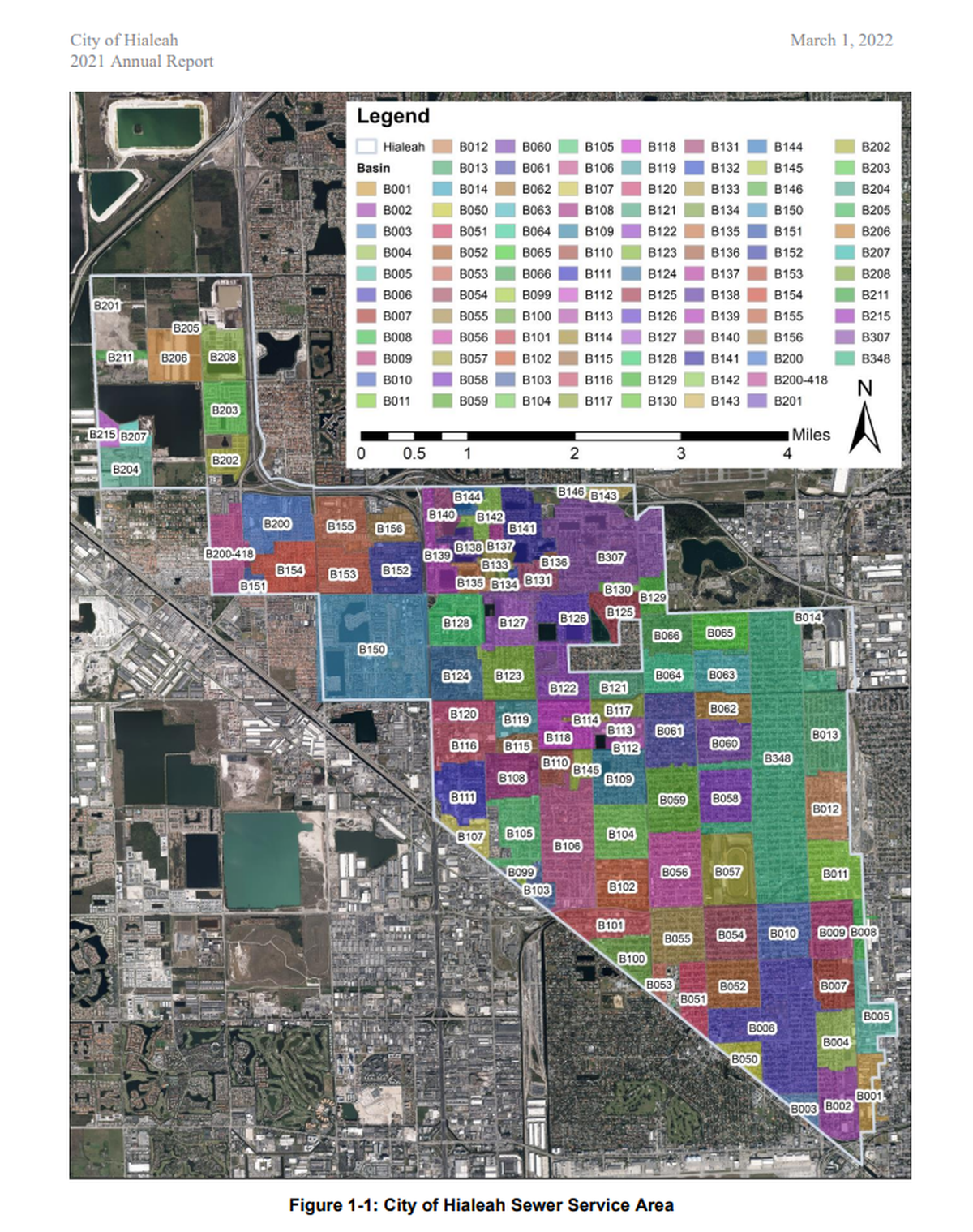
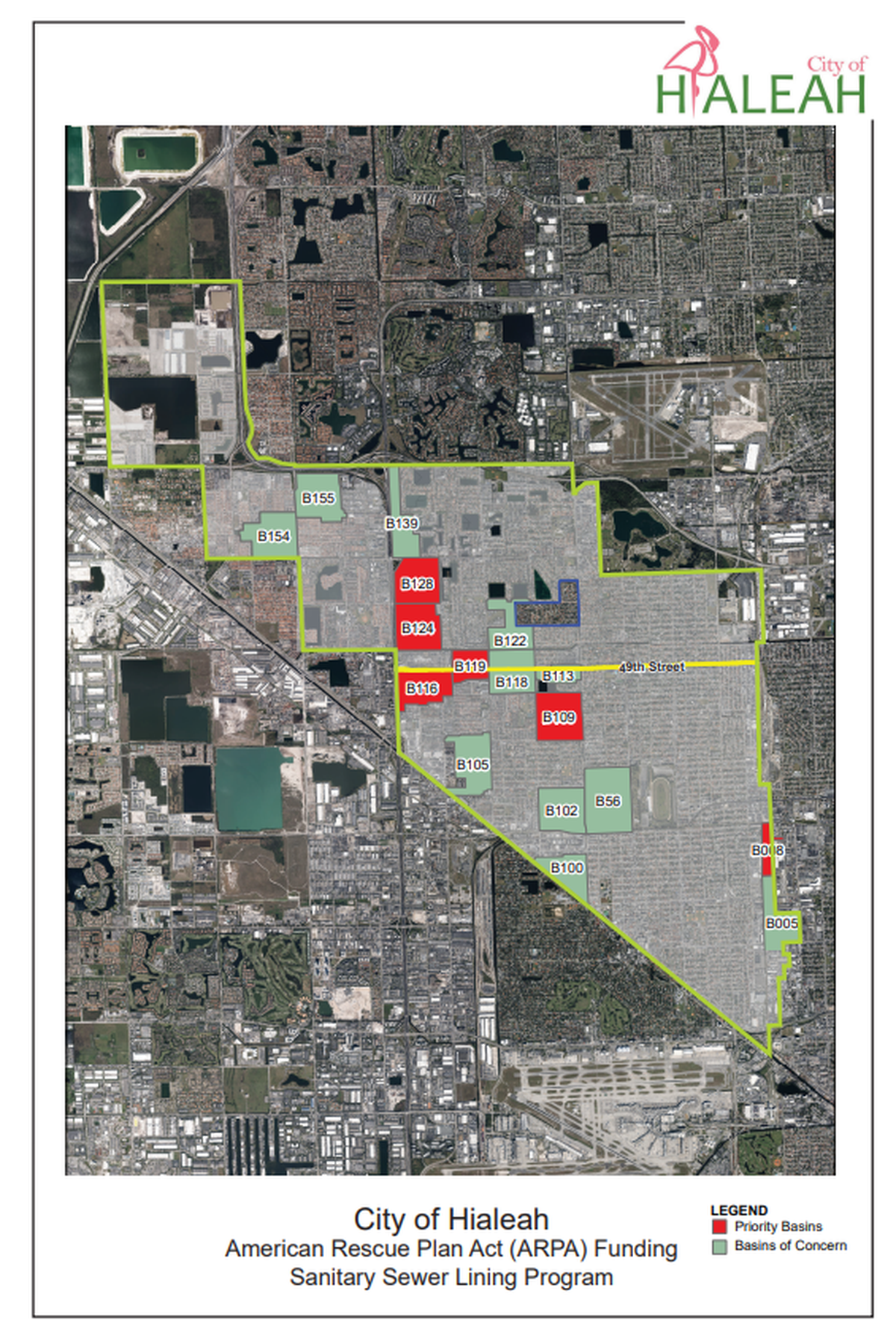
In this system, Hialeah has at least six basins in a “moratorium,” explains the report, indicating that these pumping stations are working more than the 10 hours established by Miami-Dade County, exceeding their limits of gallons per mile. The basins 124 and 128 are the ones in worst condition.
Although the report dates from March 1, 2022, the mayor’s office has not fully addressed the problem. In statements to el Nuevo Herald on May 11, the authorities indicated that these “stations (008, 109, 116, 119, 124, 128) would be reviewed in June 2022 to determine if these areas are below the infiltration threshold.”
Hazen and Sawer’s report explains that “the city plans to conduct additional flow monitoring at the basins between June 1 and November 30, 2022, to assess the extent of its progress toward meeting infiltration reduction goals.”
Pursuant to resolution 2020-013, which approved the agreement between the City of Hialeah and Miami-Dade County in January 2020 to fix the unauthorized municipal license, under Mayor Carlos Hernández it was determined that “the defendant (the City of Hialeah) shall, within 18 months of the effective date of this agreement, rehabilitate all basins under absolute moratorium and all basins under moratorium that exceed 5,000 gallons (...).”
They also agreed that in the next 365 days from the agreement becoming effective, an action plan should be submitted to provide a financial and technical reference framework that minimizes or eliminates future moratoriums and provides a solution in the future, after 12 months from the moment when the DERM changes the basin’s status from incomplete moratorium to initial moratorium.
As of that date, January 22, 2020, the county had advised the city of Hialeah that it had 17 stations in excess of 5,000 gallons per day:
- Stations 005, 008, 109, 116, 119, 124, 128, 131, 140, 141, 143 would have incomplete pumping data or missing monthly readings.
- Stations 012, 105, 133, and 154 were in “conditional moratorium,” since they operated more than 10 hours per day. In this case, a corrective action plan was requested.
- Stations 056 and 127 were in “absolute moratorium,” after 12 months after their inspection it was determined that the station was still pumping for more than 10 hours. This categorization also occurs when the sewer in the area experiences chronic overflows.
The agreement shows that stations 056 and 127, in worse conditions at the time of consent, had been in moratorium since 2015 and 2012, respectively.
Of these 17 stations, at least seven — stations 008, 109, 116, 119, 124, 128, 141 — persist with the “temporary moratorium,” failing to comply with DERM recommendations, more than 28 months after the agreement between the city and the county was signed.
What does all this cause? An expense to the city and its residents. The additional water that enters the sewers is also processed by the county in its treatment plants. It is extra water that enters the pipes even though no one is using it, which would not happen if the pipes were not obsolete.
How the obsolete system affects citizens
When a sewer has an infiltration, the liquid that is in the ground enters the pipe and more water is processed in the treatment plant. Wastewater collection is the most expensive part of the bill — it represents more than 65% of the total expense.
According to a municipal study provided by the director of Public Works, Armando Vidal, to el Nuevo Herald, when the service data is analyzed separately — water and sewage — Hialeah ranks fifth out of 34 cities in Miami-Dade County with the most expensive wastewater bill and seventh in charges for water alone.
However, the bill as a whole shows that only three of the 34 cities in the county have higher water and sewer rates than Hialeah: North Miami Beach, Bay Harbor Islands and Medley, according to the city study.
The city told el Nuevo Herald that in the last 20 years, it has invested more than $40 million in the rehabilitation of sewer infrastructure, including pumping stations and 42% (101 miles) of the sewer network. However, it did not specify what has happened to the other 58% of the system that it does not mention in its statement.
“These improvements eliminated approximately 400 million gallons per month of groundwater infiltration, reducing the monthly cost to residents by approximately $16 million based on current rates,” the city specified.
However, they didn’t answer about the cost the city would have to pay to carry out an exhaustive maintenance of the system. Councilman Bryan Calvo estimated that “changing the pipes in those areas would cost the city $15 million.”
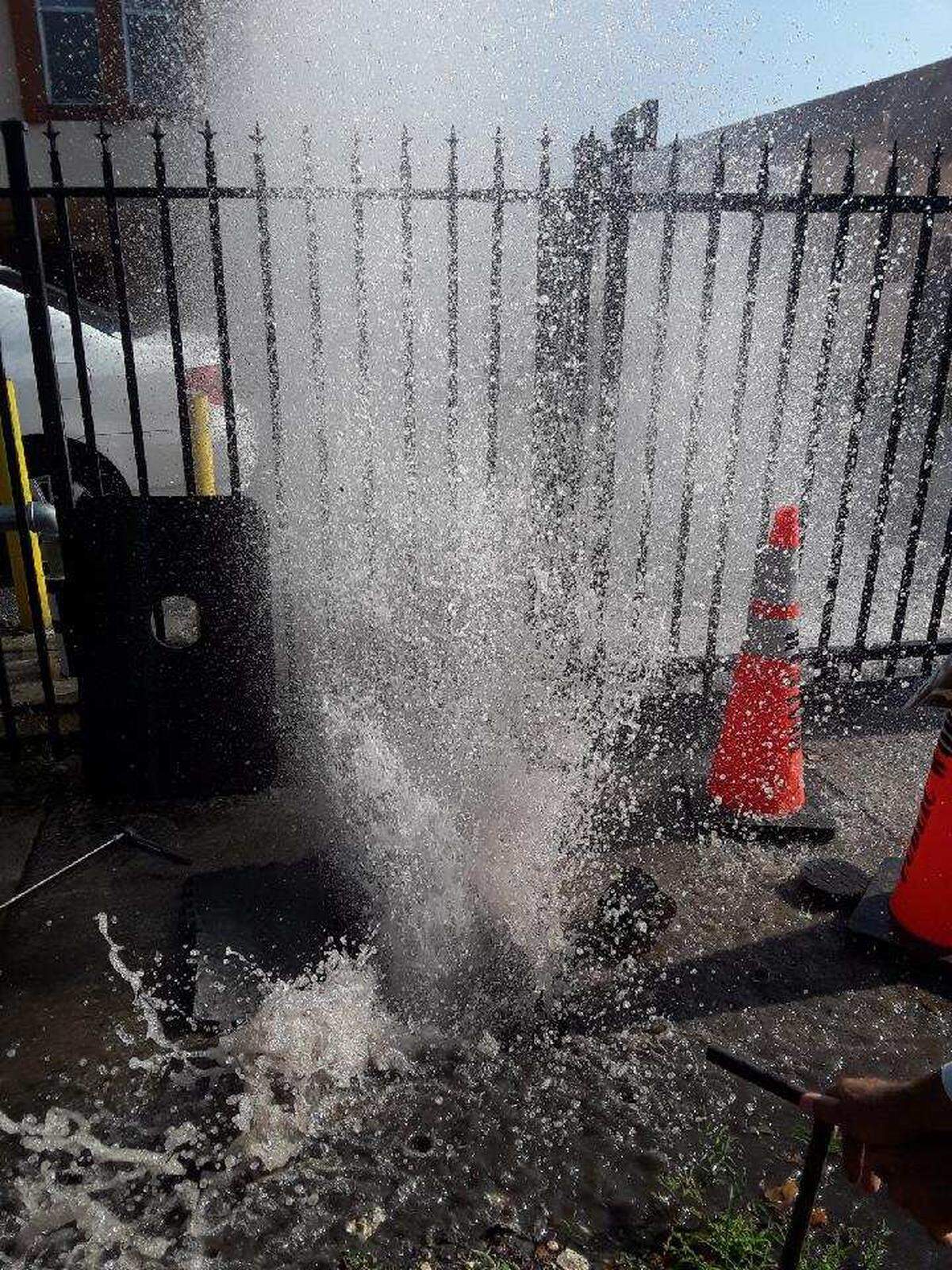
However, he pointed out that doing so is only half the problem. “You have the same leaks in the whitewater pipe, only instead of allowing water to enter the sewer, you have a leak or a spill. Then we have to change all those pipes, prevent dripping so that 100% of the water produced reaches the consumer, instead of producing 150% to get 100% of the water,” Calvo said.
The mayor’s office has asked the Department of Public Works to prepare a priority list of capital projects as part of its next budget.
Sources in the Department of Public Works estimate that the only way to correct the underground system is to increase municipal taxes for repairs and maintenance.
Failure in the hydrants’ water pressure
Sources in the Hialeah Fire Department, as well as employees of the Department of Public Works, have reported that, on several occasions, when there has been a fire, the rescue team has not been able to connect their hoses to the nearest hydrants because of the lack of water pressure.
The most recent case occurred on West 29th Street and Okeechobee Road, according to sources in the fire department, who preferred to keep their identity confidential for fear of reprisals.
The mayor’s office has responded to these complaints by saying that Vidal has been asked to coordinate an action plan with the Hialeah Fire Department.
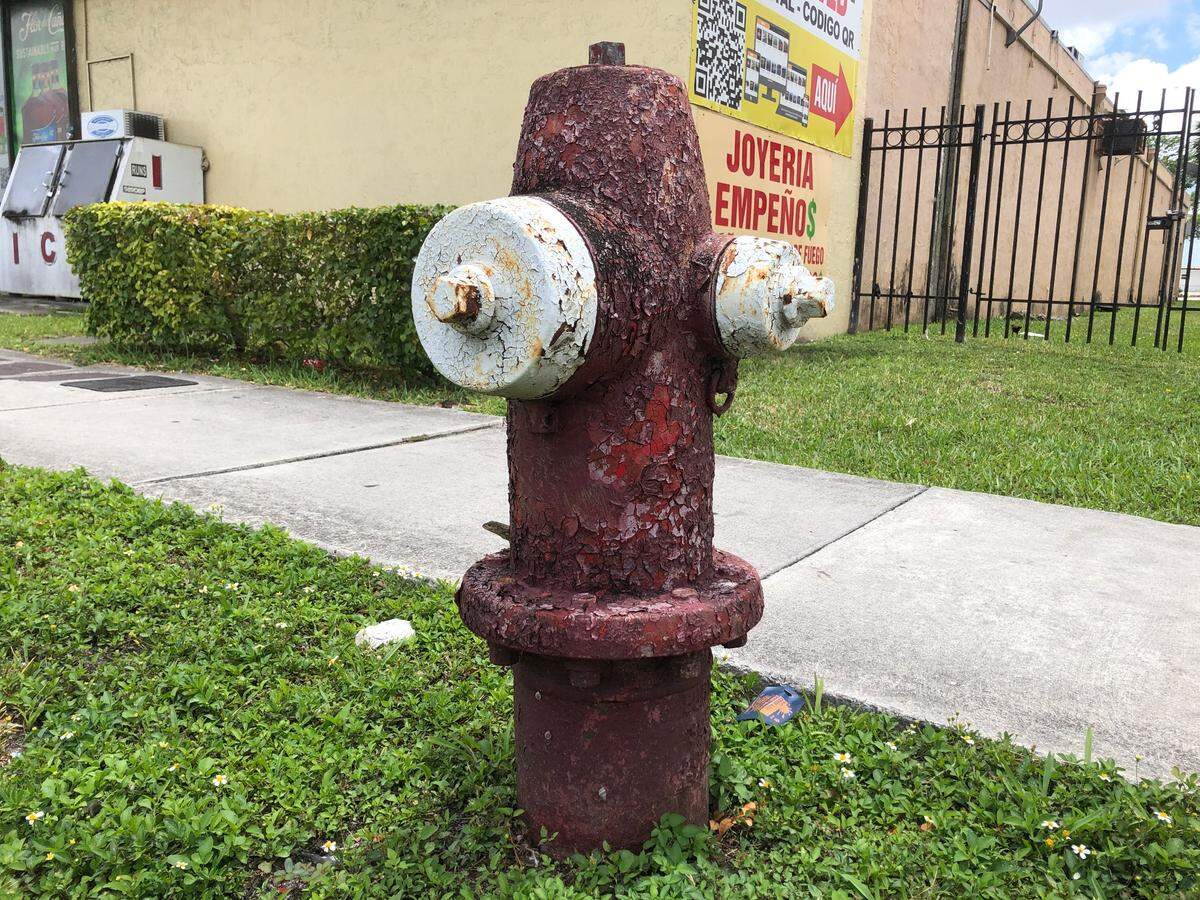
Hialeah uses three brands of hydrants: Mueller, American and Kennedy. Each one of them recommends that such equipment be maintained, cleaned and inspected at least twice a year. However, employees of the Department of Public Works explained to el Nuevo Herald that maintenance is not being done.
They report that at least a dozen hydrants in the city are useless, are broken, or their caps (where the fire hoses are connected) cannot be opened to provide the water that would extinguish the fires.
This happens at least in the following addresses:
- E. 4th Ave and 19th St
- W. 16th Ave and 68th St.
- W. 68th St. and W. 5th Ave
- 115 E. 9th St.
Hydrants are used within the water and sewer system to move the water at the ends of the pipelines and prevent it from stagnating or pooling, as well as serving as a tool to introduce chlorine that will purify the liquid.
The quality of the city’s water is not at risk, employees of the Department of Public Works assured, but they estimate that the lack of maintenance of these devices makes it difficult to protect Hialeah communities from fires.
This story was originally published June 2, 2022 at 6:00 AM.